Stefan Boscia

Labour needs to toughen up on violent crime

From our UK edition

In January 1993 Labour’s Shadow Home Secretary Tony Blair announced a key pillar of the opposition’s future election policy in a New Statesman op-ed. He wrote that a Labour government would be ‘tough on crime and tough on the underlying causes of crime’ – a phrase that would be often repeated after he ascended to the Labour leadership in 1994. This policy was symbolic of New Labour’s third-way centrism. It focused on personal responsibility and punishing offenders, while also implementing grassroots programmes to stop the root causes of violent crime. With an election likely around the corner, the current Labour leader would do well to take a page out of Blair’s book and focus on law and order as a winnable battleground issue.
I’d rather be politically homeless than stay in the Labour party

From our UK edition

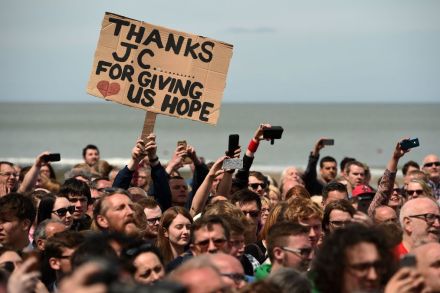
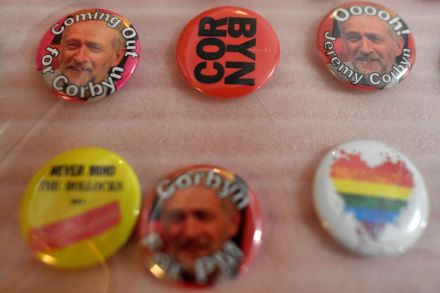
Among the first things I did when moving to the UK from Australia was sign up to three British institutions: Arsenal football club, the NHS and the Labour party. Sure, Jeremy Corbyn's party is further to the left than the Australian iteration. But following Labour's surge in the 2017 general election there was something alluring about the party. It was offering wholesale change, by improving public services, increasing the minimum wage and scrapping student tuition fees. These policies sat well with my millennial sensibilities. And like it or loathe it, Labour's grassroots campaign back then radiated a palpable sense of excitement about the party's future.

Could the Lib Dems’ anti-Brexit stance backfire?

From our UK edition

The timing of the Liberal Democrats’ leadership hustings on Friday could not have been better for Jo Swinson and Ed Davey. The two leadership hopefuls took to the lectern on an historic day when YouGov recorded the once floundering party as leading in its latest polling. This, along with the party’s recent success in the EU elections, provided an exciting backdrop for Swinson and Davey to outlay their future vision for the party. While the party’s current surge is attributable to its strong support for a second Brexit referendum, the party’s next leader must be able to craft a coherent vision and identity beyond this issue.

How climate change decided Australia’s election

From our UK edition

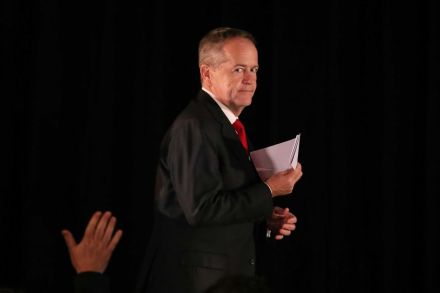
Australian Labor leader Bill Shorten will forever have the ignominious label of the man who lost the unlosable election – Australia’s answer to Neil Kinnock. After six years of the conservative Liberal-National coalition government, and three different prime ministers, Labor were considered the clear favourite to win Saturday’s general election. The government had been wracked with disunity over climate change and same-sex marriage and were governing in a minority for the past nine months. The Liberal party also saw several high-profile retirements in the lead up to the election as MPs started jumping off what they thought was a sinking ship.

The Extinction Rebellion protests are targeting the wrong country

From our UK edition

In 2007, then-Australian prime minister Kevin Rudd labelled climate change 'the great moral challenge of our generation'. Rudd is right: if no action is taken on rising CO2 emissions then the world is in trouble. That's why it is so disappointing that my country, Australia, has failed to tackle the problem and remains one of the highest emitters per capita of greenhouse gasses. However, the same is not true of the United Kingdom. Thanks to sensible and far-reaching climate change policies, Britain has significantly reduced its level of CO2 emissions and has almost entirely abandoned coal as an energy source. The UK has made some of the largest reductions in emissions in the OECD and has recorded a 38 per cent decrease in CO2 output since 1990.

My encounter with Young Labour makes me fear for the party’s future

From our UK edition

To understand the decay of the Labour Party since 2015, look no further than its London youth wing. London Young Labour (LYL) is the Momentum-controlled home of the capital’s under-27 Labour members. It is also a sparkling example of the worst kinds of regressive identity politics popping up on campuses across Britain. As a 26-year-old Labour member, albeit of a more moderate persuasion than those now running the show, I decided to go along to LYL’s Annual General Meeting last weekend. People talk of Labour as the party of young people. I hoped that the event might make me grow a newfound respect for a party I am quickly losing confidence in. Unfortunately, I left disappointed.