Politics

Read about the latest political news, views and analysis

Boris Johnson’s secret superpowers

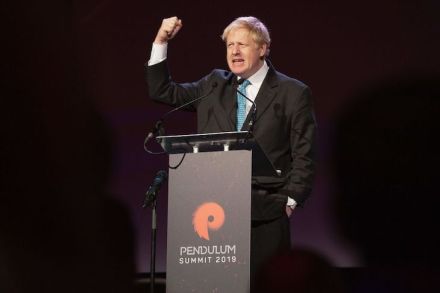
David Davis gave away Boris Johnson’s big secret, live on the Today Programme: the Tory MP set to be our new prime minister has superpowers. The point is that the former Brexit secretary says he is wholly persuaded that Johnson will take the UK out of the EU, deal or no deal, by 31 October – while also conceding that Johnson has given absolutely no detail on how that can be achieved, against the implacable opposition of a majority of MPs to a no-deal Brexit, and the equally implacable opposition of EU leaders to changing the Brexit withdrawal agreement to meet the concerns of Brexiters like Johnson. I am only half joking about his superpowers.
Boris Derangement Syndrome

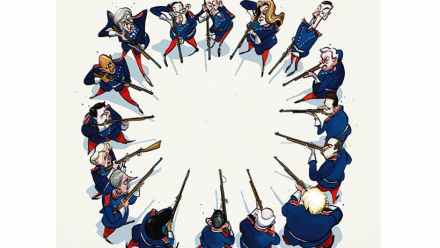
I switched on the radio last week and caught the tail end of a discussion about the Conservative leadership election. The presenter, who seemed to be in a highly agitated state, was talking about one of the contenders: ‘A man who’s lied to both of his wives, all of his mistresses, every constituent, every employer, every party leader, every colleague, every interviewer, every journalist he’s ever encountered, he’s not just lied to them, he’s actively agitated to deceive them…’ On it went. Even by left-wing shock jock standards, it was unhinged. He could only have been talking about Boris Johnson. In the US, Trump Derangement Syndrome, or TDS, is a well-established phenomenon.

Boris in No. 10

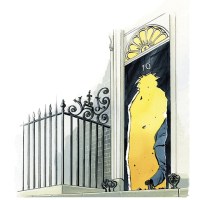
Quietly and discreetly, the planning for Boris Johnson’s premiership has begun. No one wants to be seen measuring the curtains, but his team are confident he’ll be the choice of Tory party members. It would be the most spectacular upset if he is not. Boris has fixed a Brexit deadline — 31 October — and time is short so his aides are concentrating on what to do when — if — he makes it to No. 10. The first few weeks in No. 10 are crucial for any prime minister, but particularly one who takes over in mid-term, without their own personal electoral mandate. Boris will have only 99 days to agree a Brexit deal that can pass through parliament, something which eluded Theresa May, with many MPs thinking that the government might collapse if he fails.

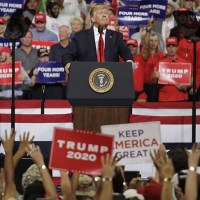
Trump’s re-election campaign never stopped

 New York The great ceremonial game of poll dancing is gearing up for its quadrennial orgy. Headlines across the fruited plain bark out numbers and percentages in mystic confabulation. Votaries sway back and forth as the modern magi of the press repeat the results of this contemporary incarnation of taking the auspices. Was any medieval or ancient devotee of numerology more besotted by the task of squeezing significance out of numbers than our pollsters and their marks, or clients, are today? I doubt it. During the First Punic War at the naval battle of Drepana in 249 bc, the commander Publius Claudius Pulcher grew impatient when the sacred chickens failed to signal divine approval for the battle by refusing the grain they were offered.

Is Green’s deal with his creditors the beginning of another scandal?

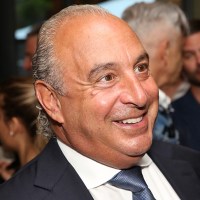
There’s a palpable urge elsewhere in the media to see Sir Philip Green come to grief, whether as a result of allegations, denied by him, that he ‘spanked and groped a Pilates trainer’ in Tucson, Arizona, or through the collapse of his Arcadia retail empire, which includes Topshop and Burton, even if that were to involve thousands of job losses and hundreds of empty shops. So there were mixed reactions to the news that Arcadia has succeeded, after months of hardball negotiation, in signing a Company Voluntary Arrangement (CVA) with a required majority of its creditors, including its major commercial landlords, that will cut its cost base by securing rent cuts on 200 stores and enabling it to close 23 others.

When good men go bad

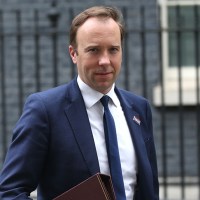
It was when Matt Hancock went over to Boris Johnson that something snapped. ‘Every time a child says “I don’t believe in fairies,”’ said Peter Pan, ‘there is a fairy somewhere that falls down dead.’ When Matt Hancock said this week that he did believe in Boris Johnson, something in me died. I remember Matt practising with a few of us for his speech to Conservative candidate selection meetings. He needed more work on the fluency — he still does — but was outstandingly bright, quick, endearingly ambitious, full of bounce and, most important, he seemed to me a good person.

Rory Stewart’s bad debate leads to his elimination from the Tory leadership race

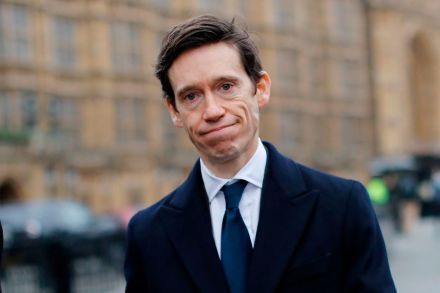
Rory Stewart is out of the Tory leadership race. He polled only 27 votes—ten down on what he received yesterday. It seems clear that his performance in last night’s debate, where he chose to take on all the other candidates — not just Boris Johnson — cost him heavily. There was a sense among Tory MPs that the level of blue on blue action his candidacy was causing was damaging the party’s future prospects, and today they have stubbed out his candidacy. The fall in Stewart’s vote makes it hard to blame his ousting on tactical voting. If he had increased his own vote by just two from yesterday, he would still be in the race. Where Stewart’s supporters go now will determine who faces Boris Johnson in the members’ round.

Florence of Belgravia has bitten the dust

Earlier today, Rory Stewart said that he was in talks with Michael Gove's campaign team, to see if the Environment Secretary would drop out and combine forces with him to take on Boris Johnson. In the end though, it was Stewart who was forced to walk the plank - with even fewer votes than he picked up yesterday. Boris Johnson continued his dominance of the race, winning 143 votes, 17 more than the last round - so benefiting from the elimination of Dominic Raab. Trailing behind him were Jeremy Hunt and Michael Gove, who received 54 and 51 respectively, and then Sajid Javid on 38 votes. Stewart only managed to reach 27 votes this time, losing ten backers since yesterday.

John Bercow’s authority has now collapsed

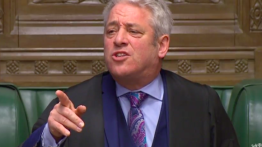
The title ‘Father of the House’ tends to give the bearer a chronic problem with wind. The present holder, Ken Clarke, stood up at PMQs and asked a question of Gibbonian magnitude and complexity. Among the gusts of prose was a useful point about spending. ‘It would be extremely unwise for the outgoing government to make reckless commitments,’ he said. He was ignored. Member after member tried to cadge money from Mrs May before she quits the Downing Street cash-pile. The Conservative MP Marcus Jones wanted a handout for shops in Nuneaton, while Paul Scully made the case for SEN children. Tim Loughton, whose constituency abuts the sea, proposed a whole new arm of government, the Coastal Schools Challenge Fund, to help kids living near a beach to swot harder.

Can politicians learn the toughest lessons of the Grenfell fire?

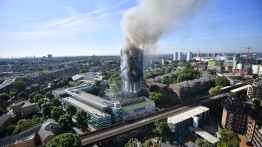
Jeremy Corbyn chose to focus his questions to the Prime Minister today on the government's response to the Grenfell Tower fire. It was the second anniversary last week of that fire, and campaigners have accused the government of not keeping its promises to the survivors of that disaster. The Labour leader asked about the slow progress in removing the same cladding from other buildings that was on the Grenfell Tower, and then moved on to a recommendation made years before the fire that tower blocks should have sprinklers fitted. That recommendation followed the fire at Lakanal House in 2009 in which six people died. The coroner at that inquest had recommended that sprinklers be fitted to all high-rise buildings.

Mufti Patel and the problem with the BBC’s leadership debate

As Boris’s team should have predicted, the BBC, via Emily Maitlis, attacked Boris throughout the Tory leadership debate. So did its coverage the following morning. ‘Words are actions,’ said Nick Robinson on Today, sententiously editorialising. ‘Again and again Boris Johnson gets his words wrong.’ Up duly pop Nazanin Zaghari-Ratcliffe’s husband, Heathrow airport expansion and the precise wording of the promise to leave on 31 October — all licensed to do so by the weak decision to let Boris go on. Such debates are structured against Conservatives and conservatism.

Who will face Boris in the final stage of the Tory leadership contest?

This is my scenario for how the last two days of the MPs’ stage of the Tory leadership ballot will play out - which of course by definition means none of it will happen (and the clever money probably bets against me). Most of the 30 votes won by the defeated Brexiteer Dominic Raab will transfer to Johnson - with perhaps just a few going to Sajid Javid, following his loud commitment to take the UK out of the EU by 31 October, no ifs or buts. So it will be touch and go who is knocked out today, Javid or Rory Stewart - because Stewart’s decision to cast himself in the BBC debate last night as the only 'honest' candidate, against four putative con artists, will have reinforced some Tories’ fears that he is too divisive a character.

Will there be a ‘Stop Rory’ campaign in the third ballot?

With five candidates surviving Tuesday's ballot, the surprise result was Rory Stewart. The wildcard entry won 37 votes – with Sajid Javid behind on 33 votes. It follows that when it comes to who is most likely to be knocked out in this afternoon's ballot, it's the Home Secretary who ought to be the most vulnerable. However, Stewart is not home and dry. Although the DfID Secretary has been building momentum of late, he had a challenging appearance in the BBC debate – admitting after that it wasn't his preferred format. His Cabinet candidate rivals also turned on him at points – with both Michael Gove and Sajid Javid directly challenging him. Multiple messages from the Stewart camp to MPs soon after the second ballot have added to a sense of unease about his campaign.

The questions the BBC must answer about Abdullah in Bristol

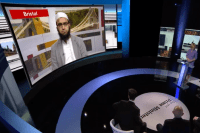
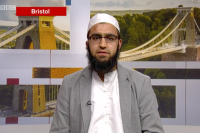
One of the most awkward moments of Tuesday night’s Conservative leadership debate was when a Muslim voter challenged the candidates on anti-Muslim prejudice within their party. The BBC identified the man as ‘Abdullah Patel from Gloucester, speaking from a studio in Bristol’, and described him as an imam. His question stood out because it left Boris Johnson flustered and eventually falling back on his Muslim great-grandfather who immigrated to the UK a century ago. The question also prompted Sajid Javid to urge his rivals to back an independent inquiry into anti-Muslim bigotry within the Tory Party, something they all appeared to agree to.

Tory leadership debate: who won Emily Maitlis’ Brexit show trial?

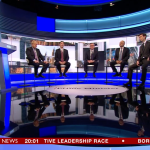
Five hopefuls in a shallow arc of bar-stools. Last night, the BBC summoned the Tory candidates for a Brexit show trial overseen by Emily Maitlis. Michael Gove made an early impact with a burst of crazy egoism. ‘Because I started this, I will finish it.’ He forgot that countless campaigners such as Bill Cash, Dennis Skinner and (oddly enough) Jeremy Corbyn have been lobbying to extract Britain from Europe since long before Gove bought his first toot of coke. Boris seemed genial but over-relaxed. He leaned back on his bar-stool like an embroidered pillow hoping no one would sit on him. No one did. He failed to impress but he got away with it. A gaffe-free night is a victory of sorts. Plenty of guff though.

Ivan Rogers: no deal is now the most likely Brexit outcome

We all know this is a great country. Sadly, it’s one currently very poorly led by a political elite, some masquerading as non-elite, which has great difficulties discerning and telling the truth. I am discouraged by just how badly Brexit has been handled to date, and currently pessimistic that this is going to get any better any time soon. I am worried that the longer the sheer lack of seriousness and honesty, the delusion mongering goes on, the more we imperil our long-term prospects. It is not patriotism to keep on failing to confront realities and to make serious choices from the options which exist, rather than carrying on conjuring up ones which don’t.

Why the Tory party should worry about this leadership debate

If you’ve ever been in group therapy, you will have recognised many of the behaviour types in the BBC’s Tory leadership debate. There was Mr Avoidance (Boris Johnson), who kept his head down and let the clock run out, and Mr Calculating (Jeremy Hunt), who kept his interjections to a minimum and studiously ignored his rivals in favour of speaking directly to the inquisitive punters. There was The Overachiever (Michael Gove), trying to one-up everyone by boasting about his achievements in government and his many plans to solve all of Britain’s ills. Sajid Javid was the Passive-Aggressive Snarker, agreeing with Gove here, jabbing Boris there, and mugging sceptically throughout Rory Stewart’s every answer.

A cacophony of a leadership debate

Boris Johnson’s warning that the televised Tory leadership hustings would be a ‘cacophony’ was proved correct this evening when the five candidates spent an hour talking over one another. Any private fears the former Foreign Secretary may have had about his own performance were largely unjustified, though, as he stayed reasonable and quiet throughout the debate. His worst performance came when he answered a question on Islamophobia. Johnson appeared not to have prepared an answer for this, even though his column on the burqa and his handling of the Nazanin Zaghari-Ratcliffe have come up repeatedly throughout this contest.