Politics

Read about the latest political news, views and analysis

Jo Swinson sets her sights on Boris in Lib Dem victory speech

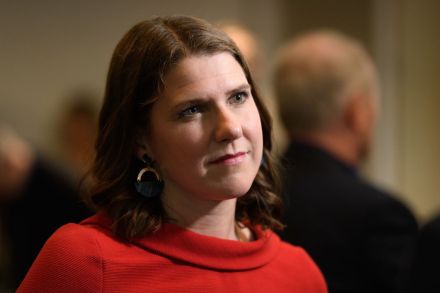
Jo Swinson has been elected as the new leader of the Liberal Democrats. Succeeding Sir Vince Cable in the role, Swinson, the first woman to hold the position, beat her rival Ed Davey – winning 47,997 votes against 28,02 with 63 per cent of the vote. In her victory speech, Swinson said that on joining the party at 17, she had 'never imagined that I would one day have the honour of leading our great party'. So, how will she lead it? Swinson – who served as a business minister in the coalition – used her speech to cast the Liberal Democrats as the party of liberalism. She tried to paint Boris Johnson – in anticipation of him winning the Tory leadership contest – and Jeremy Corbyn as the products of nationalism and populism.

Alan Duncan’s resignation just adds to the chaos in the Foreign Office

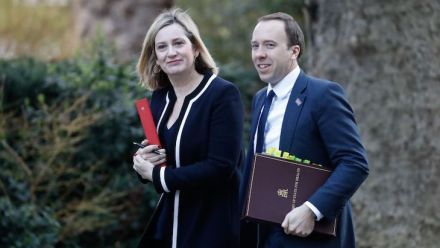
Sir Alan Duncan's resignation will only leave a hole in the Foreign Office for a couple of days before the new prime minister replaces him. But he's not the only missing minister in that department: Mark Field is suspended while the incident at Mansion House is investigated. Duncan had been covering some of Field's responsibilities over the past few weeks, and now he is off too, just as the crisis in relations with Iran deepens. Jeremy Hunt, meanwhile, has been busy conducting a leadership campaign, all of which gives the Foreign Office, normally the most composed and regal part of Whitehall, a slightly chaotic, neglected feel.

Tory MP Charlie Elphicke charged with sexual assault

Tory MP Charlie Elphicke has been charged with sexually assaulting two women. Elphicke, who represents Dover, will appear at Westminster Magistrates' Court on 6 September. The allegations relate to three incidents in 2007 and 2016. Elphicke, 49, was suspended from the Conservative party in November 2017. In December last year, the MP had the whip restored ahead of a no-confidence vote in Theresa May. The Crown Prosecution Service released the following statement this morning: ‘The Crown Prosecution Service has today charged Charles Elphicke, MP for Dover, with three charges of sexual assault against two women. The CPS made the decision to charge Mr Elphicke after reviewing a file of evidence from the Metropolitan police.

Alan Duncan’s ‘honourable’ resignation

Sir Alan Duncan became the first minister to resign from the government today, ahead of Boris Johnson's likely promotion to become the next prime minister. In a letter to Theresa May handing in his resignation, Duncan said that he had left government before the expected change on Wednesday so he could be 'free to express my views in advance of you relinquishing office.' But while Sir Alan would no doubt like to present his departure as a 'principled' refusal to serve in a Johnson administration, Mr S has to wonder if that's really credible, considering the Foreign Office minister's own various positions on Brexit (and Boris) in the past.

Boris Johnson will soon be the most popular leader in the world

Only one person in Britain now believes that Boris might deprive us of a Jeremy Hunt premiership. That person is Jeremy Hunt. The rest of us expect the ‘Blonde Ambition’ project to reach fruition and for Boris to enter Number 10. This will come as no surprise to anyone who knows him. Nature always marked him out. Even as a first-year Balliol student, aged 18, he was weirdly conspicuous – the ruddy jowls, the stooped bullish stance, the booming Duke of Wellington voice, and the freakish white bob crowning his head like a heavenly spotlight. He was always one to watch. People say he can’t ‘do detail’. But nobody spends four years studying classics at Oxford without the power to absorb and retain a mass of abstract information.

How much bother will the Gaukeward squad cause Boris Johnson?

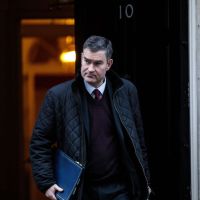
How much bother will the Gaukeward squad cause Boris Johnson? Barring one of the biggest political upsets of the past three years, Boris Johnson will be announced on Tuesday as the new leader of the Conservative party – and the next prime minister. Talk has already turned to the problems (and defections) he could encounter in his own party in his first days in office. Philip Hammond set the tone on The Andrew Marr Show on Sunday when he took some pleasure in explaining he couldn't be sacked by Johnson as Chancellor. The reason? He would resign first. It's a common refrain amongst the anti-no deal Cabinet ministers. David Gauke – the Justice Secretary – has suggested he will do the same.

Sunday shows round-up: Philip Hammond – ‘I’m going to resign’

In his final show before the summer break, Andrew Marr sat down with the Chancellor of the Exchequer. With the results of the Conservative leadership contest to be announced on Tuesday, Philip Hammond told Marr that if Boris Johnson emerged victorious, he believed his only course of action was to follow in the footsteps of fellow cabinet minister David Gauke: AM: Do you think you're going to be sacked? PH: No, I'm sure I'm not going to be sacked because I am going to resign before we get to that point... I understand that [Johnson's] conditions... would include accepting a no deal on 31st October. That is not something I could ever sign up to... I therefore intend to resign to Theresa May before she goes to the Palace to tender her own resignation on Wednesday.

Is Martin Selmayr a friend of Britain?

By this time next week the Johnson era will surely have begun. ‘We can, we will, we must now escape the giant hamster wheel of doom,’ our new Dear Leader will have declared in Downing Street. Or something like it. He will be rewarded with headlines such as ‘BoJo gives us back our mojo’. We will all have been urged to believe in Britain again. Then the questions will begin. With the same deadlocked parliament, the same deeply divided party and country and the same intransigence, what will the new prime minister be able to achieve that Theresa May hasn’t? I’ve been examining the past three years of failed Brexit negotiations for a BBC One documentary called Britain’s Brexit Crisis. What’s clear is that Britain never had a plan for Brexit.

How Tom Watson reinvented himself to become the new challenger to Corbyn

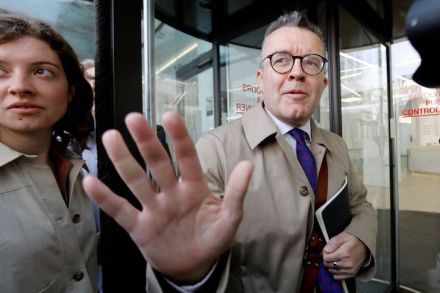
Tom Watson has had more reinventions than Kylie Minogue has had mid-performance outfit changes. His performances over the years have ranged from baronial backroom fixer loathed by Blairites to scourge of Fleet Street when he took on Rupert Murdoch. There was a brief counter-culture period when he went around wearing a beret, a foray into hunting down alleged paedophiles, and a mysterious vanishing act when he realised that Jeremy Corbyn's fans were out to get him. In the magazine this week, I look at where Watson's latest incarnation is taking him: he's the key figure in the latest attempt to save the Labour Party from Jeremy Corbyn and his hard left allies. As I say in that piece, Watson these days is a kindly man who many MPs - to their own great surprise - look to for help and support.

The Lib Dems could soon become important power brokers: here’s what they want

An old joke among political journalists is that you know a writer has run out of topics when they start producing columns either on their children or the Liberal Democrats. With so many other things going on, perhaps this is why Westminster has been oddly indifferent to the leadership contest taking place between Jo Swinson and Ed Davey over the past couple of months. We should have been paying more attention, as the winner may well have an important role to play in the political turmoil over the next few months. Last night, the BBC held its hustings with the two candidates, and I was one of the journalists invited to ask questions.

Which Brexit strategy will Boris Johnson go for?

Before he even gets in to Number 10, Boris Johnson must make one of the most important calls of his premiership. As I say in the Sun this morning, he must decide what his Brexit plan is. On Wednesday, calls with European leaders will begin—and Boris Johnson will have to know what he wants to tell them. As one of those preparing him for government puts it, ‘They’ll call him to say congratulations—and he’ll have to set out his stall’. This is crucial because the European Commission will refuse to negotiate with Boris’s government unless it is instructed to do so by the member states. Within the Johnson camp, there is an ongoing debate about what course to take.

Lib Dem Special: Jo Swinson

19 min listen

Jo Swinson is the current deputy leader of the Liberal Democrats, but she's running to be leader against Ed Davey. With the Liberal Democrats' surge in the polls, Swinson's role in the coming months could be vital for Brexit. In this special edition of Women with Balls, she talks about losing her seat in 2015 after the coalition, problems with pairing in Westminster, and what she has in common with Boris Johnson.Presented by Katy Balls.

We’re heading for an autumn election

Interviewing Boris Johnson is like staring long and hard into an expressionist painting: there are pyrotechnics, the shape of commitments and policies, but it might all be mirage. After I spoke with him on Wednesday for my show, my abiding sense was that he would dearly love a root-and-branch renegotiation of Theresa May’s Brexit deal, but that his famous optimism is not the same as naïveté. He knows replacing the Withdrawal Agreement at this late juncture is a million-to-one chance – and so leaving without a deal may be the only way to meet his deadline of Brexit by 31 October.

Boris’s critics are only making him stronger

If, as expected, Boris Johnson heads off to Buckingham Palace next Wednesday to become Prime Minister, I fear that a fleet of ambulances may be required at the Guardian’s headquarters in King’s Cross – as the newspaper’s collective Boris Derangement Syndrome moves into its final, and possibly terminal, phase. All week the Guardian has been running ever-more desperate stuff in its final attempt to dissuade Tory members from voting for Boris – which looks like being as successful as its appeal for readers to write heartfelt letters to US citizens, imploring them not to vote for George W Bush in the 2004 US Presidential election.

The Spectator Podcast: the latest plot to oust Corbyn

When Labour moderates tried to oust Jeremy Corbyn in 2016, their attempt only made him stronger, protected by swathes of loyal members. But this year, is the tide turning for Corbyn, as even supporters begin to doubt him? First, there were the abysmal European Election results, which for many Corbynites were particularly painful because they disagree with the leadership's ambiguous stance on Brexit. Then, last week's BBC Panorama brought out a dark side to the leadership - the press team's defensive response to the programme, accusing whistleblowers of being 'disaffected', disheartened many most loyal to the project. One high profile Corbynite I spoke to told me that they were disappointed at the response, and believe the party was institutionally anti-Semitic.

Rome’s lesson for Labour

Jeremy Corbyn’s refusal to take serious action against Labour’s anti-Semitic members is no surprise: Marxists know who their friends are. The Roman plebs showed how to deal with such cabals. In 509 bc, Rome’s last tyrant king was thrown out, and the very nobles who had advised him at once took over the new republic as senators and annually appointed leaders (‘magistrates’ such as praetors, consuls, etc). And the plebs? Desperate for change, they found none: poverty, debt and landlessness persisted. So they took action —rioting and withdrawing their labour, especially on the battlefield.

Wasted lives

Twenty years ago, the Scottish parliament was reconvened after a lapse of almost three centuries. The logic for devolution was clear enough: that Scotland has discrete issues, and ones that were not always solved by London government. Devolution would allow ‘Scottish solutions for Scottish problems’. There was, in Westminster, a feeling that MPs could worry less about these problems. Public health in Glasgow, previously one of the biggest problems in the UK, would be someone else’s problem. Let the MSPs see if they could do any better. The news this week should shock people on both sides of the border. Scotland has the worst rate of deaths from drugs in Europe, with numbers up by a shocking 27 per cent since 2017.

Diary – 18 July 2019

By this time next week the Johnson era will surely have begun. ‘We can, we will, we must now escape the giant hamster wheel of doom,’ our new Dear Leader will have declared in Downing Street. Or something like it. He will be rewarded with headlines such as ‘BoJo gives us back our mojo’. We will all have been urged to believe in Britain again. Then the questions will begin. With the same deadlocked parliament, the same deeply divided party and country and the same intransigence, what will the new prime minister be able to achieve that Theresa May hasn’t? I’ve been examining the past three years of failed Brexit negotiations for a BBC One documentary called Britain’s Brexit Crisis. What’s clear is that Britain never had a plan for Brexit.