Politics

Read about the latest political news, views and analysis

Cottage gardens

The confusion is understandable. You arrive at Anne Hathaway’s Cottage in Stratford-upon-Avon, keen to experience the quintessential cottage garden — only to be told that Shakespeare’s garden was, in fact, designed in the 1920s. The space in front of an Elizabethan cottage would have been used for keeping pigs or hens, with a patch for cabbages or onions. Any flowers or herbs would have had medicinal or practical uses, not least for strewing on the cottage floor to disguise the stench. By the 19th century, the garden at Hathaway’s Cottage had become more decorative, but it was the Edwardian plantswoman Ellen Willmott who filled the front with flowers and introduced the idea of mown paths through long grass in the orchard.

Jeremy Hunt slips up

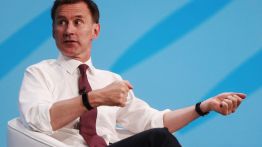
As parliament voted today on an amendment which would make suspending parliament to prevent a no-deal Brexit more difficult, one MP was conspicuously absent from the events. After the vote it was noted that Foreign Secretary Jeremy Hunt, who has ruled out proroguing parliament if he becomes the next leader of the Tory party, was listed as having abstained on the key amendment. It's unusual enough for such a vital figure to miss an important vote, but most assumed the head of the Foreign Office had at least 'paired' himself with a Labour MP, so the result wasn't affected. Apparently not though. Hunt explained on Twitter this afternoon that although he thought he had been paired with an opposition MP (so he could be absent), he'd in fact made a mistake. https://twitter.

The prorogation vote shows how strong the anti-no deal coalition is

In a much heavier than expected defeat, the government lost by 41 votes in its attempt to take an anti-prorogation amendment out of the Northern Ireland bill. The vote was essentially a proxy for whether the Commons would accept no deal, and the size of the government’s loss is a reminder of how difficult any Prime Minister would find it to stay in office with this parliament if they went for no deal. It is worth noting that the amendment doesn’t stop no deal; and doesn’t even create an obvious vehicle to do so. But with this size of majority, the anti-no deal faction will be confident of finding a way with John Bercow’s help. Boris Johnson was in the Commons for the vote, ironically sitting just one row in front of a bunch of the Tory rebels.

Is Leo Varadkar climbing down over Brexit?

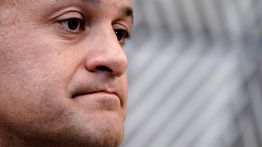
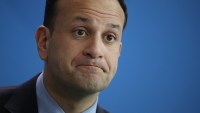
Leo Varadkar certainly talks tough when it comes to Brexit, but is the Irish PM preparing to back down? Mr S. only asks because the Taoiseach conceded this morning that he is 'willing to compromise' over Brexit. This marks something of a change from his earlier comments in which he has repeatedly dismissed alternatives to the backstop, or regulatory alignment across the Irish border. Here is what Varadkar said on RTE today:  'The objective is to avoid the emergence of a hard border between north and south as a result of Brexit. What I care about is achieving those objectives and I am willing to compromise providing those objectives are achieved. And those objectives are that Brexit should not lead to the emergence of a hard border between north and south.

Seven of the best moments from This Week

It's the end of an era tonight as This Week goes out for the very last time. The BBC's late-night politics show has built up a cult following since it first aired in 2003. A host of politicians, from Diane Abbott and Jacob Rees-Mogg, to Charles Kennedy and Ken Livingstone have all appeared. Singer Pete Doherty, Primal Scream's Bobby Gillespie and comedian Stewart Lee have also all popped up. The show's presenter Andrew Neil has been there from the beginning. Here is Mr S's pick of the seven most memorable moments from the show: Red Ken comes unstuck: Ken Livingstone is well known for talking about Hitler. But it was on the subject of Venezuela that the former London mayor came unstuck when he appeared on This Week earlier this year.

Varadkar’s gamble

‘The government has relished wearing the green jersey on Brexit and standing up to the British with the help of the European Union — and been aware of the political benefits of doing so,’ thundered Pat Leahy in the Irish Times last week. ‘But now the pitfalls begin to emerge from the fog.’ Leo Varadkar gambled on the British government either cancelling Brexit or getting roped in by the backstop to accept Brexit in name only. The Taoiseach lost that gamble — and his strategy now lies in tatters. Since mid-2017, when Varadkar took office, teaming up with Brussels to take a maximalist, ultra-legalistic approach to the Irish border, his domestic commentariat has overwhelmingly backed him.

Watson’s new plot

Ever since Jeremy Corbyn was elected as leader of the Labour party, many of his MPs have dreamed of deposing him. They’ve tried mass shadow ministerial resignations, a no-confidence motion, even a formal leadership contest — but to no avail. Some, like Chuka Umunna, left the party, hoping (in vain) that others would join their breakaway group. Other MPs gave up hope, resigned and found jobs outside of politics — concluding no plot would ever work. But that might now be changing. The Corbynites, who have stuck together for so long, are fighting with each other. Party members, once the human shield who protected their leader, are beginning to doubt him.

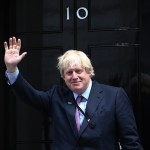
Will Boris revive cabinet government?

It has become something of a tradition in British politics: an incoming prime minister promises to restore proper cabinet government. They vow to go back to the good old days of NHS policy being run by the health secretary, schools policy by the education secretary — and decisions taken in open discussion with a prime minister who is first among equals. The reality, however, is that a small clique in No. 10 ends up controlling the government. Gordon Brown made a fuss about bringing back cabinet government to try to differentiate himself from Tony Blair. In a rare admission of error, Brown says in his memoirs that he failed to do so. He tried to do everything himself, with mixed results.

Penned in

Cynical old hacks like me have been amused by the chorus of establishment applause for the Mail on Sunday’s great Kim Darroch scoop. Our elected masters were outraged, rightly, by threats from the Met’s Assistant Commissioner Neil Basu to criminalise editors who publish leaked memos. Politicians left, right and centre condemned an assault on press freedom. Alan Rusbridger, saintly ex-editor of the Guardian, demanded to know what they taught budding bobbies in police college these days. ‘I would like to suggest a new and compulsory course,’ he said. ‘Let’s call it “The Basics Of Free Speech”. Lesson number one. The police do not tell newspaper editors what to write.

Hatred is in the eye of the beholder

There’s a broad mainstream consensus on both sides of the Atlantic: Trump’s tweet telling four hard-left minority Congresswomen to ‘go home’ to the crime-ridden countries they’re from, when three of the four were born in the US, was racially inflammatory and staggeringly ill-judged.  But the first question that would be raised in the UK if a British politician committed such a gaffe is the last question raised in the US: was that post ‘hate speech’? The First Amendment to the American constitution guarantees five basic freedoms, including freedom of speech, and these principles ought rightly to pertain in other democracies such as Britain.

Are Boris’s pro-business promises the defibrillator we’ve been waiting for?

Back when Boris Johnson was editor of this magazine and MP for Henley, I was with him at a Tory party conference in Bournemouth. He was about to speak at a meeting on transport policy. An intern rushed up with some random downloaded pages, having evidently been told to Google ‘transport policy’. Boris grasped the papers, ran his hands through his hair, revved the rhetorical engine, launched into an old gag about how many times his bicycle had been stolen — and brought the house down. His improvisations swooped, soared, hit and missed for a hilarious quarter-hour before the big finish: ‘Jogging along your lovely seafront here in… ah, err, Bournemouth this morning, I came across a padlocked kiosk that bore a sign saying “This kiosk is alarmed”.

The only way to solve Labour’s anti-Semitism problem

'The Labour Party welcomes everyone* irrespective of race, creed, age, gender identity, or sexual orientation. (except, it seems, Jews)'. So says an unprecedented advert in the Guardian today, which is signed by more than 60 Labour peers. It could hardly be more damning. Yet while the advert is shocking, it stops short of pointing out the only way that Labour can solve its anti-Semitism crisis for good: by getting rid of Jeremy Corbyn. Labour peers who backed the statement aren't the only ones to fail to state the obvious. Deputy leader Tom Watson, who says he favours the introduction of an independent complaints procedure, has also fallen short.

No fanfare, no cheers, and a thin turnout at PMQs

A thin turnout for Theresa May’s penultimate PMQs. Labour members were skulking in corridors plotting to oust their leader. And Tories, especially devout Remainers, were busy talking to journalists about their lifelong commitment to a no-deal Brexit. Mrs May seemed to be angling for the post of chief attack dog at the next election. Jeremy Corbyn asked her about climate change but she raised Labour’s anti-Semitism crisis. ‘You have failed the test of leadership,’ she said, bending the rules by addressing him directly. ‘Stand up and apologise.’ Breaches of protocol always add extra juice to Commons rows. Corbyn retorted that Labour was the first party to pass anti-racism legislation in Britain.

Corbyn and May argue over whose party is more racist

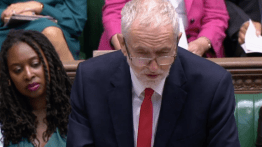
Today's Prime Minister's Questions provided a rather dispiriting summary of the current political scene. The two leaders of the main political parties ended up having a fight on whose party had the bigger racism problem, sparked by tweets from the US president telling black and minority ethnic Congresswomen to 'go back'. Jeremy Corbyn tried to open the session on climate change, but Theresa May had, unsurprisingly, turned up clutching the advert placed by Labour peers in today's Times, which said Corbyn had 'failed the test of leadership' because of his attitude to anti-Semitism. And so the exchanges moved to a predictable format.

The Labour party is completely dysfunctional

What has it come to in the Labour Party when the only way Labour peers feel they can communicate with their leader, Jeremy Corbyn, is to pay to take out an advert in the Guardian? No major party has ever been this dysfunctional. The advert has been signed by roughly a third of Labour Lords. It looks like a declaration of semi-independence by them – over Jeremy Corbyn’s failure to deal with the scourge of anti-Semitism in a way they see as effective and appropriate. [caption id="attachment_10346522" align="alignnone" width="444"] The Guardian advert taken out by Labour lords.[/caption] 'The point about the Lords is they can’t be deselected,' said a senior Labour MP. 'If we didn’t face the threat of deselection, we’d be as bold as the Lords.

Jeremy Hunt’s ‘entreprenur’ blunder

Did you know that Jeremy Hunt is an entrepreneur? If you've heard any of the Tory leadership contender's speeches or been at a hustings event, you are bound to, given how often Hunt has mentioned his business background. But while Mr S. doesn't doubt Hunt's money-making credentials, he does wonder whether he could do with brushing up on his spelling. Over on Hunt's official Facebook page, a meme has appeared boasting that Hunt is 'an entreprenur to turbocharge our economy'. Oh dear...

Watch: Dominic Grieve says Tory party has been ‘Talibanised’

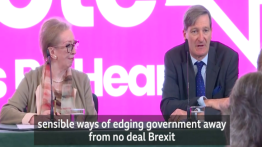
There is no love lost between Dominic Grieve and his local Tory party association, but Mr S. thinks that the MP for Beaconsfield's latest comments will hardly help matters. At an event in London, Grieve said there had been a 'Talibanisation' of the Tory party. He also said that a fear of being deselected was putting Tory MPs off from speaking out against a no-deal Brexit: 'There has been a sort of Talibanisation of sections of the Conservative party grassroots membership with some vociferous minorities – but often capable of dominating meetings coming along and trying to get rid of MPs interestingly enough who've been totally loyal.

Is ‘because of Brexit’ the new ‘despite Brexit’?

Unemployment is at record lows. Wages are rising at the fastest rate in a decade. The gender gap is evaporating, creating a more equal society. Which country is that? France, perhaps, as it benefits from president Macron’s reforms? Or Germany, as it reaps all the benefits of the Single Market and the single currency? Well, not quite. In fact, it is Britain. Despite Brexit, to use the obligatory two words that now have to be firmly placed in front of any positive news about the economy, the UK continues to evolve into one of the best places in the world to be an employee right now.

The complaints are piling up at the BBC after my Newsnight appearance

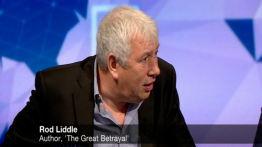
For those of you who were not watching, if you have the time, take a look at the interview I did on Newsnight with Emily Maitlis about my book. And tell me if you think that it was an even-handed, unbiased, rational discussion. The complaints are piling up at the BBC: here’s one from a remainer: Dear sir or madam, I am writing in relation to Emily Maitlis's interview with Rod Liddle on Newsnight yesterday. I have the highest regard for the BBC: over many years, I have relied on the organisation to provide impartial reporting and comment on a wide range of issues. Moreover, I am well aware of the challenges the organisation faces in providing such reporting and comment, particularly in recent years.