Politics

Read about the latest political news, views and analysis

Northern Irish unionists are united against the protocol

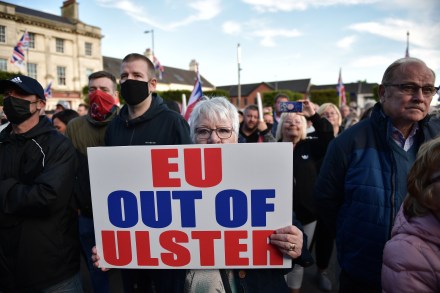
The DUP’s departed leader Edwin Poots spoke in his valedictory interview of a 'significant victory' heading unionism’s way regarding its bête noire, the Northern Ireland protocol. The outright, irrevocable removal of the ‘sea border’ imposed by the protocol has become the fundamental objective of all shades of political unionism and loyalism.  Anti-protocol street art garlanded two deeply different citadels of unionism in the past week — the working-class heartland of Belfast’s Shankill Road and the affluent County Down village of Killyleagh. There is a sense of shared purpose.
Labour councillor tells Tory: ‘Go back to New York!’

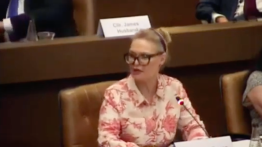
Handbags last night at the Kensington and Chelsea council meeting. A motion on sexual assault and harassment prompted an extraordinary moment when Tory councillor Janet Evans took to the stand to criticise her Labour opponents for a lack of initiative in tackling such issues.  Evans, who was born in America but has lived in the UK for decades, was midway through her fiery speech when her Labour opponent Sina Lari interrupted to yell: 'Go back to New York!' Lari has since claimed that he too was the subject of derogatory insults which were not picked up on camera.

Tory conference to require vaccine passports

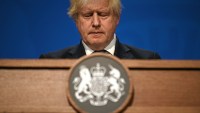
Boris Johnson's announcement on Monday that Covid passports could be introduced for mass events from September did not got down well with Tory MPs. At least 42 of them have signed a cross-party Big Brother Watch declaration against 'Covid status certification to deny individuals access to general services, businesses or jobs' in recent months, with Labour's decision yesterday to oppose Johnson's plans meaning he could well lost a vote on the subject. Sir Iain Duncan Smith decried the move as 'without logic' while David Davis bemoaned the government's efforts to 'try to coerce people.

What Dominic Cummings gets wrong

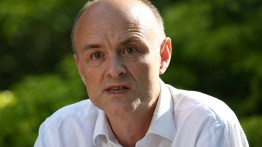
Anyone who thinks Boris Johnson lacks statecraft should pay attention to Dominic Cummings’s attacks on him. They often to seem to show the opposite of what Dom intends. Cummings now reveals that, in January 2020, he and his allies were saying: ‘By the summer, either we’ll all have gone from here or we’ll be in the process of trying to get rid of [Johnson] and get someone else in as prime minister.’ In fact, neither happened. By November, however, Cummings was (to use Mr Pooter’s joke) going; Boris stayed. The winner of the then still recent landslide election victory presumably discovered about his adviser’s seditious conversations and, reasonably, did not like them.

Sajid Javid: My isolation diary

You always remember when a prime minister calls you to ask you to take on a new role, and you remember the reaction of your loved ones, too. My mum was delighted — like many Asian mothers she wanted at least one of her five sons to be a doctor and she was thrilled that I would be, as she put it, ‘working in healthcare’ after all these years. My wife was concerned about the pressures of the role and what it might mean for our family. And my daughter was worried that I might not look the pinnacle of health walking through the famous Downing Street door, due to my limp after an unfortunate slip during ‘walk your children to school week’.

Now what? The government’s Covid optimism is fading fast

When the news broke on Sunday morning that Boris Johnson and Rishi Sunak planned to skip self-isolation — availing themselves of a loophole — the reaction was as much disbelief as fury. Could the Prime Minister and Chancellor, even for a second, think it right to excuse themselves from the Test and Trace regime that they have imposed on millions? They changed their minds (after just a few hours) but it raised wider concerns in the party: what on earth were they thinking? And is this typical of the quality of decision-making we can expect ahead of a tricky few weeks? Of course they both had other plans in mind for so-called ‘freedom day’.

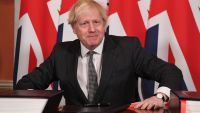
Boris is in danger of becoming the Prime Minister he once warned against

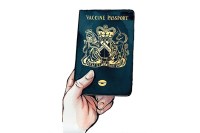
Back when Boris Johnson was on a mission to stop identity cards being used in Britain, he made a very persuasive argument: if parliament allows such expensive technology to come into existence, then the government will cook up excuses to use it. They will start to ‘scarify the population’ by saying there is a threat or an emergency. If they sink millions into an ID card scheme then be in no doubt: our liberty will be threatened. The slippery slope, he said, is one that the government is sure to go down. Boris Johnson is in danger of becoming the Prime Minister he once warned against. At first, we were told that any vaccine identity system would be used only for foreign travel.

The Troubles amnesty and the hypocrisy of Sinn Fein

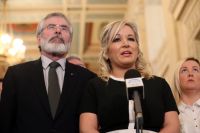
Predictably – and understandably – the Northern Ireland Office’s proposed amnesty for crimes relating to the Troubles has resulted in a backlash across both sides of the Ulster divide. Yet, while the criticism was initially uniform, rifts have already emerged in the week since they were first unveiled. The noble ideal that justice delayed is justice denied has proved relatively feeble as a unifying glue, despite the Northern Ireland Assembly voting on Tuesday for a motion rejecting Westminster’s proposals. Prior to that vote, which heard many heartfelt and worthy speeches from across the chamber about the moral and legal basis for rejecting the amnesty, a gathering took place outside the Stormont chamber to protest the proposals.

The tax-and-spend Tories

When you ask a government minister why something hasn’t happened, you get a one-word answer: ‘Covid’. It has become the catch-all excuse for manifesto promises not materialising. But in the case of social care, there is a particular truth to it. A meeting last week between the Prime Minister, the Chancellor and the Health Secretary nearly resulted in an agreed policy. A plan was expected this week. Then Sajid Javid tested positive for Covid, putting the three into isolation and the policy on hold. Johnson feels he needs a solution to social care, having promised to solve the issue when he became PM two years ago and again in the Tory manifesto.

Gove addresses Westminster rumours

The wine was flowing at last night's Policy Exchange summer soirée as attendees unburdened themselves of the stresses of the past eighteen months. Party season is at full swing at present but the great and the (not so) good of SW1 were all present to pay tribute at the court of the 'most powerful Dean in Westminster' – PX director Dean Godson and his team of wonks.  With the invite promising merely 'a senior government minister' Steerpike was delighted to see Michael Gove, one of the most talked about men in Westminster, take to the stage as the night's keynote speaker. Gove, who recently announced he was divorcing wife Sarah, has been the subject of much speculation given his status at the heart of Whitehall.

The truth about Nick Gibb, history and ‘dead white men’

In 1983, Daniel Patrick Moynihan, a great American sociologist and politician, wrote: 'Everyone is entitled to his own opinion, but not his own facts.' Then the internet happened. Anyone who has spent five minutes online, especially on a social media site, is aware that everyone now has their own facts, carefully chosen to support whatever argument or narrative they favour. Any contested issue that’s debated online (i.e. all of them) sees people on different sides of the argument adduce statistics, quotations and any other material helpful to their cause. Take this stuff far enough and you get people prioritising subjective experience above objective fact.

What are the limits of Boris’s ‘levelling-up’ agenda?

No doubt Boris Johnson has many qualities but the only one that comes to mind is this: he is not a conservative. That realisation may be dawning a little late on his more spirited supporters, who gave short shrift to anyone making this point during the flaxen-haired dauphin’s campaign for the crown, but it sunk in some time ago with his savvier opponents.  Boris’s non-conservatism is not the primary obstacle to the Labour party (or the broader left) regaining parliamentary power. But it is an added hindrance that could be done without. However, it also presents an opportunity to use a nominally Tory government to advance policies that wouldn’t ordinarily appear in a Tory election manifesto.

When will Boris get serious about balancing the budget?

Should we be pleased that net government borrowing for June came in below expectations, at £22.8 billion – £5.5 billion less than June 2020? Should we see it as a sign that the economy is recovering a little faster than had been hoped? That is the spin being put on the public borrowing figures released this morning. An alternative, and less rosy, view might come from examining two figures in particular. Firstly, while borrowing is down compared with June 2020, public spending is actually up. Over the month the government spent £84.1 billion of our money, £2.5 billion more than in the same month a year earlier. Balancing the budget seems to have become a deeply unfashionable debate in UK politics That is extraordinary.

Why isn’t Starmer properly scrutinising the government?

13 min listen

On the 80th anniversary of Prime Minister's Questions, viewers were treated to a distinctly lacklustre performance today. James Forsyth argues that Starmer's questions are still too long; and proper scrutiny is not helped by the technical issues that accompanied the Prime Minister's virtual contribution. Isabel Hardman talks to Katy Balls and James Forsyth.

The problem with polling

If you did an opinion poll about opinion polls, chances are most people would recognise the limitations of market research, offer some unfavourable views of pollsters and deride the uses to which their work is sometimes put. Yet if you asked politicians and the media whether polls deserve our attention, they would almost unanimously agree. Even after Brexit. Or Trump in 2016. Or the eye-popping poll earlier this month that found that one in five Brits support having a nationwide 10 p.m. curfew permanently in place, regardless of whether or not the pandemic is still raging. Polls have major shortcomings. Even if pollsters avoid leading questions and interview the perfect cross-section of society, talk is still cheap.

Will Peta be given a veto on all UK policy?

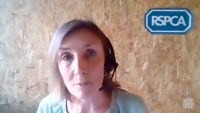
The government's flagship Animal Sentience Bill is (slowly) making its way through parliament, with Monday afternoon seeing the Defra select committee take evidence from a range of experts. Steerpike has covered the proposed legislation extensively in recent months, detailing the concerns of peers about its plans to create a powerful Animal Sentience Committee which would judge the effect of government policy on the welfare of animals. A similar bill was pulled by the then Environment Secretary Michael Gove three years ago after MPs noted it would open every government policy to judicial review.

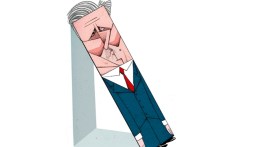
PMQs: The tragedy of Richard Burgon

PMQs is sixty years old. Speaker Hoyle opened the proceedings with a reminder that the weekly cross-examinations began in July 1961. Boris wasn’t there. Well, he was, but via Zoom. A televised shot of his head was beamed from Chequers to a flat-screen screwed to a high gallery. This was unfortunate for Sir Keir Starmer who needed to tackle the blond amplitude of Boris in person. Instead, he had to wrestle with an image, to punch at a vacancy and to skewer a shimmering square of coloured pixellations. It was like headbutting a cushion. Sir Keir was armed with some excellent complaints about the government’s ping debacle. Millions of citizens have equipped themselves with a pocket robot that can place them under house arrest at a moment’s notice.

Boris’s Brexit deal isn’t worth sacrificing Northern Ireland for

There will be chaos at the borders. Food will run out at the supermarkets. Travellers will face long queues, and companies yet another round of disruption. As the UK lays the groundwork for breaking with the Northern Ireland Protocol, we will hear plenty of scare stories about how it might mean losing the Free Trade Agreement with the European Union. There is an element of truth in that, of course. The EU may well decide that if we are not sticking to the Protocol then the free trade deal has to go as well. But there is a flaw in that argument, and it is not exactly a minor one. In truth, the FTA is not worth saving – and certainly not worth sacrificing Northern Ireland for.