Politics

Read about the latest political news, views and analysis

Boris’s Brexit deal isn’t worth sacrificing Northern Ireland for

There will be chaos at the borders. Food will run out at the supermarkets. Travellers will face long queues, and companies yet another round of disruption. As the UK lays the groundwork for breaking with the Northern Ireland Protocol, we will hear plenty of scare stories about how it might mean losing the Free Trade Agreement with the European Union. There is an element of truth in that, of course. The EU may well decide that if we are not sticking to the Protocol then the free trade deal has to go as well. But there is a flaw in that argument, and it is not exactly a minor one. In truth, the FTA is not worth saving – and certainly not worth sacrificing Northern Ireland for.

Will the EU accept the UK’s Northern Ireland protocol changes?

The UK has just revealed a list of the changes it wants to make to the Northern Ireland protocol. These are not minor tweaks. They would, as David Frost said, require ‘significant changes’ to the protocol. Frost says that the UK wants ‘to open discussion on these proposals urgently.’ But it is hard to imagine the EU being keen to renegotiate the protocol. They will point out that the current British Prime Minister signed this agreement and likely repeat their demand that the protocol must be implemented. So what happens next? The current grace periods run until the end of September so there is unlikely to be an immediate confrontation.

Is Starmer’s Labour plotting to reopen the Brexit deal?

Brexit is done and dusted, but when it comes to playing politics on the UK's departure from the EU, the Labour party is still managing to get itself in a muddle. Rachel Reeves, the shadow chancellor, is the latest Labour frontbencher to send confusing messages about Brexit to voters.  Starmer's party, we are told, wants to come to an arrangement with the European Union on recognition of professional standards, something Boris Johnson's deal lacks. Labour is also seeking a bespoke veterinary agreement with the EU to overcome problems inherent in the Northern Ireland Protocol as it stands. The party also wants to make it easier for British bands to tour on the continent. Yet all the time, Reeves is sticking to the line that Labour would not reopen the Brexit deal.

Parliament needs PMQs back to normal

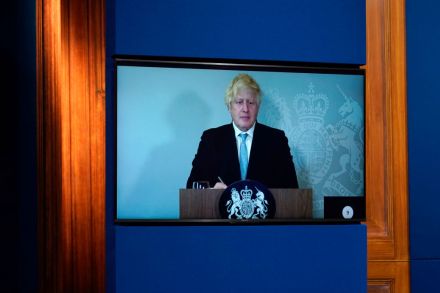
PMQs today descended into chaos. Boris Johnson was beaming in from Chequers, where he is self-isolating, and there were predictable tech gremlins. These disrupted the flow of the session and rendered it close to useless as a means of holding the Prime Minister to account.  PMQs is meant to be the most difficult half an hour of the parliamentary week for the executive, the moment when its arguments are tested. But today’s session descended into Johnson sounding like a train traveller going through a series of tunnels as he repeatedly asked whether the House could hear him or said that he hadn’t quite heard the question.

New poll reveals public back greater censorship

The public's willingness to back more authoritarian measures has been a constant feature throughout the pandemic. Poll after poll for the past 17 months has suggested strong support for tough restrictions, sanctions, deterrents and lockdowns – perhaps not a surprise in a country where a third of voters backed the use of live ammunition against the 2011 rioters. But is such authoritarianism now bleeding into the cultural sphere too? A new poll for The Spectator conducted by Redfield and Wilton reveals that some 40 per cent of the public would support the government censoring books with content that it deems 'sexist, homophobic, or racist'.

Why Dominic Cummings’s attacks on Boris Johnson backfire

Anyone who thinks Boris Johnson lacks statecraft should pay attention to Dominic Cummings’s attacks on him. They often to seem to show the opposite of what Dom intends. Cummings now reveals that, in January 2020, he and his allies were saying: ‘By the summer, either we’ll all have gone from here or we’ll be in the process of trying to get rid of [Johnson] and get someone else in as prime minister.’ In fact, neither happened. By November, however, Cummings was (to use Mr Pooter’s joke) going; Boris stayed. The winner of the then still recent landslide election victory presumably discovered his adviser’s seditious conversations and, reasonably, did not like them.

Six things we’re unlikely to read in Prince Harry’s memoir

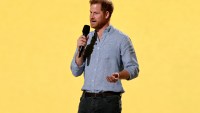
In a fresh bid to secure privacy for himself and his family, Prince Harry has announced this week that he is publishing his ‘intimate and heartfelt’ memoirs at the age of 36. The book – ghost-written by JR Moehringer, another of those dastardly journalists – will be published by Penguin Random House late next year and is set to provide ‘the definitive account of the experiences, adventures, losses, and life lessons that have helped shape him.’ The official press release includes this gem from the exiled royal: 'Prince Harry, the Duke of Sussex, said: 'I'm writing this not as the prince I was born but as the man I have become.' Might be worth sharing that memo to Penguin’s publicists then.

Watch: The four best ‘Dom bombs’ from his BBC interview

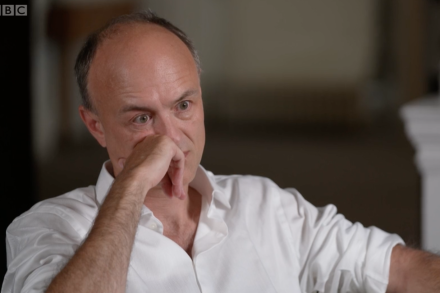
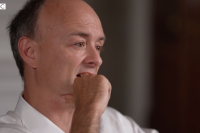
After eight months of confining his thoughts to Substack and Twitter, tonight Dom Cummings went mainstream. His first television interview with Laura Kuenssberg laid bare the tensions that exited throughout Boris Johnson's first year in government and his growing discontent with how the Prime Minister runs his government. Steerpike has already covered Dom's role in saving the Queen from meeting a Covid riddled Prime Minister. But here are four more 'Dom bombs' revealed in tonight's interview: 1. Plotting to get rid of the PM days after the election Cummings revealed how his issues with Johnson started even before the pandemic began and that less than a month after the victorious 2019 election triumph he was on manoeuvres against the PM: https://www.youtube.com/watch?

How much vaccine coercion will Boris use?

11 min listen

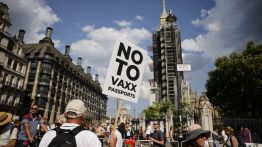
It's the day after 'freedom' day and it's not entirely clear just how free we are, with the prime minister last night say that from September nightclub goers will have to prove their vaccination status or provide a negative test. But with just the threat of vaccine passports leading to record appointments booked in both Israel and France could this method get us to herd immunity? Katy Balls talks to James Forsyth and Isabel Hardman.

Corbyn crashes Corbyn’s protest

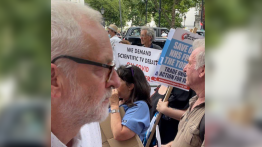
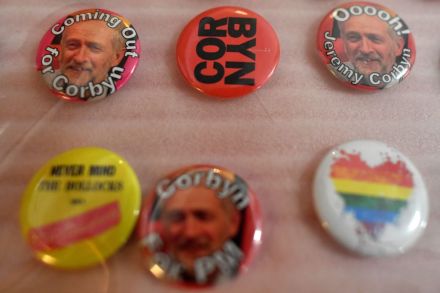
Two Corbyns descended on Downing Street today as Westminster was treated to a family reunion. The first, the better-known Jeremy, was there to hand in a petition with nurses and MPs calling for a 15 per cent pay rise for health workers. The second was older sibling Piers, the ever-eccentric disseminator of anti-vaccine materials, who earlier in the afternoon had shouted about his 'unconditional support for my brother' outside the nearby Labour party head office. While Jeremy waited patiently to be let into the street on which he once nearly lived, Piers did his best to steal his brother's thunder, shouting into a microphone 'No more lockdowns! End the Covid con!

Can Boris and his ministers agree on the point of the Covid app?

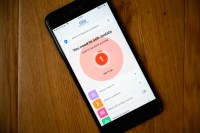
What is the point of the Covid-19 app? Ministers seem to be as in the dark about the answer to this question as the rest of us, with the government tying itself in knots over whether it means anything at all to get 'pinged' and told to self-isolate. Downing Street has contradicted Business Minister Paul Scully, who said this morning that there was no need to self-isolate if it was just the app that alerted you. He told Times Radio:  It seems that there is a genuine schism in Whitehall 'The app is there to give...to allow you to make informed decisions. And I think by backing out of mandating a lot of things, we're encouraging people to really get the data in their own hands to be able to make decisions on what's best for them, whether they're an employer or an employee.

When it comes to food, we need the nanny state

Henry Dimbleby’s long-awaited National Food Strategy took three years to write, yet the Prime Minister appeared to dismiss its key recommendation of taxing sugar and salt within mere hours of it landing. Boris Johnson likes to talk about ‘levelling up’ — and nowhere is this more needed than when it comes to food. The impact of diet today on health inequalities, the environment and national efficiency cannot be overstated. What a shame, then, that the Prime Minister ignored the independent review during his ‘levelling up’ speech in Coventry last week. Besides the sugar and salt tax, the report contained a raft of other sensible policies that are unlikely to be given proper consideration.

Is Boris brave enough to confront the truth about the NHS?

If a government does not wish to break a manifesto promise it should punt fewer such 'promises' into its manifesto. The modern mania for throwing everything possible into a manifesto – the better to proof it against interference from the House of Lords – renders manifestoes nothing more than a job lot of largely spurious pledges. The vision thing is notable for its absence and the vision thing is more important – and more revealing – than a grocery list of promises. Still, if you must break a promise it is no bad thing to start with a large and stupid one.

A tax rise for care won’t solve the problem

The tax burden in the UK is nearing a 70-year high — but that’s not stopping ministers from mulling over plans to hike taxes further. According to reports this morning, Boris Johnson and Rishi Sunak are close to agreeing an increase to national insurance to help address the NHS backlog (five million patients in England, and counting). They also want to fill the long-standing black hole in the social care budget: something Johnson promised he’d address nearly two years ago to the day when he first entered Downing Street. The rumours have immediately led to criticism of the government’s willingness to break its manifesto pledge, not to raise income tax, national insurance or VAT.

Isolation stats delayed as statisticians forced to isolate

A spectre is haunting Britain: the spectre of the 'pingdemic.' With Covid cases on the uptick, it is no surprise that more than 500,000 people in England and Wales were 'pinged' by the NHS test and trace app in the week to 7 July, up 46 per cent on the previous week.  Iceland and Greene King are among the latest businesses forced to close sites as workers are told to self-isolate. The Metropolitan Line in London was forced to shut over the weekend due to enforced absences while the Nissan factory in Sunderland has sent home more than 900 staff – more than 10 per cent of its workforce. Now it seems not even the government's best brains are immune from the curse.

Did Dom Cummings save the Queen?

For a man who professes to despise the media, Dominic Cummings is certainly adept at courting it. The former No 10 chief special adviser has given his first, long-awaited interview since storming out of Downing Street some eight months ago. In an hour long grilling with Laura Kuenssberg which will air tonight, Cummings will set out his case against the Prime Minister's handling of the Covid pandemic. Several clips have already been aired by the BBC with most attention thus far focusing on the claim that Johnson was reluctant to tighten Covid restrictions as cases rose last autumn because he thought people dying from it were 'essentially all over 80.

Kicking out the cranks won’t save Labour

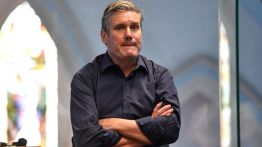
There is a problem with Sir Keir Starmer’s reported plan to expel 1,000 Labour members associated with ‘poisonous’ groups, and not just that there are way more than a thousand poisonous people in the Labour party. The problem – and it’s a common error – is that Sir Keir exaggerates the role played by the far-left in bringing Labour to the point where it has lost four general elections in a row and last led the Tories in a poll almost six months ago. The cranks became more visible after Ed Miliband’s election as leader, more numerous thanks to his three-quid revolution and more powerful when that policy put Jeremy Corbyn in charge, but they alone are not to blame for the party's current malaise.

Boris Johnson’s sombre ‘freedom day’ press conference

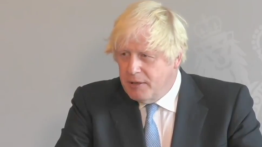
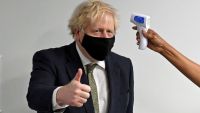
On the day that nearly all legal Covid restrictions go, one could be forgiven for presuming ministers would be in the mood for celebration. Instead the press conference Boris Johnson led this afternoon to mark so-called freedom day proved a sombre affair. The Prime Minister was forced to dial in remotely after having to self isolate as a result of coming into close contact with the Health Secretary last week, who has since tested positive for Covid. From his self isolation, Johnson went on to unveil plans for vaccine passports for nightclubs and contingency plans to keep the country moving as millions face self isolation in the coming weeks.