Politics

Read about the latest political news, views and analysis

Whitehall’s Covid gloom could harm our economic recovery

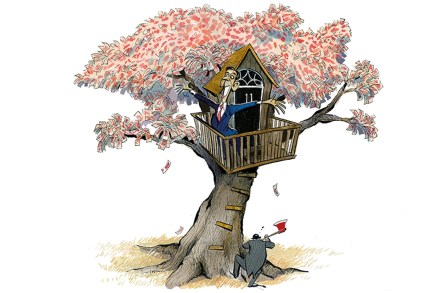
As the government continues to put forward an extremely cautious narrative about re-opening, more evidence emerged today that the economy is surging ahead. The International Monetary Fund has once again upgraded its forecast for Britain's growth this year: its April prediction of 5.3 per cent growth in 2021 has now been revised upward to 7 per cent. If correct, the UK could boast one of the fastest growing economies amongst major countries, with a recovery looking to be on par with the United States. Today’s update from the IMF fits a trend. Just this weekend the EY Item Club forecast 7.6 per cent growth this year – the fastest rate of growth in Britain for 80 years.

Why the Tories are losing support

Boris Johnson hoped to mark his two year anniversary with a series of big domestic policy announcements as part of his plans for the post-Covid recovery. Instead, the Prime Minister had to spend it in self-isolation on a weekend in which a series of polls pointed to a dip in support for his government.

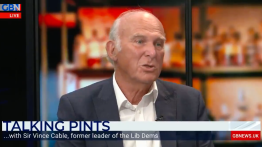
Why is Vince Cable so liberal towards Chinese illiberalism?

On Monday, Vince Cable appeared on Nigel Farage’s 'talking pints' segment on GB News. This, if you haven’t seen it, is where Farage places a guest in front of a pint of beer while having his own and the two figures talk politics for a quarter of an hour. Really, it’s like any other political segment on a British news channel, only with Farage and alcohol involved. It started off well for Vince. Farage asked him about the coalition, and unlike most Lib Dem politicians who would have unveiled a litany of apologies for that government having ever come into existence, Cable staunchly defended it. ‘As a government, it worked well. We didn’t necessarily like each other politically, but we were grown-ups and we worked well together.

Five experts who predicted daily Covid cases would hit 100,000

A lot was said and written about the UK's decision to press ahead with July 19, the so-called 'Freedom Day' when restrictions on social contact were lifted. Some greeted this date with a mix of horror, outrage and fury with 1,200 scientists signing a letter which effectively declared the unlocking as 'a threat to the world.' Much of the commentary focused on claims that there would be 100,000 positive Covid tests a day by July 19 and that a mass unlocking would only increase this. The full effect of the unlocking will only be seen in the fortnight after July 19 and the possibility remains that case numbers will go back up again – as they have done all too often before.

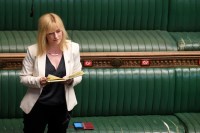
The hounding of Rosie Duffield

I grew up in 1980s County Durham; it felt at the time like a People’s Democratic Republic. When the miners went on strike in 1984, Labour held 53 of the 72 seats on the county council. But whatever impression southerners might get from watching Billy Elliot, boys like me did not engage in ballet. Labour may have been in charge, but attitudes were socially conservative. We played football and supported the Toon, or Newcastle United to give them their official name. Allegiance to Sunderland raised eyebrows — in my town at least — while Manchester United was beyond the pale. If boys were ostracised for supporting the wrong football teams, teenagers struggling with sexuality or gender learnt to keep those things very close to their chests.

Can businesses achieve Net Zero?

40 min listen

Responsible for 17 per cent of the UK’s carbon usage, government will be looking to the private sector to reduce its emissions in the years to come. But what does it really mean for a business to achieve ‘net zero’? Should companies - and their sectors - account only for their direct emissions, or must they also measure their indirect impact, related to supply chains or digital carbon footprints? How should businesses address their historic emissions - and what might this mean for once carbon-intensive sectors? In partnership with Velux.

Starmer faces a difficult summer

Like Covid data, polling data has a built-in time lag of several days. Those sifting the evidence on coronavirus typically expect to see about a four-day lag between someone becoming infected and them showing up as a positive case after getting tested. Indeed, the Financial Times has just produced a graph showing distinct Covid case spikes among young men four days after every England football match in the recent European championships. Opinion pollsters would recognise a similar lag when it comes to events that influence the standing of parties. It takes time for those events to percolate through the public consciousness.

Covid has revealed the limits of the big state

When Rishi Sunak turned on the spending taps last March, a triumphant Jeremy Corbyn said he had been proved 'right'. History would be written by the losers. In the 16 months since, government spending on the pandemic has swelled to an eye-watering £372 billion. Wages have been nationalised, along with the railways. Individuals have radically altered their behaviour to shield a state institution. Many now hold the view that coronavirus demonstrates government can borrow and spend a large amount of money quickly and wisely — and that it can therefore continue to do so. But two new reports from the Commons Public Accounts Committee decisively debunk that myth.

Dom Cummings urges Britney to take back control

They say politics is show business for ugly people. And now Dominic Cummings has taken that axiom to new heights after throwing himself behind the campaign to 'release' American pop princess Britney Spears. Spears, the noughties sensation behind a string of successful songs, is currently battling to end her 13 year-long conservatorship – a controversial legal process whereby a guardian is appointed by a judge to manage the affairs and life of another. This was placed on Spears in 2008 after a year of mental health concerns. A California court case has now begun to determine if she can have a new conservator, with Spears accusing her father, family and management team of abuse.

How can the government boost vaccination rates?

13 min listen

University students could need to be double-vaccinated if they want to attend lectures or stay in halls, according to reports today. Young people have the lowest jab uptake, and these reports follow the announcement last week that clubbers will need a vaccine passport to enter venues from September. Will it work? James Forsyth speaks to Katy Balls.

Labour heralds the changing of the guard

It's been a busy few months for Keir Starmer. Following the Hartlepool by-election disaster, the Labour leader opted to reshuffle his team and bring in a string of new signing. Out went old faces like Ben Nunn and in came, err, even older faces from the Blair years such as Sam White, Deborah Mattinson and Matthew Doyle. Not content with shaking up his own team, the former Director of Public Prosecutions has opted to put opponents in the dock, with the National Executive Commitee voting last Tuesday to expel four left-wing groups 'not compatible' with the party's values.

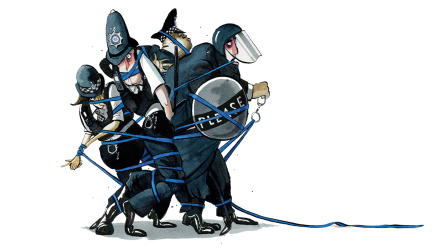
Britain’s creeping authoritarianism

When a top Edinburgh school announced earlier this month that it would stop teaching To Kill a Mockingbird, citing the novel’s ‘white saviour motif’ and use of the n-word, the response ranged from uproar to bafflement. We may be living in increasingly censorious times, it seems, but banning books, even just on a school’s curriculum, still has a bad smell around it. Well, perhaps not for much longer. In an alarming new poll, conducted for The Spectator by Redfield and Wilton Strategies, 40 per cent of respondents said they supported the UK government censoring books with content that it deems sexist, homophobic or racist. Just 30 per cent were opposed while 24 per cent would neither support nor oppose it.

Watch: Welsh First Minister dismisses hospitality fears

Welsh First Minister Mark Drakeford is widely regarded as having had a good pandemic. Re-elected in May with an increased Labour representation in the Senedd, the member for Cardiff West has earned plaudits for his un-showy style of leadership. Still, Mr S can't help but wonder how Drakeford would fare if his gaffes were treated in the way that the London press pack jumps on those by ministers in SW1. A typical example of this came just a fortnight ago, at a Senedd session that went largely unnoticed by the Welsh media, when the minister was asked by James Evans MS about restrictions on hard-pressed pubs.

Don’t fall for Rishi Sunak’s ‘Britcoin’

Do we need an officially-sanctioned, government-backed crypto-currency underwritten by sterling — a ‘Britcoin’ — as Rishi Sunak is said to be advocating? At first sight it is hard to see the attraction. Surely, there are two principle reasons why people feel attracted to Bitcoin and other cryptocurrencies. Firstly, if you are a drug dealer, you might hope that it is a way of keeping your stash of wealth beyond the reach of law enforcers. This hasn’t quite proved true, but you can understand why cryptocurrencies have their fans in the criminal world. Secondly, there is the hope of making a quick, speculative profit.

Boris could make devolution reform his legacy – if he has the ambition

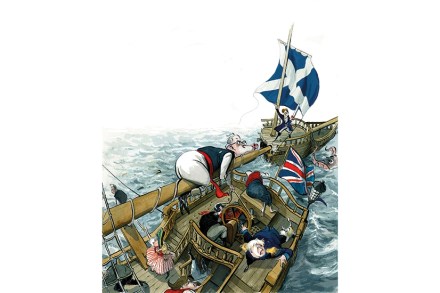
Today marks two years since Boris Johnson accepted Her Majesty’s invitation to serve as her fourteenth Prime Minister. His tenure was meant to be all about Brexit but so far has mostly been about Covid, yet the invisible theme running under it all is the constitution. Britain is almost a quarter-century on from the legislative devolution experiments in Scotland, Wales and London, which leeched power away from Parliament and created rival seats of political authority to Westminster. Scotland is where devolution has taken its most aggressive form and where it has done the most to undermine the Union, parliamentary sovereignty and even the continued existence of the United Kingdom itself. Two years in, the Boris era has brought modest relief from the policy of ever-weaker Union.

We need to act now to block Britain’s social credit system

I have to admit that I didn’t quite get it right when, 12 days ago, I wrote: ‘There is a model for what will be coming our way if we do not resist vaccination passports and electronic ID cards: China’s social credit system, which blacklists people for numerous antisocial offences, from crossing the street on a red light to failing to sort their recycling, and uses the information to deny them the right, for example, to buy rail and airline tickets.’ I had in mind that it would take two to five years for a vaccination passport scheme to morph into a Chinese-style social credit system. In fact, it took two weeks.

Is Boris Johnson allowed to pick the next Archbishop of Canterbury?

A few weeks ago, Prime Minister Boris Johnson was shirty with me when I asked him whether he was now a practising Roman Catholic, having recently been married to Carrie Symonds at Westminster Cathedral. His answer was ‘I don't discuss these deep issues. Certainly not with you.’   The question may be ‘deep’, as he says, but it is also – as a senior minister has reminded me – an intensely practical one and relevant to his duties as Prime Minister. Because under the British constitution:  1. The Prime Minister’s appointments secretary has an advisory role in the appointment of all bishops  2.

Was the government right to delay ‘freedom day’?

23 min listen

It's our first 'freedom' weekend, but it was only a few weeks ago when our own Fraser Nelson and Kate Andrews clashed heads over the most sensible way to open up. Kate thought we should stick to the 21st of June, Fraser argued that the later opening date made sense. Now it's time to see who was right? This cage match was refereed by Katy Balls.