Economy

  • AAPL

    213.43 (+0.29%)

  • BARC-LN

    1205.7 (-1.46%)

  • NKE

    94.05 (+0.39%)

  • CVX

    152.67 (-1.00%)

  • CRM

    230.27 (-2.34%)

  • INTC

    30.5 (-0.87%)

  • DIS

    100.16 (-0.67%)

  • DOW

    55.79 (-0.82%)

The IMF growth downgrade is more bad news for Rachel Reeves

Rachel Reeves lands in Washington tonight to be greeted with bad news. The International Monetary Fund (IMF) – whose spring meeting the Chancellor is attending – has just handed Britain the largest GDP downgrade of any G7 country.  In the freshly released update to their world economic outlook, the IMF forecast growth for the UK this year of just 0.8 per cent – down from the 1.3 per cent they’d previously projected. Things don’t get much better next year either, with just 1.3 per cent growth forecast, again downgraded from 1.5 per cent.  This downgrade singles out Britain and our European neighbours. While the IMF calls the overall effect of

Spotlight

Featured economics news and data.

Cutting Britain’s giant welfare bill would be an act of kindness

Does having money really matter that much? There are those, usually with quite a bit of it, who want us to care less about materialism. But, unequivocally, money really does matter – not because of any status it supposedly brings, but for the freedom it buys: freedom to choose how we live and how we look after others. Considering this, it seems that the deep disillusionment with mainstream politicians in recent years stems from a protracted and ongoing period of stagnant living standards over which they have presided. But the truth is that the average person has not got poorer since the global financial crisis. They have got a little

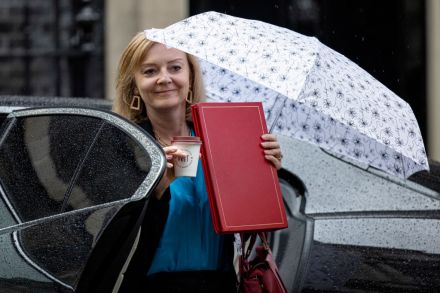
Liz Truss insists she’s not for turning

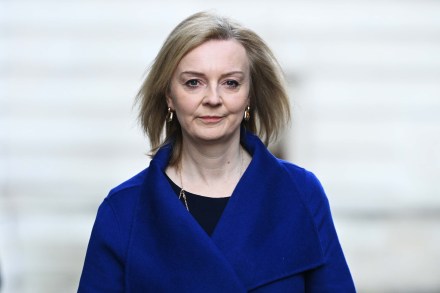
Liz Truss goes into her first Conservative party conference with the latest Opinium polling giving Labour a 19-point-lead and her own approval ratings down at -37 – worse than Boris Johnson’s in his final days in office. Yet despite this, the new Prime Minister used her first big sit down interview since the fallout from the not-so-mini Budget to insist that she was not for turning. Truss told Laura Kuenssberg that she stands by all the measures announced last Friday – including abolishing the 45p rate of income tax for the highest earners. The furthest Truss would go in accepting that her first fiscal event – which has spooked the markets, voters

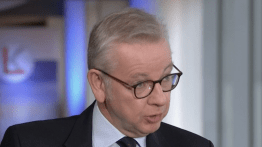
‘It’s not conservative’: Gove’s verdict on Liz Truss’s economic plan

It was right of the Prime Minister to acknowledge that the fiscal event (the mini Budget) needs to be revisited. There needs to be a recognition of mistakes. But it’s still the case, on the basis of what the Prime Minister said this morning, that there is an inadequate realisation at the top of government at the scale of change required. So, yes: the energy package was the most important thing in the fiscal event. But 35 per cent of the additional money that we are borrowing is not to cut energy costs; it is for unfunded tax cuts. I’m profoundly concerned about that because there are two major things

What do the Tories have to show from their time in power?

After 12 years in Downing Street, four prime ministers (so far), two monarchs, and one mini-budget, the public are starting to drop hints that it’s time for Tories to head home. As Conservative conference kicks off, it’s as good a time as any to take stock: what do the Tories have to show for their many years in office? The truth is that the party’s legacy amounts to little, but it has done one thing well: keeping Labour out of power. This is hardly something to boast about. The 2010 Conservative manifesto opened with the declaration that ‘our economy is overwhelmed by debt’. The public finances would dominate David Cameron’s

Is this a Black Wednesday moment for the Tories?

Kwasi Kwarteng delivered his mini-Budget one week after the thirtieth anniversary of Black Wednesday, when the markets forcibly ejected sterling from the Exchange Rate Mechanism (ERM). There’s one measure that makes recent market turmoil seem modest and even manageable by comparison with Black Wednesday. According to the Bank of England’s database, the pound fell 2.16 per cent against the euro on the day the Chancellor delivered his fiscal statement. By last Thursday, the pound was down only 1.91 per cent against the euro. Black Wednesday and its immediate aftermath saw sterling fall 13.9 per cent against the Deutschmark. In all other respects, however, the economic and political situation is more

What Liz Truss should do now

Markets are nervous and they are right to be. The government has announced a huge, open-ended package of energy subsidies expected to cost over £100 billion but that could cost over £200 billion if energy prices rise and stay high. At the same time, the Bank of England is making large losses on its QE bond-holdings as government bond prices fall as an automatic result of current and future-expected interest rate rises – by some estimates costing potentially another £200 billion. This leaves a possible £400 billion hole in the nation’s finances. The government says it will spell out how that will be paid for in November. From a policymaking perspective

Can Liz Truss regain market confidence?

When the Liz Truss camp floated the idea of side-lining the Office for Budget Responsibility for her government’s first fiscal statement, the argument went that the announcements would be targeted at the energy crisis – and they couldn’t wait. As anticipation around the fiscal event grew, and it became clear that it would include much more than an energy update, MPs started to suspect foul play – that this was an overtly political attempt to avoid scrutiny of Kwasi Kwarteng’s growth plans and spending splurge. This suspicion is only going to grow now that the OBR has confirmed that draft forecasts were presented to the Chancellor on his first day

Liz Truss’s mea culpa moment

The fallout from last Friday’s mini-Budget has been bigger and more volatile than almost anyone expected, with sterling hitting an all-time low against the dollar; runaway gilt yields; a U-turn from the Bank of England on its plans to start quantitative tightening. And that was all by Wednesday lunchtime. Will things be looking up anytime soon? The pound has recovered to pre-mini-Budget levels, hovering around $1.11, a point the Prime Minister’s supporters are keen to emphasise. But the pound has always been a secondary part of this story: with soaring borrowing costs the primary indication of the market’s confidence (or lack thereof) in the government’s tax cut-and-spend strategy. The real

The Liz Truss survival guide

If you can keep your head when all about you are losing theirs and blaming it on you then, as Rudyard Kipling almost wrote, there is a strong possibility you haven’t appreciated the gravity of the situation. Or as Corporal Jones put it more pithily in Dad’s Army: ‘Don’t panic!’ It is undeniable that Liz Truss is in a bind. Her first big play following national mourning for the Queen – the ‘fiscal event’ of last Friday – has not gone well, contributing to a meltdown about UK prospects in financial markets and emergency intervention by the Bank of England. Two successive opinion polls have put Labour 17 points ahead –

Why is the right not making the moral case for lower taxes?

There was an article recently in the increasingly woke but still useful New Scientist which attempted to gauge the degree to which luck was responsible for who we are and, hence, an individual’s life circumstances. I think it came in third place after genes and the environment – which are also both down to luck, really, I suppose. The thesis seemed to be we pay too little attention to the role of luck when considering why one man is a millionaire and the other is a lavatory attendant or a book reviewer. I would beg to differ. Ascribing luck to one’s unfortunate position in life is very prevalent indeed and

Maybe Nanny does know best

Not least among the shivers down my spine as I listen to Liz Truss and Kwasi Kwarteng pump up the rhetoric on their economic revolution is the evocation of myself – myself when young. Like Ms Truss, I too joined the Liberal party as an Oxbridge fresher. I too believed in the power of personal choice. I too had a dream of unhindered competition liberating the animal spirits of enterprise and individual genius. I too told myself that we liberals must grit our teeth and keep the faith when sink-or-swim left some to sink. I too thrilled to the metaphor of ‘tall trees’ being allowed unencumbered access to the light.

Ten handy phrases for bluffing your way through the new financial crisis

Aggggghhh! Woooaaaah! Urrrggghhhh! Those screams you hear are ten thousand self-appointed financial experts howling into the existential abyss. The Bank of England this morning announced its ‘operation’ in the gilt market, and every pundit with a social media account is thrashing around in the ever greater ocean of economic jargon and incomprehensible data. It’s hard enough to remember what a gilt is: now we are all expected to comment knowingly on how gilt yields operate, how government interventions shape the bond market, and how markets will react. ‘It’s unprecedented. Then again, we are living in an age when the unprecedented is the precedent’ Seasoned bluffers need not be afraid, however.

Why is the Bank of England buying gilts?

In a dramatic about-turn, the Bank of England is now intervening in the gilts market to try and calm the reaction to Friday’s fiscal event. It will buy long-dated government gilts for the next two weeks, which will lower the cost of government borrowing. It is also postponing quantitative tightening (i.e. selling the securities it bought during QE). My understanding is that the Bank’s intervention was to prevent the pension market from imploding. The rise in gilt rates meant that traditional pension funds were becoming forced sellers to meet collateral demands from banks. This risked a doom loop. The Bank’s actions have stopped the bleeding but there will likely be

Britain’s economic crisis is a warning to the world

A falling exchange rate and rising bond yields are the typical characteristics of a financial crisis in an emerging market. Those who never forgave the UK for its decision to leave the EU like to remind us of this fact right now. But an emerging market crisis doesn’t even begin to capture what is going on. This is a macro financial crisis story; EU membership is not the issue here. The UK had its independent macro policies when it was still in the EU. What is happening in the UK, and worldwide, is the realisation that fiscal and monetary policies have run out of our control. You can’t have 4-5

Will Liz Truss take on the IMF?

Tonight the International Monetary Fund has weighed in on the UK’s mini-Budget, offering a direct rebuke of Liz Truss and Kwasi Kwarteng’s tax cuts. ‘We are closely monitoring recent economic developments in the UK and are engaged with the authorities,’ its spokesperson said, in reference to the fluctuating pound and rising borrowing costs. ‘Given elevated inflation pressures in many countries, including the UK, we do not recommend large and untargeted fiscal packages at this juncture’ – suggesting some concern that the measures could be inflationary. The IMF seems more frustrated with the ethics of the policies rather than their economic impact It’s the kind of intervention that does little to

Trussonomics shows that Scottish independence doesn’t add up

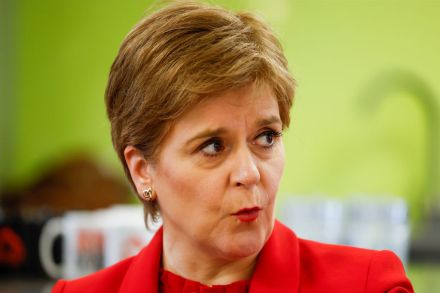
As the pound fell to a record low on Monday on the back of Kwasi Kwarteng’s ‘mini-budget’, the pings on SNP MPs and MSPs private WhatsApp groups must have ballooned in line with Gilt yields. There were many aspects to consider: the challenge of responding to the 45 per cent rate of income tax being scrapped and cuts to stamp duty, and how this new tax competition will impact Scotland’s budget; the impact on cost-of-living challenges; international concerns that the volatility induced in financial markets could destabilise the global economy. All too predictably, the messaging from senior SNPers focused on this being yet another reason for Scotland to exit the

Can the Bank of England inspire confidence?

It has dawned on the government that last week’s mini-Budget might have been a bit too one-sided: £70 billion worth of extra borrowing and not a single mention of spending cuts or efficiency gains has seen borrowing costs spike (up by 0.3 per cent just today). As James Forsyth reports on Coffee House, this afternoon’s announcement that a ‘medium term fiscal plan’ will be announced next month is an attempt by the Treasury to reassure markets – and convince them that fiscal responsibility has not totally disappeared from this government’s agenda. Emphasis is being placed on previous promises to make sure debt falls as a percentage of GDP in the

Can Kwarteng reassure the markets?

The Treasury has just released a statement saying that a medium term fiscal plan will be delivered by Kwasi Kwarteng on 23 November, accompanied by an Office for Budget Responsibility forecast. This plan will, the Treasury says, set out the government’s fiscal rules and how it intends to ensure debt falls as a percentage of GDP in the medium term. The Treasury also confirms the Times story this morning that there’ll be no new spending settlements, meaning an effective cut for departmental budgets. The question is whether the government can persuade the market that it is prepared to hang tough on public spending The Bank of England has also issued a

The miscalculations exposed by Kwarteng and Truss’s Budget

The Chancellor’s first ‘fiscal event’ has revealed two major miscalculations – one by most of the political class and the other by the government. The political class broadly didn’t think Liz Truss’s government would actually push forward with its campaign pledges. It did. The government, for its part, appears to have badly underestimated the sceptical reaction of the markets to its economic agenda. Let’s take these in turn. First, anyone who is shocked by discussion of higher interest rates wasn’t paying attention during the leadership campaign. The attacks on ‘Treasury orthodoxy’ were frequent and explicit. Rishi Sunak insisted it was inappropriate to take aim at the Bank, while Truss called

The Bank of England has no good options

How will and how should the Bank of England, and the Treasury, react to this morning’s continued fall in the value of the pound? I’ve been talking to former Bank of England executives and ex-Treasury officials, who make clear that the stakes are incredibly high and that reassuring markets will not be easy. This further devaluation in the currency is a serious problem for Chancellor Kwasi Kwarteng after his maxi ‘mini-Budget’ on Friday because it means the price of imports will continue to rise, stoking already-high inflation. And it raises the spectre that the government will struggle to borrow what it needs at acceptable interest rates, because of the falling