Economy

  • AAPL

    213.43 (+0.29%)

  • BARC-LN

    1205.7 (-1.46%)

  • NKE

    94.05 (+0.39%)

  • CVX

    152.67 (-1.00%)

  • CRM

    230.27 (-2.34%)

  • INTC

    30.5 (-0.87%)

  • DIS

    100.16 (-0.67%)

  • DOW

    55.79 (-0.82%)

The IMF growth downgrade is more bad news for Rachel Reeves

Rachel Reeves lands in Washington tonight to be greeted with bad news. The International Monetary Fund (IMF) – whose spring meeting the Chancellor is attending – has just handed Britain the largest GDP downgrade of any G7 country.  In the freshly released update to their world economic outlook, the IMF forecast growth for the UK this year of just 0.8 per cent – down from the 1.3 per cent they’d previously projected. Things don’t get much better next year either, with just 1.3 per cent growth forecast, again downgraded from 1.5 per cent.  This downgrade singles out Britain and our European neighbours. While the IMF calls the overall effect of

Spotlight

Featured economics news and data.

Cutting Britain’s giant welfare bill would be an act of kindness

Does having money really matter that much? There are those, usually with quite a bit of it, who want us to care less about materialism. But, unequivocally, money really does matter – not because of any status it supposedly brings, but for the freedom it buys: freedom to choose how we live and how we look after others. Considering this, it seems that the deep disillusionment with mainstream politicians in recent years stems from a protracted and ongoing period of stagnant living standards over which they have presided. But the truth is that the average person has not got poorer since the global financial crisis. They have got a little

The truth about corporate taxes

I’ve chosen to write about corporate tax rates this week not because they’re the sexiest subject available but because – unlike the government’s frontbench, the value of the pound and the scale of winter fuel bills – they’re unlikely to change dramatically during the shelf-life of this column. An increase in corporation tax from 19 per cent to 25 per cent, originally announced by Rishi Sunak, will go ahead in April, despite new Chancellor Jeremy Hunt’s own leadership campaign pledge to cut the rate to 15 per cent, which would have placed the UK between Ireland and Singapore in competitive tax tables. The uplift will, we’re told, tip £19 billion

The triple lock will condemn Britain

Liz Truss is almost exactly the leader the country is desperate for. Britain needs someone to take painful decisions and even alienate voters in order to get growth going. Given that the next election is probably lost anyway, there is a case to be made that Truss should serve as the sin-eater for Conservative policy, implementing necessary but unpopular actions before she’s deposed. Last night rumour had it that she was planning to break the triple lock on pensions, instead bringing in a below-inflation rise. Perhaps this was to be one of those unpopular but necessary policy decisions? Not a bit of it. At PMQs, she told the Commons: ‘I’ve been clear,

Inflation is getting worse

In all the recent economic chaos, it’s been easy to overlook one of the most important factors contributing to the cost-of-living crisis: inflation. But this morning’s update from the Office for National Statistics brings it back into focus, as CPI inflation rose back into double digits in September: now at 10.1 per cent on the year, compared to 9.9 per cent in August. Another uplift was expected, but inflation has still risen higher than the broad consensus of 10 per cent. A weak pound hasn’t helped: sterling’s plunge against the dollar over the past few months has increased the costs of importing goods, especially food, which according to the ONS

Politicians can’t fix our economic woes

The knives are out for the Prime Minister. The world watches as Britain falls into a simultaneous political and economic crisis. Yet commentators in Britain appear to think that this is resolvable. They think that bad politics gave us a bad Budget which has led to economic destabilisation. Clean out the bad politicians, reverse the bad Budget and all will be well. None of that is true. The reality is that the Budget, however bad, is not the underlying cause of the economic crisis. The Budget merely triggered a crisis which has much deeper roots. It is comparable to a shock that sends a person with chronic heart disease into

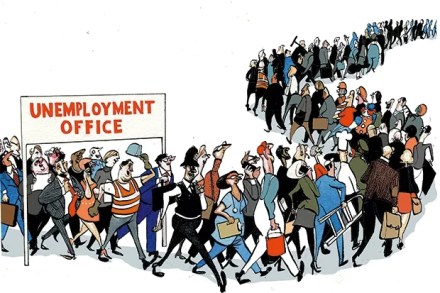
Britain needs more honesty about unemployment

Is low unemployment causing us more problems than we realise? The suggestion might seem absurd, offensive even. It’s reminiscent of the days of Mrs Thatcher’s supposedly ‘cruel’ monetarism, when we had three million unemployed. Some on the fringes liked to argue that unemployment was good for the economy because it made people work harder, being fearful for their jobs. Mass redundancies would not, of course, help the economy now or at any other time. If a million people were to lose their jobs, as happened in the early 1980s, that would be a million households suffering a collapse in the spending power. As well as a human tragedy, it would

Has Hunt restored the government’s fiscal credibility?

Jeremy Hunt set out at the start of the weekend with one goal in mind: that when the gilt markets reopened on Monday, the cost of government borrowing would not surge further. Ideally, it would start to fall. In this sense, it’s been a successful day for the new Chancellor. The Treasury’s early morning update that a major fiscal announcement was about to be announced saw gilt yields start to drop when markets opened at 8 a.m. After Hunt’s overhaul of the mini-Budget – including the surprising decision to suspend the 1p cut to the basic rate of tax ‘indefinitely’ – they fell even further. After starting the day at

Trussonomics is dead

When Jeremy Hunt took the role of chancellor last week, he was thought to have done it under instructions from Liz Truss that he was not to roll back any more of the mini-Budget. That instruction hasn’t stuck. Today’s update on the ‘medium-term fiscal statement’ was not so much a detailed plan to balance the books (that’s still to come on 31 October), but rather a reversal of almost all of the mini-Budget rolled out by Liz Truss and former chancellor Kwasi Kwarteng last month. The plan to bring forward a 1p cut to the basic rate of income tax has been scrapped completely. It was thought that Hunt would

It’s not easy to regain market trust

The government’s position has become so precarious – and its credibility with the markets so low – that even waiting another two weeks to announce the ‘medium term fiscal statement’ became too big a gamble. By moving the announcement forward to today, Jeremy Hunt is removing the uncertainty of creating a two-week gap between the end of the Bank of England’s intervention in the gilt market and the government’s announcements. And markets are tentatively responding well. Ten-year gilt yields started dropping considerably when the market opened at 8 a.m., from 4.3 per cent down to just under 4.1 per cent. You can follow along with hourly updates via The Spectator’s

Will Jeremy Hunt’s U-turns deepen recession?

Just two weeks ago, Liz Truss told the Tory conference that her priority was ‘growth, growth and growth’. But how much of that can she expect now that her new Chancellor plans to jack up corporation tax from 19 per cent to 25 per cent as the economic headwinds strengthen?  As she never tired of telling us during the leadership campaign, it’s an unusual thing to do at a time of threatened recession: no other G7 country plans to put up taxes in this way. Now that she has agreed to go along with the Sunak plan in the name of assuaging the markets, City forecasters are doing a double-take.

What if Jeremy Hunt’s rebooted centrism doesn’t calm the markets?

He will control spending, reverse the few remaining tax cuts that are still in the works, and bring in every kind of official body imaginable to check over all the figures. Jeremy Hunt made the best of a very difficult hand of cards in his first outing as Chancellor on Saturday morning. He was calm, rational, sensible, and conciliatory. His strategy was clear enough. To calm the markets, and buy the government some breathing space while it figures out what to do next. There is a catch, however. What if it doesn’t work? Hunt’s real problem is that he has no plan for growth Hunt’s plans as Chancellor are clearly

The Chancellor could take the tax burden even higher

This morning on the media round, Jeremy Hunt followed in the footsteps of Tory chancellors before him warning about the ‘very difficult decisions’ that lie ahead. The new chancellor’s language and tone could easily be compared to George Osborne after the financial crisis, explaining to the country why government spending needed to be curbed. Or to Rishi Sunak, towards the end of the crisis stage of the pandemic, who was constantly reminding MPs and the public about the ‘difficult times ahead’ due to the fallout from economic shutdowns and unprecedented peacetime spending. The crucial difference, however, is that this new talk of spending cuts and higher taxes is in response

We’re in dark days for market liberalism

If there is anything that the swift overturning of Prime Minister Liz Truss’s purported free market revolution has taught us, it is the utter lack of enthusiasm for economic liberalisation à la Reagan and Thatcher across the West right now. Yes, the lousy roll-out of the mini-budget by Truss’s now ex-Chancellor Kwasi Kwarteng played a role in the prime minister’s rapid and multiple U-turns. But bad-PR is only part of the story. Many Tory MPs are plainly comfortable with the economic arrangements prevailing in Britain that successive Conservative governments have not challenged since the Tories returned to power in 2010. For despite the mythologies about nefarious ‘neoliberals’ ruling the world, the

Why Liz Truss failed

The markets did not crash, so there was not a Black Friday in the way some had envisaged. But this certainly was Black Friday for the Tories, a new low in the party’s history, a debacle to rival Black Wednesday but with none of the economic dividends. A new Prime Minister sacks a Chancellor for doing exactly what she told him to, then declares she will implement every single one of the corporation tax rises that she had spent the summer promising to stop. So it now emerges that Liz Truss stood for leader on a false prospectus, promising an agenda she has quickly proved unable to deliver. Her plan

Is there anything left of Trussonomics?

After two major U-turns over last month’s mini-Budget and the sacking of a chancellor, what’s left of Liz Truss’s economic agenda? Parts of it remain intact. But it’s now shaping up to be significantly different from what the Prime Minister intended when she entered Downing Street. The key assumption behind Trussonomics as it was developed during the leadership race was that the markets would be delighted to lend to the government, on the cheap, to see through its tax-cutting, growth-stimulating agenda. That assumption was quickly killed off after former chancellor Kwasi Kwarteng sat down from presenting his mini-Budget, and the cost paid by governments to borrow began to soar. It

Liz Truss is still at the mercy of the Bank of England

Last week, I wrote here that 14 October was the key date in British politics, because the expiry of the Bank of England’s gilt-buying programme would force the Government to act to lower gilt yields. Be in no doubt: the sacking of Kwasi Kwarteng today is a consequence of the Bank’s refusal to go on supporting bond prices and artificially shielding the Government from the credibility-shredding consequences of the September fiscal statement. That’s not to say the Bank planned or engineered this. I don’t think Andrew Bailey, the Governor, is a Machiavellian political strategist. It’s just to say that the nature of the UK’s economic and financial position is that

The markets have rebounded – but how long for?

So, no Black Friday. The pound is steady, the FTSE100 up 1.5 per cent, the FTSE250 up more than 3 per cent. Just as fears grew that the end of the Bank of England’s gilt-buying programme could send pension funds to the brink and precipitate a fresh market crisis, the opposite happens: markets embark on a rebound. It won’t necessarily last, of course. The long, miserable decline of stock markets and gilt markets this year has been punctuated, as ever, by periods of optimism, only for a fresh slide to begin. But for the moment it seems as if the big story that is driving markets is the expectation that

Six graphs that could seal Liz Truss’s fate

When Britain crashed out of the European exchange rate mechanism on Black Wednesday, prime minister John Major phoned the Sun editor Kelvin McKenzie to ask how the day’s events would be covered. McKenzie is said to have responded: ‘Prime minister, I have on my desk in front of me a very large bucket of shit which I am just about to pour all over you.’ With the Bank of England ending its emergency support for pension funds this afternoon, what newspaper editors are saying about the present Prime Minister by market close could come down to the ebbs and flows of these six graphs: 1. It’s all about gilts. Yesterday

Five things market-watchers should look out for tomorrow

All financial crises have their peak days, the moment of drama when everything comes to a head. Think of Black Monday – 19 October 1987 – when the bottom fell out of global stock markets, or Black Wednesday – 16 September 1992 – when the pound crashed out of the Exchange Rate Mechanism. With the Bank of England saying that it will cease emergency purchases of gilts tomorrow (although it is reported to have told pension fund managers a different thing in private) could we be facing a Black Friday? Some things to look out for tomorrow morning…. Gilts crash (ie yields rise sharply)?  This afternoon, things have been going

A house-price crash won’t be the only effect of the Kwarteng calamity

Where next for house prices? Clearly, they’re going down as mortgage rates go up – and my forecast in May that they would shed ‘recent froth’ and then stagnate rather than plunge, has been entirely overtaken by events, or at least by Kwasi Kwarteng’s calamitous ‘fiscal event’ last month. Reverberations from the Chancellor’s debut continue apace, with more emergency bond-buying by the Bank of England despite news that the OBR-assessed forecast missing from his September speech will now be unveiled on 31 October instead of on 23 November. But even if the books can be cooked in a way that makes more sense than markets expect, hundreds of mortgage deals