Economy

  • AAPL

    213.43 (+0.29%)

  • BARC-LN

    1205.7 (-1.46%)

  • NKE

    94.05 (+0.39%)

  • CVX

    152.67 (-1.00%)

  • CRM

    230.27 (-2.34%)

  • INTC

    30.5 (-0.87%)

  • DIS

    100.16 (-0.67%)

  • DOW

    55.79 (-0.82%)

The IMF growth downgrade is more bad news for Rachel Reeves

Rachel Reeves lands in Washington tonight to be greeted with bad news. The International Monetary Fund (IMF) – whose spring meeting the Chancellor is attending – has just handed Britain the largest GDP downgrade of any G7 country.  In the freshly released update to their world economic outlook, the IMF forecast growth for the UK this year of just 0.8 per cent – down from the 1.3 per cent they’d previously projected. Things don’t get much better next year either, with just 1.3 per cent growth forecast, again downgraded from 1.5 per cent.  This downgrade singles out Britain and our European neighbours. While the IMF calls the overall effect of

Spotlight

Featured economics news and data.

Cutting Britain’s giant welfare bill would be an act of kindness

Does having money really matter that much? There are those, usually with quite a bit of it, who want us to care less about materialism. But, unequivocally, money really does matter – not because of any status it supposedly brings, but for the freedom it buys: freedom to choose how we live and how we look after others. Considering this, it seems that the deep disillusionment with mainstream politicians in recent years stems from a protracted and ongoing period of stagnant living standards over which they have presided. But the truth is that the average person has not got poorer since the global financial crisis. They have got a little

Truss says no to spending cuts. Here’s the caveat

The mini-Budget was a spending spree. The ‘medium-term fiscal plan’ was meant to explain the funding. But what exactly is going to be in it?  Liz Truss and Kwasi Kwarteng were thought to have (finally) come to terms with the need to address the need for some restraint, after their mini-Budget led to market chaos which is yet to settle. Their fiscal statement – in other words, how they would fund their tax cuts – was moved forward by almost a month, to 31 October. Its contents were thought to include some major spending cuts, in a bid to convince markets that fiscal discipline still guides the Tory party. If there are

Is it time to sack Andrew Bailey?

Kwasi Kwarteng’s mini-Budget was botched and the government has lost control of public spending. But this morning Jacob Rees-Mogg was not wrong to deflect at least some of the blame for current market turmoil on the Bank of England. The bank has been hopelessly behind the curve on inflation – in May last year it was still confidently predicting that the Consumer Prices Index would rise no higher than 2 per cent this year. Shortly before Kwarteng’s budget it showed that it was still lagging behind by raising interest rates by 0.5 per cent rather than the 0.75 per cent which markets had been expecting. If ever there was a public

Britain’s shrinking economy adds to market jitters

Liz Truss and Rishi Sunak spent the summer fighting it out in the Tory leadership contest, debating how they would make the economy grow. It turns out that, while that discussion raged on, the economy was contracting: GDP fell in August by 0.3 per cent, according to figures from the Office for National Statistics. This is an unexpected dip which is only likely to increase market jitters. September is likely to be a bad month too Production output fell by 1.8 per cent, while services dipped by 0.1 per cent overall: of this, arts, entertainment and recreation activities plunged by 5 per cent in total, making it one of the ‘largest contributors’ to the

Kwasi Kwarteng’s mini-budget continues to spook investors

If government bond sales by pension funds are the fundamental cause of a potential systemic crisis that could hurt us all, as the Bank of England says, why are pension funds taking so little advantage of the Bank’s offer to buy £65 billion of the bonds? And why are bond prices still falling? It seems to me the only explanation for what is happening is that margin calls on pension funds’ liability-driven investments (LDIs) – or the trillion pounds of their debt that’s secured against UK government bonds – are not, in fact, the main cause of the spike in bond yields, or at least they are only a small

The Bank of England’s governor issues a stark warning

Speculation has been growing that the Bank of England might announce an extension of its emergency gilt-buying programme which is set to end on Friday. Despite the Treasury moving forward its ‘medium-term fiscal plan’ announcements from November to the end of this month, gilt yields have been rising yet again this week in the lead-up to the end of the scheme. It seemed likely that the Bank’s gilt-buying programme might be extended for another two weeks as a result, in order to buy time before the Chancellor Kwasi Kwarteng’s announcement on 31 October. But tonight Andrew Bailey put that speculation to bed. Speaking at the Institute of International Finance in Washington DC, the

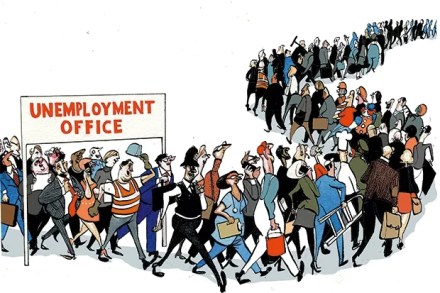
More Britons than ever are out of work due to long-term sickness

Some nine million working-age people are out of work and are not looking for it either. Figures released by the Office for National Statistics this morning reveal this number has grown by 630,000 since before the pandemic began. This is an increase from the previous quarter and from the same time last year too. Now over a fifth of working age people find themselves economically inactive. Rising inactivity has been driven by long-term sickness since the pandemic. Today’s figures reveal those inactive due to illness hit a record high of two and a half million people. There’s debate around what’s causing this with some pointing to long Covid, the state

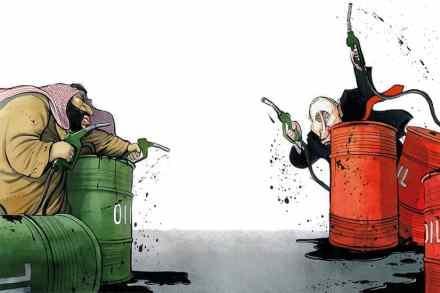
Opec will regret taking on the US

Production will be cut. Supplies to the rest of the world will be curbed. And inflation will rise just a little bit higher. No one ever expected the oil-cartel Opec(+), led by Saudi Arabia, to be friendly to the West, or to help out when it was needed. Even so, its decision this week to effectively side with Russia, and to make the energy crisis even worse, may quickly backfire. In reality, Opec was already in long-term decline. Picking a fight with the US will just make that worse. It was certainly the kind of news the energy markets didn’t need. Just as it was getting over the loss of Russia’s crucial

Will Truss’s growth target gamble pay off?

Liz Truss has bet the house on growth. The Prime Minister and Chancellor formally gave themselves the target of a 2.5 per cent growth rate in last month’s mini-Budget. But at the Conservative party conference this week, Truss used her speech to frame her premiership around growth, singling out as her enemies anyone she deems part of the ‘anti-growth coalition’. Anything the government does now needs to be approached with caution rather than revolutionary zeal As I say in today’s Telegraph, this was perhaps Truss’s most savvy political move to date. If the Prime Minister has had any success so far, it’s been to completely refocus the national narrative towards

Liz Truss’s fate rests with the Bank of England

James Carville, an ostentatiously aggressive adviser to Bill Clinton, once said that when he died, he wanted to be reincarnated ‘as the bond market – you can intimidate everybody’. Carville and Clinton had learned something that a lot of people in UK politics seem to be overlooking. The bond market, where government loans (gilts, in the UK) are traded, can decide what governments can – and cannot – do. It can also determine whether governments survive. But because bonds are boring and a bit complicated (yields go up as prices go down – what does that even mean? And what on earth is a yield curve?) they don’t get enough

Opec’s oil cut spells more bad news for Brits

Liz Truss joins other European leaders in Prague today at the first meeting of the European Political Community. Truss’s presence is sensible, a reminder of Britain’s point that it left the EU, not Europe as a whole. It should also help relations with Emmanuel Macron given how much he has invested in this project. One of the subjects discussed will be energy. The conversation will focus on Putin’s weaponisation of energy and how to keep the lights on this winter. But the anti-Russian alliance has suffered a blow after the news that the Opec+ countries, which include Saudi Arabia and Russia, are going to cut oil production by two million

Will the free-market cause ever recover from Liz Truss?

In theory, I should be delighted about the Liz Truss project. She is saying the things I’ve been arguing for years: talking not just about lower taxes but about basic liberty and how it relates to everyday life. She’s passionate about these ideas – and sincere. I remember watching her deliver a rallying cry, a salute to the ‘Airbnb-ing, Deliveroo-eating, Uber-riding freedom fighters’. This was just over three years ago when she was a Treasury minister. Her speeches were getting punchier and her one-liners becoming newsworthy and memorable. She was turning into one of the most recognisable faces of classical liberalism in Britain – a development which clearly delighted her.

Is Credit Suisse the tornado on the banking horizon?

Headlines about ‘alarm over CreditSuisse’ might be read as a sign of normality in financial news, rather than the reverse. The second-ranked Swiss bank (behind UBS) has slipped on so many banana skins in recent years that, as I wrote in February: ‘I sometimes wonder how and why it survives.’ As a recognised basket-case, its difficulties are not usually seen as harbingers of systemic trouble. But in the Kwarteng-induced febrile mood of London’s markets, the question has to be asked. This is October, the devil’s favourite month for provoking crashes. Could Credit Suisse be the tornado on banking’s horizon? Amid rumours of critical balance-sheet weakness, Credit Suisse’s shares have fallen

What did Kwarteng say to the free market think tanks?

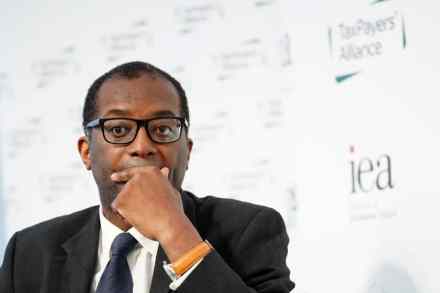
When Liz Truss and Kwasi Kwarteng entered Downing Street, laser focus was not only applied to them, but also to the free market think tanks they had worked with over the years. This evening, Kwarteng paid a visit to two of them, as the Institute of Economic Affairs and The Taxpayers’ Alliance hosted the Chancellor at Conservative party conference for one-on-one conversations. Similar to his speech yesterday, Kwarteng used the opportunity to try to take some heat out of his mini-Budget. When asked if market reaction was part of the Treasury orthodoxy he and Truss had been taking aim against for weeks, he shook his head and pointed to the

Scrapping inheritance tax is a terrible idea

There is no hole deep enough that a Conservative minister cannot muster the spadework to excavate it to even greater depths. No sooner had Kwasi Kwarteng announced that he was dropping his proposed reduction in the upper rate of income tax, than Andrew Griffith, one of his ministers at the Treasury, declared that he would like to see inheritance tax abolished. ‘I have lots of my fantastic local association [members] with me here and they will know because they asked me at my selection meeting 27 months ago which tax, if I had the choice, I would most like to see eliminated. History will record it was inheritance tax, ’he

Kemi Badenoch: ‘I’m Brexit fatigued’

Liz Truss wants growth at 2.5 per cent. That figure will allow the UK to pay off the huge cost of her energy subsidy – predicted at around £40 billion – while also putting the public finances on a more sustainable footing. The problem is that growth is elusive. Between the financial crash and the Covid lockdowns, the UK’s average growth rate was just 1.3 per cent.  One of the few sure-fire ways to grow the economy is trade. New markets give companies the chance to grow their sales purely by matching up new consumers with goods that they want. The power to do this, to set our own trade

France and Britain are brothers in despair

Since Brexit, Britain and France appear to have drifted apart. Leaders from both countries have engaged in an on-off war of words. But despite these political fractures, Britain and France have actually come to resemble each other more closely than ever. It is now difficult to differentiate the economic, financial, social and political conditions that exist on both sides of the Channel.  France and Britain face a wave of strikes over the coming months. After a lull over the summer, Gallic workers are once again walking out: public sector and railway worker unions staged a national strike for wage increases last week. Even moderate unions are now threatening mass stoppages if Macron continues his labour reforms. Meanwhile,

Will anyone ever be able to cut the 45p tax rate?

Well, that went well. Kwasi Kwarteng’s decision to axe the 45 per cent top rate of income tax triggered a crash on the financial markets. It then ran into so much opposition from the public and from Conservative MPs fearful for their seats that it had to be scrapped completely. Right now, it seems unlikely that any politician will want to revisit the subject any time in the next two or three millennia. Abolishing Christmas would be less toxic. If they do, however, one point is surely clear: the 45 per cent rate is here to stay. The only way any politician will ever be able to scrap it now is by

Things could be about to get worse for Liz Truss

It’s a cliche to report an air of unreality at the Conservative conference here in Birmingham. All party conferences are divorced from political reality, cut off from the rest of the country by steel fences and self-absorption. But this little bubble of self-referential noise feels even further away from normality than usual. Safe behind the fences and still, just about, comfortable in the familiar company of their colleagues and contacts, conference-goers (Tories and non-Tory visitors alike) risk failing to grasp just how much trouble the party, the government, and the country, are in. Start with talk of a fresh austerity programme, trimming between £20 billion and £40 billion a year

George Osborne: It’s ‘touch and go’ if Kwasi Kwarteng survives

George Osborne knows a thing or two about an omnishambles Budget. Having hiked taxes on pasties back in 2012, the then-chancellor was forced into a humiliating u-turn. So far, his successor Kwasi Kwarteng is holding his ground over his ‘mini Budget’. But how long can that last? Osborne’s verdict is that it might not be long before we get an answer to that question.  ‘I think I underestimated the ability of the government to blow itself up in its first few weeks of office’ Speaking on the Andrew Neil show on Channel 4, Osborne said it is now ‘touch and go whether the Chancellor can survive’ after the catastrophic fallout from his unfunded tax