Economy

  • AAPL

    213.43 (+0.29%)

  • BARC-LN

    1205.7 (-1.46%)

  • NKE

    94.05 (+0.39%)

  • CVX

    152.67 (-1.00%)

  • CRM

    230.27 (-2.34%)

  • INTC

    30.5 (-0.87%)

  • DIS

    100.16 (-0.67%)

  • DOW

    55.79 (-0.82%)

The IMF growth downgrade is more bad news for Rachel Reeves

Rachel Reeves lands in Washington tonight to be greeted with bad news. The International Monetary Fund (IMF) – whose spring meeting the Chancellor is attending – has just handed Britain the largest GDP downgrade of any G7 country.  In the freshly released update to their world economic outlook, the IMF forecast growth for the UK this year of just 0.8 per cent – down from the 1.3 per cent they’d previously projected. Things don’t get much better next year either, with just 1.3 per cent growth forecast, again downgraded from 1.5 per cent.  This downgrade singles out Britain and our European neighbours. While the IMF calls the overall effect of

Spotlight

Featured economics news and data.

Cutting Britain’s giant welfare bill would be an act of kindness

Does having money really matter that much? There are those, usually with quite a bit of it, who want us to care less about materialism. But, unequivocally, money really does matter – not because of any status it supposedly brings, but for the freedom it buys: freedom to choose how we live and how we look after others. Considering this, it seems that the deep disillusionment with mainstream politicians in recent years stems from a protracted and ongoing period of stagnant living standards over which they have presided. But the truth is that the average person has not got poorer since the global financial crisis. They have got a little

Why didn’t Jeremy Hunt mention childcare in his Autumn Statement?

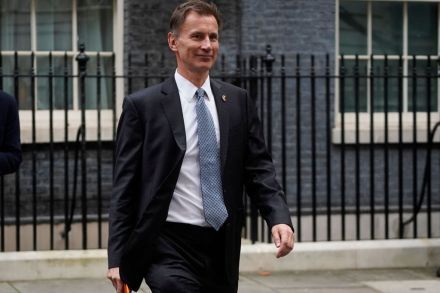
Jeremy Hunt’s Autumn Statement had a curious omission: childcare. The pleas of desperate parents who gathered on Whitehall last month during ‘The March of the Mummies’ appear to have fallen on deaf ears. Demonstrators gathered outside Downing Street banging drums and shouting: ‘Dear Rishi Sunak, we want our choices back.’ So why didn’t the Chancellor listen? Britain’s childcare costs are already among the highest in the world, with the recession and soaring inflation increasing pressures on parents. One way to reduce the burden would be to make nurseries cheaper. For many parents, is cripplingly unaffordable, especially as the current subsidy of 15 hours a week only applies to three and four-year olds.

Sunak’s Conservatives are the party of zero growth

We might get a new nuclear power station one day, unless the protestors or the Supreme Court find a way to block it. We will plough on with High Speed Rail 2 regardless of its mounting cost. And there will be some re-heated waffle about supporting technology and innovation, complete with misty-eyed homilies to Alexander Fleming and John Logie Baird that could have been lifted word for word from any chancellor’s speech over the last fifty years. And, er, that was about it. In his Autumn Statement today, Jeremy Hunt had nothing to say about growth – because, in reality, Rishi Sunak’s Conservatives have become a zero-growth party. Lame, feeble

Rachel Reeves’s killer question of Hunt’s Autumn Statement

After the disaster that befell Kwasi Kwarteng’s mini-Budget, his successor Jeremy Hunt was never likely to want to pull many rabbits out of hats in his Autumn Statement. In fact, seldom has a pitch been rolled so extensively before a Chancellor’s statement as it was before today’s, both via a string of briefings emanating from within the Treasury about its likely contours and contents and the seeking of statements of advance approval from independent scrutineers. Hunt was at pains to quote the NHS chief executive as confirming the extra resources for healthcare should be sufficient to allow the service to discharge its core responsibilities. More crucially still, he deferred to

Three ways Hunt’s Autumn Statement will be judged

The government expects its Autumn Statement to be judged on three tests. First of all, how do the markets react? The decisions announced today by the Chancellor Jeremy Hunt mean that the government will be issuing £31 billion less in gilts – in other words, in borrowing – than expected after the mini-Budget. The initial market reaction to this has been positive. However, the new fiscal rule – to have debt falling as a percentage of GDP by the end of the five-year forecast period – is still relatively loose. Hunt and Sunak are relying on their credibility and their willingness to make difficult choices to reassure the markets.   Perhaps

Will the Autumn Statement break the Tory truce?

It’s crunch day for Rishi Sunak. This morning his Chancellor Jeremy Hunt will stand at the despatch box and unveil a mix of spending cuts and tax rises worth in the region of £55 billion in a bid to fill the fiscal black hole in the public finances. Hunt is expected to tell MPs his fiscal plan will help Britain ‘face into the storm’ by being ‘honest about the challenges, and fair in our solutions’ to inflation and rising energy prices.  The measures Sunak and Hunt are expected to pitch as the best response to the global financial situation – as well as the fallout from Liz Truss’s not-so-mini-Budget which

What can we expect from Hunt’s Autumn Statement?

Later this morning Jeremy Hunt will deliver his first Autumn Statement as Chancellor. With the focus firmly on the dire state of the economy, pressure is on Hunt to deliver on his promise to reduce inflation (which yesterday hit 11.1 per cent) and restore stability. As Kate Andrews writes in this week’s magazine, the Chancellor’s measures are likely to see a new era of austerity ushered in due to a number of a trailed tax hikes and public spending cuts. In recent days, Hunt has been laying the ground work for what is likely to be a difficult times ahead. So what can we expect from today’s statement? The Chancellor’s

The bogus companies exploiting Britain’s registration rules

Britain appears to be enjoying a surge of entrepreneurialism, with more than 200,000 start-ups registered at Companies House between April and June this year alone. However, while many of these are genuine cases of people taking the plunge and embarking on their dream of opening a tea shop, launching a webinar app or whatever, an awful lot are not going to be contributing any cherries to our national pie – and some might well be pilfering a few. Among those unlikely to be contributing are the 36 companies registered last year to a single address in Bristol – not a business park but a small semi-detached house. Or the 95

Why we should pray for crypto’s survival

Note to self: don’t sound smug about the sudden collapse of FTX – the Bahamas-based crypto exchange whose valuation has been zapped from $32 billion to zero – because however much it plays to I-told-you-so instincts about the mug’s game of crypto, the episode may herald a wave of wealth destruction that’s the last thing the financial world needs when there’s already so much bad stuff going on. Still, smugness is a strong temptation here – and what could be more provoking of that sentiment than a photograph in the Daily Telegraph of Sir Tony Blair and Bill Clinton on an FTX-badged stage alongside the firm’s 30-year-old founder Sam Bankman-Fried in

Inflation hits 11.1 per cent

There had been quiet but growing optimism from some economists that inflation in Britain was nearing its peak as the CPI headline rate had fluctuated slightly – in and out of double digits – over the past few months. But that optimism was put on pause this morning when the Office for National Statistic revealed that inflation rose by a full percentage point from September, taking CPI to 11.1 per cent on the year last month. CPI is at its highest level since 1981, and above the Bank of England’s most recent prediction for where inflation would peak. Meanwhile, real-terms wage increases are failing to keep up with price hikes.

Is there anything we don’t know about Hunt’s Autumn Statement?

What does Jeremy Hunt want us to know about the Autumn Statement? The Chancellor is in the final hours of writing the economic announcements for Thursday, and today he had his last Treasury questions in the Commons before he gives his long speech. Hunt has been rolling the pitch more assiduously than an MCC groundsman over the past few weeks, with endless briefings about black holes, tax rises and unpopular spending cuts. Today, he was talking again about how ‘difficult’ things were going to be. He said: ‘Despite the difficulty of the package I will be announcing, I will sadly not be drinking any whisky as I do so.’ Hunt

The case for letting council tax rise

We have now been primed for so many tax rises that Thursday’s autumn statement will inevitably come as some form of relief. Whatever Jeremy Hunt announces is sure to be milder than the possibilities fed to us over the past few weeks. But there is one suggested tax rise which is far too mild, and far too reasonable. Local authorities, it has been floated, may be allowed to put up their council tax bills by up to 5 per cent without having to put it to the public in a referendum (a referendum which, needless to say, would swallow up a good slice of any extra revenue gained). If the

Is Jeremy Hunt bailing out Bailey?

There is a conundrum at the heart of Jeremy Hunt’s comments leading up to the Autumn Statement. Hunt describes inflation as an ‘​​evil’ that ‘erodes the pound in your pocket’: uncontroversial. So Autumn Statement, he says, has been designed by his Treasury to ‘help the Bank of England bring down inflation.’ But controlling inflation is the Bank of England’s remit, so any action will be indirect. By tightening fiscal policy, Hunt is lifting pressure off the Bank to keep pushing raising interest rates. This will be by design on the part of the Treasury. After Liz Truss and Kwasi Kwarteng’s disastrous mini-Budget, markets were predicting rates headed for over 6

The decline of the London stock market

There is plenty for anyone in Paris to feel smug about if they happen to look across to the other side of the English Channel right now. France has been able to watch British prime ministers come and go with almost comical regularity. It can supply everyone else with electricity from its nuclear power stations if they ask nicely enough. And it is about to watch its football team cruise to defending its crown at the Qatar World Cup. But there is one more that will make the French especially pleased. Paris has just overtaken London as Europe’s largest stock market – and the UK has only itself to blame. 

Crypto is being hoisted by its own petard

Like Liz Truss, Sam Bankman-Fried will be the stuff of pub quizzes: who lost his entire $16 billion fortune in days? A quick trawl of the internet suggest his only real challenger in losing so much money so quickly was Masayoshi Son, the founder of Softbank, who was estimated to have made a paper loss of $70 billion in the dotcom crash. But he wasn’t completely wiped out, and retained considerable wealth as Softbank rose again. Bankman-Fried, on the other hand, is believed now to be worth pretty much zero following last week’s collapse of the crypto exchange he founded, FTX. At its peak, Bankman-Fried’s stake is estimated to have

Are there signs inflation has peaked?

Is the inflationary spike past its peak? That is the obvious reaction to the news that US inflation fell to 7.7 per cent in October, down from 8.2 per cent in September and significantly lower than the 8.0 per cent that markets had been expecting. Clearly, inflation remains high, but US inflation is now lower than at any stage since January. A further couple of months of falls would seem to indicate that, for now, inflation has been tamed. It ought to come as no surprise. The US Federal Reserve has been fighting inflation aggressively all year with interest rates. It is some way ahead of the curve being followed

Britain’s economy shrinks again as recession looms

September was always going to be a tough month for economic growth. The additional bank holiday added for the Queen’s funeral, combined with much displaced activity for the days around it, created a consensus amongst economists that we’d see economic contraction that month. And indeed, we have. New figures published by the Office for National Statistics this morning show the economy shrank by 0.6 per cent in September. This was mainly driven by a fall in services – roughly half of the economy’s contraction is attributed to business closures due to the events of that month. But it’s not September’s figures that are most worrying this morning. The problem facing

Made.com is a dotcom parable from an earlier era

‘Reparations’, much bandied about at Cop27, is a dangerous word. It speaks of an admission of historic guilt, which no one can deny has a place in public discourse. But its intention is to put a punitive price on guilt itself, rather than to advance collaborative work needed to rectify damage that can be traced back to bad acts, whether committed through greed, prejudice, aggression or ignorance. It says, in short: ‘Don’t send us your supposedly superior expertise and your lectures about how to improve ourselves. Just send cash. And keep sending it until your tortured conscience is assuaged.’ But in relation to climate impacts, the argument over who pays,

Brexit isn’t to blame for the economic collapse

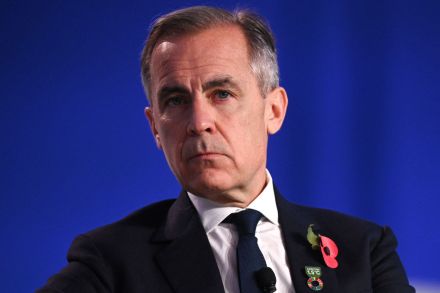
We can be grateful for small mercies. 4 November 2022 will go down as the day when a presenter on the Today programme finally challenged a dodgy statistic trying to blame economic collapse on Brexit. The statistic in question was put forward by former Bank of England governor Mark Carney in an interview with the Financial Times last month in which he said: ‘Put it this way, in 2016 the British economy was 90 per cent the size of Germany’s. Now it is less than 70 per cent.’     Was Carney’s ultra-loose monetary policy not part of the cause of today’s inflationary environment? Mishal Husain, to her credit, put this to Carney

Why interest rates are still lower than you might think

Anyone with a mortgage will be in serious trouble. Small businesses will go to the wall. Demand will be hammered. And the cost of government debt will soar. After the Bank of England upped interest rates yesterday to 3 per cent, the highest level in more than a decade, there was one point on which everyone agreed. The Bank might be moving too fast or too slow, but it is imposing steep rises in rates. But hold on: is that right? After all, when you take into consideration rising inflation, the real cost of money has hardly ever been cheaper.  The Bank’s decision to hike rates by 0.75 percentage points