Economy

  • AAPL

    213.43 (+0.29%)

  • BARC-LN

    1205.7 (-1.46%)

  • NKE

    94.05 (+0.39%)

  • CVX

    152.67 (-1.00%)

  • CRM

    230.27 (-2.34%)

  • INTC

    30.5 (-0.87%)

  • DIS

    100.16 (-0.67%)

  • DOW

    55.79 (-0.82%)

The IMF growth downgrade is more bad news for Rachel Reeves

Rachel Reeves lands in Washington tonight to be greeted with bad news. The International Monetary Fund (IMF) – whose spring meeting the Chancellor is attending – has just handed Britain the largest GDP downgrade of any G7 country.  In the freshly released update to their world economic outlook, the IMF forecast growth for the UK this year of just 0.8 per cent – down from the 1.3 per cent they’d previously projected. Things don’t get much better next year either, with just 1.3 per cent growth forecast, again downgraded from 1.5 per cent.  This downgrade singles out Britain and our European neighbours. While the IMF calls the overall effect of

Spotlight

Featured economics news and data.

Cutting Britain’s giant welfare bill would be an act of kindness

Does having money really matter that much? There are those, usually with quite a bit of it, who want us to care less about materialism. But, unequivocally, money really does matter – not because of any status it supposedly brings, but for the freedom it buys: freedom to choose how we live and how we look after others. Considering this, it seems that the deep disillusionment with mainstream politicians in recent years stems from a protracted and ongoing period of stagnant living standards over which they have presided. But the truth is that the average person has not got poorer since the global financial crisis. They have got a little

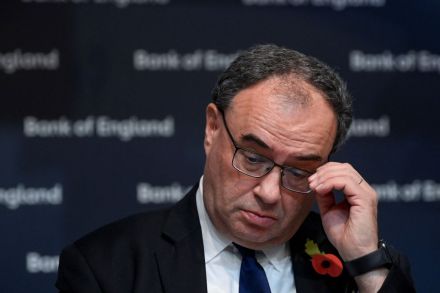
A two-year recession has begun, says the Bank of England

Alongside a rather defensive interest rate hike today, the Bank of England unveiled some alarming forecasts for economic growth. The BoE predicts the economy will be in ‘recession for a long period’ – until mid-2024 – with inflation peaking around 11 per cent.  While the Bank is predicting that the recession will be shallower than other contractions, we are looking at the longest recession on record. The Bank thinks recession is already underway (the economy contracted by 0.3 per cent in August –we will get September’s figures next week) and will last for two years. The driving factors for economic contraction, the Bank thinks, will be ‘high energy prices and materially tighter

Bank of England takes interest rates to a 14-year high

After yesterday’s fourth consecutive 0.75 percentage point interest rate rise from the Federal Reserve, the Bank of England has finally decided to follow suit. This afternoon the BoE announced a rate hike of 0.75 points too, the first rise of this size in 33 years. This takes UK interest rates from 2.25 per cent up to 3 per cent – a 14-year high. A 0.75 per cent increase had been expected by markets – the broad consensus of what the Bank would do after a tumultuous month of interventions, spikes in borrowing costs and inflation returning to double digits. There was general consensus on the Monetary Policy Committee, too, with a vote

Why windfall taxes come at a great cost

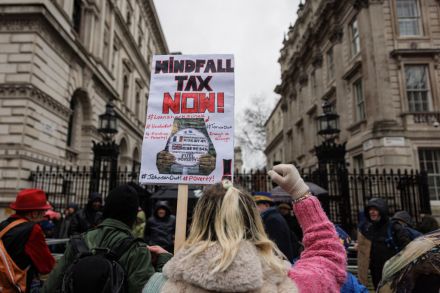
There is no such thing as free money. This was learned the hard way last month, when investors made clear after Liz Truss’s mini-Budget that the era of cheap money was over. Mass borrowing for day-to-day spending was going to have a big premium attached: a bill so large that no government would want to pay. Rishi Sunak understood this delicate dynamic, and said so many times over the summer. His willingness to admit the truth – that the government’s many promises can’t be delivered for free – is what, eventually, landed him in No. 10. But now in power, Sunak and his chancellor Jeremy Hunt risk making another ‘easy

The morality of begging for trade with Saudi and Qatar

Cop27? Me neither. Barring a last-minute call to join Boris Johnson’s Sharm El Sheikh entourage, I’ll be minding my carbon footprint at home. But I’m sorry not to be reporting firsthand from a more controversial Middle Eastern gathering of the global elite: the Future Investment Initiative in Riyadh, or ‘Davos in the Desert’. A ticket to Cop27 is a virtue signal in itself. But attendance at last week’s FII, an annual showcase for progressive sovereign spending within Mohammed bin Salman’s otherwise medieval Saudi state, is a moral conundrum. Just as the UK relies on Qatar for liquefied natural gas supplies while our dignitaries queue to cite the emirate’s human rights

What BP’s soaring profits tell us about our dependence on oil

So much for those ‘stranded assets’ which former Bank of England governor Mark Carney and many others tried to warn us about. It wasn’t long ago that climate activists were urging the world to dump shares in oil companies, not just because we should want to punish them for climate change but because, they said, oil companies’ fortunes were on a downward trajectory as the world turned green. ‘The exposure of UK investors, including insurance companies, to these shifts is potentially huge,’ Carney said in 2015. ‘Once climate change becomes a defining issue for financial stability, it may already be too late.’ But that’s not how it looked in BP’s boardroom

Eurozone inflation hits record 10.7%

Britain’s economic problems can, of course, be laid at the door of Brexit. We know this because it was asserted on a BBC podcast which went viral over the weekend – and no one would question the BBC’s objectivity. But maybe there ought just to be a scintilla of doubt in the heads of the staunchest remainers given this morning’s news that eurozone inflation has reached 10.7 per cent – even higher than Britain’s latest CPI figure of 10.1 per cent. Markets had been expecting Eurozone inflation to stay a little below the 10 per cent mark. Far from Britain parting off from the rest of Europe and entering a

Sunak is right to stay away from COP27

Rishi Sunak deserves one of those ‘climate champion’ badges they hand out at primary schools. Why? Because he is not going to fly to the COP27 summit in Egypt – thereby saving 1.65 tonnes of carbon emissions, according to the World Land Trust’s carbon calculator. So what if Ed Miliband thinks it is a failure of leadership? There is no point in any UK Prime Minister travelling to any more of these summits when the world’s largest carbon emitters have made it perfectly plain that they have no intention of copying Britain’s example. They will not be putting themselves under legal commitment to eliminate net carbon emissions by 2050 or any

Are Sunak and Hunt planning a windfall tax grab?

When Rishi Sunak entered No. 10 on Tuesday, he paid lip service to the aims of his predecessor. Liz Truss ‘was not wrong to want to improve growth in this country’, he said outside Downing Street. But ‘mistakes were made’ which is why he was installed as Prime Minister: to fix the economic fiasco that has overwhelmed Britain over these past few weeks. This morning’s news about looming growth forecasts brings both statements to the fore. Just over a week ago, Chancellor Jeremy Hunt thought he had to find upwards of £30 billion worth of spending cuts and tax hikes to fill the black hole in the public finances. But

Might Sunak regret his Budget delay?

Given the swift defenestration of his predecessor after her mini-Budget panicked the markets, it is not surprising that Rishi Sunak has delayed the Treasury’s autumn statement until 17 November. No set of fiscal plans will satisfy everyone, but markets and public opinion do seem to be especially sensitive to changes in fiscal policy at present. And there’s this: left-leaning thinktank the Resolution Foundation this morning said delaying the statement for just two weeks will reduce the apparent black hole in the public finances as the cost of government borrowing comes down. The two-week delay could create the illusion of an extra £15 billion in the government’s coffers (or rather £15

After the Truss-Kwarteng crash, a tentative welcome for Sunak

Let’s hope Tuesday’s partial eclipse of the sun was a good omen for the return of Rishi Sunak to Downing Street, this time as Prime Minister. Understandably, he looked more earnest than triumphant. Business leaders and financial markets gave him a positive welcome but – understandably also after months of turmoil, with huge challenges ahead – rather a tentative one. Ten-year gilt yields dropped from a panic-driven 4.5 per cent to a still worried 3.8 per cent, double their recent lows; the pound blipped up, then settled back to its recent benchmark of $1.13. A ‘dullness dividend’ is what money men are hoping for, we’re told, after Johnson’s narcissistic inattention

Liz Truss: my part in her downfall

Now that the final curtain has fallen on Liz Truss’s brief and tumultuous premiership, it is time for reflection. A chance to set the record straight and also to own up to mistakes – especially for those of us who tried to advise her. What went wrong? Yes, the tipping point was Kwasi Kwarteng’s mini-Budget. But three problems were by then already brewing. First, the leadership campaign over the summer had become very focused on tax cuts. Even Rishi Sunak ended up saying he would cut the basic rate of income tax from 20 per cent to 16 per cent by the end of the next parliament, while Jeremy Hunt

Is Britain heading into an inflation spiral?

Inflation, asserted Rishi Sunak in his first PMQs, makes us all poorer. That is not entirely true – people relying entirely on the state pension, for example, will be fully compensated for this year’s high inflation, and no doubt some of Sunak’s former colleagues in the hedge fund industry have found a way to profit, too. But generally, he is right. Working people have on the whole suffered a large drop in their real wages. In the year to April, median weekly pay rose by 5 per cent from £610 to £640. In many years that would be a substantial rise, but when adjusted for inflation it comes out as

Delaying the fiscal statement is a wise move

The date of the fiscal statement has changed again. The Treasury has announced that the update – now being billed as an ‘Autumn Statement’ – will be pushed back from 31 October to 17 November, just six days earlier than the original date planned by Kwasi Kwarteng. Chancellor Jeremy Hunt said the delay means it will be based on the ‘most accurate possible’ economic forecasts. A hold-up was expected once it became clear that Rishi Sunak was going to emerge as the next Tory leader and Prime Minister. Penny Mordaunt was thought to have told chancellor Jeremy Hunt that his statement would go ahead as normal if she won the leadership race. But

Liz Truss should have known better

In the coming weeks we’re going to learn a lot more about what went so badly wrong inside Liz Truss’s government. Indeed, my colleague James Heale is co-writing the book on it. As Rishi Sunak heads into No. 10 in a bid to undo some of the damage (‘mistakes were made…’ he said on the steps of Downing Street this morning, ‘…and I have been elected as leader of my party, and your Prime Minister, in part, to fix them’) we are bound to learn more about the miscalculations, bad advice, and hubris that ultimately led to the undoing of prime minister Truss in just a matter of weeks. It

Is Britain heading for a painful recession?

Given how inflation has taken off and sent real incomes into steep decline it is remarkable that Britain is not already in recession. It seemed that we were heading that way – until the Office for National Statistics revised upwards economic growth in the second quarter of this year from minus 0.1 per cent to plus 0.2 per cent. The economy then shrank by 0.3 per cent in August. But the definition of a recession is two quarters of negative growth – so Britain cannot be classed as being in one until growth figures for the fourth quarter are published in January. But the S&P Global Purchasing Managers’ Index (PMI)

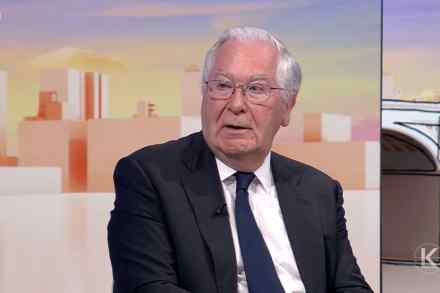
Mervyn King said the unsayable about Britain’s economy

This morning the BBC hosted a current Tory leadership contender and the leader of the opposition on Sunday with Laura Kuenssberg. Yet the most insightful comments came from one of the panel members: Lord Mervyn King, former governor of the Bank of England between 2003 and 2013. Asked by Kuenssberg about the narrative that’s doing the rounds with some Truss supporters – that markets ‘bullied’ Truss out of her plans and out of office – King offered up a robust response and a clear explanation of what had gone so badly wrong: Markets are not in charge. Governments and central banks are. Markets respond to the announcements made by government

Could Boris Johnson’s cakeism survive the markets?

In the brief time Sajid Javid was chancellor to Boris Johnson, he spelled out to The Spectator his ‘low for long’ theory about rates: a theory which would enable the new prime minister’s ambitious spending agenda. Speaking to Fraser Nelson in December 2019, Javid was confident that the era of ultra-low interest rates and extremely favourable borrowing costs was here to stay. ‘It just felt quite ludicrous seeing that a government could borrow at negative real interest rates and not take advantage of that,’ the then-chancellor told the magazine. Convinced these circumstances would remain for ‘at least a decade’ he was willing to borrow tens of billions of pounds for

Liz Truss was a conviction politician

As an erstwhile Brexit-voting academic, I’m used to being at odds with those around me. But in feeling troubled at the news of Liz Truss’s resignation yesterday, it seems I’m now in a minority of one. Truss had to go, of course. Her failings have been so well documented they hardly need repeating. Her lack of political acumen was perhaps most shocking: Truss utterly failed to read the mood of the Conservative party, the nation and the financial markets on every single one of her 44 days in office. But still, I have a pang of regret that she is on her way out. Truss’s stilted performances failed to inspire

These figures show the enormity of the next PM’s task

Next week we will have a new prime minister (again), but the economic problems facing the country will remain the same. This morning’s update from the Office of National Statistics shows public sector net borrowing was  £20 billion last month: the second-highest borrowing September record and significantly higher than the Office for Budget Responsibility’s last forecast, which put the figure close to £15 billion. It’s this rapid rise in borrowing that the markets have turned on in recent weeks Economists thought borrowing would rise, but even the consensus (roughly £17 billion) was lower than what the government borrowed in practice. While total borrowing for the financial year is slightly below