Economy

  • AAPL

    213.43 (+0.29%)

  • BARC-LN

    1205.7 (-1.46%)

  • NKE

    94.05 (+0.39%)

  • CVX

    152.67 (-1.00%)

  • CRM

    230.27 (-2.34%)

  • INTC

    30.5 (-0.87%)

  • DIS

    100.16 (-0.67%)

  • DOW

    55.79 (-0.82%)

The surprising truth about AI and jobs

Lord Stockwood, the minister for investment, recently floated the idea of universal basic income to cushion AI-driven job losses. Last month, the European Central Bank published a study of 5,000 eurozone firms showing that companies which adopt AI are 4 per cent more likely to hire. Something doesn’t add up. So what’s going wrong? In 2013, a widely cited Oxford study told us that 47 per cent of American jobs were at high risk of automation. Since then, every serious forecast has done the same thing: decompose a job into tasks, score which tasks machines can do, announce a crisis. The renowned VC investor Marc Andreessen refined the point this

Spotlight

Featured economics news and data.

Cutting Britain’s giant welfare bill would be an act of kindness

Does having money really matter that much? There are those, usually with quite a bit of it, who want us to care less about materialism. But, unequivocally, money really does matter – not because of any status it supposedly brings, but for the freedom it buys: freedom to choose how we live and how we look after others. Considering this, it seems that the deep disillusionment with mainstream politicians in recent years stems from a protracted and ongoing period of stagnant living standards over which they have presided. But the truth is that the average person has not got poorer since the global financial crisis. They have got a little

Have we really lost hundreds of thousands of workers since Covid?

The jobs market appears to be slowing down, but can we trust the figures? Vacancies have fallen for the longest continuous period on record, according to data published by the Office for National Statistics (ONS). But there are still just under 950,000 jobs on offer which is well above the pre-lockdown norm. Meanwhile, despite British workers receiving real-terms pay rises in the three months to October, wage growth seems to have peaked. This will please Bank of England rate setters who feared that spiralling wage demands could worsen inflation. Average weekly earnings (including bonuses) fell slightly to 7.2 per cent on the year, down from 8 per cent. Because of

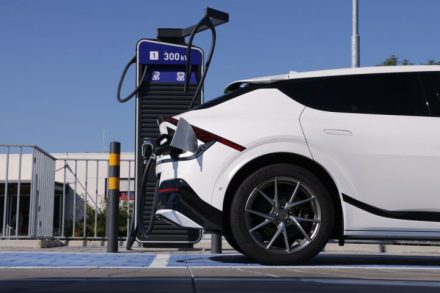
Net zero has doomed Europe’s car industry

The decision of the European Commission to delay, for three years, tariffs on car exports between Britain and the EU is the harbinger of a more constructive relationship between the two. But is it going to save the European car industry? Probably not. It is net zero targets, not Brexit, which are condemning mass-market car production in Europe to possible extinction. Until this week’s decision, car manufacturers faced a cliff edge. Unless they could show that at least 45 per cent of a vehicle, by value, had been made in Europe, that vehicle would face a 10 per cent tariff if exported from Britain to the EU or vice versa. What might have

Was COP28 any more than hot air?

What position should the distant observer take on the COP28 conference in Dubai? That the sight of 70,000 delegates flying into a desert oil state from around the world to discuss human impacts on climate change is beyond satire and that its proceedings are never likely to rise above Greta Thunberg’s encapsulation of all such jamborees as ‘blah blah blah’? Or that the climate problem is now so obvious and urgent that all efforts towards global action, however small, should be uncynically applauded? I leave that choice on the table. But I’m finding it hard to take a positive view of Sultan Al-Jaber, president of the Dubai gathering, who also

The Tories’ migration crackdown will have many victims

The UK’s immigration system must be ‘fair, consistent, legal and sustainable’, proclaimed the new Home Secretary as he presented his ‘five-point plan’ to reduce legal migration in parliament. James Cleverly billed these changes as ‘more robust action than any government’ has taken before to reduce the headline net migration figure.  They involve increasing the skilled worker earnings threshold from £26,200 to £38,700 from next spring; increasing the NHS surcharge (paid every time most migrants secure or renew their visa), from £624 to £1,035; ending the 20 per cent salary reduction for shortage occupations (as well as reforming and reducing the list); increasing the minimum salary for a family visa to

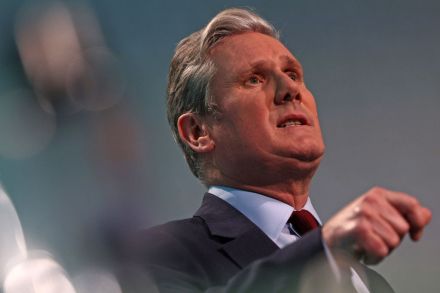
Starmer offers a heavy dose of the big state

Keir Starmer wants to set expectations early. Speaking at the Resolution Foundation’s economy conference later today, the opposition leader used his speech to emphasise just how little scope he’d have at the start of any Labour government to splash the cash. His party will not ‘turn on the spending taps’, he told an audience of economists and policy analysts. Anyone expecting them to do so is ‘going to be disappointed.’ The speech seemed to deliberately echo the infamous ‘I’m afraid there is no money’ note left for the incoming Tory government by a Labour minister.  Starmer responded to the spending trap laid out in the Autumn Statement last month: where

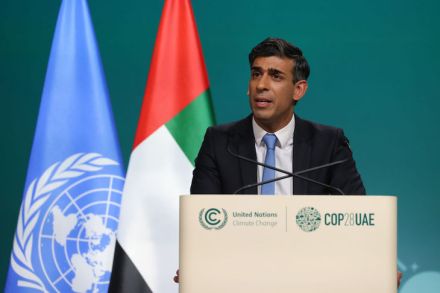
The thinking behind Rishi Sunak’s common sense Net Zero approach

Rishi Sunak has a new approach to Net Zero, defining himself against ‘zealots’ and acknowledging the side effects of proposed green taxes. He’s replacing the old, often hyperbolic precautionary-principle logic and bringing in the language of tradeoffs: stressing the importance of democratic consent and the futility of green taxes that voters will not accept and are likely to rebel against. The Prime Minister has just taken his case to the UN ‘Cop’ Climate Summit in Dubai and his short speech deserves more attention than it has received. The standard form, in such events, is for leaders to try to outdo each other in ‘dark green’ jeremiads and say ‘we’ must

Get used to Labour being the party of low taxes

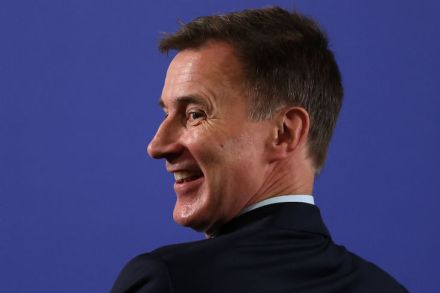
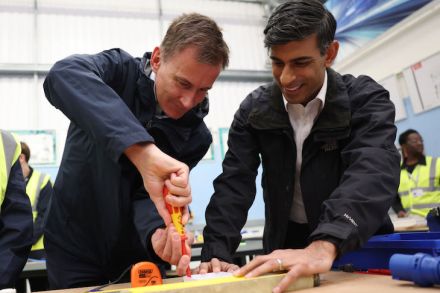
It takes some to get used to Labour posing as the party of low taxes, but it is something that we are going to have to deal with as the election approaches. Today Jeremy Hunt appeared before the House of Commons Treasury Select Committee, and we had a taste of what is to come. In a fairly docile but highly partisan session, Labour MP Siobhain McDonagh asked the Chancellor if he takes the British public for fools, asking if he thinks they will not notice that the 2p cut in employees’ National Insurance will put rather less back into their pockets than fiscal drag is taking out – Hunt is

Should Boris Johnson really be telling Canada how to build houses?

My eye was caught by a passage of the Chancellor’s Autumn Statement last week that other pundits, intent on analysing tax impacts, largely skipped past. As part of ‘progressing further capital market reforms to boost the attractiveness of our markets and the UK as one of the most attractive places to start, grow and list a company’, said Jeremy Hunt, ‘I will explore options for a Natwest retail share offer… It’s time to get Sid investing again.’ Leaving aside the non sequitur that battered NatWest, formerly RBS, still 39 per cent owned by the taxpayer 15 years after its bailout, hardly counts as a start-up with growth prospects, how many

When will Rishi Sunak see sense on the Triple Lock?

When Jeremy Hunt announced his ‘Autumn Statement for Growth’ last week, there was a slight problem: the Office for Budget Responsibility (OBR) had actually revised down its growth forecasts. Apart from this year and the last year for the forecast, GDP gains are expected to be smaller than were predicted back in March. Yes, the government can still technically say it is making good on its pledge to ‘grow the economy’ — but best of luck to any minister who stands up and sincerely insists that 0.6 per cent or 0.7 per cent growth is something to boast about. The OBR is not, of course, the only forecaster. There are

Opec’s split is good for the West

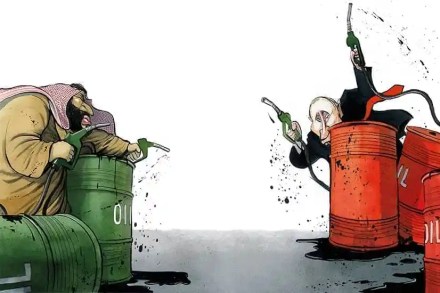
It largely slipped under the radar, but there was a rare bit of good news for hard-pressed consumers and businesses this week: the next meeting of Opec+, originally scheduled for today, has been pushed back almost a week amidst rumours of splits between its members. Most people struggling with inflation and the cost of living probably don’t look for salvation in the depths of the international and business pages. Few organisations cast a longer shadow over economic life in the West than the Organisation of Petroleum Exporting Countries (Opec) and its tag-alongs in Opec+. Ever since it was first established in 1960, the purpose and mission of this organisation has

Is Javier Milei already defying his critics?

Critics of Argentina’s president Javier Milei have already made up their minds: he is a lunatic and his plans will collapse on first contact with the real world. Argentina’s money will run out and the economy will grind to a halt. To some commentators, he is a ‘hard-right’ ideologue who will crash the economy within weeks. They say he’s like Liz Truss and Kwasi Kwarteng on roller-skates. If you listen to those attacking Milei, you’d be forgiven for thinking the man in charge in Buenos Aires will precipitate yet another economic calamity in a country which has been stumbling from one disaster to another for almost a hundred years. But

The Scottish Greens’ oil crusade is coming unstuck

‘Well, well, well,’ as the meme goes. ‘If it isn’t the consequences of my own actions.’ The news that Grangemouth, Scotland’s last oil refinery, is to close by 2025, with hundreds of jobs thought to be at risk, has elicited statements of concern from across the political spectrum. But no one is likely to improve upon that from Scottish Green MSP Gillian Mackay, who posted on Twitter/ X: There couldn’t be a more dazzling display of radical cluelessness. Mackay’s party, which is in government with Humza Yousaf’s SNP in Scotland, has made a crusade of harrying the oil and gas industry out of operation north of the border. Earlier this

Rachel Reeves borrows an attack line from Ronald Reagan

Rachel Reeves is getting used to being nicknamed ‘the copy-and-paste shadow chancellor’ by the Tories. Today she leaned into that name by repeating a phrase she’s been using for a while; one she copied and pasted from another politician. Ronald Reagan’s 1980 question of ‘Are you better off now than you were four years ago?’ was the central theme of her Autumn Statement response. Her recast of it was ‘the questions that people will be asking at the next election and after today’s autumn statement are simple: do me and my family feel better off after 13 years of Conservative governments? Do our schools, our hospitals, our police today work

Why is the public sector so unproductive?

The government has achieved its promise to halve inflation from last December’s level, borrowing has come in at little under the predictions made in March’s budget, and the Chancellor has felt able to lower taxes. But one thing isn’t going well: productivity. Little-noticed figures released by the Office for National Statistics (ONS) this week show that output per worker has fallen by 0.1 per cent over the past 12 months and output per hour is down by 0.3 per cent. While productivity in the private sector has risen by around 30 per cent since 1997, in the public sector it has hardly risen at all The problem is especially acute in

Why we should all welcome Hunt’s tax break for businesses

Rishi Sunak has made ‘long-term decisions’ the leitmotif of his government. Today’s Autumn Statement announcement on permanent full expensing – which will allow businesses to write off capital investment costs against corporation tax immediately and in full – shows his Chancellor is singing from the same hymn sheet. While it might sound dry, this tax reform is a vital step towards fixing one of the key structural weaknesses in the British economy: lacklustre business investment. Hunt’s announcement today will help boost productivity, economic growth and wages. In due course, full expensing should make us all – businesses, workers and consumers – better off. The current version of full expensing, introduced

Rishi Sunak can’t take the credit for falling inflation

Even the best-run companies have occasional leadership crises. But if you asked ChatGPT to come up with a blockbuster boardroom-bloodbath movie scenario, I doubt it would propose anything as extreme as this week’s events in its own San Francisco-based parent company, OpenAI. Chief executive and co-founder Sam Altman was fired last week for failing to be ‘consistently candid’ with OpenAI’s board, though no one was prepared to say what he had not been candid about. By Monday he had a new job leading AI research at Microsoft, OpenAI’s 49 per cent shareholder. One inside source claimed 743 of OpenAI’s 770 staff had signed a letter supporting him and many of

Don’t be deceived by Jeremy Hunt’s tax ‘giveaways’

When Jeremy Hunt takes to his feet in the Commons this afternoon to deliver his Autumn Statement, he’ll be trying to woo voters with some tax ‘giveaways’: VAT thresholds might be raised to help small businesses and the basic rate of National Insurance could be reduced for the rest of us. But hold on. Before the Chancellor gives anything back, both he and the Prime Minister Rishi Sunak need to do something far more important: they should apologise for all the tax rises the Tories have imposed. We don’t know the final figure yet, but it turns out that the Chancellor has around £13 billion to £15 billion of ‘headroom’,

Will the Tories’ ‘carrot and stick’ benefits plan work?

Rishi Sunak wants to frame a benefits crackdown in tomorrow’s Autumn Statement in compassionate terms, with ministers saying people with mobility problems and mental illnesses can no longer be ‘written off’ thanks to advances in technology making it easier to work from home. Instead, they will be expected to look for work or face benefits sanctions. The ‘carrot and stick’ approach being proposed will include a promise to claimants that their right to benefits won’t be reassessed if they look for work, as well as better support in the package of reforms being developed by work and pensions secretary Mel Stride. In lots of ways, this is compassionate: being out

Bailey pours cold water on hopes of inflation falling quickly

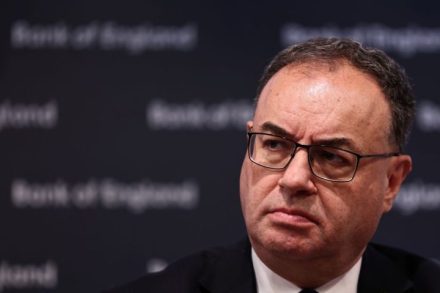
Should we bother taking any notice of what Andrew Bailey says about inflation, given that he and his colleagues on the Monetary Policy Committee (MPC) failed miserably to foresee any of the inflationary forces of the past two years? As late as May 2021 they were still predicting that the Consumer Prices Index (CPI) would rise no higher than 2.5 per cent at the end of 2021 before falling back to 2 per cent. For what it is worth, the Governor of the Bank of England has come over all pessimistic. Addressing the Treasury Select Committee this morning he said markets have got it wrong: they are putting too much emphasis