Economy

  • AAPL

    213.43 (+0.29%)

  • BARC-LN

    1205.7 (-1.46%)

  • NKE

    94.05 (+0.39%)

  • CVX

    152.67 (-1.00%)

  • CRM

    230.27 (-2.34%)

  • INTC

    30.5 (-0.87%)

  • DIS

    100.16 (-0.67%)

  • DOW

    55.79 (-0.82%)

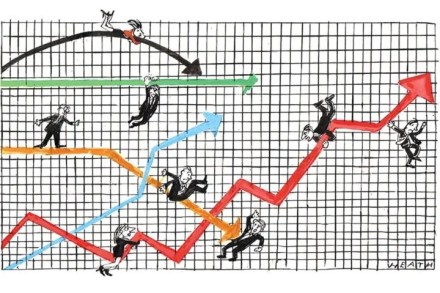
The surprising truth about AI and jobs

Lord Stockwood, the minister for investment, recently floated the idea of universal basic income to cushion AI-driven job losses. Last month, the European Central Bank published a study of 5,000 eurozone firms showing that companies which adopt AI are 4 per cent more likely to hire. Something doesn’t add up. So what’s going wrong? In 2013, a widely cited Oxford study told us that 47 per cent of American jobs were at high risk of automation. Since then, every serious forecast has done the same thing: decompose a job into tasks, score which tasks machines can do, announce a crisis. The renowned VC investor Marc Andreessen refined the point this

Spotlight

Featured economics news and data.

Cutting Britain’s giant welfare bill would be an act of kindness

Does having money really matter that much? There are those, usually with quite a bit of it, who want us to care less about materialism. But, unequivocally, money really does matter – not because of any status it supposedly brings, but for the freedom it buys: freedom to choose how we live and how we look after others. Considering this, it seems that the deep disillusionment with mainstream politicians in recent years stems from a protracted and ongoing period of stagnant living standards over which they have presided. But the truth is that the average person has not got poorer since the global financial crisis. They have got a little

Can Jeremy Hunt cut taxes in good conscience?

When the government announces a range of tax cuts tomorrow, it has pledged to do so in a ‘sustainable’ way. What counts as sustainable, however, is going to be hotly contested – especially in light of this morning’s update from the Office for National Statistics, which saw the UK borrow more than forecast or expected last month. Public sector net borrowing came in at £14.9 billion in October – more than a billion pounds higher than forecast by the Office for Budget Responsibility and £4.4 billion more than was borrowed during the same month last year. There are two ways to look at the data. The first is to note that while

Why have Sunak and Hunt suddenly decided they want tax cuts?

The government’s transition on taxes has taken place at lightning speed. We’ve gone from chancellor Jeremy Hunt hinting at tax cuts yesterday morning on the BBC to Rishi Sunak confirming that not only are tax cuts coming this Wednesday, but they are now a major priority for the government, as laid out in five new promises made today. Arguably the UK economy has been defying the doomsday predictions for a while now But it’s not just the policy that’s changing. It’s the rhetoric too. Hunt has gone from insisting that tax cuts are ‘virtually impossible’ in September – not something to consider right now, he said in October – to ushering them in this November and embracing a

Sunak makes more pledges – but what happened to his last five?

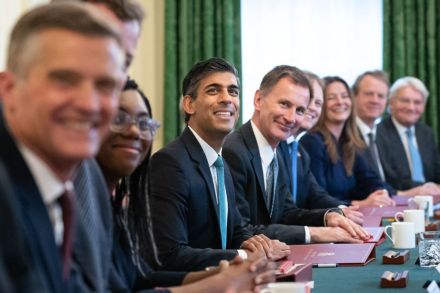
In his speech in north London his morning, the Prime Minister confirmed that tax cuts are coming this Wednesday, as is another attempt by the government to get Britain’s 5.5 million missing workers back into employment. But Rishi Sunak didn’t stop there. Having achieved one of his five pledges for the year last week — the inflation rate halved in the year to October, slowing to 4.6 per cent — the Prime Minister decided this morning to offer up five more. Now in addition to the ‘five promises’ made in January — halving inflation, growing the economy, reducing public debt, cutting NHS waiting lists and ‘stopping the boats’ (a pledge

The Tories must get serious about welfare reform

You can’t fault Mel Stride for trying. Conscious that our current levels of worklessness are neither sustainable nor likely to win the Tories plaudits at the next general election, the Work and Pensions Secretary has been proposing a range of wild and wacky solutions. In February, it was reported the government would be expanding ‘midlife MOTs’ to get the unemployed under-50s back to work. In July, the Department for Work and Pensions (DWP) policy generator was at it again, encouraging doctors to refer patients to life coaches rather than sign them off sick.  Now we’re getting the stick: new reforms would see people who refuse take on work placements or

What changed Hunt’s mind on tax cuts?

Has Jeremy Hunt had a change of heart or a change of circumstances? The Chancellor has spent the past few months crushing any hope of a major tax cut in next Wednesday’s Autumn Statement, insisting that the government’s main priorities – including tackling inflation and improving the dire state of the public finances – directly contradict calls to cut taxes now.  Just a month ago, Hunt was telling grassroot members at Conservative party conference that the Treasury was in no position to talk about personal tax cuts, ‘or even to ask what if’. If there were to be any kind of update in the Autumn Statement, he said, the priority would

Fewer shoppers are hitting the high street than before Covid

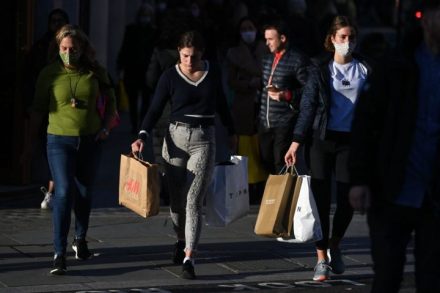
The UK economy has so far defied those, like the Bank of England, who confidently predicted a recession. But the threat is not over yet, as the retail sales figures for October show.  Not only were sales volumes down by 0.3 per cent over the month, but the Office for National Statistics (ONS) also revised its estimate for sales volumes in September downwards from minus 0.9 per cent to minus 1.1 per cent. Over the three months to October – a better guide as the number is based on more data – sales were also down 1.1 per cent. Over the year to October, sales volumes were down 2.7 per cent (although the

Biden and Xi’s meeting is a boost to the global economy

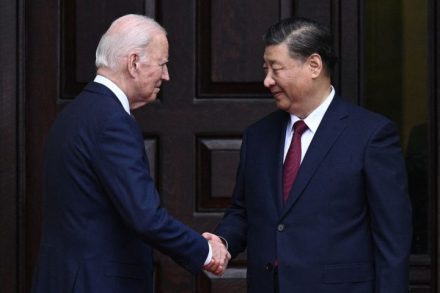
At least there will be some pandas. At his summit with President Biden this week, China’s President Xi pledged to send more cuddly bears to the US, the traditional Chinese way of cementing good relations with other countries. More importantly, there was a significant easing of tensions between the two largest economies in the world. Military communications will resume, reducing the chances of a catastrophic miscalculation between the two nations, controls on narcotics will be tightened up, and there will be a resumption of high-level diplomatic contacts. It remains to be seen if that sticks. But if it does, one point is surely clear. That could yield a huge ‘peace

What’s the point of a degree?

‘Place nose on dot.’ That’s what my screen is telling me to do as the first step in a ‘liveness’ test I must complete to be accepted as a signatory on a club bank account. But if I align the image of my face with the dot, nothing happens. If I press my nose to the screen, I go cross-eyed. And if the test’s purpose is to make sure I’m not dead, it would be simpler to ask me to shout at it. After the sixth failed attempt, that’s what I do – cursing the modern world in which identity fraud is so prevalent that all new connections between customers

Sunak meets first pledge as the rate of inflation halves

Inflation has slowed significantly, according to the latest update from the Office for National Statistics. The headline rate was 4.6 per cent in the year to October, down from 6.7 per cent the previous month. The sharp slowdown is largely attributed to last year’s hikes in energy prices dropping out of the data with the figures now reflecting Ofgem’s price cap reduction.  This major slowdown in the inflation rate allows Rishi Sunak and Jeremy Hunt to say that one of their five pledges for the year has been delivered. In January, the prime minister promised to ‘halve inflation’ by the end of the year. The rate in January was 10.1 per cent

The UK labour market is beginning to cool

Slowly but surely, the labour market in the UK appears to be cooling down. Data from the Office for National Statistics this morning shows the number of job vacancies across the economy fell by another 58,000 between July to September, taking the total figure to an estimated 957,000. This is still far above pre-pandemic levels, but the number has been dropping constantly, and is down again for a sixteenth consecutive period. Meanwhile, both the UK’s unemployment figure and inactivity figure have remained ‘largely unchanged on the quarter’: sitting at 4.2 and 20.9 per cent, respectively. This bodes well for an economy that is trying to dodge the dreaded label of ‘stagflation’. The UK

The spectre of recession continues to haunt the UK economy

The UK economy grew 0.2 per cent in September. This followed 0.1 per cent growth in August, revised downwards from 0.2 per cent. Monthly figures don’t always tell a story on their own, but these past two months of data reflect the UK economy’s trend for the year – one, unfortunately, of virtually no growth. The provisional Q3 figures are out this morning as well, showing no economic growth between July and September. A tiny 0.1 per cent uptick in the services sector was offset by a small fall in construction output, which has led to a flatlining economy. Compared with the same quarter in 2022, GDP has increased by

WeWork and FTX tell us visionary hype is always dangerous

In the New York trial of Sam Bankman-Fried, founder of the collapsed FTX crypto exchange, there was never a moment when he looked like talking his way to freedom: he was found guilty on seven charges of fraud and conspiracy and now awaits what’s likely to be a very long sentence. Justice has been swift and sure, barring an extraordinary reversal on appeal. But what should worry thoughtful observers is the fact that during the period of the trial, from 3 October to 2 November, the price of bitcoin rose from £22,700 to £28,700. Perhaps investors saw the crypto currency as a safe haven after Hamas’s attack on Israel. Perhaps they

Snooping on benefit claimants’ bank accounts won’t cut fraud

Another day, another wheeze from a desperate government as it tries to move the polls. Benefit claimants could soon have their bank accounts checked each month to ensure they are not lying about their savings. The law change, designed to crack down on benefits fraud, appears to be the government’s answer to the fact that welfare payments have exploded in recent years. It will reportedly be unveiled in the Autumn Statement, with estimates suggesting it could save the taxpayer £100 million a year. But will it make a difference? The Department for Work and Pensions’ total proposed expenditure for 2023/24 is set to reach £279 billion (almost half of which is pensioner benefits).

Are we diluting the meaning of ‘mental health’?

What does ‘mental health’ mean? Is the answer to that question undergoing a generational change, as younger people become more aware of – and likely to talk about – their mental state and to discuss it in terms of ‘mental health’? And will that cultural change have economic effects? These are some of the questions I’ve explored in a Radio 4 Analysis show that’s broadcast on Monday night.  There might be a generation of workers who are inclined to take a day off work because they’re feeling a bit worried about a big meeting and so on It includes the voices of several fascinating people, but in particular I’d draw

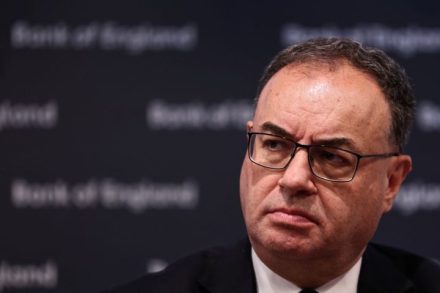
Has the Bank of England done enough to stave off recession?

The Bank of England has held interest rates at their 15-year high for a second time. Markets were expecting another pause, but there was no guarantee: once again the Monetary Policy Committee (MPC) was split on the decision, voting 6 – 3 to hold rates at 5.25 per cent. The minority on the committee were in favour of increasing rates by 0.25 percentage points.  The Bank’s governor warned these votes would be ‘tight’ and hard to predict for the foreseeable future. But some are taking this second pause as a sign that rates have peaked. Capital Economics says it is ‘all-but confirmed’ now, while also noting that the ‘Bank is

Alison Rose doesn’t deserve a huge NatWest payout

When I wrote in July that Dame Alison Rose’s forced exit as chief executive of NatWest in the wake of the Nigel Farage scandal was ‘unnecessary’, many readers vehemently disagreed with me. Out she went, Treasury ministers having steamrollered the NatWest board’s brief attempt to hold her in post – and a subsequent Information Commissioner’s Office (ICO) report concluded she had breached data protection laws by revealing to the BBC that Farage had been a customer of the Coutts arm of NatWest and adding the misleading suggestion that his accounts had been closed for purely commercial reasons. Bang to rights, then. Rose should forfeit the £10 million to which she’s

What’s stopping a housing crash?

Should we really believe that house prices rose by 0.9 per cent in September, as claimed by the latest release from the Nationwide House Price Index? The unexpected rise moderates the annual fall in house prices from 5.3 per cent in August to 3.3 per cent in September. There is a health warning on the Nationwide’s figures – and one which also applies to the monthly Halifax figures. Both these indices are derived from data on mortgage approvals for their own customers. When the market slows and there are fewer sales, it means there is less data on which to base the monthly figures, which inevitably makes them less reliable.

What can Rishi learn from the EU’s plummeting inflation rate?

Good headlines are coming out of the Eurozone this morning, as the inflation rate slowed to 2.9 per cent in October. This is a spectacular fall from its double-digit peak last October, when the rate sat at over 10 per cent. Today’s news brings inflation to a stone’s throw away from the European Central Bank’s target of 2 per cent. But it’s not without trade-offs. Alongside today’s inflation news, we have also learned that growth across the Eurozone took a hit, averaging a 0.1 per cent contraction between July and September this year. This dip was worse than the consensus, which expected to see a small uptick in GDP. Some

Is the business world sane again?

There are signs that woke capitalism is on the way out. Unilever, purveyor of the most right-on brand of the moment, Ben & Jerry’s ice-cream, will no longer ‘force fit’ all of its brand with a social purpose, following a backlash over the company’s ‘virtue-signalling’. Hein Schumacher, who became Unilever’s chief executive in July, has said that for some brands, giving them a social or environmental purpose ‘simply won’t be relevant or it will be an unwelcome distraction.’ He added: ‘I believe that a social and environmental purpose is not something that we should force fit on every brand.’ This report, in today’s Daily Telegraph, marks a significant U-turn for the manufactures of

Let’s do away with EPC ratings

The Autumn Statement could propose offering discounts in stamp duty for homebuyers who take improvement to raise the Energy Performance Certificate (EPC) rating of their home during their first two years of ownership. Could this be the beginning of a new divergence between the Conservatives and Labour, where the Tories provide incentives and Labour pursue punitive measures?  More carrot and less stick over green policies seems a good thing Previous government policy was to threaten the owners of homes with low EPC ratings. Landlords were to be banned for letting properties with a rating lower than ‘C’, and in the longer term it would become impossible to buy, sell or take