Economy

  • AAPL

    213.43 (+0.29%)

  • BARC-LN

    1205.7 (-1.46%)

  • NKE

    94.05 (+0.39%)

  • CVX

    152.67 (-1.00%)

  • CRM

    230.27 (-2.34%)

  • INTC

    30.5 (-0.87%)

  • DIS

    100.16 (-0.67%)

  • DOW

    55.79 (-0.82%)

The surprising truth about AI and jobs

Lord Stockwood, the minister for investment, recently floated the idea of universal basic income to cushion AI-driven job losses. Last month, the European Central Bank published a study of 5,000 eurozone firms showing that companies which adopt AI are 4 per cent more likely to hire. Something doesn’t add up. So what’s going wrong? In 2013, a widely cited Oxford study told us that 47 per cent of American jobs were at high risk of automation. Since then, every serious forecast has done the same thing: decompose a job into tasks, score which tasks machines can do, announce a crisis. The renowned VC investor Marc Andreessen refined the point this

Spotlight

Featured economics news and data.

Cutting Britain’s giant welfare bill would be an act of kindness

Does having money really matter that much? There are those, usually with quite a bit of it, who want us to care less about materialism. But, unequivocally, money really does matter – not because of any status it supposedly brings, but for the freedom it buys: freedom to choose how we live and how we look after others. Considering this, it seems that the deep disillusionment with mainstream politicians in recent years stems from a protracted and ongoing period of stagnant living standards over which they have presided. But the truth is that the average person has not got poorer since the global financial crisis. They have got a little

Dodgy data risks breaking Universal Credit

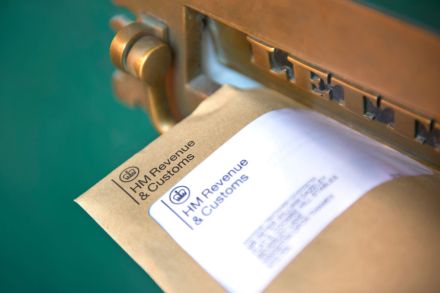
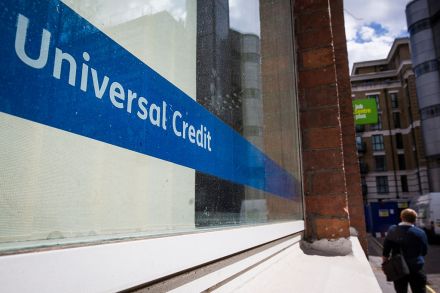
As many as one in 20 Universal Credit payments to working Brits are wrong. Claimants are at risk of destitution when they’re underpaid and accused of fraud when they’re overpaid, as the Department for Work and Pensions has been using a flawed data stream provided by HMRC to calculate Universal Credit payments. This week The Spectator revealed how HMRC’s PAYE earnings data is error strewn and fundamentally unreliable. Now it has emerged this system, used to calculate Universal Credit, risks criminalising benefit recipients and automated computer systems make it impossible for claimants to put the record straight. Insiders warn of a scandal waiting to happen – one that officials seem unaware of. The social

Jeremy Hunt should stick to sensible pledges – it’s too late for big moves

Imagine you’re Chancellor Jeremy Hunt, drafting your Autumn Statement for delivery in three weeks’ time. Bookies’ odds for a Tory general election win have moved out to six-to-one (against Labour’s dead-cert one-to-seven) following by-election wipe-outs. The Lib Dems look set to nab your South West Surrey seat if you don’t stand down anyway. And you can’t give your back-benches red-meat tax cuts because public borrowing for this year could run £30 billion higher than forecast. Releasing the pension ‘triple lock’ to save money would alienate older Tories. Inheritance tax giveaways that might please them would be campaign gold for Labour. A stamp duty cut would do nothing for floating-vote home-buyers facing

Unemployment is up – but can we trust the ONS’s numbers?

The UK’s unemployment rate rose to 4.2 per cent in the three months leading up to August this year, according to new experimental data from the Office for National Statistics (ONS). This is a 0.2 per cent increase compared with the previous quarter (March to May 2023), but not a big change compared to previous data sets. The new numbers tell a familiar story: that the labour market is cooling slightly yet employers remain desperate for workers. For the last five decades, the ONS has relied on its Labour Force Survey – which covers ‘tens of thousands of households across the UK’ – for its employment data. But in a blog explaining changes to

The Renters’ Reform Bill won’t solve the housing crisis

The Renters’ Reform Bill aims to improve tenant security in the private rental sector by scrapping no-fault evictions, but it’s won’t solve Britain’s housing crisis. The Bill, which returns to Parliament this week for a second reading, was originally dreamt up in the dying days of Theresa May’s government. It could still just about make it in time for the next general election, as the government’s main electoral offer to ‘generation rent’. Yet the reality is that it fails to tackle the main cause of our housing woes: a lack of supply. The Bill’s main component is a ban on so-called ‘Section 21‘ or ‘No-Fault Evictions’. At the moment, the most common arrangement in

The taxman’s dodgy data

Ten years ago, HMRC unveiled what was billed as ‘the biggest change’ to the tax system since PAYE began in 1944. The taxman mandated employers to report their workers’ pay every time they ran payroll. Introduced to support Universal Credit by providing earnings data in close to real time, it has since been used to support a raft of other public policies too, including Covid furlough. But this change to PAYE Real Time Information (RTI), as HMRC calls it, has been a disaster for households on Universal Credit, taxpayers, public finances and confidence in HMRC and the senior civil service, as the quality of tax data has effectively collapsed. At

The weather isn’t to blame for Britons shopping less

It was the weather wot did it, wot stopped us spending in the shops. Yet again, the favourite old excuse has been trotted out by retailers trying to explain where their sales have vanished. Retail sales volumes in September, the Office for National Statistics (ONS) reports this morning, plunged by 0.9 per cent in September, with a quarterly fall of 0.8 per cent. Apparently the hot weather in September is to thank for delaying us going down to the high street to try on all the exciting autumn collections (although why we didn’t do this later in the month when temperatures fell they don’t explain). There is, of course, an

Pressure is mounting for Jeremy Hunt to find tax cuts 

Timing is a funny thing. The Chancellor received some good news about the public finances this morning, just when everyone is focused on fairly catastrophic election results for the Tories. A few hours after it was announced that strong Conservative majorities were overturned in the ​​Mid-Bedfordshire and Tamworth by-elections (Katy Balls analyses the results here), we also learned that there may be slightly more scope than previously thought for Jeremy Hunt to come up with some pre-election sweeteners, with the pressure on to cut taxes. Public sector net borrowing in September came to £14.3 billion – a staggering sum, yes, but £1.6 billion less than in September last year and far below the

Why has there still not been a housing crash?

Not for the first time, a widely-predicted – and for many frustrated buyers, hoped-for – house price crash has failed to materialise. The Office for National Statistics’ House Price Index (ONS HPI) shows average prices up 0.3 per cent in the month of August and up 0.2 per cent since August 2022. This is at odds with the Halifax House Price Index, which put house prices in September at 4.7 per cent lower than a year earlier. But it is a more complete data set based on all sales across the UK. The Halifax index, by contrast, is based on mortgage approvals by the Halifax bank – and there is no guarantee that

The attack on Israel must lead to an uptick in inflation

A 10 per cent increase in oil prices translates to a 0.15 per cent loss of global GDP and a rise of 0.4 per cent in global inflation, says Gita Gopinath, deputy managing director of the IMF. Before Hamas launched its assault on Israel on 7 October, the Brent Crude barrel price had already moved 20 per cent above its summer level of $75 and pundits were predicting $100, based on prospects of tighter supply from Saudi Arabia and Russia. Natural gas prices have also risen sharply with winter approaching – and no one knows how escalation of the latest Middle East conflict might affect other energy flows and supply chains.

Who would lend money to Humza Yousaf?

It runs a vast budget deficit. It keeps raising taxes way above its neighbour. It spends wildly, it is at war with its major industry, and its former leader has been arrested over an investigation into missing party funds. But, heck, never mind about that. Humza Yousaf, the leader of the Scottish National Party, has just decided the bond markets will now have the privilege of ignoring Switzerland and Norway for a few days and can lend a few billion to Scotland instead. There is just a small problem, however. Why would anyone want to lend money to Humza?  It was certainly an ambitious proposal. In his conference speech, Humza

Has inflation stuck?

‘As we have seen across other G7 countries, inflation rarely falls in a straight line,’ said Chancellor Jeremy Hunt this morning in response to UK inflation data for September. We’ve seen this in the UK, too: at the start of the year, the rate of inflation rose from 10.1 per cent on the year in January to 10.4 per cent in February – before finally falling out of the double digits in April. And this morning we’ve seen another break in the line: the rate of inflation stuck at 6.7 per cent on the year in September, the same rate as August. Food and non-alcoholic beverages were the ‘largest downward

Say goodbye to tax cuts?

‘We are in a horrible fiscal bind’ says the Institute for Fiscal Studies this morning, as it publishes its Green Budget report ahead of the Autumn Statement. A combination of stagnant growth, stubborn inflation, rising debt interest payments and a tax burden at a postwar high has produced a grim assessment of the UK economy, which the IFS suggests will worsen in the coming years, as ‘huge fiscal pressures’ around the National Health Service and public sector pensions increase (more on that here). The report’s conclusion is that now is not the time to raise taxes. It would make terrifying reading for a Conservative prime minister and chancellor if they weren’t already aware

It’s official: we don’t know how many people are unemployed

For perhaps the first time in its history, the Office for National Statistics does not know how many employed, unemployed and economically inactive people there are in the country. This morning, the monthly labour market figures were due to be published. But late last week news slipped out that the employment portion of the release would have to be delayed. The reason: plummeting survey response rates. You simply cannot make decisions about which levers to pull if we do not know how many people are in work Each month, Britain’s statisticians work out how many people there are in the workforce based on responses to a national ‘Labour Force Survey’.

Where did all the boomer bankers go?

There aren’t many Alex types in banking anymore. The popular middle-aged cartoon banker, greyer and greyer since the 1980s, is regularly depicted in the Daily Telegraph gazing sagely over the heads of panicked young traders, safe in the knowledge he’s seen it all before. Older traders like him are few and far between now. Instead, Britain’s banks and investment firms have been left largely in the hands of the youngsters, a generation too used to working in an era of free money. It’s a troubling thought. Since the 2008 financial crisis, expensive and experienced senior bankers have been cast out, replaced by younger, cheaper rivals. Credit Suisse was forced into a desperate rehiring scramble in

As oil prices rise, the permacrisis continues

It was a year ago this weekend that Liz Truss sacked her chancellor, Kwasi Kwarteng, over the fallout of their ‘growth plan’. This marked the beginning of the end of Truss’s premiership: she then appointed Jeremy Hunt to the role, and he swiftly dismantled almost every part of her infamous mini-Budget. Since leaving No. 10, Truss has been quick to return to the political spotlight, writing comment pieces for national papers, giving interviews, making speeches and interventions – and launching a Growth Commission through which she continues to take the Office for Budget Responsibility to task. But just as Truss continues to make her views known, so do her critics.

Britain’s sluggish growth is nothing to celebrate

So, the doomsters have been proved wrong again – not least the Bank of England, which a year ago forecast recession throughout 2023. GDP figures released by the Office of National Statistics this morning show that the economy grew by 0.2 per cent in August, partially reversing a sharp contraction of 0.6 per cent in July.  Across the three months to August – which is a rather better guide to what is happening than the volatile monthly figures – show growth of 0.3 per cent. It is not possible now – by the usual definition of two consecutive quarters of negative growth – for Britain to suffer a recession in 2023, and

Metro’s story tells us markets are still fearful of a banking crash

Market sentiment around the possibility of failures in the banking world remains as febrile as ever. Or so we might judge from coverage of Metro Bank – which reports suggested might have been edging towards collapse before finding a new owner over the weekend. Metro was the brashest of the ‘challenger banks’ that sprouted after the 2008 financial crisis and the only one that aimed to build an all-new network of 200 branches. Its American founder, Vernon Hill – whose other interests included a chain of Burger King outlets – declared an urge to ‘make banking fun’ when the first Metro opened in Holborn in 2010, offering free lollipops and

Starmer’s house-building plan could prove a hit with young voters

The biggest hinderance for the Conservatives is that they have nothing to offer young voters. The Labour party, however, just might. It seems that Keir Starmer will announce in his conference speech a plan to return to the idea of post-war new town corporations, which were able to compulsory-purchase land at agricultural value. It could – just possibly – mean a sharp fall in the price of new housing, massively expanding the number of first time buyers.  The great shame is that the Conservatives couldn’t bring themselves to introduce a similar policy You don’t have to be a socialist to feel aggrieved at your inability to afford a home, something that you

Is the IMF right to be this pessimistic about the UK economy?

The International Monetary fund has published its biannual World Economic Outlook report – and it’s more bad news for the UK. While the IMF’s predictions for 2023 fall broadly in line with other forecasts – which show Germany having the most economic trouble this year – the IMF predicts that the UK will be an outlier come 2024. It expects the UK to grow by 0.6 per cent next year: the weakest growth among G7 nations and a downgrade of 0.4 per cent from its previous predictions. But there are reasons to be optimistic. Revisions to UK GDP of late has been more positive. Just last month the Office for National Statistics

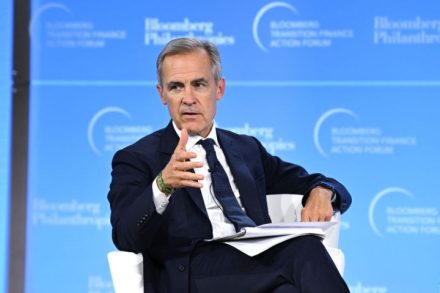
Mark Carney is wrong to endorse Rachel Reeves

The timing could hardly have been better. Other Labour leaders and shadow chancellors have had to make do with endorsements from the drummer in a 90s Britpop band, or a runner up for the Booker Prize. Rachel Reeves, however, rounded off her speech to the Labour party conference today with no one other than the former Governor of the Bank of England Mark Carney singing her praises. But hold on. Isn’t Carney starting to abuse his position – and possibly the Bank’s independence as well?  By taking sides so openly Carney is turning the Bank into a political body At least we know who Carney would be voting for if