Economy

  • AAPL

    213.43 (+0.29%)

  • BARC-LN

    1205.7 (-1.46%)

  • NKE

    94.05 (+0.39%)

  • CVX

    152.67 (-1.00%)

  • CRM

    230.27 (-2.34%)

  • INTC

    30.5 (-0.87%)

  • DIS

    100.16 (-0.67%)

  • DOW

    55.79 (-0.82%)

Trump’s oil sanctions relief is a precious gift for Putin

Apart from windfall revenues from higher oil and gas prices and the political leverage that comes from supplying the Global South with fertilisers, how much sanctions relief can Russia also expect amid the war in the Middle East? Some relief is already here. On 12 March, the United States amended its sanctions on Russian oil tankers already at sea. Under an updated general licence, Washington continued to allow the sale of Russian crude and petroleum products loaded onto vessels as of that date. It also globally extended a month-long Treasury department waiver, issued a week earlier, that had allowed India to buy Russian crude and petroleum products loaded between 12 March

Spotlight

Featured economics news and data.

Cutting Britain’s giant welfare bill would be an act of kindness

Does having money really matter that much? There are those, usually with quite a bit of it, who want us to care less about materialism. But, unequivocally, money really does matter – not because of any status it supposedly brings, but for the freedom it buys: freedom to choose how we live and how we look after others. Considering this, it seems that the deep disillusionment with mainstream politicians in recent years stems from a protracted and ongoing period of stagnant living standards over which they have presided. But the truth is that the average person has not got poorer since the global financial crisis. They have got a little

Christine Lagarde is failing again

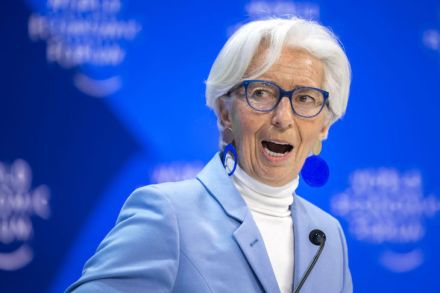
Christine Lagarde, the president of the European Central Bank, has one of the most glittering CVs in European politics. The ex finance minister of France, and former managing director of the International Monetary Fund, earns £365,000 a year for running the show at the ECB. But is she any good? An internal poll of staff at the Bank, leaked to the press, suggests not. It found that more than half of employees rated her leadership of the organisation as either ‘poor’ or ‘very poor’. Her own people reckoned she put self-promotion ahead of the institution (‘Quelle surprise’ as they would say in her native country), pushed an irrelevant political agenda,

Can Jeremy Hunt really afford more tax cuts?

On the face of it, this morning’s public sector finance update is good news. The government borrowed £7.8 billion in December last year. This is well below the £11 billion that economists had expected and almost half the £14 billion last forecast by the Office for Budget Responsibility (OBR). These are the lowest borrowing figures for December since the pandemic hit.  Once again, larger tax receipts helped fill in the gaps: up on the year to £61.1 billion – £3.5 billion higher than December 2022 – though on this occasion they notably undershot the OBR’s expectations by £1.8 billion, suggesting a minor slowdown. A large contributor to lower borrowing figures overall was

Why the Tories should think twice about pre-election tax cuts

Are Jeremy Hunt and Rishi Sunak asking the right question as they approach the spring Budget? For the Chancellor and Prime Minister, the key issue is ‘how can we cut taxes in a way that will get us credit with voters?’ But polling by YouGov for today’s Times suggests voters might want them to ask a different question about improving public services, with 62 per cent saying that the government should prioritise spending more on public services rather than cutting taxes. Hunt won that argument, but seems to have forgotten about it now he is Chancellor The curious thing is that Hunt used to make a similar argument when he

Can we trust Hunt’s tax cut promise?

More tax cuts are on their way, according to the both the Prime Minister and Chancellor who have written comment pieces in The Sun on Sunday and The Mail on Sunday respectively to indicate their intentions ahead of the upcoming March Budget. This is interesting because their published plans suggest a rise in taxes, to levels not seen in peacetime history. Might they be about to change their mind? The Prime Minister used an outing to Hampshire to give the green light to tax cuts at ‘future events when we can responsibly do so’, while the Chancellor used his trip to Davos to say that a lower tax burden was ‘the direction of travel we would

Jeremy Hunt has difficult decisions ahead of him on tax cuts

The Tory party’s plan to further cut taxes in the Spring Budget is not exactly a secret. Still, Jeremy Hunt’s suggestion at Davos that they are indeed coming has sparked imaginations – while his party continues to debate internally where these tax cuts should land. Speaking on a panel at the World Economic Forum’s conference in Davos, Switzerland, the Chancellor gave his biggest indication yet about his priorities for the upcoming fiscal statement. ‘We note that the economies growing faster than us in North America and Asia tend to have lower taxes,’ he said. ‘I believe fundamentally that low-tax economies are more dynamic, more competitive and generate more money for

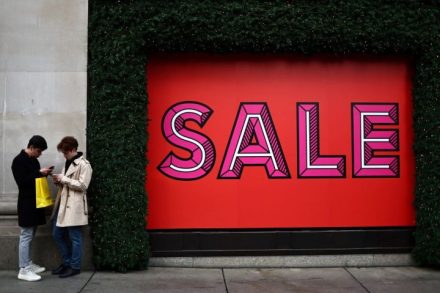
Will the high street slump spell trouble for the economy?

Consumers seem finally to have thrown in the towel: they are no longer propping up the economy. After a year in which the predicted recession kept failing to arrive, the high street finally ran out of steam in December with a hefty 3.2 per cent fall in sales volumes compared with November. Non-food was down 3.9 per cent. Year on year, according to the retail sales figures published by the Office for National Statistics (ONS) this morning, sales were down 2.8 per cent in December. This would appear to mark a headlong descent into recession – except that GDP figures published last week appeared to show the opposite: the economy

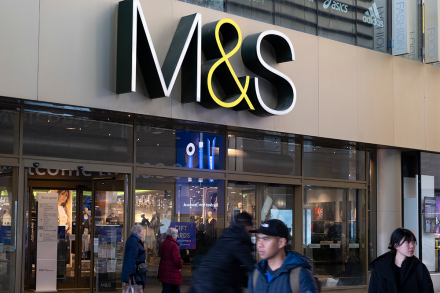
Why can’t the UK be more like Marks & Spencer?

Marks & Spencer was a 20th-century paradigm of better business: a trusted brand and a benign employer that built strong relationships with suppliers and generated handsome returns for shareholders. Then its performance began to fade, as one management team after another failed to keep pace with retail trends in-store and online. By August 2020, when it announced 7,000 job cuts and ‘multi-level consultation [on] further streamlining’, I was moved to predict M&S would end up as no more than ‘a chain of upmarket convenience food stores and a website that’s handy for sending flowers and chocolates’. But I misjudged the residual loyalty of middle-class shoppers. Lately they have been returning

Rising inflation makes a speedy interest rate cut less likely

Inflation rose to 4 per cent on the year to December, up slightly from 3.9 per cent the previous month. It’s the first time the inflation rate has increased for almost a year – an unexpected uptick, as the consensus was for the rate to slow once more, down to 3.8 per cent.  This is not the update politicians and central bankers were hoping for, but as far as monthly data goes, it’s not the end of the world either. The inflation rate doesn’t come down in a straight line, as evidenced already in the UK’s battle to get prices under control. The jump up to 4 per cent on the year

Has Britain’s jobs market bounced back?

The jobs market has turned a corner. Vacancies have fallen again to 934,000, down 49,000 in the last three months of the year, the longest continuous fall on record. Wage growth slowed to 6.5 per cent in cash terms – which will please the Bank of England – but luckily for workers inflation is falling faster, meaning those rises translate into real terms pay bumps (of about 1.3 per cent). Employment climbed slightly while unemployment remained flat.  The next inflation figures are out tomorrow but the wage data are a sure sign of the direction of travel. Take out bonuses and average pay rose 6.6 per cent (1.4 in real

What’s wrong with trillionaires?

Why is Oxfam so concerned about the coming possibility of the world’s first trillionaire? The charity has this week released a report with an apocalyptic warning that one is likely within the next decade. Yet surely people only get that rich by making something that people want. That should be celebrated instead of condemned.  In a report published for the start of Davos, the annual event where very rich people gather at an expensive resort in Switzerland to worry about being rich, Oxfam said the world’s first trillionaire could come soon. Apparently, that showed we are entering a ‘decade of division’. ‘We have the top five billionaires, they have doubled

Will Red Sea strikes disrupt the UK economy?

November is proving to have been a lucky month in Britain. Inflation slowed significantly: from 4.6 per cent on the year in October down to 3.9 per cent on the year in November (a bigger fall than anyone predicted). Not only that: this morning we learned from the Office for National Statistics that the economy grew by 0.3 per cent, rebounding from an (unrevised) 0.3 per cent contraction in October.  Unfortunately that headline growth rate was largely thanks to a handful of temporary factors. Growth in overall services, up 0.4 per cent, is mainly attributed to a reduction in strikes that month, particularly within the health and transport sectors. Furthermore,

Will inflation return to normal this year?

When will inflation return to the target rate? According to its latest forecasts, the Bank of England isn’t expecting inflation to slow to 2 per cent until 2025. But could this happen much sooner? Several independent forecasters are growing in confidence that inflation could get down to 2 per cent this spring, rather than next spring. Oxford Economics now expects inflation to average 2.1 per cent this year (a full percentage point lower than it expected in November). They also expect the inflation rate to slow to the annual rate of 2 per cent in April, as Ofgem once again lowers the energy price cap and last year’s higher prices

How much should we fear the return of the ‘bond vigilantes’?

BlackRock’s UK chief investment strategist, Vivek Paul, has warned this week that pre-election promises of large tax cuts or spending increases could unsettle the bond markets again. There are clear echoes here of the turmoil that followed the Liz Truss and Kwasi Kwarteng mini-Budget back in 2022. How worried should we be? These warnings should not be dismissed lightly. BlackRock is a huge global player, with more assets under management than any other firm. Sentiment can be fickle and market selloffs are often self-reinforcing. The mini-Budget backfired in part because of mistakes that no-one is now likely to repeat, such as sidelining OBR There are also some reasons to think

Fujitsu should pay for the Post Office scandal

Let’s talk about Fujitsu. In particular, let’s ask why the Japanese multinational IT supplier has not been taken to court, or heavily fined, or barred from bidding for new public-sector contracts, for the faults of its Horizon sub-post-office system and the mishandling of pleas for help from hundreds of innocent sub-postmasters who were wrongfully convicted. Public reaction to the ITV drama Mr Bates vs the Post Office has provoked the former Post Office chief Paula Vennells to hand back her CBE, but whatever she did wrong, she wasn’t the root cause of the scandal. So let’s take a closer look at the maker of the kit that failed. Fujitsu built

Boris Johnson can’t lecture Sadiq Khan on rail strikes

London mayor Sadiq Khan has just given us a foretaste of a Labour government by capitulating to the RMT and averting a tube strike at the last moment by, to borrow Nye Bevan’s phrase, stuffing the rail workers’ mouths with gold. That, at least, is Boris Johnson’s assessment of the 11th-hour agreement to avert the walkouts. Johnson is right, except is it really much different from what has been going on for years under his and other Conservative governments? It wasn’t Labour which gave us train drivers on £65,000 a year – far more, in some cases, when you add on overtime. That puts some train drivers in the top

In defence of ‘fat cat’ chief executives

Are chief executives overpaid? The High Pay Centre thinks so. Every January, it releases data showing the huge inequality between top UK CEOs and average workers. The results are startling: ‘Bosses of Britain’s biggest companies will have made more money in 2024 by lunchtime on Thursday than the typical worker will all year,’ according to the BBC, which wrote up the story showing that top bosses’ average reward amounts to £3.81 million a year. But is this disparity with the £34,963 annual median wage for full-time workers really a surprise? The truth is that this pay gap is an obvious feature of a free market where top pay in business

eBay side-hustlers deserve to get taxed

There will be people outraged by the latest initiative of HMRC: to demand that the likes of Airbnb, eBay, and Vinted furnish it with details of everything bought and sold on their online platforms. The taxman should keep his nose out of the sharing economy, many will say. People who sell their secondhand clothes, books, or who earn a little holiday money by letting their property to tourists while they are themselves away from home are doing the environment a favour, they will argue. HMRC should keep its nose out and go for the ‘real’ tax-dodgers in large corporations, who are taking advantage of our tax system by shunting profits

Bitcoin’s bounce back has proved its critics wrong again

The charlatans had been exposed. Its flimsiness had been confirmed. And the bubble had finally burst. Rewind to just over a year ago, and with the collapse of the crypto exchange FTX and the arrest of its billionaire founder Sam Bankman-Fried it seemed as if the legions of skeptics of the digital currency Bitcoin had been proved completely right. But hold on. Over the last few months, its price has soared again. In reality, Bitcoin has made fools of its critics once again.  In the wake of the FTX scandal, Bitcoin, along with its digital imitators, seem headed for history’s dustbin. After all, the collapse seemed to confirm all the

House prices aren’t falling any time soon

Economic forecasts rarely survive far into the New Year. Just look at last year’s prophecy by the IMF that the UK economy would shrink by 0.6 per cent in 2023, which was already being revised by March. But we are only three days into 2024 and already the forecasts of falling house prices are beginning to look somewhat questionable. In November, the Office for Budgetary Responsibility (OBR) forecast that prices would slip by 4.7 per cent over the year. The Halifax followed that up by forecasting a 2 to 4 per cent slide. Yesterday, however, the Halifax became one of those banks which has started slashing fixed rates. A two year fix is suddenly

Labour won’t fix Britain’s childcare mess

Labour appeared stumped when, earlier this year, the government announced it would be drastically increasing its ‘free’ childcare provision. Given it was a policy that shadow education secretary Bridget Phillipson was rumoured to be considering, her party would now need to find a way to outdo itself. Now, we have a clearer idea what its ‘signature offer’ to voters might entail. At present, all parents of pre-school children over the age of three are entitled to 15 ‘free’ hours with registered providers. From April 2024, this will expand to all over-twos, and from September, to all children over nine months (the point at which Statutory Maternity Pay ends). If the rollout continues