Economy

  • AAPL

    213.43 (+0.29%)

  • BARC-LN

    1205.7 (-1.46%)

  • NKE

    94.05 (+0.39%)

  • CVX

    152.67 (-1.00%)

  • CRM

    230.27 (-2.34%)

  • INTC

    30.5 (-0.87%)

  • DIS

    100.16 (-0.67%)

  • DOW

    55.79 (-0.82%)

Trump’s oil sanctions relief is a precious gift for Putin

Apart from windfall revenues from higher oil and gas prices and the political leverage that comes from supplying the Global South with fertilisers, how much sanctions relief can Russia also expect amid the war in the Middle East? Some relief is already here. On 12 March, the United States amended its sanctions on Russian oil tankers already at sea. Under an updated general licence, Washington continued to allow the sale of Russian crude and petroleum products loaded onto vessels as of that date. It also globally extended a month-long Treasury department waiver, issued a week earlier, that had allowed India to buy Russian crude and petroleum products loaded between 12 March

Spotlight

Featured economics news and data.

Cutting Britain’s giant welfare bill would be an act of kindness

Does having money really matter that much? There are those, usually with quite a bit of it, who want us to care less about materialism. But, unequivocally, money really does matter – not because of any status it supposedly brings, but for the freedom it buys: freedom to choose how we live and how we look after others. Considering this, it seems that the deep disillusionment with mainstream politicians in recent years stems from a protracted and ongoing period of stagnant living standards over which they have presided. But the truth is that the average person has not got poorer since the global financial crisis. They have got a little

Will Jeremy Hunt play it safe today?

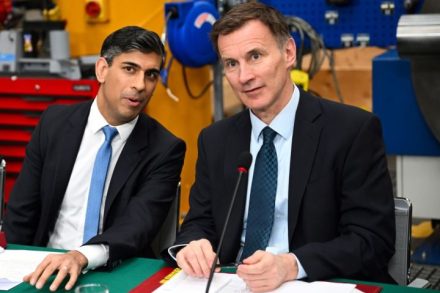
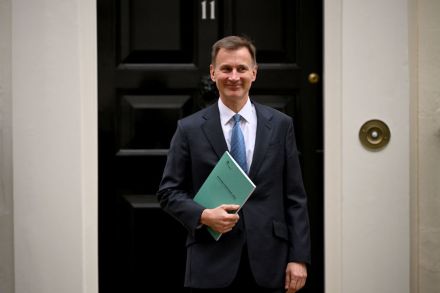
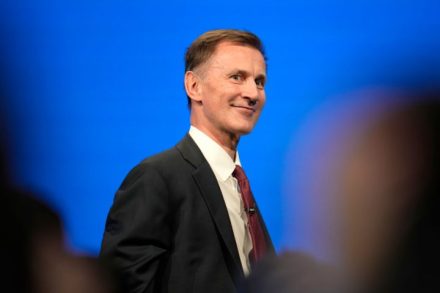
This Budget is probably Jeremy Hunt’s last fiscal event before the election, and the Chancellor will want to at least set a fair wind for the Conservatives to head into polling day. That means giving voters a sense that sticking with the Tories is the safer option, offering them giveaways on tax and the sense that more tax cuts might be to come – as well as avoiding the sort of post-Budget rows that can define a government in all the wrong ways. Hunt is expected to cut National Insurance by a further two percentage points, on top of the 2 point cut he made in the autumn. This is

It’s time to take a chainsaw to the British civil service

Slashing Whitehall waste is a pledge that brings to mind Augustine’s prayer for the Lord to make him virtuous – but not yet. It is something repeatedly promised by governments, but rarely delivered. Here we are again, days out from the final Budget before voters go to the polls in a general election, and Jeremy Hunt is announcing a crackdown on bureaucracy in the public sector. He intends to reduce the civil service headcount by 66,000, returning it to pre-pandemic levels. Do we need a Department for Culture, Media and Sport? Voters are likely to feel cynical. Britain’s public sector is riddled with entitlement and waste at levels described by the Chancellor as

The farce of Drax’s wood pellets

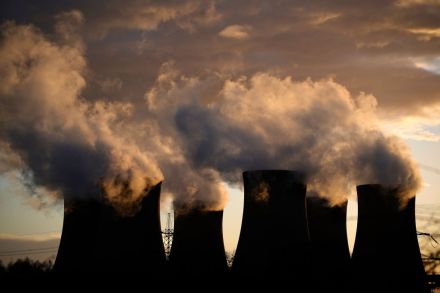
When is the government going to stop pretending that chopping down trees in North American forests and shipping them across the Atlantic to burn them in UK power stations is a zero-carbon form of energy? The environmental-friendliness of Drax power station in North Yorkshire has been called into question yet again this week after BBC Panaroma investigation reported that some of the woodchips being burned there have allegedly been sourced from established ‘old growth’ forests in Canada rather than recent plantations. Drax has not commented on those specific allegations, but the investigation has thrown the issue back into the spotlight. How and where the wood is sourced has a dramatic

Sending seized Russian loot to Ukraine is no simple matter

We must be bolder in seizing frozen Russian assets, writes the Prime Minister in a Sunday newspaper. ‘That starts with taking the billions in interest these assets are collecting and sending it to Ukraine.’ Can that really be done? Having consulted international legal opinion, here’s my summary. The principle of ‘sovereign state immunity’ doesn’t prevent the freezing of state assets, but confiscating them would create a very dangerous precedent, namely that no state’s reserves would be secure in anyone else’s banking system. But in a conflict where the aggressor has clearly breached international law, as Russia has in Ukraine, the wrongfully harmed state has a right to restitution; and the

Jeremy Hunt is about to disappoint his party

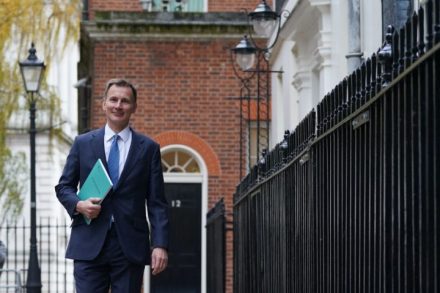
In a week’s time, Jeremy Hunt will stand up at the despatch box and unveil the Spring Budget. This event has long been seen by Tory MPs as a key marker ahead of the general election. It is the last big set piece event in the calendar between now and the short campaign. Ministers, too, have raised expectations about what could be in it – with Rishi Sunak telling The Spectator in December to expect a ‘gear shift’ in taxation. However, the problem for Sunak and Hunt is that they are likely to disappoint. Despite the government recouping record revenues in January, the public finances are not as healthy as

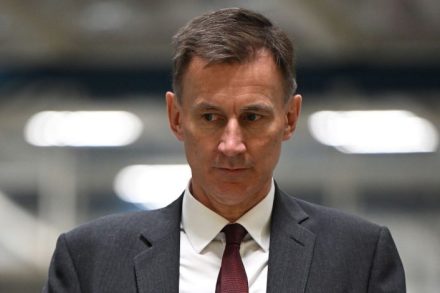
Can Jeremy Hunt actually afford to cut taxes?

Does Jeremy Hunt have the cash to spend on tax cuts in his spring Budget next week? That’s the billion pound question that the Institute for Fiscal Studies (IFS) focused on during its pre-Budget briefing this morning, hosted by Director Paul Johnson and Deputy Director Carl Emmerson.  As Ross Clark notes on Coffee House, the latest rumours suggest that the Chancellor is pivoting away from an income tax, inheritance tax or stamp duty cut (the last of which is considered most desirable by economists, including those over at the IFS, due to how badly it distorts the housing market and weighs down growth). Instead he may be opting for another penny

How Hunt’s Budget could put Starmer in a bind

Time was when a chancellor had to resign for leaking the Budget – Hugh Dalton famously lost his job after telling a reporter a few details of what he was about to deliver. Dalton assumed it was past the newspaper’s deadline, but he was wrong. Nowadays, it seems to have become customary for chancellors to leak beforehand, just leaving a ‘rabbit in the hat’ for the day itself. Therefore, we should take seriously reports in the Times this morning that Jeremy Hunt has abandoned plans to cut income tax, inheritance tax or stamp duty next week and instead intends to limit himself to a further one pence reduction in National

Is there a house-building cartel?

The Competition and Markets Authority report on the housing sector should be a boost to the Yimby policy machine. It expressed grave concerns about the housing market operating like a cartel, and said that much of this was enabled by the current planning system.  The CMA was tasked with looking at the housing market a year ago, because targets are consistently missed, prices are consistently rising, and there are allegations that tactics such as ‘land banking’ are used to drive up profits. The result was a strong indictment of the planning system as it currently stands.  The report found that under-staffed planning departments, combined with a veto-heavy system, made getting

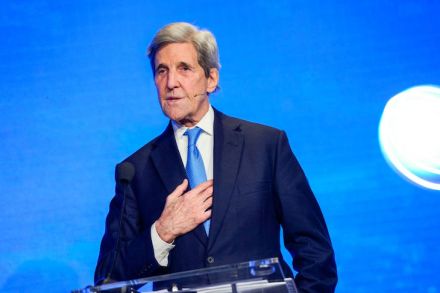
John Kerry has unwittingly exposed the climate change wheeze

Here’s a good wheeze: prod every last inch of your own country, open the taps and become the world’s largest producer of fossil fuels. Then, when other countries start to try to develop their own resources, tell them they mustn’t, for the good of the planet. In other words, make them all dependent on you. That is pretty well what John Kerry, the outgoing US special envoy on climate change, suggested on the BBC’s Today programme this morning.  The US is shamelessly using climate change to promote its own industries ‘We do need gas to keep our economies moving but we don’t need to open a whole raft of new

Unreliable renewables will make energy more costly

It is of course good news that the Ofgem price cap for a dual fuel household bill will fall from £1,928 to £1,690 from April (that is the bill paid by the average householder). It means that there should be strong downwards pressure on inflation (the Consumer Prices Index) in April. Barring a jolt in inflation in other goods and services or an acceleration in earnings it ought to mean the Bank of England finally has the courage to cut its base rate, probably in May. None of that, though, should distract from the fact that energy prices in Britain remain far too high. For one thing, the huge fall

Falling energy prices raise hopes of a Spring rate cut

The good news started with the revelation that last month had produced a surplus of £16.7 billion for the Treasury – double the surplus of the same month last year and a record-breaking amount (in nominal terms) since records began. This has boosted hopes that the Chancellor will be able to offer up more tax cuts in his Spring Budget (though admittedly his headroom to do so still seems to be notably less than the amount he had to play with last autumn to deliver the business tax cuts).  Now, as money comes off workers’ tax bills, their energy bills will fall too. This morning Ofgem announced changes to the

Did red tape worsen Britain’s inflation problem?

It has been a miserable few years for our quality of life. People have gotten used to that sinking feeling every time you read a price tag at the supermarket, receive an electricity bill or – particularly for younger generations – think about someday buying a house.This squeeze comes from prices rising faster than wages, and has resulted in the biggest slump in living standards since records began. According to the Office for Budget Responsibility’s latest forecasts, household incomes will still be 3.5 per cent below pre-pandemic levels over the coming year. The immediate causes of this crisis are well-known. The Bank of England printed too much money during Covid,

The valuable lesson learnt from Japan’s stock market recovery

A lot has happened over the past 34 years: the Cold War ended, several wars have taken place in the Middle East, a banking collapse occurred, and a global pandemic left millions stuck inside their homes. But one thing remained constant throughout: the bear market – a price drop of 20 per cent or more from the most recent high – in Japanese equities ground on and on relentlessly. After hitting an all time high of 39,915 points on 29 December 1989, the Nikkei 225 which covers the country’s major companies slumped and slumped again. Today, it finally recovered all those losses, setting a fresh all time high. There is

Bombed-out bank shares are a failure of modern capitalism

When I read news of a fresh strategic plan for Barclays, I seem to hear a ghostly rustling from the corner cupboard in the living room. Could it be a forlorn protest from the dusty bundle of share certificates that are the last vestiges of my late father’s lifelong service to Barclays from junior clerk to deputy chairman? They were a modest farewell reward – 40 years ago, in the era before mega-bonuses for senior executives – that might once have been swapped for a country cottage but today would barely yield enough to pay for his upcoming centenary dinner. Even the Qatari sheikhs have sold down their Barclays holdings

Jeremy Hunt’s cash boost isn’t quite what it seems

Jeremy Hunt needed some good news this morning, when the monthly public sector finance update was released by the Office for National Statistics (ONS). Having promised meaningful tax cuts last month – and then rowed back expectations this month – the Chancellor was hoping for a notable surplus and reduction in borrowing to give himself a bit more room within his fiscal rules to cut tax. January delivered. The ONS reports a surplus of £16.7 billion in January 2024 – not only double the surplus of the same month last year, but a record-breaking surplus (in nominal terms) since records began. Receipts jumped up to £111.4 billion – almost £4 billion more

London has France to thank for its Brexit win

The City of London would be hollowed out. Bankers would have to retrain as burger chefs. And Paris and Frankfurt would emerge as the twin centres of the European financial markets, leaving London as little more than a backwater. Of all the predictions made by some Remainers during Brexit, there was one that kept re-emerging: that financial trading would inevitably move to the other side of the Channel.  It’s clear that this doom mongering was overblown. A deal has finally been struck between EU chiefs and the bloc’s member states that will keep the City of London in business for several years to come. According to Politico, following pressure from

Germany’s recession is an omen of Europe’s economic decline

The German economy is set to tip back into a technical recession in the first quarter of 2024, according to the Bundesbank. This means it will continue to shrink in the first three months of this year – after contracting last year and registering as the worst-performing major economy in the world. A technical recession is ‘technical’ in the sense that it follows a pretty arbitrary rule of thumb used by economists to identify when an economy is in decline. It was once useful for indicating serious and shocking problems in an economy, but since western economies entered a period of deep stagnation at the turn of the decade it

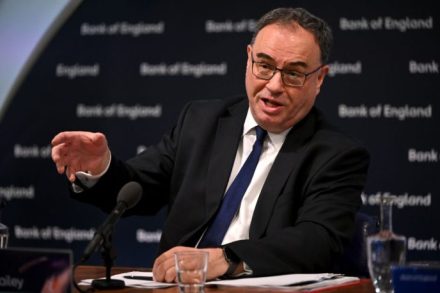
Andrew Bailey: Britain’s recession may already be over

We’re not cutting interest rates because we think the recession may already be over and we’re not even sure we are in recession anyway. That was the gist of Governor of the Bank of England’s evidence to the House of Commons Treasury Select Committee this morning. Bailey fell back on the traditional excuse of CEOs who get it wrong and send their businesses into a downwards spiral: the weather Andrew Bailey reminded the committee of what happened ten years ago when Britain seemed to be on the verge of a triple dip recession. In the end, revisions of the GDP figures revealed that we had never even entered a double

Shoppers are falling out of love with online shopping

Maybe the Office for National Statistics should stop seasonally adjusting its data. That is the lesson from today’s retail sales figures, which show a strong rebound in sales volumes of 3.4 per cent in January. All areas of spending were up except clothing, which was down by 1.4 per cent. The overall figures might sound promising, but all they really do is to cancel out December’s fall of 3.3 per cent. Look at the figures for the past three months and sales are pretty flat, falling by 0.2 per cent in that time. The high street is in a stupor, just like the economy as a whole. Why did retail appear

The UK is in recession – but for how long?

At the start of last year Rishi Sunak made the promise to ‘get the economy growing’ one of his five major pledges. Today he is confronted with headlines that the UK fell into recession at the end of last year, as the Office for National Statistics reported this morning that the economy contracted by 0.3 per cent between October and December 2023. This fall in the fourth quarter followed a fall of (an unrevised) 0.1 per cent in the third quarter. That’s two consecutive quarters of negative growth – the technical definition of recession. Today’s revelation is going to spark debate about what constitutes a recession. The technical definition has been met, but