Economy

  • AAPL

    213.43 (+0.29%)

  • BARC-LN

    1205.7 (-1.46%)

  • NKE

    94.05 (+0.39%)

  • CVX

    152.67 (-1.00%)

  • CRM

    230.27 (-2.34%)

  • INTC

    30.5 (-0.87%)

  • DIS

    100.16 (-0.67%)

  • DOW

    55.79 (-0.82%)

Trump’s oil sanctions relief is a precious gift for Putin

Apart from windfall revenues from higher oil and gas prices and the political leverage that comes from supplying the Global South with fertilisers, how much sanctions relief can Russia also expect amid the war in the Middle East? Some relief is already here. On 12 March, the United States amended its sanctions on Russian oil tankers already at sea. Under an updated general licence, Washington continued to allow the sale of Russian crude and petroleum products loaded onto vessels as of that date. It also globally extended a month-long Treasury department waiver, issued a week earlier, that had allowed India to buy Russian crude and petroleum products loaded between 12 March

Spotlight

Featured economics news and data.

Cutting Britain’s giant welfare bill would be an act of kindness

Does having money really matter that much? There are those, usually with quite a bit of it, who want us to care less about materialism. But, unequivocally, money really does matter – not because of any status it supposedly brings, but for the freedom it buys: freedom to choose how we live and how we look after others. Considering this, it seems that the deep disillusionment with mainstream politicians in recent years stems from a protracted and ongoing period of stagnant living standards over which they have presided. But the truth is that the average person has not got poorer since the global financial crisis. They have got a little

China is set for a serious economic fall

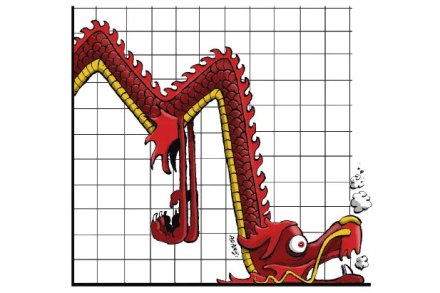
 The future trajectory of the Chinese economy is a subject for doctoral theses rather than casual column items. But the advent of the Year of the Dragon, at last weekend’s Lunar New Year, was greeted with such pessimistic commentaries that the natural contrarian should ask whether the consensualists are getting it wrong: maybe the dragon is merely marking a pause before martialling its mighty resources for the next transglobal burst of fire? The negative narrative goes like this. In spite of deflation in consumer prices, Chinese shoppers are frightened of spending. Despite central bank interventions aimed at boosting asset prices, the property market is crashing after the collapse of the

The Body Shop won’t be the last high street chain to collapse

The collapse of the retail chain The Body Shop marks a new low in the sorry tale of Britain’s shops and their struggle for survival. The brand was put into administration by private equity firm Aurelius only a few weeks after it had been acquired from its former owners Natura & Co for £207 million. The demise of The Body Shop could see the loss of its 199 shops across the UK and an uncertain future for nearly 2,000 employees – but sadly it is only the latest in a long line of big retail closures. Only last month, Lloyds Pharmacy entered liquidation owing nearly £300 million to its creditors.

Inflation stays at 4 per cent – despite Red Sea disruption

The government had been facing two economic challenges this week, ahead of the by-elections in Kingswood and Wellingborough: the publication of the latest inflation figures and the economic growth figures for the last quarter of 2023. It has just about survived the first challenge. This morning’s update from the Office for National Statistics shows the inflation rate sticking at 4 per cent on the year in January, unchanged from December. This is still double the Bank of England’s inflation target, but it is better than expected news, as economists were predicting an uptick to 4.2 per cent. A combination of factors – including the January sales for home goods and furniture and

Too many people in Britain aren’t working

Britain’s worklessness crisis is getting worse. This morning the ONS released figures showing that 1.3 million are on unemployment. But that figure masks a welfare crisis that politicians are doing little to address. Unemployment only covers those actually looking for a job – the real problem is how few are. The true benefits figure goes unpublished and is buried in a password protected DWP database. Every three months the database is updated and we track the results on The Spectator data hub. It was updated this morning and shows the number claiming out-of-work benefits has hit some 5.6 million people. The increase is being driven by those in the Universal Credit (workless) category

Job vacancies fall – but not by enough to lower interest rates

Has the Labour market cooled down enough for the Bank of England to change its mind on interest rates? Almost certainly not, based on the latest data from the Office for National Statistics, out this morning. The reintroduction of the Labour Force Survey data, which had to be suspended temporarily due to poor and limited feedback, has now been reinstated, showing fewer changes in the labour market than experts were hoping to see. Job vacancies fell for the nineteenth consecutive time – but not by much. Vacancies were down to 932,000 on the quarter – a fall of 26,000, still well above pre-pandemic levels. Despite expectations that the unemployment rate would rise

The renewables bubble has burst

It wasn’t so long ago that Orsted was being held up as an example of how oil and gas companies should handle the transition to clean energy. In 2009 the then-DONG (Danish Oil and Natural Gas) announced that it was going to turn around it business so that instead of earning 85 per cent of its money from oil and gas it was going to earn 85 per cent of it from renewables. It was an early mover in offshore wind – and, at least for some years, shareholders were richly rewarded. The share price marched upwards from around £19 in 2014 to a peak at £100 in early 2021. Increasing your money

Why Starmer had to ditch his £28 billion green pledge

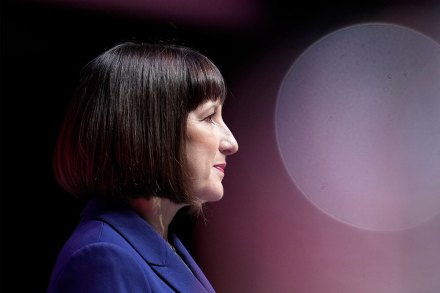
What will Labour’s flagship promise be going into the next election? There’s a policy vacancy, now that the party plans to ditch its pledge to spend £28 billion a year on green investment.  This is not your average U-turn. This has been Labour’s big offering for more than two years. Yet today, Keir Starmer will ditch the headline figure for good – though his party still plans to usher in other parts of their proposed ‘Green Prosperity Plan’.  By abandoning the £28 billion promise, Stamer is putting to rest what had become a contentious topic within his own party. The spending promise – which shadow chancellor Rachel Reeves first committed to

Will Rachel Reeves scrap the private equity tax break?

I’ve been reading – so you don’t have to – speeches recently addressed to a hot-ticket gathering of business leaders at the Oval cricket ground by Sir Keir Starmer and shadow chancellor Rachel Reeves. The nub is a promise to hold corporation tax at the current rate of 25 per cent for the duration of the next parliament, combined with a warning that ‘levelling up of workers’ rights’ will cause companies’ labour costs to rise. Then there’s all the usual guff you’d expect from a government-in-waiting about infrastructure and skills; plus an unusually warm tone towards the financial services sector, including a pledge not to reinstate the EU-inspired cap on

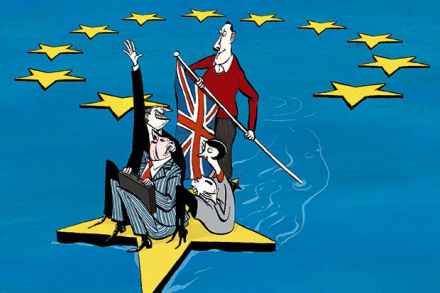
We need to be less like the EU – and more like the US

Who cares about economic forecasts, which have proven to be about as useful as sticking a pin in a chart, blindfolded? But given their prominence when they foresee the UK economy performing less well than the EU, it provides a little balance to note when it is the other way around. A little over a year ago the OECD, like the IMF, was pessimistic about the UK economy, predicting that it would shrink by 0.4 per cent in 2023, and just about creep back into growth in 2024. ‘UK faces worst downturn of any advanced economy, OECD says’ was how the BBC reported it. The only bright spot was that,

Why Kate Forbes is right about high tax

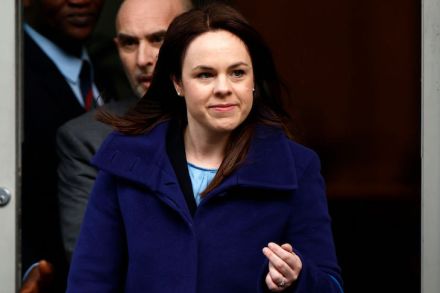
I was on BBC1’s Question Time with Kate Forbes in Glasgow last week in which she was oddly loyal to the SNP government. She seems to have been the only member of Nicola Sturgeon’s government not to be deleting her WhatsApp during Covid and I suspect she’s appalled at the way Sturgeon & co placed secrecy at the heart of their Covid response. She said on Question Time that the way to grow Scotland’s economy was to attract people to come and work there. I put to her that having the highest tax rates in the UK (as Humza Yousaf has chosen to do) didn’t exactly scream “come to Scotland!”.

Will Londoners fall for Sadiq Khan’s election bribes?

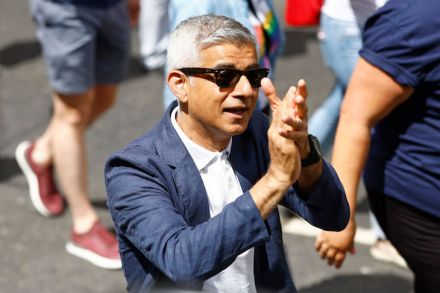
Taxpayers are being treated to a clutch of pre-election bribes from a politician who only a few months ago was claiming there was a lack of money for anything. That will almost certainly be true of Jeremy Hunt’s budget on 6 March, but it is already true of Sadiq Khan’s London Mayoralty budget for 2024/25. Khan was in no doubt who was to blame last December when he announced that the Mayor’s precept on council tax bills in London would rise by 8.6 per cent, more than twice the rate of inflation. The government, he claimed, was starving London of money. It was ‘due to the continued lack of national investment

Interest rate cuts are on the horizon

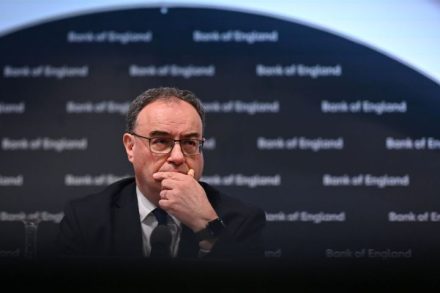
The Bank of England (BoE) has held interest rates at 5.25 per cent for the fourth time in a row. This is no big surprise: with inflation ticking back up slightly on the year to December (rising to 4 per cent) – continued trade disruption in the Red Sea last month is expected to have some impact on prices – it was unlikely that the Monetary Policy Committee was going to start a rate-cutting spree so early in the year. Instead, the hints are in the language used by the Monetary Policy Committee (MPC) in its report. Markets were looking for clear indication that rate cuts are coming. The BoE has delivered this,

Can anyone save the Post Office? 

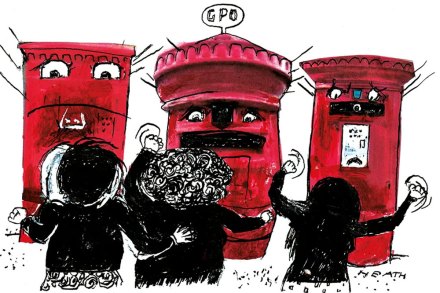
Angry farmers offer a theme for the week – starting with the French at close quarters. Leaving the Eurotunnel at Calais en route to a wedding in the Alps, my car party encounters agricultural rage in the form of convoys of stationary trucks at all the port’s major exit points, as tractors blockade the autoroutes and police do nothing to shift them. Echoing recent protests in Germany, Poland and Romania, French farmers want better price protection, cheaper diesel, more import barriers, more aid from Brussels and less green regulation. We’re lucky not to be sprayed with manure, as was happening elsewhere. The protests have support from the powerful CGT union

No, Brexit checks won’t push up food prices

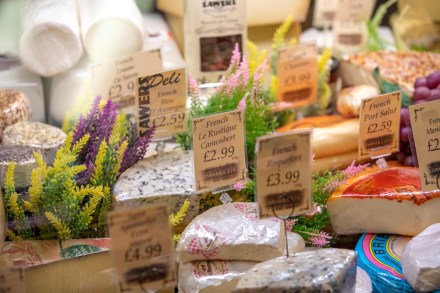
It is one of those occasions when you don’t need to wait for tomorrow’s newspapers to know what will be inside. There will be the usual photographs of empty supermarket shelves, along with the message ‘It’s Brexit wot done it’. Never mind that there are always some gaps on supermarket shelves and that the blockades on French motorways (as that country’s farmers demonstrate their deep commitment to the single market) are bound to impact on some supply chains. The reason for the gaps, it will be asserted, is that from today animal and vegetable products imported to Britain from the EU will require a veterinary certificate. From 30 April consignments will also be

Jeremy Hunt should ignore the IMF’s tax cut warning

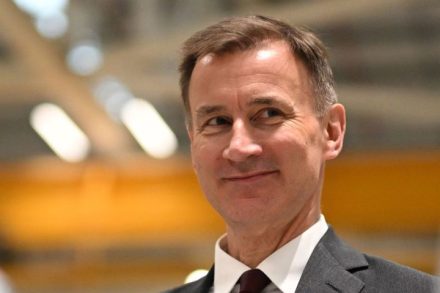
Government borrowing is lower than had been forecast. The economy needs some form of a boost. And perhaps most of all there is an election within a few months. There are plenty of reasons why Chancellor Jeremy Hunt might want to cut taxes slightly in his spring Budget, and perhaps even once more by the autumn. But hold on. The International Monetary Fund (IMF) has just said it would be ‘fiscally irresponsible’. Well, perhaps. And yet, the IMF’s record on forecasting is very poor, and it is also very committed to a high-tax, big-state economic model. On that basis, Hunt should just ignore it, and cut taxes anyway. There is

Do French farmers really have it so bad?

What a shame we are not still in the single market, seamlessly exporting our lamb and whisky so it can be enjoyed in the finest restaurants in Paris. Or rather so that it can be burned and poured over the A1 autoroute. French farmers have blockaded roads with tractors and haystacks, set lorries on fire and are now threatening to re-enact the Siege of Paris by cutting off food supplies to the capital. They are protesting against red tape, environmental policies and what they say are cheap imports. And no, it isn’t just UK farmers whom they don’t like exporting food to Britain. Over the past week, they have attacked lorries

Can we blame universities for cashing in on foreign students?

As an English teacher and sixth form tutor, I spend a lot of my time at the moment celebrating and comforting students as they hear about their UCAS offers. I try to reassure them when they are disappointed – which many of them were last week in particular, when Cambridge offers came out – that the system is flawed and far from always fair. Many of them this weekend will have realised just how unfair it can be, as a Sunday Times investigation revealed that British universities are paying tens of millions of pounds a year to recruit lucrative overseas students with far lower grades than those required of UK applicants. Up

Where are the smart investments under a Starmer government?

I worry that my Burlington Bertie life in London’s West End offers a misleading picture of the real economy. Yes, boutiques and brasseries are busy, but what’s it like in outer boroughs and distant provinces? To take a single morning’s headlines, on the plus side there’s upbeat trading news from ABF, the grocery and Primark discount clothing retailer, which reaches consumers everywhere; and a prediction that energy prices will fall 16 per cent by April. On the negative, warnings that ‘more than 47,000 companies are on the brink of collapse’ (from insolvency specialists Begbies Traynor); and that world trade faces a second wave of Red Sea disruption even if Houthi

Hinkley C and the rising cost of net zero

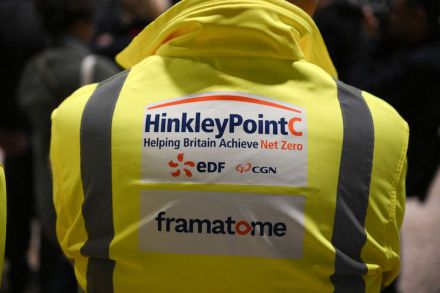
Should we be bothered that Hinckley C nuclear power station has run even further over budget (the latest estimate is £35 billion, nearly twice that quoted when the project was given the go-ahead in 2016) and that its completion date has been put back yet further, to 2031? After all, the whole point of offering French energy giant EDF a guaranteed ‘strike price’ at the then juicy rate of £92.50 per megawatt-hour (at 2013 prices, rising with inflation) was supposed to be to transfer financial risk to EDF and its financial backers. ‘It is important to say that British consumers won’t pay a penny, with the increased costs met entirely

Christine Lagarde is failing again

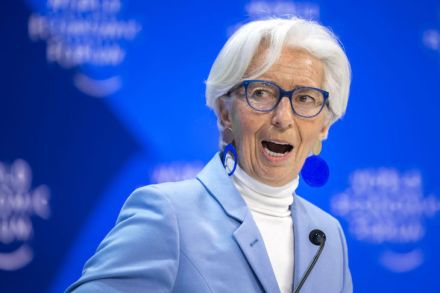
Christine Lagarde, the president of the European Central Bank, has one of the most glittering CVs in European politics. The ex finance minister of France, and former managing director of the International Monetary Fund, earns £365,000 a year for running the show at the ECB. But is she any good? An internal poll of staff at the Bank, leaked to the press, suggests not. It found that more than half of employees rated her leadership of the organisation as either ‘poor’ or ‘very poor’. Her own people reckoned she put self-promotion ahead of the institution (‘Quelle surprise’ as they would say in her native country), pushed an irrelevant political agenda,