Economy

  • AAPL

    213.43 (+0.29%)

  • BARC-LN

    1205.7 (-1.46%)

  • NKE

    94.05 (+0.39%)

  • CVX

    152.67 (-1.00%)

  • CRM

    230.27 (-2.34%)

  • INTC

    30.5 (-0.87%)

  • DIS

    100.16 (-0.67%)

  • DOW

    55.79 (-0.82%)

Is Britain losing its sense of fairness?

Has Britain become a freeloader’s paradise, asks the Spectator’s economics editor Michael Simmons in our cover piece this week. Michael analyses ‘the benefits of benefits’, at a time when Britain’s welfare bill is burgeoning and most households are struggling with cost of living. For example, while a family of four can expect to pay £111 to visit the Tower of London, that is just £4 total on Universal Credit (UC), and for London Zoo it is £108 compared to £26. Michael is not arguing against the idea of helping those in need, but pointing out that – as the benefits bill continues to increase – this is another case of

Spotlight

Featured economics news and data.

Cutting Britain’s giant welfare bill would be an act of kindness

Does having money really matter that much? There are those, usually with quite a bit of it, who want us to care less about materialism. But, unequivocally, money really does matter – not because of any status it supposedly brings, but for the freedom it buys: freedom to choose how we live and how we look after others. Considering this, it seems that the deep disillusionment with mainstream politicians in recent years stems from a protracted and ongoing period of stagnant living standards over which they have presided. But the truth is that the average person has not got poorer since the global financial crisis. They have got a little

Rachel Reeves deserves a rough ride at the CBI

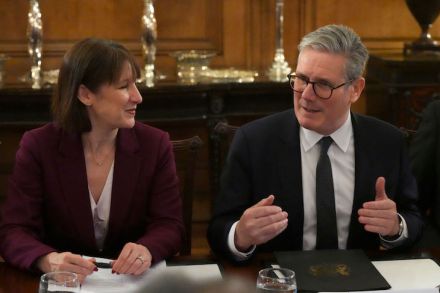
Rachel Reeves was probably expecting to be cheered for restoring ‘stability’, for rebooting ‘growth’ and crafting a British version of Bidenomics to create ‘the industries of the future’. Instead, the Chancellor’s ‘fireside chat’ at the Confederation of British Industry (CBI) conference today is likely to be rather uncomfortable. There probably won’t be any heckling, walk-outs, boos and cat-calls. Yet the business world has made it all-too-clear that Reeves’s Budget will hit both jobs and growth hard. Reeves is going to get a rough ride this afternoon – and deservedly so. Labour’s relationship with business is now broken beyond repair The CBI made it clear this morning what it thinks of

Rachel Reeves faces a frosty reception at the CBI summit

At the beginning of the year, Rachel Reeves was being praised all round for her efforts repairing relations between the Labour party and business. In February, the Chancellor hosted a business conference – attended by leading figures – where she pledged to cap the headline rate of corporation tax at its current rate of 25 per cent if Labour entered government. Since her party’s election triumph, Reeves has stuck to her word on that promise – although other announcements from the Chancellor have caught the business community by surprise and led to strain. It means that Reeves will face a frosty reception when she appears at the Confederation of British

Why young Brits think the social contract is crumbling

Something is stirring. In WhatsApp groups and Westminster pubs, wherever wonks, spads, and other SW1 types gather, there’s a name on everybody’s lips. It’s like John Galt in Atlas Shrugged or Tyler Durden in Fight Club. It’s at once a wail of despair and a call to arms. Who is this man they whisper of? Who is “Nicolas (30 ans)”? The hard-done-by in society, on this increasingly popular account, are not Barbour-wearing farmers “Nicolas (30 ans)” is the protagonist of “Le contrat social”, a meme posted onto Twitter, as it then was, in April 2020. It was popularised by a French account which goes by the nom de plume Bouli, after an obscure

The truth about the lesbian pay premium

Some lesbian and gay campaigners might have you believe that life is hard for gay people. Of course, for many it is. But my experience of being a lesbian is that it is mostly a privilege rather than an oppression. Lesbians can avoid the multiple disadvantages of navigating relationships with men, some of whom have absorbed messages of how they are superior to women. There’s another perk, too: what the Financial Times calls the ‘lesbian pay premium’. An analysis of studies from 1991 to 2018 found that lesbians typically earn 7 per cent more than their heterosexual counterparts. The LGBTQ umbrella term can be suffocating for lesbians That life is

Businesses give Reeves’s Budget a ‘thumbs down’

What did businesses really think of Rachel Reeves’s Budget? Today we have one of the first economic indicators reflecting their responses to Labour’s tax and spend changes – as well as global events like the US presidential election. The Purchasing Managers’ Index (PMI) fell below 50 in November, which suggests the private sector economy is now contracting after a year of expansion.  Firms said that employment has been shrinking for two months and they are not replacing staff who leave voluntarily in order to offset the coming rises in the cost of workers. They also reported subdued customer demand – something shown in the retail sales figures Ross Clark examined this morning.  This

Falling retail sales shows how fragile the UK economy is

Until a few weeks ago it seemed as if the government had inherited if not a golden economic legacy then an improving economic picture. But this morning’s figures for retail sales show just how faltering the economy is. During October the volume of retail sales fell by 0.7 per cent. Worst-affected was textile and clothing sales, which plunged by 3.1 per cent. Online retail suffered along with physical stores. Not only that, the figures for September were revised downwards from 0.3 to 0.1 per cent growth. Comparing year on year, sales volumes were still up 2.4 per cent. Sales in the three months to October were also up, by 0.8

Labour’s promise to cut energy bills looks more foolish than ever

After reneging on its manifesto pledge to not raise National Insurance, Labour is starting to struggle with another promise: to cut energy bills by £300 a year. This morning Ofgem has announced that its Energy Price Cap will rise in January so the average household will be paying £21 a year more. Together with the £149 rise in the price cap in October it means that average bills will soon be £170 higher than they were when Labour came to power.  Together with the loss of Winter Fuel Payment – either £200 or £300 depending on your age – it means that pensioners will be worse off to the tune

Can anything stop benefits spending hitting £120bn?

The Office for Budget Responsibility’s (OBR) forecasts on Budget day included the startling figure that spending on health and disability benefits is set to pass £100 billion in five years’ time. Figures from the Department for Work and Pensions (DWP) today, which are based on a broader range of benefits and recipients, put the amount even higher: £120 billion.  The DWP’s figures include housing benefit for health and disability benefit recipients. In real terms, spending on this definition is forecast to rise by 20 per cent (or £18 billion) over the next five years. The share of government spending that goes on these benefits will be at a record level this year,

GDP has lost its usefulness as a measure of real growth

Paul Samuelson, the famous American economist and author of the bestselling textbook Economics, gave the now quaintly old-fashioned example of the pitfalls in GDP accounting by pointing out that if a man married his maid, GDP would fall. The example was dropped after the third edition. A more relevant example today would be if a middle aged person stops working full-time to look after an elderly relative at home. The GDP economy loses part of the contribution of the middle aged person plus the demand of the elderly person for care in a private care home. Yet in most cases that elderly person is much happier staying in their own

Britain is addicted to spending beyond its means

Imagine what the government could do with an extra £9.1 billion a month. It could build HS2 in its entirety within the space of a year. Or better still, it could double the defence budget and still have some money left over to build the 40 new hospitals which the Conservatives promised – as well as a few schools, too.  That sum – £9.1 billion – is what the government paid in debt interest in October alone, according to the figures on public finances released by the Office for National Statistics this morning. Overall, it was forced to borrow £17.4 billion over the course of the month – only just

The Scottish Tories must go further on tax cuts

Russell Findlay has a tough job. His party is not on track for a good 2026 election and the new Scottish Tory leader needs to figure out quick how to present Scots with a vision worth voting for come the Holyrood poll. He must prove the Scottish Conservatives are not only different from the soft-left SNP, Labour and Lib Dems – but also different from the surging Reform UK, which according to today’s Survation poll is neck-and-neck with the Scottish Tories despite having no leader, no policies and no campaign. Enter Findlay’s ‘common sense’ agenda, which this week turned to tax. The centrepiece of the proposal was an income tax

The EU is heading for fresh financial doom

If it came from Nigel Farage no one would be very surprised. Or from one of the band of German professors who launched the far-right AfD party. But the latest warning of a fresh crisis in the eurozone comes from a far more unexpected source: the European Central Bank (ECB). In its financial stability review published today, the ECB warns that the single currency could soon be plunged into a replay of the trauma of 2011 and 2012. Unfortunately, it is almost certainly right.  The review, published twice a year, is intended to warn the markets of impending risks to the system. Today’s update explores a familiar cocktail of risks,

Inflation surge hits Britain’s ailing economy

Inflation rose to 2.3 per cent in the year to October, up from 1.7 per cent in September – its lowest level since the early weeks of the first lockdown in 2021. This surge above the Bank of England’s 2 per cent target was higher than economists and markets had expected. Worryingly, core inflation (which excludes more volatile goods like food and energy) has also increased slightly to 3.3 per cent – up from 3.2 per cent in September. The largest contributors to the rise in inflation were from the effects electricity and gas prices are having on household costs. The Office for National Statistics’ Chief Economist Grant Fiztner blamed

Farmers won’t be quick to forgive Labour

12 min listen

Thousands of farmers descended on Westminster today to protest the inheritance tax changes proposed in Labour’s Budget. Amidst a sea of tweed and wellington boots, speeches and support came from the likes of Kemi Badenoch, Ed Davey, Nigel Farage and Jeremy Clarkson. To what extent is this just a fringe issue that the government will be able to brush off? Or has the issue exposed a rural blind spot for Labour? And how lasting could the damage be? Katy Balls and Spectator editor Michael Gove discuss with James Heale.  But first, William Moore has been out and about getting the views of farmers directly from the protest… Produced by Patrick

Britain should side with Trump over Europe

It may well be the biggest and most significant choice the Starmer administration will have to take. If Donald Trump decides to impose huge tariffs on China, potentially sparking a global trade war, the UK will have to decide whether it backs America, or tries to steer a softer path with the European Union. All the indications are that it will choose Europe. The trouble is, that will prove a huge mistake – the British economy is very different from the rest of Europe, and we will be thrown overboard as soon as it is convenient.  The contrast has ground to a halt, and it makes little sense to tie

How many farmers will be hit by Labour’s inheritance tax raid?

Tens of thousands of farmers will descend on Westminster in their tractors tomorrow to protest at inheritance tax changes that could see them pay death duties when they hand down their farms. The government doesn’t understand the fuss. It says they are just targeting wealthy land buyers trying to dodge tax. Meanwhile the farmers argue their way of life risks being wiped out. Who’s right? Two in five farmers are over the age of 60, so it’s not impossible the tax ends up having to be paid soon The government says the changes ‘are expected to affect the wealthiest 500 estates each year with smaller farms not affected’ – and

Can Kent’s hop industry survive?

There is something quintessentially English about hop fields. Rows of ten foot wooden stakes rise from the grass, perhaps three feet apart, holding up a network of wires. In the summer, hops grow up these wires like vines, forming a fragrant, uneven wall of green shades: darker leaves with soft lime-green cones. The industry has shaped Kent for centuries with terraces of former pickers’ cottages lining the lanes, and dark clay cone-shaped oast houses – remnants of a time before hops were dried industrially – dotting the landscape. Local museums preserve the testimonies of poor Londoners who escaped here from the East End in the early 20th century to spend

Without America, Britain’s economy will stall

The comments by Stephen Moore, Donald Trump’s economic adviser, should not really be controversial. ‘I’ve always said that Britain has to decide,’ he said from Florida, where he is preparing the new administration’s economic policy. ‘Do you want to go towards the European socialist model or do you want to go towards the US free market? Lately it seems like they [Britain] are shifting more in a European model and so if that’s the case I think we’d be less interested in a free trade deal.’ He is right. Britain absolutely does have to decide whether it wants to be closer to the US economic model or to carry on

Andrew Bailey will regret reopening the Brexit debate

Business taxes are soaring. Employment rights have been massively extended, the trade unions are getting more powers, companies are too dependent on low-skilled immigrants, and the planning system still makes it impossible to build anything. There are plenty of challenges facing the British economy that the Governor of the Bank of England Andrew Bailey could have drawn attention to in his Mansion House speech last night. And yet, instead he decided to reopen the Brexit debate. That was surely a mistake. There are two big problems with Bailey’s decision to reopen that can of worms Addressing the City alongside the Chancellor Rachel Reeves on Thursday, Bailey argued that relations with

Labour’s first growth figures are seriously disappointing

Forecasts are one thing, results are another. It’s a tough morning for the government, as the Office for National Statistics publishes the first quarterly growth figures since Labour entered Downing Street. The figures are disappointing: the UK economy only managed to grow by 0.1 per cent between July and September, lower than had been expected (market consensus was 0.2 per cent). Furthermore, GDP fell by 0.1 per cent in September this year, with production output – which contracted by 0.5 per cent – acting as the main contributor to the fall. The news lands just after Rachel Reeves’s first Mansion House speech, where free trade, city regulation and pension reform were