Paddy Stephens

Paddy Stephens is a Taipei-based freelance correspondent who has written about Taiwan for The Economist and Financial Times. He also writes the Portraits of Taiwan newsletter.

The forgotten history of France’s doomed invasion of Taiwan

From our UK edition

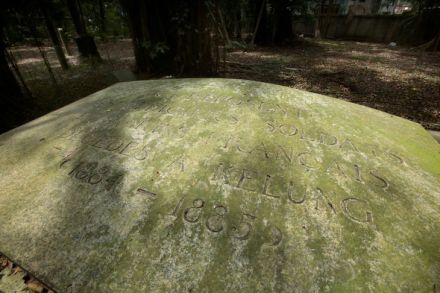
The French language may not be the global lingua franca it once aspired to be, but I’ve found myself using it in some unexpected places far beyond the Hexagon. Near the busy port of Keelung (pronounced Ji-long), beneath the steep hills surrounding a natural harbour less than twenty miles from Taiwan's capital Taipei, is a curious burial site. It has the natural placidity of a churchyard, despite its proximity to a main road; trees shade the headstones, whose first line reads “Ici repose…”. This is a French military cemetery. So what is it doing in Taiwan? Few remember this history in Europe, but in Keelung it is commemorated in a special annual ceremony In 1884, war broke out between the Qing Empire and the French Empire as they wrestled for control of northern Vietnam.
Is Taiwan ready for an attack by China?

From our UK edition

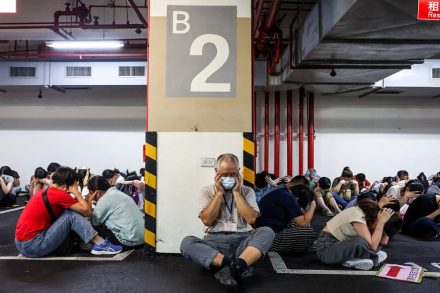
It’s still lunchtime in Taipei but the streets are strangely quiet. A few people are running with their bags, despite the sweltering summer heat, desperate to get somewhere before 1.30 p.m. I’m enjoying the air-conditioning in a local supermarket when an announcement politely informs me and the only other customer still in the shop that we need to hurry if we want to buy something. The checkout assistant rushes to hand me my change, and I head back out into the heat. The Taiwanese government is certainly taking the risk of an attack by China seriously At precisely 1.30 p.m., my phone buzzes with a yellow alert in Chinese and English: 'Air Defense Drill. Missile attack. Seek immediate shelter', with a link to a map of nearby shelters.

Does Taiwan have a free speech problem?

From our UK edition

These are jittery times in Zhongzheng, Taiwan’s Westminster. The island’s most important supporter, the United States, is now led by a man who resents, rather than is grateful for, the island’s enormous high-tech exports to the US. A few commentators wonder out loud whether Taiwan has become too economically dependent on America. There’s another large economy nearby that would happily boost ties. Then there’s the military drills. The two Chinese characters for ‘Liberation’ have dominated the front pages here recently: some in reference to Trump’s tariffs bonanza, others referring to two days of surprise live-fire exercises by the People’s Liberation Army around the island.

Why did Trump throw Taiwan under the bus?

From our UK edition

Things could have been very different. Since the distant days of the first Trump presidency, Taiwanese tech companies have been shifting production from China to Taiwan due to US tariffs and tech controls aimed at China. For the US, that strategy has borne some fruit. Most countries tend to trade the most with their close neighbours. But in February, for the first time in over two decades, Taiwan’s top export destination for goods was not China and Hong Kong, but America, thousands of miles across the Pacific. It was a tremendous victory for America on the frontline of the US-China rivalry. Instead, the arrival of that milestone was greeted with trepidation in Taipei.

Can Kent’s hop industry survive?

From our UK edition

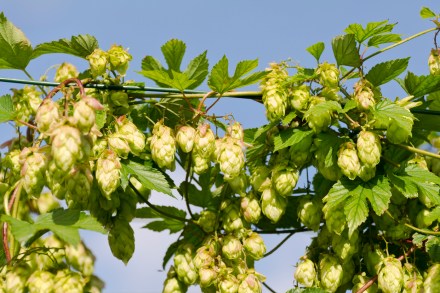
There is something quintessentially English about hop fields. Rows of ten foot wooden stakes rise from the grass, perhaps three feet apart, holding up a network of wires. In the summer, hops grow up these wires like vines, forming a fragrant, uneven wall of green shades: darker leaves with soft lime-green cones. The industry has shaped Kent for centuries with terraces of former pickers’ cottages lining the lanes, and dark clay cone-shaped oast houses – remnants of a time before hops were dried industrially – dotting the landscape. Local museums preserve the testimonies of poor Londoners who escaped here from the East End in the early 20th century to spend their summers picking.  Alas, the local hop industry will soon be confined to history too.