Economy

  • AAPL

    213.43 (+0.29%)

  • BARC-LN

    1205.7 (-1.46%)

  • NKE

    94.05 (+0.39%)

  • CVX

    152.67 (-1.00%)

  • CRM

    230.27 (-2.34%)

  • INTC

    30.5 (-0.87%)

  • DIS

    100.16 (-0.67%)

  • DOW

    55.79 (-0.82%)

Is Britain losing its sense of fairness?

Has Britain become a freeloader’s paradise, asks the Spectator’s economics editor Michael Simmons in our cover piece this week. Michael analyses ‘the benefits of benefits’, at a time when Britain’s welfare bill is burgeoning and most households are struggling with cost of living. For example, while a family of four can expect to pay £111 to visit the Tower of London, that is just £4 total on Universal Credit (UC), and for London Zoo it is £108 compared to £26. Michael is not arguing against the idea of helping those in need, but pointing out that – as the benefits bill continues to increase – this is another case of

Spotlight

Featured economics news and data.

Cutting Britain’s giant welfare bill would be an act of kindness

Does having money really matter that much? There are those, usually with quite a bit of it, who want us to care less about materialism. But, unequivocally, money really does matter – not because of any status it supposedly brings, but for the freedom it buys: freedom to choose how we live and how we look after others. Considering this, it seems that the deep disillusionment with mainstream politicians in recent years stems from a protracted and ongoing period of stagnant living standards over which they have presided. But the truth is that the average person has not got poorer since the global financial crisis. They have got a little

Can the OBR be trusted?

It was the absence of the Office for Budget Responsibility’s judgment that was blamed for the bond market crisis after Liz Truss’s mini-Budget. Truss and her chancellor Kwasi Kwarteng had rushed to enact their vision for a fast-growing economy without waiting for the wisdom of the government’s official fiscal watchdog. For Truss, the OBR is just another part of the establishment that was out to get her. But then, can the OBR be entirely trusted anyway? It seems that it has created a black hole of its own making – by overstating Public Sector Net Financial Liabilities (PSNFL). PSNFL is the measure that Rachel Reeves has chosen to use for

Will the ‘value for money’ tsar really overrule Rachel Reeves?

Is there any word more laughably misapplied than ‘tsar’? We have already had an ‘antisemitism tsar’ and now we are going to have a ‘value for money’ tsar. Had you suggested to a Russian peasant that their monarch was value for money I suspect you might have ended up floating on the Neva River alongside Rasputin. Admittedly, that is not David Goldstone’s official title – we are supposed to call him Chair of the Office of Value for Money. But he does come with a CV that includes involvement in all kinds of public projects associated with tsarist excess. He was in charge of the delivery authority for the London Olympics, which

Can Labour save its Budget?

After the Office for Budget Responsibility’s assessment of the Budget was published on Wednesday, the cost of government borrowing started to rise. Yesterday, those costs hit their highest levels this year, with the 10-year gilt yield peaking just over 4.5 per cent and the five-year gilt yield exceeding 4.4 per cent, before settling slightly by the end of the day.  Labour need this trend to stop. The further borrowing costs rise and the pound falls, the more expensive Reeves’s Budget becomes, as investors demand a higher return for lending to the UK. Moreover, the longer jitters persist, the more certain it will seem that markets have not bought Labour’s fiscal

Britain can grow faster than the OBR thinks

The UK economy may end up growing a bit faster by the end of this decade than the Office for Budget Responsibility expects – but if it does that will be no thanks to Rachel Reeves’s Budget.  The OBR’s projections are unambitious. This is their summary: ‘Having stagnated last year, the economy is expected to grow by just over 1 per cent this year, rising to 2 per cent in 2025, before falling to around 1½ per cent, slightly below its estimated potential growth rate of 1⅔ per cent, over the remainder of the forecast. Budget policies temporarily boost output in the near term, but leave GDP largely unchanged in five years.’

Labour’s farm tax makes no sense

Amid the furore over Lord Alli’s contributions to Lady Starmer’s wardrobe the new environment secretary, Steve Reed, was able to stay under the radar. Most of us weren’t aware that he had been schmoozing his way around British farms during the election campaign wearing brand new, top of the range Le Chameau wellies – also apparently gifted by the ubiquitous Lord Alli. At the time Reed was promising that Labour had no intention of changing Agricultural Property Relief. In fact, responding to an accusation by his Tory opponent, Steve Barclay, he dismissed it as ‘desperate nonsense’. The efforts of the generations before me may all have been for nothing So

Rachel Reeves’s Budget plan is much worse than you think

‘No plan for the economy’ is the charge being made against the government, as Conservatives take to the airwaves following the Budget. The problem is that, in this case, the charge is simply untrue. Labour do have a plan for the economy. It is called securonomics: a worldview set out in some detail by the Chancellor herself in the Spring during her Mais Lecture. And as Paul Mason put it earlier in the year in this magazine, securonomics constitutes a ‘coherent, well founded’ plan for the economy, rooted in a ‘clear political philosophy’. Securonomics will make Britain more lethargic, more risk averse Securonomics, at its most basic level, is a

Labour’s Budget is a missed chance to solve Britain’s benefits problem

‘Fixing the Foundations’ is the phrase the Labour government wants in your head after the Budget. But the thin gruel for dealing with the challenge presented by our ill-health and disability benefits system suggests those words don’t count for much. Apart from the defence of the realm, there is nothing more foundational to society than the way it treats its most vulnerable and most disadvantaged. Some people are, through no fault of their own, not able to work. Its the duty of the government to ensure that a safety net is in place to help these people; it must balance this by ensuring that the system is fair to the

The true cost of Labour’s Budget is impossible to calculate

No sombre music accompanied Rachel Reeves’s Budget, nor was there a reading from Corinthians. Yet, those details aside, one point is surely clear: Labour’s first Budget in 14 years was a requiem for entrepreneurial Britain. The four decades from the Thatcher reforms of the early 1980s, that turned the UK into one of the best places, at least in Europe, to start and build a company, are now officially over. Britain’s economy will be a lot poorer thanks to the Labour government. In Labour land, entrepreneurs might as well not exist True, the Budget might not have been quite as bad as some of the advanced speculation suggested. Even so,

The markets don’t like this Budget much

It has been a good day for investors in the Alternative Investment Market (Aim), with the index of the top 100 Aim shares up 4.3 per cent. But that merely serves to undermine the damage that Rachel Reeves had done to the market by previously suggesting that she might remove the exemption whereby Aim shares were free of inheritance tax (IHT). In the event, she made Aim shares liable for 50 per cent of the normal rate of IHT – hence the relief rally. Yet Aim shares are still down 2 per cent since election day. By contrast, the Ftse small cap index – smaller shares within the main London

Living standards take a hit in Labour’s Budget

‘Judge us by whether, in five years’ time, you have more money in your pocket,’ Keir Starmer told the Mirror earlier this week. This comment came ahead of his speech in the West Midlands, which was designed to prepare the country (and markets) for the Budget. ‘Everyone can wake up on Thursday and understand that a new future is being built, a better future,’ he said in his address. The message was clear: tough decisions now would lead to a brighter – and more prosperous – future in the UK.  In simple terms, the tax hike is set to redirect cash from workers’ wages to the Treasury instead Has that promise been

Eight graphs that expose the truth about Labour’s Budget

Rachel Reeves sounded triumphant as she delivered Labour’s first Budget in 14 years. ‘Invest, invest, invest,’ the Chancellor said. She claimed hers was a Budget for growth and prosperity and, that most of all, it was a Budget to help working people. But the Office for Budget Responsibility – the body set up 14 years ago by George Osborne to judge fiscal events – doesn’t seem to agree. Its report, published immediately after the Chancellor delivered her Budget, makes for grim reading. The stand-out chart in the OBR’s report shows the effect the increase in employer National Insurance contributions will have on Britain’s labour force. Reeves gets much of her

Labour has no idea how to break Britain’s spiral of decline

The government came into office promising to prioritise economic growth. Now, after their first Budget, I suppose we have some idea of what that means: more borrowing to fund public sector capital projects, and higher tax and regulatory burdens on business. This does not seem very likely to prove a successful recipe, and furthers the impression that this government is likely to fall into the same trap that ensnared its immediate predecessors: managing Britain’s relative economic decline, with no clear idea of how to break out of it. The biggest single item in the Budget is the £25 billion increase in employer National Insurance contributions. There are a few things

As it happened: Rachel Reeves raises taxes by £40 billion in Labour’s first Budget

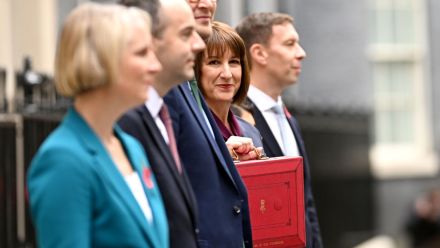
Taxes will rise by £40 billion following Labour’s first Budget for 14 years. The Chancellor announced: • An increase in employers’ National Insurance contributions from April to 15 per cent, raising £25 billion • That the freeze on income tax and National Insurance thresholds will not be extended past 2028 • That the lower rate of capital gains tax will be raisedfrom 10 per cent to 18 per cent, and the higher rate from 20 per cent to 24 per cent • That fuel duty will remain frozen for the next two years • The introduction of VAT on private school fees from January

Why billionaires are fleeing China

‘To get rich is glorious’ is perhaps the most over-used slogan attributed to Deng Xiaoping, the paramount leader who reformed China and opened its economy up to the world. There is no evidence that he actually said it, but regardless it seemed to capture the mood of that era. In the China of Xi Jinping, to get rich is decidedly dangerous, which may account for why the number of super-rich (or at least those admitting to it) is in sharp decline, with many now clambering for the exit to protect their wealth and their liberty. According to a rich list compiled by Hurun, a research group, the number of dollar

Three tests for Reeves’s first Budget

It’s Budget day in Westminster. The question being asked by Labour MPs: can Rachel Reeves pull it off? This lunchtime, the Chancellor will stand at the despatch box and pitch Labour’s first Budget for 14 years as necessary tough choices to ‘fix the foundations’ while also ensuring ‘working people don’t face higher taxes in their payslips’ (see Mr Steerpike for who Labour’s working people definition misses out). Reeves will use a report by the Office for Budget Responsibility to argue that the Tories left such a bad economic inheritance she had to take action. The Tories will try to argue in turn that Labour planned a tax raid (to the

Will there be a surprise in Rachel Reeves’s Budget?

Most chancellors pull a rabbit out of a hat during their Budget statements – something to delight their own MPs and leave the opposition feeling outmanoeuvred. Such has been the atmosphere of doom and gloom generated by Rachel Reeves in advance of hers that there is a temptation to envisage her plonking a boiled bunny on the Commons despatch box and exclaiming: ‘It’s Halloween tomorrow, so grab a load of that!’ And yet Ms Reeves will surely at least attempt to conjure up the vista of some sunlit economic uplands after four months of exaggerated complaints about the financial inheritance passed down by the Tories. Better resourcing of ‘Our NHS’

Why this Budget could be worse than you fear

It is tempting to think of this Budget as a triumph in expectation management. Rachel Reeves’s minions have briefed us on so many potential tax rises that surely the actual speech, when finally delivered, can’t be as bad as feared. Having been conditioned to expect the worst, we will all end up feeling pathetically grateful to Reeves for having spared us. But having run through a few figures I am not so sure. Rather, I fear we may be in for whatever is the opposite of a rabbit out of the hat – a toad out of the hat, perhaps. Over the past few days we have been told to