Andy Maciver

Andy Maciver is Founding Director of Message Matters and Zero Matters

The Tories are increasingly irrelevant in Scotland

From our UK edition

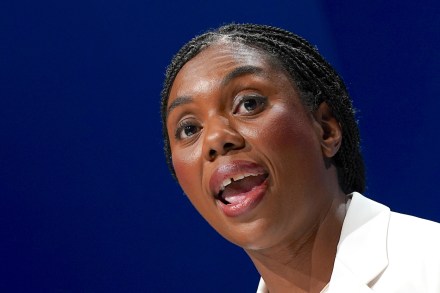
When you are in the wrong job at the wrong time, whether or not you are also the wrong person is moot. This appears to be where Kemi Badenoch, in theory the leader of His Majesty’s Opposition, finds herself as she goes into her Conservative party’s annual conference in Manchester. She is unlikely to be relegated to the backbenches in 2025, but with Robert Jenrick lingering, ready to step in if and when the country takes its chance to reject his boss at the ballot box, one would imagine there is, at best, only a 50:50 chance of her seeing out 2026. Quite what Jenrick thinks he will bring to the party that Badenoch does not, is at first glance difficult to see. For him, too, all the evidence is that this is the wrong job at the wrong time.
Will more Tories defect to the Lib Dems?

From our UK edition

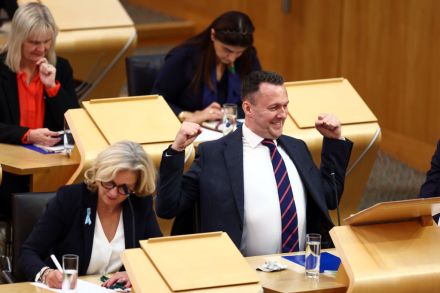
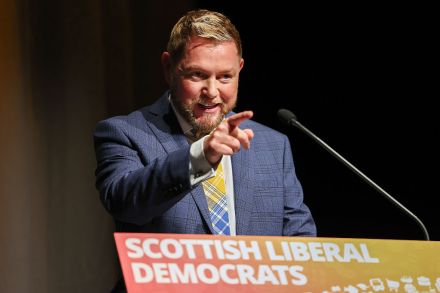
Crossing the floor of the Scottish Parliament – moving around the arc is perhaps a better description – is highly unusual. Several MSPs have become independents, for one reason or another, but swapping one party for another had only been done by Alba's Ash Regan, formerly of the SNP, until yesterday. Jamie Greene is a one-time Scottish Tory leadership contender who resigned the Conservative whip with an excoriating letter to his leader Russell Findlay on Thursday. The very next day, the ex-Tory turned up at the Scottish Liberal Democrat annual conference in Inverness to announce he would be joining the party. It was a genuinely significant Holyrood moment. More importantly, though, it looks to be a genuinely significant moment in the fortunes of the Scottish Tory party.

Should the Scottish Tories ignore the Reform threat?

From our UK edition

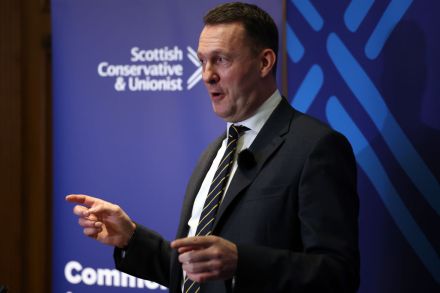
What do the Tories do with a problem like Reform? Kemi Badenoch’s party in Westminster has some time to consider this, with over four years to go until it has to put her strategy – whatever that is – to the test. But the same cannot be said of Russell Findlay, the Scottish Conservative party leader, who has an election in just over a year. While the UK group will be benchmarked against an historically poor Tory result in the 2024 general election, Findlay will be benchmarked against the best Holyrood election result in Tory history, with Douglas Ross winning 31 seats and a near one-quarter vote share. Seat extrapolations from current polling have the Tories down in the mid-teens and, in most polls, only a seat or two ahead of Reform. Tory MSPs are worried.

Swinney must ignore the Scottish Greens’ Trump-bashing

From our UK edition

When Scotland’s First Minister John Swinney gave his New Year's address in Edinburgh University’s Old College on Monday, the idea was to put pressure on Holyrood’s opposition parties ahead of the culmination of the budget process over the next month-or-so. 'Vote for the Scottish budget or the health service suffers' was the general gist. Yet the briefings that appeared in that morning's newspapers included a line that ensured the media focus was largely elsewhere. Voting against the budget would 'feed the forces of anti-politics and populism'. Who did he mean, the media in attendance asked? Can he be clear he’s talking about Elon Musk? And does he think Musk will try to interfere with the Scottish election next year?

The Scottish Tories must go further on tax cuts

From our UK edition

Russell Findlay has a tough job. His party is not on track for a good 2026 election and the new Scottish Tory leader needs to figure out quick how to present Scots with a vision worth voting for come the Holyrood poll. He must prove the Scottish Conservatives are not only different from the soft-left SNP, Labour and Lib Dems – but also different from the surging Reform UK, which according to today’s Survation poll is neck-and-neck with the Scottish Tories despite having no leader, no policies and no campaign. Enter Findlay’s ‘common sense’ agenda, which this week turned to tax.

Alex Salmond irreversibly changed Scottish politics

From our UK edition

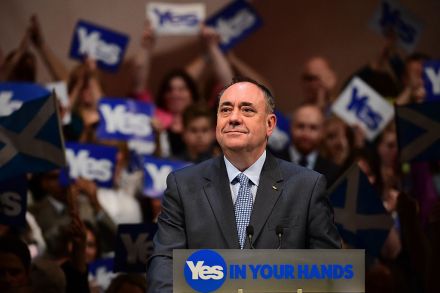
Just hours before he passed away, Alex Salmond tweeted that 'Scotland is a country, not a county'. It was a response to First Minister John Swinney's participation in the Prime Minister's Edinburgh summit at the weekend – and Salmond smelled a rat. A phalanx of English regional mayors being given equal prominence to his country’s FM didn’t work for him. He likely would have refused to attend had he still been in post, or at least created such a stink beforehand that his role in proceedings would have been enhanced. Somehow or other, he would have sent a message to the people of Scotland that he was on their side against the English machine. Salmond had a political and strategic intellect which established him as the pre-eminent Scottish politician of my lifetime.

Does it matter who wins the Scottish Tory leadership race?

From our UK edition

Nominations for candidates wanting to stand in the Scottish Tory leadership contest close today. One candidate has already voluntarily dropped out, and it's not clear if all of the remaining five will receive the 100 votes they need from the membership to progress to the next stage. Already there has been much drama, with some contenders even suggesting the race be paused after revelations about outgoing leader Douglas Ross came to light. Yet as the Scottish Conservative leadership contest descends into internecine warfare, one could be mistaken for believing that at stake is something of importance, something of value. But the uncomfortable truth is: it doesn't really matter who runs Scotland's only mainstream centre-right party.

Sunak won’t be much help to the Scottish Tories

From our UK edition

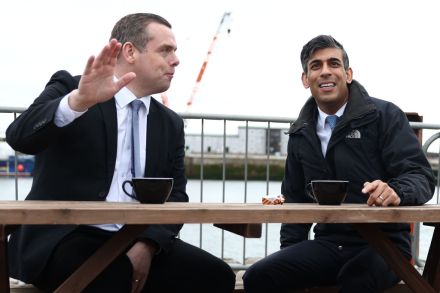
The first few days of this general election campaign have been characterised by Rishi Sunak’s dismal campaign management. From wet suits and sinking ships, his whistlestop tour of the four nations seemed more like a box-ticking exercise than anything else. The key to any Tory success is to augment the notion that independence is still a threat A prime minister from the Conservative and Unionist party must find some way to appeal to Northern Ireland and Scotland, the two parts of that union which in the longer term still represent a realistic flight risk. It was, however, hard not to reflect on Sunak’s irrelevance in these parts of the UK. Irrelevant in Northern Ireland because the party – making up less than 1 per cent of the vote – effectively does not participate.

The Scottish Tories are facing an identity crisis

From our UK edition

Why is the only party of the centre-right in Scotland so far away from government? As the Labour Party becomes more sensible under Sir Keir Starmer and Anas Sarwar, the Scottish Conservatives are facing an increasingly existential threat. Their conference gets underway in Aberdeen this weekend — and the party must not waste this opportunity to confront what is going wrong. One of the main problems facing Douglas Ross's Scottish Tories is that his party and the SNP are inextricably linked. Both groups are utterly dependent on the prospect of a second independence referendum being credible and real. Think about it: the SNP’s overarching narrative for the last 10 years has been ‘vote for us and you will have a second independence referendum’.

Things are looking up for Scottish Labour

From our UK edition

Scottish Labour gathers in Glasgow this weekend in both a mental and electoral state few thought achievable just a short few years ago. Having polled less than 10 per cent in the (albeit meaningless) European Parliament elections of 2019, followed by another humiliating third placed finish at the Holyrood elections of 2021 with less than 18 per cent of the regional vote, Labour looked helpless and hopeless. But things change. Quickly. Lenin said that there are decades where nothing happens, and there are weeks where decades happen. Scottish Labour’s ascent is not quite in that category, but nevertheless Anas Sarwar’s outfit has rapidly morphed from the irrelevant cousin-at-the-wedding to the bride-to-be.

Is Sunak winning over Scottish voters with his petrol ban delay?

From our UK edition

Fewer than one in five Scots can reliably be expected to vote for the Conservative party, but a poll this weekend showed that well over half are in favour of his delay on the banning of the sale of new petrol and diesel cars. In rural areas, much of which is still considered SNP territory, this is nearer 70 per cent. The Tories aren’t popular north of the border — but Rishi Sunak’s green pushback rhetoric is making an impact on Scotland. Our electric vehicle charging infrastructure in Scotland is very poor. The government built a network which is now both dismally slow and almost unfeasibly unreliable. Now, the Prime Minister is not seriously a climate sceptic.

Is Humza Yousaf’s ‘pro-growth’ stance convincing?

From our UK edition

It may not have a title quite as resplendent as The King’s speech, but today represents the marquee day in the Scottish Parliament’s calendar. The Programme for Government (PfG), like its regal counterpart at Westminster, is the annual opportunity for Scotand’s First Minister to tell us what his or her vision is and what he or she intends to do with it. Much like The King’s speech, the PfG also gives the government a couple of days of wall-to-wall media coverage, so from the perspective of the political strategist and communicator, it is one of the top two or three moments of the Scottish political calendar. This PfG was the Humza Yousaf edition. Yousaf is still new enough in the job that this was his first gig, and he was slated to use it in two main ways.

How did the Scottish Greens end up with so much influence?

From our UK edition

There are often complaints that the Scottish parliament lacks the ‘big beasts’ of other European counterparts. It is not a complaint, however, which can reasonably be levelled at Fergus Ewing. Ewing is a giant of Scotland’s independence movement and a giant of Scottish politics. But perhaps the thing which is most interesting about Fergus Ewing is that he is not a socialist. He has that in common with much of the traditional SNP support, and much of the SNP support outside the central belt — but it increasingly marks him out from the Scottish government, led by his very own Scottish National party. Last Wednesday, Ewing appeared on Holyrood Sources, the weekly podcast that I jointly host.

The newfound confidence of the Scottish Tories

From our UK edition

It is difficult for Scotland’s Conservative and Unionist party to know whether to laugh or cry these days. The last few months have been dominated by the SNP's implosion – yet the decline of Humza Yousaf's party could ultimately backfire for the Tories. For now, though Douglas Ross, the Scottish Tory leader, has never looked happier. So what might explain his newfound positivity? The Supreme Court’s verdict that the Scottish parliament does not have the jurisdiction to hold a legally recognised referendum on independence last November was greeted with euphoria by the Tories. It means that without a compliant Westminster government, the second independence referendum is dead.

SNP rule has been disastrous for Scotland’s schools

From our UK edition

This week was supposed to be Humza Yousaf’s big relaunch for the SNP. His speech on Tuesday was designed to show how he was combining his adopted role as the ‘son of Sturgeon’ with his ability to be his own man. Alas, it was not to be: the arrest of SNP treasurer Colin Beattie completely and utterly derailed the new First Minister’s best-laid plans. Yousaf had wanted to show he recognised that the relationship between the Scottish government and the business community had fallen into a ditch, to make clear it needed a ‘reset’. His willingness to compromise came in his announcement that the deposit return scheme would be delayed, and plans to ban alcohol advertising would return to the ‘drawing board’.

Is Douglas Ross wise to champion unionism over conservatism?

From our UK edition

The SNP’s internecine warfare has dominated political chatter for the past two months and the Scottish Conservatives, it seems, have been feeling left out. So, at the weekend, the Tories piped up. Douglas Ross, the Scottish leader, suggested that unionists should use their vote at the next general election for the candidate most likely to defeat the SNP incumbent.  The party in London was indignant with Ross’s apparent approval of Tory voters crossing the box for Labour and arming Sir Keir Starmer with more MPs. This is hardly the first time that the Scottish party and its London HQ have had a difference of opinion. This particular disagreement has the same roots as most of the others.

Why Humza Yousaf should make Kate Forbes his deputy

From our UK edition

Five weeks ago, Kate Forbes’ leadership campaign looked to be dead and buried. She had set her campaign on fire, Scottish political commentators said, by launching her socially conservative views on gay marriage on the nation. Today, despite the widespread opprobrium by her party colleagues, nearly half of the SNP membership voted for her to be their leader, and the country’s First Minister. Over half, though, voted for Humza Yousaf, and tomorrow he will be elected as Scotland’s First Minister. What then? Perhaps Yousaf can use the closeness of this result to his advantage. The so-called ‘best of both worlds’ is much sought after in politics and this may now be available to him.

Nicola Sturgeon’s successor should be careful what they wish for

From our UK edition

We are almost there: on Monday, the SNP will appoint its new leader after five weeks of what will surely be remembered as the most controversial and consequential change of leadership in the short history of devolution. Nicola Sturgeon's resignation in February came as a surprise even to her closest allies. They knew the First Minister was closer to the end of her tenure than the start; it seemed likely she would find a way to avoid standing in the 2026 Scottish parliament election.

Jason Leitch’s lockdown regrets

From our UK edition

You may have been forgiven for thinking that the only story in town up here in Scotland is the election of the leader of the SNP, and Scotland’s next First Minister. However, for a day at least, some of the headlines have been stolen by a man who became almost as well-known to Scots as the outgoing First Minister: Professor Jason Leitch. 'Lockdown,' Leitch concluded, 'is an old fashioned approach to managing a disease that is going around the world in an aeroplane.' Scotland’s National Clinical Director, Professor Leitch was at the side of Nicola Sturgeon during the entirety of the Covid pandemic, the country's equivalent of Sir Patrick Vallance, the government's Chief Scientific Adviser, and Professor Chris Whitty, the Chief Medical Officer, all rolled into one.

The SNP membership’s big gamble

From our UK edition

They’re all the same, politicians. How often have we heard this before? We need a real choice, people often say. Well, we have it now; or at least members of the Scottish National party do. If you’ve been watching the televised debates, of which there have now been four, you’d be forgiven for thinking that this is a contest between three members of different political parties, only one of whom belongs to the government of the day. The two front-runners for the crown, health secretary Humza Yousaf and finance secretary Kate Forbes, have adopted polar opposite strategies in this leadership contest, and offer their party and their country an entirely different vision for the way forward on almost every key issue. Yousaf is the party’s chosen one.