Economy

  • AAPL

    213.43 (+0.29%)

  • BARC-LN

    1205.7 (-1.46%)

  • NKE

    94.05 (+0.39%)

  • CVX

    152.67 (-1.00%)

  • CRM

    230.27 (-2.34%)

  • INTC

    30.5 (-0.87%)

  • DIS

    100.16 (-0.67%)

  • DOW

    55.79 (-0.82%)

Is Britain losing its sense of fairness?

Has Britain become a freeloader’s paradise, asks the Spectator’s economics editor Michael Simmons in our cover piece this week. Michael analyses ‘the benefits of benefits’, at a time when Britain’s welfare bill is burgeoning and most households are struggling with cost of living. For example, while a family of four can expect to pay £111 to visit the Tower of London, that is just £4 total on Universal Credit (UC), and for London Zoo it is £108 compared to £26. Michael is not arguing against the idea of helping those in need, but pointing out that – as the benefits bill continues to increase – this is another case of

Spotlight

Featured economics news and data.

Cutting Britain’s giant welfare bill would be an act of kindness

Does having money really matter that much? There are those, usually with quite a bit of it, who want us to care less about materialism. But, unequivocally, money really does matter – not because of any status it supposedly brings, but for the freedom it buys: freedom to choose how we live and how we look after others. Considering this, it seems that the deep disillusionment with mainstream politicians in recent years stems from a protracted and ongoing period of stagnant living standards over which they have presided. But the truth is that the average person has not got poorer since the global financial crisis. They have got a little

Rachel Reeves is turning into Gordon Brown

Rachel Reeves is beginning to look awfully like Gordon Brown. Study the actions of this government so far and you would hardly say that deregulation was its big idea. True, Keir Starmer did claim at his investment summit last month that he was going to slash red tape. Angela Rayner wants planning laws relaxed to allow new homes on the green belt and Ed Miliband wants wind farms, solar farms and pylons just about everywhere – without the locals being given much of a say. Reeves did not elaborate on which regulations she intends to tear down in her quest to boost the City of London But look at the

Will Rachel Reeves’ pension shake-up really boost growth?

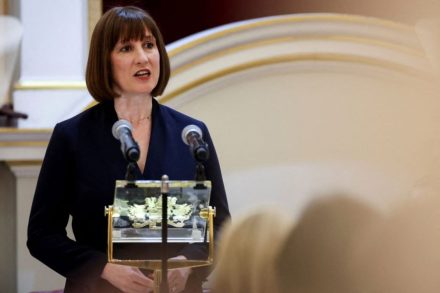
As Chancellor Rachel Reeves prepares to deliver her first Mansion House speech in the City of London tonight, one word is set to be emphasised: growth. ‘Last month’s Budget fixed the foundations to restore economic stability and put our public services on a firmer footing,’ she will tell her audience of bankers and City workers. ‘Now we’re going for growth.’ Her sights are set on pensions. The Chancellor is expected to announce what is being billed as the ‘biggest set of reforms to the pensions market in decades,’ with the Treasury estimating these changes could unlock up to £80 billion in additional investment for Britain. Not everyone is convinced about

The world isn’t listening to Keir Starmer’s climate preaching

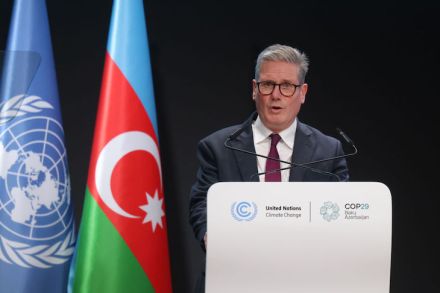
Keir Starmer said he was travelling to Cop 29 in Baku intending to “lead the world on climate change”. But it must surely be obvious that he is, instead, barking at a world that is heading in the opposite direction. Last year’s grand talk about “phasing down” fossil fuels at Cop 28 notwithstanding, today’s Global Carbon Budget Report forecasts that global carbon emissions will hit another record high in 2024, reaching 41.6 billion tonnes, up from 40.6 billion tonnes in 2023. The report calls this “marginal”, but it’s actually a 2.5 per cent increase, including all carbon emissions from industry and land use, as well as fossil fuel burning. How

League tables alone won’t force the NHS to change

When Chancellor Rachel Reeves announced that over half the new tax rises in her first Budget would go straight into the National Health Service, an immediate question followed: where’s the reform? The big health promise made by this government, after all, was to tie any additional money to an NHS overhaul – the biggest in its history. And it was the Prime Minister who only a few months ago, when speaking at the Kings Fund in London, said ‘hear me when I say this, no more money without reform’. Yet there in the Budget was an additional £22 billion for day-to-day spending, with seemingly no strings attached. The biggest announcement

If anyone can fix America’s bloated state, it’s Elon Musk

Perhaps he will walk through the lobby of the Pentagon with a kitchen sink. Or fire the entire IT department at the Fed, shift the IRS to Mars, while replacing traffic police with fully autonomous Tesla robo-cops. No one has any real idea yet what Elon Musk, the entrepreneur behind Tesla and SpaceX, might come up with now he has been appointed by Donald Trump to head up a new Department of Government Efficiency (or ‘Doge’). One point is certain, however. There will be some spectacular fireworks. And it will throw down a challenge to bloated governments everywhere.  Nobody gets to amass a $300 billion fortune, working in manufacturing and

There are now seven million migrant workers in the UK

For the first time ever there are seven million migrant workers in Britain’s job market. Figures released by the ONS this morning show that more than one in five jobs in Britain is now filled by someone born overseas – despite a fall in EU workers since Brexit. Overall, that’s an increase of 183,000 – equivalent to a town the size of Warrington or a city the size of Southend – since the election, and up over one million since the first lockdown. The rest of this morning’s ONS release suggest the jobs market could be about to face a slowdown. The ONS stats show employers reducing hiring. Above inflation pay

The truth about Britain’s transition to ‘clean energy’

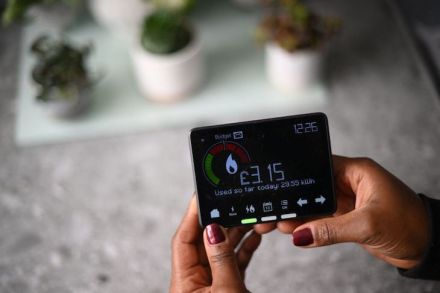
The timing couldn’t have been worse. Under leaden November skies, came news of what many have suspected: energy rationing for British households could be officially on the cards. The NESO-Miliband plan for a low-carbon future is going to involve a lot more than just waiting a while for a cup of tea The bearer of these tidings is the National Energy System Operator (NESO), the UK’s new energy systems operator which began work last month. NESO’s first main act has been to publish a report arguing that ‘demand side flexibility’ – which appears to be a euphemism for rationing at peak hours – is vital if the country is to make the

Labour is doomed if it is blamed for price rises

It emerged over the weekend that Tesco might have to start putting up prices. So, we have learned over the past few days, will Sainsbury’s, BT, and even JD Wetherspoons, a company that is usually committed to keeping prices as low as possible. One by one, many of the major consumer brands in the UK have said they will have to push up the amount they charge their customers, and are pinning the blame for that on the Chancellor Rachel Reeves’s Budget. The trouble is, the government seems unable to find a response. It is losing control of the narrative, and will soon find itself blamed for a fresh spike

Elon Musk’s support for Donald Trump is a masterstroke

Elon Musk contributed huge sums of money. He campaigned relentlessly. And his social media network X provided a platform for the candidate. Of all the architects of Donald Trump’s return to the White House this week, arguably none was more influential than Musk, and certainly none were playing for such high stakes. If he had lost, the X owner would have faced a furious regulatory backlash. As it happens, however, the election has been a triumph for Musk – and will make him more powerful than ever. Even from this side of the pond, it was hard to escape Musk’s presence during the US election. The entrepreneur behind Tesla and

Are the super rich really abandoning Britain?

With an urgency not always noted in plumbers, Charlie Mullins announced earlier this year that he was leaving the country, before even waiting for the Budget fallout. He put his £12 million penthouse on the market and is busy buying up properties in Spain and Dubai, between which he will now spend his time. Inheritance tax, he said, was his main bugbear. He has already cashed out of his business, Pimlico Plumbers, which he sold for £145 million three years ago. Wealth managers are enjoying boom times like never before He didn’t even wait for the budget, but now it has been delivered has the real exodus begun? To judge

Trump’s tariff plans don’t have to spell bad news for Britain

On the face of it, Donald Trump’s threat to impose general import tariffs of 10 to 20 per cent on all goods – and much higher levies on those from China – is bad news for Britain, the US and the world. That protectionism makes us poorer is a lesson which seems to have to be re-learned every generation. The last time America was forced to learn the hard way was when George W Bush tried to protect the US steel industry with punitive tariffs on imports of steel in 2002. A US government review later concluded that the tariffs had cost 200,000 jobs in US by increasing the prices

The interest rate cut is good news for Labour

The Bank of England has announced its rate cut of 0.25 percentage points, reducing the base rate from 5 per cent to 4.75 per cent. The decision, voted 8-1 by the Monetary Policy Committee, is the second rate cut to be announced by Threadneedle Street since the inflation crisis began. Markets were expecting a rate cut today, after the Bank held rates in September. The BoE has been clear that bringing down the base rate will be a slow and steady process, as the Committee continues to assess the impact of lower rates on the economy and potential inflationary effects. This ‘gradual approach’ was reconfirmed today in the MPC’s minutes,

Is No. 10 coming for game shooting next?

I confess I was lunching at L’Escargot in Greek Street as Rachel Reeves delivered her Budget. My excuse was that I thought I already knew what was in it – but in reality the package was even more anti-business than I feared. My punishment was a risotto too glutinous to finish, but the Chancellor’s 76-minute sermon proved just as indigestible when I tuned in later. Like the wild mushrooms in my dish, the more pungent Budget measures had to be picked out of a blander mass – and I was roused from postprandial torpor by a call from a veteran entrepreneur, regularly quoted here under a variety of disguises, in

Why the market reaction to Trump 2.0 has been muted

Truth Social rocketed. Bitcoin soared in price. The dollar rose, and bond yields were up, while Chinese equities wobbled. Over the course of last night, as it became clear that Donald Trump had won the US presidential election, the markets responded to the news. The trouble is, no one really knows what Trump 2.0 means for the global economy.  Investors will have no idea until he forms an administration in January The initial price moves were very obvious. With the backing of the main crypto tycoons, a Trump White House will be a lot friendlier to digital currencies, although even that had to be kept in perspective. A 7 per

The reason Kamala Harris lost

Whatever you think of Donald Trump, watching the mood change in the BBC’s election studio has been delicious. It was like a New Orleans funeral in reverse – a carnival turning a corner and transforming into a wake. This was supposed to be a historic night. But then it wasn’t just the BBC. The liberal media have been at it for days. There was supposed to be a last-minute surge in support for Kamala Harris, driven by record turnout of women coming out to fight for their rights. The idea that American voters would be steered by anything other than their own personal economic circumstances was foolish This was pure

More evidence that the Budget raises taxes for workers

Six days on from the Budget, and things don’t look any better for Rachel Reeves’s claim that her Budget won’t negatively affect working people. Today and tomorrow, it is the turn of the Commons Treasury Select Committee to pick through the wreckage. What have we learned so far? David Miles from the Office for Budget Responsibility (OBR) doubled down on the effect of the rise in employers’ National Insurance (NI). The OBR has already estimated that three-quarters of the effect will be on wages – thereby contradicting Reeves’s claim that working people will not suffer from the rise. Miles went further, saying that many economists would argue that 100 per

How Germany became the sick man of Europe

Vertrauen ist gut, Kontrolle ist besser – trust is good, control is better – is a popular German saying. It’s also the state’s motto for overseeing Europe’s biggest economy, which is now being run into the ground. Germany’s economy is officially expected to shrink in 2024 for the second year in a row. Berlin’s Social Democratic Chancellor Olaf Scholz and his Greens Vice-Chancellor Robert Habeck, who are fighting for their political lives as their coalition crumbles around them, are to blame. Only one German sector is growing: the state. Government consumption grew by 2.8 per cent from mid-2023 to mid-2024. Dealing with bureaucracy costs German business €67 billion (£55 billion)

Rachel Reeves’s new gamble

Credit to Rachel Reeves: while some chancellors opt to take part in the Sunday shows ahead of a fiscal event, the Chancellor has decided to do the media round the Sunday after her first Budget. Rather than spending the entire interview refusing to say what will be announced in the week ahead (the information is considered to be market-sensitive), she is instead having to answer difficult questions about what she announced on Wednesday. It wasn’t an easy morning, as Labour’s Budget narrative continues to get tested to breaking point. Reeves was played a video on Sky News this morning of her comments back in June, when she said no tax increases would

The Scottish budget must prioritise economic growth

Rachel Reeves’s Budget, announced on Wednesday this week, signalled a significant fiscal policy change. In it was a major shift in strategic direction on public investment, and a big early push on spending, especially on health and education. Two points are worth noting regarding government spending compared to this year’s spring Budget plans under the previous Conservative government. First, the Chancellor listened to the advice of many economists who urged her to modify the fiscal rules to avoid a bias against public investment in the previous debt regulation. Certainly her change in the debt (investment) rule to focus on a broader measure of debt is similar to what International Monetary Fund economists have

Can Republicans be trusted with the US economy?

When it comes to the economy, Americans typically trust the Republicans. They’re the party traditionally aligned with big capital; and their policies – low taxes and minimal government interference – sound sweet in a believer’s ear. Donald Trump, leading the GOP for the third election in a row, is a famous businessman; and the party’s previous nominee, back in 2012, was Mitt Romney – the co-founder of one of the largest private equity firms in the world. The Republicans, you might think, are a safe pair of hands. However, despite the Republicans prioritising the economy, it’s the Democrats who have the far superior record. Of the eleven recessions since World