Books

Meeting Karl Ove Knausgård

On a winter’s morning, outside the Three Lives bookstore in New York’s West Village, Karl Ove Knausgård has just finished signing copies of his latest novel, The School of Night. His features are familiar from the dustjackets – the gray-blue eyes, the grizzled beard – but he is surprisingly tall and his signature silver mane is now cropped short around the ears. Gone, too, are the cigarettes, traded for a vape. The School of Night is the fourth novel in Knausgård’s “Morning Star” series. It takes its name from a secret society of Elizabethan poets and scientists, which included the explorer Sir Walter Raleigh and the play-wright Christopher Marlowe. Marlowe’s


karl ove knausgård

Tales of quiet intensity: The News from Dublin, by Colm Tóibín, reviewed

Colm Tóibín is a master of understatement, his work characterized by great emotional intelligence coupled with redoubtable restraint. This is his third anthology of stories, following Mothers and Sons (2006) and The Empty Family (2010). Within a few pages, he fills the gaps between words – the things he doesn’t say – with as much meaning as the prose. Familiar themes emerge. There is the Irish diaspora in the US (as in Brooklyn and Long Island); the Catalan Pyrenees (the setting for “The Long Winter” in Mothers and Sons); and Argentina (as in the novel The Story of the Night). Feelings of exile and being an outsider are aroused, while

colm Tóibín

The misery of working with Chuck Berry

In Ian Leslie’s John & Paul, the creative relationship between the titular Beatles is treated as a platonic love story. Matt Thorne widens the paradigm with seven more pairings, variously rivalrous, amorous, respectful, disrespectful and occasionally frankly tenuous. The 11 American and three British musicians here have careers that collectively cover seven decades of popular music.  There are three dynamics at play. First, there are the Thucydides tensions, where a waning power tangles with a rising one. Frank Sinatra invites Elvis Presley to join him on a television show; Keith Richards throws a filmed concert with Chuck Berry. (Richards, for once, is the younger partner.) The older player is not

Why Hitler’s suave architect escaped the noose at Nuremberg

At the Nuremberg trial of the main Nazi war criminals, one man stood out: Adolf Hitler’s favorite architect and later armaments minister, Albert Speer. He cut a gentlemanly figure in a gallery of rogues. The strutting, smirking Hermann Goering reminded Rebecca West, who attended the trial, of “a tout in a Paris café offering some tourists a chance to see a black mass.” Julius Streicher, the Jew-baiting brute, was like “a dirty old man of the sort who gives trouble in parks.” On the same bench, all declaring their innocence in the face of overwhelming evidence of monstrous crimes, were the lantern-jawed SS leader Ernst Kaltenbrunner, the sour-faced ex-Champagne salesman

How the illiterate peasant Rasputin changed the course of modern history

There lived a certain man, in Russia long ago. He was big and strong, in his eyes a flaming glow. You know the rest. Antony Beevor’s telling of the story of Grigory Rasputin will surely be the greatest literary chart hit of the year. That the life and death of one of history’s most extraordinary charlatans is a well- known and often-told morality tale doesn’t matter. Beevor makes no claim to have uncovered any great revelations. Rather, he carefully sifts Okhrana surveillance logs, court diaries, memoirs, the Empress Alexandria’s correspondence and contemporary press accounts and, with his characteristically sharp eye for telling detail, extracts enough gems to decorate a whole

rasputin

Lloyd Blankfein – guiding light of Goldman Sachs

Goldman Sachs inspires awe and envy in equal measure. Those who survive the Wall Street investment bank’s annual cull earn fortunes. Leavers join an alumni network that makes the Freemasons look like plodders. The “Government Sachs” roll call includes prime ministers (Mark Carney, Mario Draghi, Rishi Sunak and Australia’s Malcolm Turnbull); US Treasury secretaries (Robert Rubin and Hank Paulson); and central bank governors galore, not to mention two recent BBC chairmen (Gavyn Davies and Richard Sharp). After the global financial crisis, which Goldman navigated more adroitly than rivals, Rolling Stone compared the bank to “a vampire squid wrapped around the face of humanity.” New York magazine ran a cover story

lloyd blankfein

Nintendo and the plumber who conquered the world

It’s not more than a parlor game, perhaps, to speculate about history’s most crucial inventions. One invention often makes the next possible. Electric light revolutionized human productivity, allowing us to work well beyond sundown. The combustion engine and later the turbine engine collapsed our sense of distance, putting other continents within a day’s travel. We’re still debating what the internet’s done; how social media offers the double-edged sword of instant communication and addressability for good and ill; how it encourages the avatarization of ourselves as online presences. We’re both ourselves online and not quite ourselves, entirely embodied and yet psychically elsewhere. Pokémon’s release sparked a worldwide craze and moral panic

nintendo

Life lessons from George Orwell

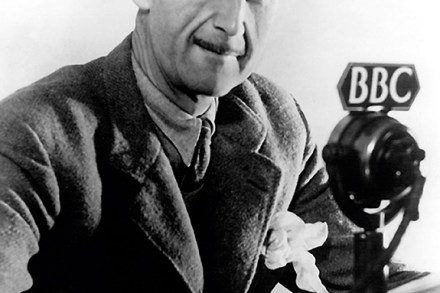
It was the British political journalist Jason Cowley, writing in London’s Sunday Times a month or two back, who posed a query calculated to strike terror into the heart of any self-respecting Orwell-fancier. Were we, Cowley wondered, with the air of one who tosses a Sèvres vase into the air to watch it descend into heap of fragments, approaching peak Orwell? Was the man in whose voluminous output so much of modern political and sociocultural malaise has been refracted losing his sheen? Some Orwellians – myself included – on hearing this would probably respond with a rather handy Latin phrase: si monumentem requiris, circumspice, which loosely translates as, “If you

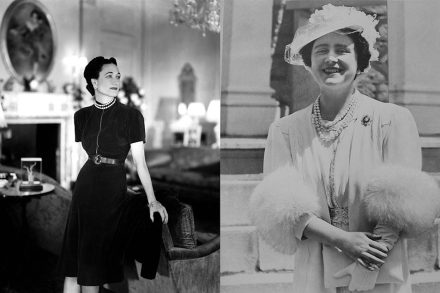
Streamlined chic or lacy froth: royal style wars of the 1930s

The semiotics of clothes, especially royal ones, can be fascinating, sending out powerful messages. Think of the jewel-studded, pearl-strewn portraits of Queen Elizabeth I or Princess Diana’s revenge-chic black dress. As a fashion queen herself (Justine Picardie was editor-in-chief of Harper’s Bazaar for more than seven years and has an acclaimed book on Chanel under her belt), no one is better placed to unpick the subtleties of royal public couture. So, judging by this book’s title, I was expecting a shrewd analysis of diplomacy dressing, with perhaps some behind-the-scenes vignettes. What happens if a royal lady unexpectedly gets a run in her tights at a crucial moment? Is there a

royal

Gavin Newsom, the everyman elitist

Young Man in a Hurry is California Governor Gavin Newsom’s attempt to explain himself to a divided country that may soon find him vying for its presidency. He alternates between candor and wile in answering the book’s central question: who is Gavin Newsom? In these pages he constructs a striking hero’s journey, illuminating an insular world of inherited wealth, hereditary political power and ideological contradiction that few Americans will have been exposed to. But he also casts himself as a struggling underdog, a folksy type whose patrician image belies a life of perseverance and a unique set of emotional and psychological deprivations. Growing up, Newsom would often board the Gettys’

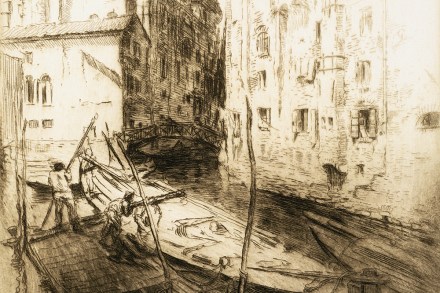
The Venice Ghetto was a landmark in the history of Jewish persecution

The word “ghetto” is said to derive from the Venetian dialect term for “foundry”: ghèto. In the early 16th century, on the orders of the Doge, Jews were herded en masse from the center of Venice to the Ghetto Nuovo, or New Foundry district, where metal workers had long cast cannon for the Venetian fleet. The Ghetto – the first of its kind on the Italian peninsula and anywhere in the world – became a model for segregated Jewish quarters throughout Europe. It was soon blighted by poverty, malnutrition and disease. The Ghetto Nuovo was a landmark in the history of Jewish persecution. In this fascinating history of the New

gold asante

The curse of gold for the Asante nation

As a metal, gold never corrodes. As a possession, the reverse is too often true. It has the power to warp morality, destroy decency and tarnish humanity. This duality – entrancing beauty alongside corrupting potency – lies at the heart of this magnificent book that engagingly blends African history with a current relevance that reaches far beyond the continent. The history is laid out with clarity and conviction. The Asante nation (Barnaby Phillips wisely settles on this spelling over a variety of homophones including Ashante, Ashanti and Achantis) is a component part of the modern west African nation of Ghana. Much like the Zulus in South Africa, their foundational history

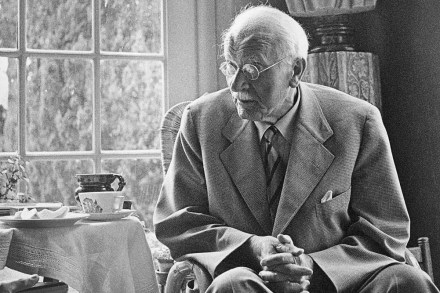
Carl Jung, the man behind the psychobabble

A surefire way to alienate people is to talk about the dream you had last night. In polite society, we’re generally told nobody cares about the goings-on of our subconscious and that it’s probably best to keep quiet. Nothing, then, quite prepares one for the oneiric delights to be found in Jung’s Life and Work, a new edition of the collected interviews between Professor Carl Gustav Jung, the renowned Swiss psychiatrist and founder of modern analytic psychology, and his former student, Aniela Jaffé. The tone is set in the very first interview, where Jung recalls a childhood dream involving a gigantic “erect phallus” reaching “almost to the ceiling” equipped with

carl jung

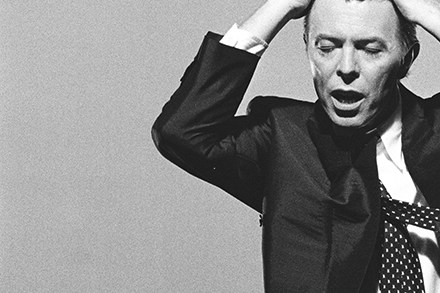
The many David Bowies

Alexander Larman is the author of a biography of John Wilmot, Earl of Rochester, and of Byron’s Women. Reading Larman’s new biography of David Bowie, one gets the sense that this could have been the end of a trilogy, given all three men’s talent and excesses. In fact, Bowie once considered playing Byron in a movie. Larman’s focus in Lazarus is on Bowie’s career from the end of the 1980s through to his final works: the musical Lazarus and the album Blackstar, the artist’s last gift to his fans, released on his 69th birthday – two days before his death from liver cancer in 2016. This is a thorough account

bowie

Inside the Murdoch family fallout

Terrific scripts, marvelous acting and glamorous locales – plus that haunting theme song – made HBO’s Succession superlative television. The show also took the sheen off being a billionaire. Who among us, watching Logan Roy (a barely veiled stand-in for media mogul Rupert Murdoch) mess with his children’s psyches, didn’t think “Isn’t it perilous to be quite so loaded?” Journalist Gabriel Sherman’s new book prompts a similar, aversive recoil. Every family has squabbles, but the Murdochs have fallen out with shocking animosity. Though it’s hyperbolic to claim, as the author does, that the struggle for control of News Corp broke the world, his gruesomely detailed account reveals how shattering the

The literary appeal of the English upper classes

“However British you are, I am more British still,” said the American expatriate novelist Henry James, explaining his fascination with all things aristocratic and Anglo. It’s a type of fascination that’s only gathered steam over the years. A grand representative of the establishment, Lady Anne Glenconner, sold thousands of copies of her first book, Lady in Waiting, in the US, and recently discovered that her (admittedly predominantly homosexual) American fanbase has taken to throwing Lady Glenconner-themed costume parties. Meanwhile, Carla Kaplan, whose biography of Jessica “Decca” Mitford, Troublemaker, went on sale at the end of last year, discovered that Decca, known as “the Queen of the Muckrakers,” has a manic

Coppola, Lucas and Spielberg’s outsized impact on 1970s cinema

For any serious lover of cinema, the 1970s were both a golden decade and the beginning of the end of film as an art form. After the permissiveness and countercultural impact of the 1960s, a whole generation of new filmmakers emerged, many of whom remain household names. These men – and they were almost exclusively men – produced work that shook up expected norms and took the medium in new, thrilling directions. It is impossible to list all the pictures and their directors who made this difference, but there are good reasons why they remain celebrated today. And then Star Wars came along in 1977 and changed the trajectory of

coppola

The inside story of how America got to the Moon

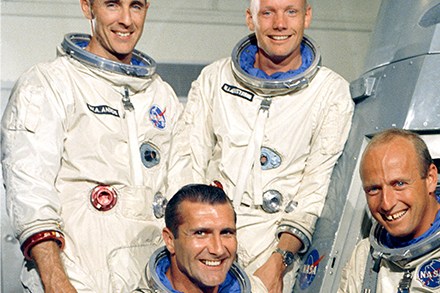
On March 16, 1966, Neil Armstrong and David Scott became the first astronauts ever to dock with another spacecraft when they linked their Gemini 8 capsule to the uncrewed Agena target ship. However, the cheers had barely died down at Mission Control Houston when Scott realized they had a problem. The conjoined spacecraft had begun a gentle leftward pitch. Armstrong and Scott watched in horror as the capsule’s gentle pitch became a tumbling motion that increased, turning the craft into a centrifuge. In desperation, Scott undocked the two ships before gravity ripped them apart. But Gemini 8 continued to spin faster. At 60 revolutions per minute, the astronauts began to

This Tucker Carlson biography is a chronicle of an era

Tucker Carlson may be the most divisive man in America, a human tuning fork vibrating at frequencies that delight half of the country and drive the other half demented. Few public figures inspire such simultaneous loyalty and loathing. To his admirers, he’s a truth-teller with a preternatural instinct for cultural anxiety. To his critics, he’s a fabulist with a talent for setting fires and selling the smoke. This tension – this strange mix of menace and magnetism – is what Jason Zengerle captures in Hated by All the Right People, a biography that becomes, almost inevitably, a portrait of the contemporary conservative movement itself. This is Carlson’s gift: to move

George Saunders’s thoroughly Dickensian novella

George Saunders’s luminous new novella Vigil begins with a fall of a kind – lower-key, sinless and very funny: “What a lovely home I found myself plummeting toward, acquiring, as I fell, arms, hands, legs, feet, all of which, as usual, became more substantial with each passing second.” With the fallen narrator landing headfirst, ass “in the air and fresh new legs cycling energetically,” the story’s tone is set. Though explicitly modeled after Charles Dickens’s A Christmas Carol, Vigil is quintessentially Saunders in its combination of user-friendly stylistic innovation, straight-faced satire and a deep dive into Big Moral Questions. Ever since the spirit/ghost/guardian angel – Saunders himself has confessed that