Book Reviews

Our reviews of the latest in literature

The good, the bad and the grotesque: the mind-blowing diversity of parasites

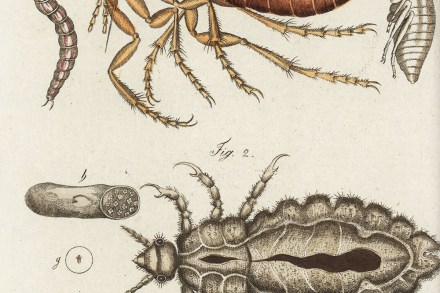
The oldest surviving sentence ever written in the first alphabet is inscribed on an ivory comb found in the ruins of the Canaanite city of Lachish in what today is Israel. Dating back around 3,700 years, it offers the owner a blessing of sorts: “May this tusk root out the lice of the hair and the beard.” As Dino J. Martins points out in his marvelously entertaining tour of the netherworld of parasites, the comb (the design of which is almost indistinguishable from the plastic ones we use for the same purpose today) speaks of the depth of the human relationship with lice – creatures that have traveled with us, fed on us and multiplied with us for millions of years. Martins is the perfect guide.

Down memory lane: It Will Come Back to You, by Sigrid Nunez, reviewed

Readers of Sigrid Nunez’s long-form fiction will be familiar with her concerns about storytelling: the gaps between what happened, what is remembered and what can be understood only through fictionalizing. Her new collection of 13 stories, written across several decades, returns to questions of memory and the unreliability of narrative. The stories tend to have mundane settings: an insomniac awake late at night; a traveler stranded by a flight delay. Nunez is less interested in dramatic incidents than in the way a passing encounter can alter one’s understanding of life. Her narrators frequently find themselves re-evaluating past certainties or realizing that events they thought they’d understood resist neat explanations.

sigrid nunez

The appeal of asymmetry: Contrapposto, by Dave Eggers, reviewed

There are novelists who seem to spend their entire careers either apologizing for being themselves or trying to become someone else entirely. And then there’s Dave Eggers, who has spent much of the last quarter century trying – and, it has to be said, as far as one can tell, very happily succeeding – to become Dave Eggers. Ever since A Heartbreaking Work of Staggering Genius appeared in 2000, fulfilling almost entirely the audacious promise of its title, Eggers has occupied that peculiarly American position of being not simply Yet Another Novelist, but the Guy, the Man, the yardstick by which all others might be judged and found wanting. He’s a publisher, campaigner, literacy activist, editor, artist, children’s author, philanthropist and impresario.

contrapposto

Christian soldiers in retreat – the disastrous Fifth Crusade

The Fifth Crusade, which was fought between 1217 and 1221, marked a new direction for the crusading movement of the Middle Ages. Instead of invading Palestine, as the first three crusades had done, and the Fourth Crusade might have done, the crusaders decided to attack Egypt. That was not the original idea. The formidable Pope Innocent III, who launched the Fifth Crusade, had envisaged a repeat of the old strategy of marching on Jerusalem from the sea. The invasion of Egypt was decided on the initial wave of forces after they had reached the Levant. There was a sort of logic behind the decision. The crusading kingdom of Jerusalem had been destroyed in 1187, when its army had suffered a crushing defeat at the hands of Saladin at the Horns of Hattin above the Sea of Galilee.

outsiders

Why do political elites insist on posing as outsiders?

The American political elite have developed a peculiar habit of styling themselves as outsiders. The closer they stand to power, the less likely they are to claim it as their own. In fact, power always seems to be in the hands of someone else, someone located just out of sight. So where exactly does it reside in this late-stage republic? Nobody seems quite certain. Two new political memoirs, one seeking to clarify the past, the other aimed implicitly toward the future, share this bewilderment. Surprisingly, they also share a good deal else. There is a common obsession with European heritage, Jill Biden through her Italian roots, and J.D. Vance through his love of Great Britain and his adopted Roman Catholicism.

Did James Patterson and MrBeast really write their book?

For Spectator readers not familiar with the cultural figure known as MrBeast, his real name is Jimmy Donaldson and he is best known for taking over YouTube and making himself a multi-millionaire in the process. And now his work can be discovered in a literary, rather than streaming, sphere. It has been announced that MrBeast will be collaborating with the bestselling thriller writer James Patterson to publish a novel entitled The Most Dangerous Games in September. It does not, in truth, sound like the stuff of high literature, or even particularly distinguished page-turning trash. The plot synopsis suggests that “In a world on the brink of collapse, one hundred players face off in a ruthless, high‑stakes competition with everything on the line. The reward?

MrBeast

The uncertainty principle: The Interpreter’s Secret, by Andrew Rosenheim, reviewed

You can’t really make this stuff up any more, political reality having long since outpaced fiction, but thank goodness there are people who continue to try. Recent history has supplied more than enough intrigue, misinformation, diplomatic doublespeak and sheer zone-flooding mad shit to challenge even the most inventive writer of political thrillers, but fortunately Andrew Rosenheim is more than up for it.

andrew rosenheim interpreter secret
brian epstein

Persistent gossip about Brian Epstein’s death risks defining his life

We know the facts about Brian Epstein’s death. The Beatles’ manager died in bed at his Belgravia home on August 27, 1967, six years after he struck gold in a Liverpool cellar, a month before his contract to manage the Beatles was due to end and four weeks after homosexual acts between men were partly decriminalized. At the time of his death, the 32-year-old Epstein was addicted, adrift and depressed – not least as a result of a long effort to hide his sexuality and the low-level anti-Semitism he encountered everywhere. One moment he was manically active, the next he was in despair, according to those around him. He had overdosed in the past and had been treated at a psychiatric hospital. On the day he died, his blood contained alcohol, antidepressants and barbiturates.

Bringing Homer into the home: how the Iliad and Odyssey became widely available

Homer’s ghost is particularly busy, popping up in the dreams of pretty much every poet going. In fact if you are a poet and haven’t been visited by Homer, you may find yourself wondering why you’ve been left out. The cultural reach of the two major poems that appear under Homer’s name – the Iliad and the Odyssey – is undeniable. I teach my creative writing students that there are only two stories: the siege and the journey, and there they are, right at the beginning of literary history. They’ve been read continuously for centuries. On my shelves is an edition of Alexander Pope’s Iliad which belonged to my great-great-great-grandfather, in which are still bits of paper put in by subsequent family members.

homer

Chinese puzzle or matryoshka doll – the complexity of Sino-Russia relations

China and Russia are twins. Both are great Asian land empires; both are continental, multi-ethnic powers that expanded by pushing forward their borders rather than by crossing oceans; both have a deep tradition of autocracy that survives to this day; and both (more plausibly in China’s case) believe that their social contract, ideology and system of government is a universal one superior to all others. In Entangled Empires, the German historians Sören Urbansky and Martin Wagner explore the convoluted story of Russo-Chinese relations from the moment in the mid-17th century that roving Cossack bands bumped up against Siberian tribes who owed fealty to Beijing up to the latest performative amity between Vladimir Putin and Xi Jinping.

russia
movie movies

A century of movie magic: how cinema has changed the way we think

The making of films is a process often on an industrial scale, and among the thousands of professionals contributing there are dozens whose practice might constitute a solid history of the artform. The great stars and directors are the usual routes into the history of film; but the roles of studio executives, producers, costume designers (Edith Head! Givenchy!), composers of scores, cinematographers and editors would make compelling narratives, too. A history of cinema audiences could also be interesting – ranging from those who are supposed to have fled in terror as a filmed express train came hurtling towards them in the 1890s; to the yobs who slashed the seats in cinemas showing 1950s rock’n’roll movies (but why?

Southern Gothic: the horror story of Alex Murdaugh, paterfamilias and ‘family annihilator’

The central figure of The Family Man, the lawyer Alex Murdaugh (pronounced "Murdock"), spends his life getting implicated in so many heinous, melodramatic crimes that he seems cobbled together by a cabal of tabloid and commercial publishers, crime podcasters and providers of big budget cinematic sleaze. Memorably referred to by psychopathologists and public prosecutors as a "family annihilator" (imagine a little bit of Medea, a little bit of the Menendez brothers and a whole lot of Oedipus Rex), he was arrested in 2021 for slaughtering his wife Maggie and their youngest son Paul with the same sort of high-tech military weaponry that he enjoyed wielding around his family compound to hunt hogs, and which visitors often found lying randomly about his home and gardens.

Why is Trump all but invisible in J.D. Vance’s Communion?

"Read Hillbilly Elegy," a friend messaged me a decade ago. "The author really gets it." So I did, and indeed he did. The young and then obscure J.D. Vance showed, through his family travails in Appalachia, how both Republicans and Democrats had in their different ways screwed blue collar, just-about-working-class families like his. The book went platinum and launched his public career. Three things saved the young Vance from the fate that awaited people like him: a fiercely defensive and religious grandmother ("Mamaw"), enlisting in the Marines, and evangelical Christianity. He fell away from this last, however, as he discovered that his fundamentalist faith may have had community love in spades but was very short on good answers to big questions.

communion

Dull, duller and Dulles – was Churchill’s jibe about America’s Cold War icon unfair?

In the era of Trumpian foreign policy incoherence, a new intellectual biography of the American Cold War icon John Foster Dulles might seem welcome for hawks and doves alike. Indeed, Dulles’s tenure as secretary of state during the first six years of the Eisenhower administration could be viewed – even by the harshest left-wing critic of American imperialism – as a useful and reassuring point of reference, despite its narrow anti-communist dogma and too cavalier approach to the dangers of nuclear confrontation with the Soviet Union and China. After all, the Eisenhower administration extricated the United States from President Truman’s stalemated Korean War and started no major new wars before the end of Eisenhower’s second term in January 1961.

dulles

Why Yesteryear is the controversial bestseller of 2026

If you’ve spent more than five minutes on social media in the past couple of years, you will probably be familiar with the tradwife phenomenon that has grown up as a reaction against the harder-edged and more strident girlboss feminism that itself threatened to become the dominant form of discourse towards the end of the last decade. Tradwifery, a form of embrace of traditional domestic roles that concentrates on the woman as homemaker, mother and carer while allowing her husband (always a husband, never a "partner”) to fulfill masculine aspects of patriarch and hunter-gatherer, has been decried by some as a right-wing coded backwards step into submissiveness. Others have described it as a welcome return to common sense and social cohesion.

yesteryear Caro Claire Burke (Riley Haakon)

Alien fever shows no signs of abating

These two books are about aliens – intelligent beings who may or may not have visited our planet. Jonathan Caplan is a distinguished lawyer and believer; David Lavelle is a journalist and skeptic. Aliens have always been with us. For at least 4,000 years there have been reports of strange visitations assumed to come from heaven, hell or simply the universe. Angels and demons were commonplace, but they were eventually replaced by technology-based visions, most often flying saucers. These could be quietly ignored until 1947, when postwar alien fever was sparked in Roswell, New Mexico. Metal and rubber debris were found which the US Army initially claimed were parts of a “flying disc.

blood

There will be blood – the vital work of field transfusion units

Most conventional World War Two military histories focus on weapons, materiel and even the manpower needed for a decisive victory over Hitler and the Axis powers. Little has been written about blood as a strategic resource. However, a pioneering service of specially trained medics who worked dangerously close to the front lines, pumping blood into the veins of battle casualties, not only saved lives but contributed significantly to winning the war. They did this by returning men to the front line and boosting morale by persuading them that, if wounded, they had the maximum chance of life.

A trove of avian lore and history

I finished reading The Book of Birds by Robert Macfarlane and Jackie Morris, and leaned out of my attic window to smoke and think about it, when there among the tumbling spires of the apple trees was a spasm of fluttering and a flurry of notes: two spotted flycatchers! One held the air for a moment, hovering and looking me in the eye, and then darted back to its perch while the other called. It has been years since we have seen them, and straight to my bird books I went. The Book of Birds was no help because it does not include the spotted flycatcher and is not designed as a recognition guide. Instead, Macfarlane writes: "Ours is a field guide with a difference... It asks not 'What is that bird?' but 'Who is that bird?' The aim is to help readers identify with them.

birds
America

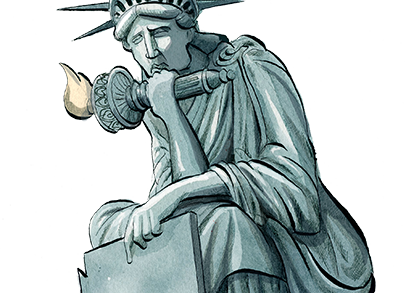
The making of America

The story of the United States was determined from the start by the manner of its birth. The original 13 English colonies may seem lost in the distant past. Yet it was their diversity that was the key to their union. The creation of the US reflected the tensions of 17th-century England, pitting the Puritan republicans of Massachusetts against the landed gentry of Virginia, Quaker New Jersey against Catholic Maryland. The Founding Fathers resolved these tensions by instituting the concept of states’ rights. Their Constitution was a tissue of compromise, yet it was robust. What served to unite 13 colonies still holds together the mightiest nation on Earth.

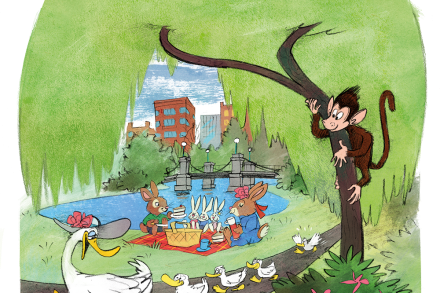
The importance of fairy tales in testing times

In the realm of magic and imagination, human nature can be better understood than in the world of our everyday lives: “The best of our tales do not lie or die.” It is a bold claim, which the folklorist Jack Zipes explores across continents and class in a series of essays. He guides the reader from the origin of oral storytelling, through medieval writings, to 17th-century literary salons and finally to today’s cinema screens. In the course of this journey, he focuses on the specific genre of the “wonder tale,” in which “those who are naive and simple are able to succeed because they are untainted and can recognize the wondrous signs... They have not been spoiled by conventionalism, power or rationalism.

fairy tales