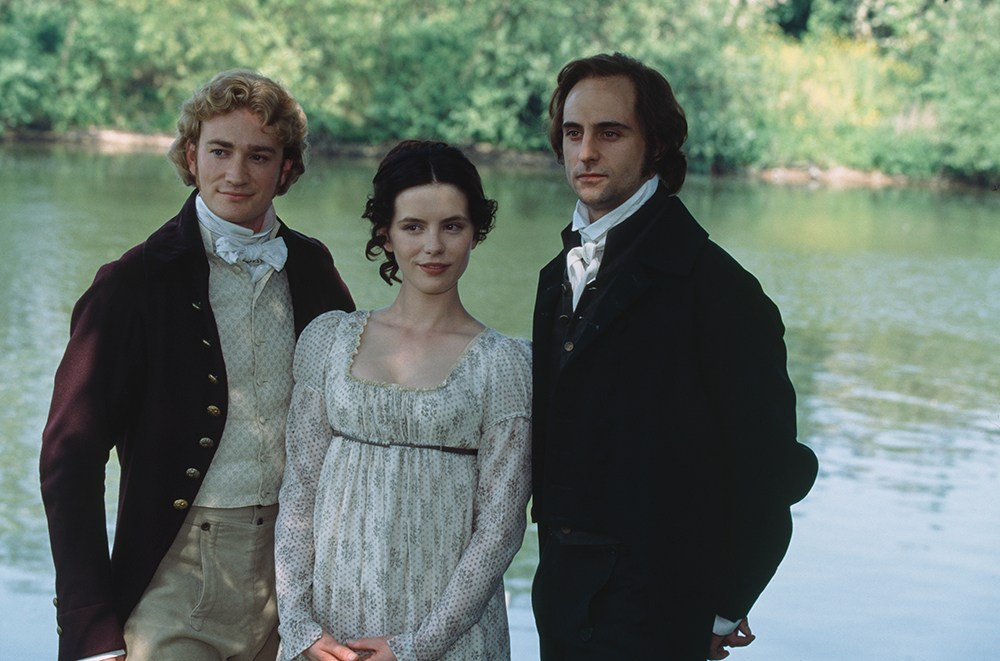
There has never been a good screen adaptation of a Jane Austen novel. There have been plenty of films with plots and characters vaguely based on her work, many of them excellent. Who could forget Matthew Macfadyen’s trembling Mr Darcy confessing his passion to Elizabeth Bennet in the lashing rain, or Colin Firth’s entry to the Mr Wet Shirt contest 1813? Yet people who have only seen the screen adaptations think of Austen as the writer of dull, silly stories where nothing much happens.
Now imagine that you had to watch, with no context, someone slowly, patiently defusing a bomb. You would have no idea how much every tiny movement mattered; how high the stakes were for the smallest slip. Hollywood keeps mistaking Austen for a writer of Regency romances. She is not. She writes savage socioeconomic stories about bored, lonely women in lovely cages having to negotiate for the least worst outcome against a ticking clock.
I kept coming back to this thought while reading The Book Was Better, which spends many very serviceable pages complicating the claim of its title. Louise Willder is not in fact making a case for the supremacy of prose, but tricking us into letting her opine about the entire process. What follows is what happens when a knowledgeable woman is allowed to talk without stopping about something that interests her.
I love this sort of thing, although not in an entirely healthy way. It is pornography for the sort of people who watch Only Connect for the puzzles – of which I am one. My family enjoyed days of respite while I indulged in one-sided grumbling at Willder’s obviously incorrect opinions about The Muppet Christmas Carol – incorrect in that she fails to acknowledge it as history’s greatest Dickens adaptation.
The book’s many nuggets of movie trivia never quite cohere into an argument. But in lieu of serious film criticism, we are treated to choice extracts from the most overhyped pulp novel to be translated into a far superior film:
Sometimes during the summer Brody would catch himself gazing with idle lust at one of the young, long-legged girls… their untethered breasts bouncing beneath the thinnest of cotton jerseys.
This beach creep becomes the hero of Jaws, played by Roy Scheider, in ‘not just Spielberg’s best film but the best film… pure story, flawless and perfectly balanced’, in Willder’s estimation. Meanwhile, I’ve a masochistic impulse to track down Willder’s contender for the worst Shakespeare adaptation of all time. It’s called Gonks Go Beat, loosely based on Romeo and Juliet – a ‘jaw-droppingly awful sci-fi caper, set in a future where warring bands are taught to work in harmony by space aliens’.
Given how much of culture now consists of adaptations, it’s high time someone paid the process proper critical attention. Most of my own work in screenwriting has been on some sort of adaptation, because Hollywood is obsessed with what studios call ‘existing IP’ and what most of us still call ‘books’. There’s a simple reason for this. It really is ridiculously expensive to make moving pictures. A top show on a streaming service such as Amazon Prime will cost up to £15 million per episode. If a story has a built-in audience and a track record of being even vaguely entertaining, it’s considered less of a gamble for investors. Studios have been known to bag the rights to books they’ve no intention of adapting just so nobody else does.
The great problem for television backers is not knowing what will sell, because there’s no reliable metric for making something that’s actually good. For that you need to be insane enough to trust creatives. Once, slightly tipsy at a party in Los Angeles, I found myself pitching a Muppet movie version of Animal Farm. It works, as I told the luckless executive I had cornered, because Animal is the farmer. He said he could probably get me a meeting. When I hastily explained I was joking and that nobody should actually make a Muppet Animal Farm, he asked if there was any chance I could take a meeting on it anyway. After all, it’s popular IP.
In an environment where making anything half decent means going ten rounds with Mammon before breakfast, a great original can be armour. You’ll still have to stumble through waves of executives wafting spreadsheets like death warrants and trying to nail every delicate narrative to the hero’s journey; but if you’re working from a good book, there are guardrails. Austen is a great example: her novels, as Willder acknowledges, are well-plotted and engaging enough that they can be defanged – stolen to make Bridget Jones or reimagined with Keira Knightley in a low-cut dress soaking wet and screaming.
Studios have been known to bag the rights to books they have no intention of adapting just so nobody else does
But consider Jo Walton’s underrated novel Tooth and Claw, in which the author, a brilliant literary ventriloquist, makes a pitch-perfect Austenesque romp where all the characters are dragons. It works because of clever world-building. In the story, dragons only get bigger by eating other dragons, so their entire society is designed around excruciating social rituals to stop them ripping each other apart. Everything that is figuratively monstrous in Sense and Sensibility is reimagined as literally monstrous. It’s a great adaptation.
On the subject of dragons, Hollywood spent 20 years trying to milk a decent film out of the wildly popular Dungeons & Dragons tabletop gaming franchise before Paramount finally got it right with 2023’s Honour Among Thieves – because someone realised that Dungeons & Dragons is not fundamentally about fantasy heroism or fighting monsters but about goofing around with your friends.
The Book Was Better would, ironically, have worked better as a blog, but that’s no bad thing. It’s a fun, frothy excursion into modern snobbery – as opposed to the traditional snobbery of tedious blowhards who assume that adaptation can never be artful. I’d have liked a little more chin-stroking. I was expecting some juicy theory about how exactly the interiority of the novel form translates to the communal experience of film and television. I was hoping, at least, to find backup in my one-person campaign to stop Hollywood turning Austen into frothy romance and finally start adapting Georgette Heyer. Heyer is exactly the frivolous, brilliant literary confectioner the ignorant think Austen is, only better. Why nobody has made a miniseries of The Grand Sophy I’ll never understand. But I’ll have to save that rant for anyone I can trick into listening to me explain the cotillion until I’m good and done.



Comments