Arts Reviews

The good, bad and ugly in arts and exhbitions

Dance: Hansel and Gretel

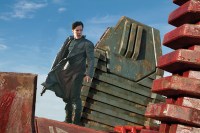
As far as memory serves, in my 46 years of being both in and at the ballet I have encountered only seven ballet adaptations of the Grimm Brothers’ Hansel and Gretel. Alas, each was less memorable than the one before. Happily, the new version by the Royal Ballet’s first artist-in-residence, Liam Scarlett, which had its première last week, has dispensed with the dance numbers for cuddly forest animals and cute gingerbread men that turned the versions of his predecessors into laughable creations. Instead, he has opted to exploit the dark tones of the Grimms’ narrative — abandoned children, cannibalism, a hyperbolic excess of unhealthily sugary food, etc. — and align


Opera: Wozzeck, Die Zauberflöte

At the close of the first night of Wozzeck at the Coliseum there was a longer dead silence than I can remember after any operatic performance I have been to, and when applause began it sounded reluctant. Everyone was stunned by the intensity and involvingness of the preceding 100 minutes, the work having been performed straight through, no interval. Virtually every element in the production contributed to this shattering effect, and any shortcomings would be easily corrigible and with one exception trifling. Perhaps the first thing to say is that the conducting of Edward Gardner and the playing of the ENO orchestra were at least as fine as any that

The Jaguar F-Type is no E-Type

In 1951, Arthur Drexler, an influential curator at New York’s Museum of Modern Art, organised an exhibition called 8 Automobiles. Drexler, who used to wear a bow tie, was one of the people who helped make ‘design’ the credible subject it is today. The press release said it was the ‘first exhibition anywhere of automobiles selected for design’ — as, indeed, it was. Eight fine cars were presented on a dramatic fake roadway with huge photographic enlargements of details as a backdrop. Drexler’s boss at the museum, the architect and one-time Nazi sympathiser Philip Johnson — and in those days New York’s arbiter elegantiarum — explained, ‘Automobiles are hollow, rolling

Spectator Play: what’s worth – or not worth – watching, listening to or going to this weekend

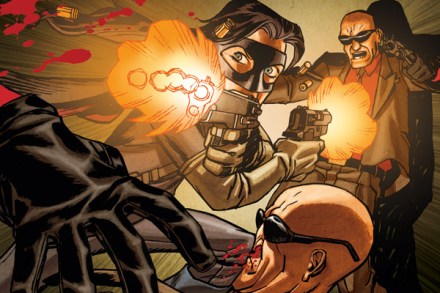
Mark Millar appears to be the typical Spectator reader until you discover – as Peter Hoskin did when he interviewed him for this week’s magazine – that he ‘spends most of his time on bizarre world in distant corners of the multiverse… surrounded by assassins dipped in blood’. Why? Because he’s a comic-book writer – and a comic-book writer who Hollywood loves. The first film adaptation of his work, Kick-Ass, made $100 million at the box office, and its sequel Kick-Ass 2 – which comes out in July and the trailer to which is below – is expected to do just as well. Not bad for a man whose first

Comic-book writer Mark Millar interviewed

In purely demographic terms, Mark Millar isn’t too different from the rest of us. He’s a middle-aged, wiry-haired, churchgoing Scot with two kids. He subscribes to The Spectator, and enjoys his ‘weekly treat’ of reading the latest issue in the bath. So, unless you have excavated this copy from the yellowing stack in your dentist’s surgery, he could even be scanning these words at the same time as you — right now. But demographics, often inadequate, are practically useless when it comes to Millar. He may tick the box marked ‘Spectator reader’, but he actually spends most of his time on bizarro worlds in distant corners of the multiverse. He’s

Alexander Calder, Eilis O’Connell, Mary Newcomb

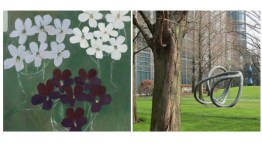
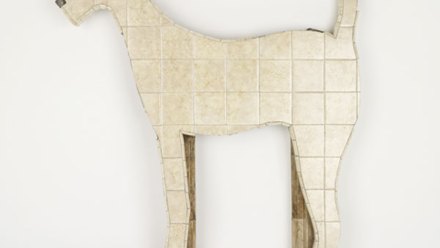
Alexander Calder (1898–1976) needs no introduction. The master of the mobile — that poignant hanging arrangement of moving elements — he also invented the stabile (stationary) and the standing mobile. There was no one who could cut and shape sheet aluminium and suspend it from wire with quite the same wit, economy and shape invention. His imagery is primarily abstract and organises flat geometrical forms in contrasting planes through space: discs and triangles balance more biomorphic shapes and are linked by bent sprung wire into a multidirectional kinetic experience of colour and light. Calder mostly used black, white and red, supplemented with blue and yellow, his forms poised and counterweighted

Springtime of the Renaissance: Sculpture and the Arts in Florence, 1400–1460

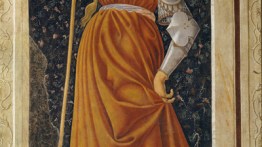
Sixty per cent of the best Renaissance art is said to be in Italy, and half of that is in Florence. So why bother going to Florence for a particular Renaissance sculpture exhibition when there’s huge amounts of the stuff on show in the city’s museums any day of the year? It’s true that some of the best Donatellos at the Palazzo Strozzi have taken only a short trip from the Bargello, ten minutes’ stroll away; ditto works from the Duomo Museum. But there’s lots more from museums around the world — from the Louvre, Berlin and the V&A — and from the rest of Italy, Naples in particular, that

War Stories

The mental battle over Sunday roast: mum, my brother and myself trying our best to look interested, so he wouldn’t be wounded.

Tweet of the day, One to One

What will you miss most if your hearing begins to diminish? Those secretly overheard snippets of conversation on the bus? The throwaway comments of partner or child? A great Shakespearean in full flow on the stage of the National? High on my list would be the Dawn Chorus. Once it starts up again in full orchestral mode you know for sure that winter is on the wane and spring must come. That cacophony of trills and warbles is a convincing restatement of nature’s invincibility. We might be doing all we can to destroy the environment but the birds are still singing loud enough to wake you from the deepest sleep.

Will the internet save television?

Forget The Apprentice. A ‘reality TV’ show where you have no say, and where you can only watch as Sir Alan Sugar does all the hiring and firing? That is so last decade. Forget, too, quaint programmes such as The X Factor, where you pick the contestants you like and the ones you don’t — a format that’s been kicking around since Eurovision. No, imagine if your power as a viewer extended way beyond deciding which participant stays and which goes: instead, you get to choose whether an entire TV series deserves to be born. ‘Out!’ you can say after watching a single episode of a wannabe series, and finding

Josie Rourke has a hit at last with The Weir, The Tempest: a karaoke version of all

The Weir is the ultimate hit-from-nowhere. It was written in 1997 by the 26-year-old Conor McPherson. It opened at the Royal Court Upstairs and glided over to Broadway and then toured America. The script defies every rule of theatrical physics. It’s wordy and static, it’s entirely devoid of action or spectacle, and the atmosphere is mired in gloom. Four morose drinkers, stuck in a pub in the west of Ireland, try to impress a pretty incomer from Dublin by telling her ghost stories. Nothing else happens. The faint stirring of a romance between the Dublin girl and the handsome deadbeat behind the bar provides a tiny note of optimism at

Benedict Cumberbatch is brilliant in Star Trek Into Darkness

P.D. James is a figure of fun in my household. She used to be a regular pundit on Newsnight Review, the old BBC arts programme, and her film criticism was guided by her hearing. Every new film, she complained, was ‘terribly loud’. Why didn’t projectionists reduce the volume? We wondered if it had ever been thus with James. We replaced the baroness’s soft tones with the austere squawk of Dame Edith Evans and declared that Buster Keaton was ‘terribly loud’. But the great lady is on to something: an overbearing sound system can harm a film. Star Trek Into Darkness began and it was as if a choir of Hell’s

Joshua, Opera North, Don Carlo, Royal Opera House

Why stage a Handel oratorio, or anyone else’s for that matter? The recent urge to do it, with Bach’s Passions — even, I’m told, with Messiah — suggests a further incursion of TV into our lives, the inability to absorb anything that isn’t partly or primarily visual. At least Handel’s Joshua, which Charles Edwards directs and designs in a new Opera North production, is bellicose so there is a fair amount of action, though the most indelible parts of it are the choruses, some of them, strangely, sung with scores in hand, some not. The setting is post-second world war, yet another production with an excuse for dressing the characters

Artists Open Houses: Brighton’s alternative to gallery going

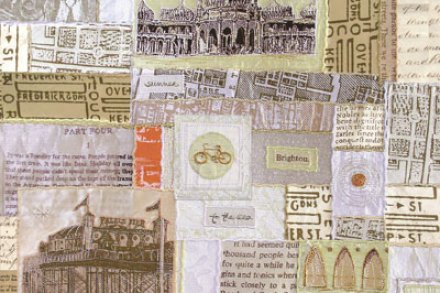
I’m standing in a palatial flat in one of the most beautiful squares in Brighton, in a huge whitewashed room flooded with natural light. The lucky man who lives here, Ted Davis, is showing me around. His home isn’t usually open to the public, but this month anyone can wander in. Ted is a photographer — rather a good one, in fact. His perceptive portraits adorn these walls, alongside his still lifes of wilting flowers,  and for the next four weekends his splendid apartment in Palmeira Square will become a temporary exhibition space. It’s part of an annual festival here in Brighton called Artists Open Houses, in which hundreds of

The two sides of painter Joan Eardley

There were two Joan Eardleys, according to a new biography of the Scottish painter by Christopher Andreae. There was ‘the tender and gentle Joan’, as revealed by her bosom friend Audrey Walker, and ‘the tough, cussing, swearing, bulldozing, indomitable creator of what may be masterpieces’. Both are reflected in the Portland Gallery’s new exhibition of drawings and paintings from the last 20 years of her short life (until 17 May). The tough Joan chose the challenging subject matter, dividing her time between the rotting tenements of unreconstructed Glasgow and the leaky fisherman’s cottages of Catterline, south of Aberdeen. Her restless eye was irresistibly drawn to moving targets, whether swarms of

Radio: We are too gender blasé to want to listen to the sex-specific Men’s Hour/Woman’s Hour

Forty years ago, the idea of having an hour of BBC Radio devoted to men talking about themselves would have been so cutting-edge. Back in that dark age, you could still see City gents striding to work in pin-striped suits and bowler hats, whose buttoned-up appearance reflected (or so we have always been led to believe) their social behaviour. No self-respecting member of the male élite would have been happy to sit behind a mike chatting about their emotional problems. Now, though, after witnessing the extraordinary sight of wet cheeks on George Osborne, Andy Murray, and even Ken Livingstone, all the mystery of male difference has evaporated. We know, we’ve

TV: I would surely die if I watched more than five minutes of Ben Elton’s The Wright Way; Rupert Murdoch: Battle With Britain

The controversial counterintuitive piece I was going to write concerned Ben Elton’s new sitcom The Wright Way (BBC1, Tuesday). You may have noticed it has been panned by all the critics, but the main focus has been on Elton’s shift from darling of the Eighties alternative comedy left to bourgeois sell-out. So what I was going to do was note that, whatever you think of Elton, he doesn’t half know how to capture the zeitgeist, and that this beautifully acted send-up of Elf n Safety gone mad starring the great David Haig is a bourgeois gem to rank with My Family and Outnumbered. But then I made the mistake of

Deborah Ross is so NOT excited by Almodovar

I was so excited about I’m So Excited but now I am just so disappointed. I love Pedro Almodóvar, usually. I would be his bitch any day, I’d have said, and although I’d probably still be his bitch, because you can’t hold one film against a person when they’ve made so many terrific ones, I may not be quite so wholehearted now I’ve been sold a pup. I thought this was going to be a ‘fun, screwball comedy’. I thought it was Almodóvar returning to his ‘wild comedy roots’. But it’s thin, banal, boring, unwitty and, if satirical, then poorly satirical, and poorly satire is no good to anyone. It