Arts Reviews

The good, bad and ugly in arts and exhbitions

Drummer Lee Rigby

Might I urge people to watch the following video? In recent days the press has inevitably focussed most attention on the perpetrators of the Woolwich attack. Here is a video from earlier today of the wife and step-father of Drummer Lee Rigby speaking about him and their love for him.

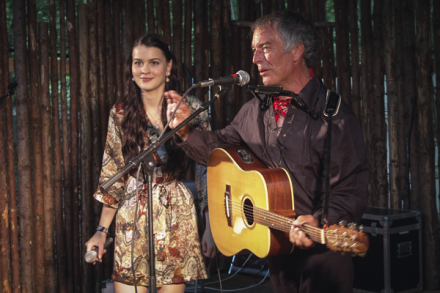
Meet Fraser Neill, the Scots folk musician behind Eurovision’s Emmelie de Forest

To be a folk music fan in Britain today is to be jangling the keys to a cultural palace. For a variety of reasons, we seem to have produced the most brilliant young musicians in decades — but the rest of the world has always seemed rather more excited about the fact than we are. We have started to export musicians, from Spain to Novia Scotia, who go on to musical achievements that are seldom recognised, let alone celebrated, back home. Of the ten million Brits who tuned into the Eurovision song contest, not many would have guessed that the Danish winner was yet another young protégée of a British

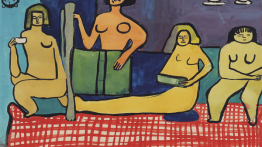
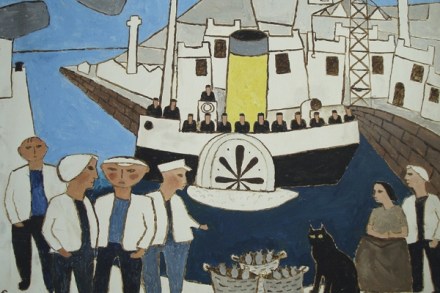
Exhibition review: Saloua Raouda Choucair, Shanti Panchal

Forgive my ignorance, ladies and gentlemen, but I must confess that I had never heard of Saloua Raouda Choucair before the advance publicity of the Tate’s exhibition. She’s not in the Yale Dictionary of Art & Artists (always a useful reference book, but by no means infallible) and I don’t believe I’d ever seen her paintings or sculptures before this show. But I may have overlooked one somewhere in a mixed exhibition, for her work does resemble that of a dozen other artists of international Modernism, and even of a number of the British variety. So why does Tate Modern now devote a solo show to her? Could it be

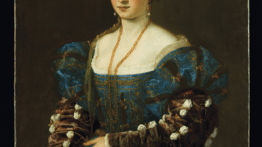
Exhibitions: Tiziano

‘When Titian paints eyes,’ observed Eugène Delacroix, who spent a lifetime admiring, studying and copying the Venetian artist, ‘they are lit with the fire of life.’ The truth of Delacroix’s aphorism is on striking display in the magnificent exhibition of Titian’s paintings at the Scuderie of the Quirinale Palace in Rome. The exhibition does not pretend to be a comprehensive collection of Titian’s works. It is merely a selection of some of his greatest masterpieces. The gorgeous young woman known simply as ‘La Bella’ looks at you with a penetrating, unblinking gaze, her eyes so hot with the fire of life that you feel sure that, in just one moment,

‘Bankers’ was not a documentary. It was a BBC hit job

I like bankers. They’re an honest lot. All of us like money, but only they are upfront about it. I once witnessed a conversation between three financiers that started with them comparing their cars, then their houses, then their helicopters. None of the shilly-shallying you find at a society cocktail party, where people slyly suss out your income on the basis of your profession, your postcode, your accent and the school you went to — these bankers went straight to unvarnished one-upmanship. Such frankness can be refreshing. I like bankers because, these days, somebody has to. The second episode of Bankers (Wednesday), the BBC2 three-part documentary that’s just ended, started

Culture notes: The glory of the Flaming Lips

Man, I love the Flaming Lips. Psychedelic rock sublimity. They movingly address the deepest human concerns without a whiff of irony, while also seeing the point of confetti cannons, dancing penguins, having the lead singer surf the crowd in a giant plastic bubble, and so on and so forth. This week, mind you, they played the Camden Roundhouse the day after a tornado killed 24 people in their hometown and (in other news) they had to cancel a gig because singer Wayne Coyne had so bad a cough he couldn’t speak. No wonder they weren’t entirely bouncy. The material from their new album The Terror saw their usual ecstatic lift

Radio review: Dinner at the Homesick Restaurant: the genius of Anne Tyler; Don’t Log Off

‘I don’t understand him and never will,’ says Pearl, the pivotal character in Anne Tyler’s 1982 novel Dinner at the Homesick Restaurant. She’s talking about her husband, but could be saying something much bigger, larger, more meaningful. That’s the charm (and effortless skill) of Tyler’s writing. She appears to be drawing very mundane portraits of family life — angry wives, feckless husbands and troublesome teenagers. The kind of lives lived behind respectable but not very interesting front doors. What can such ordinary-seeming people possibly tell us about deeper truths? Yet Tyler convinces us it’s in those unachieved and often rather dull characters that real life resides. This is so reassuring.

Are theatre critics on drugs? Fallen in Love and Pastoral reviewed

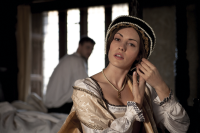
A marvellous novelty at the Tower of London. The Banqueting Suite of the New Armouries has been converted into a pop-up theatre and the Tower authorities have welcomed a new play following the rise and fall (into two pieces) of Anne Boleyn. Joanna Carrick, who directs her own script, has chosen a tricky format. Two characters, Anne and her brother George, tell the story of Anne’s fatal marriage to Henry VIII. Even Aeschylus found this ancient format rather constricting and introduced a third character. Perhaps Carrick knows better. Anne and George are evidently attracted to each other and they romp around a four-poster bed exchanging gossip in fits of giggles.

Film review: Drifting with Something in the Air

Something in the Air is a French film set in Paris in 1971, three years after the uprisings of June 1968; a time when civil unrest was still ongoing but starting to tail off. In France, this film is titled Après Mai, which makes a lot more sense, as it speaks of an aftermath, and I don’t understand why anyone imagined it a good idea to rename it with something quite so nebulous, although I’m guessing there were fears the American market would be too shallow and dumb to get it otherwise, which is always a worry. (Hark at me! When I read recently, ‘Sharon suffers stroke’ I gave no

Opera review: La donna del lago, Dido and Aeneas, The Lighthouse

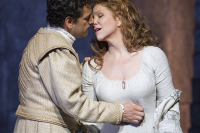
Rossini’s La donna del lago, based on Sir Walter Scott’s poem, is a relatively late work in his brief and unbelievably industrious period of operatic composition. It has its passionate admirers — it is the only opera that Maurizio Pollini has conducted and recorded. The Royal Opera was seething with excitement on the first night of the production by John Fulljames, and the roar of acclamation at the end, which had been preceded by many during the performance, showed that the fashionable and expensive audience was well pleased with what it had seen and heard. Some of the most spectacular vocal feats that the house has ever witnessed merited that

The Half of It

A hot child sees itself and cries. The kind face kissing through the glass Perhaps half wants the things to come To be the things already done, Like thank-you letters. I was home By eight! I had a lovely time. Can you believe how much he’s grown? ‘Train gone,’ he says. He weighs a ton. Back in the car, the calm’s a front. Cumulative embarrassment At having bought a foreign make Glues pink parents to grey plastic While their home-grown self-scrutineer Flops sideways in the Honda’s rear. Sometimes the gone are gone for good. Then others step out of the shade To hold and kiss and separate A hot child

Julian Trevelyan, a Jekyll and Hyde painter, at the Bohun Gallery

Between 1917 and 1923, Julian Trevelyan produced a map and an illustrated guide to Hurtenham, an industrial town on the Tees between Stockton and Darlington. You’ll search in vain for the place in an atlas today, as the entire town, with its warren of streets, railways, parks, public buildings and monuments to local luminaries, was the figment of a pre-teen imagination. But the wit and ingenuity of its conception — and its bird’s-eye views of an abstracted world — set the creative pattern for what was to follow. Born into a family of writers and intellectuals, Trevelyan was not destined for an artistic career. When he dropped out of an

Is the Louvre suggesting that Germany is programmed for war and catastrophe?

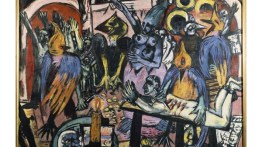
Curated by the Louvre as a tribute to mark the 50th anniversary of the Franco–German co-operation treaty signed in January 1963, De l’Allemagne 1800–1939: German thought and painting from Friedrich to Beckmann sounds like a harmless survey of German art. But it is stranger than that, less a measured look at German painting and more a very French attempt to interrogate the German soul, Nietzsche’s writings in hand. The exhibition opens dramatically with eight 12ft-high canvases by Anselm Kiefer. They were made especially for the show and provide the exhibition’s title, in turn taken from Madame de Staël’s famous book De l’Allemagne. Collaged with dramatic woodcuts and painted inscriptions —

Museums in dire straits forced to sell treasure to raise funds

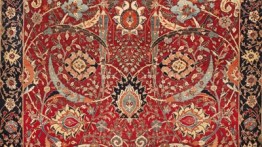
It is a desperate state of affairs when museums and art galleries sell outstanding works of art in order to raise funds. It is even worse, perhaps, when they do so because they no longer want them. Next month, on 5 June, Sotheby’s New York is offering some 25 classical carpets on behalf of the Corcoran Gallery of Art in Washington DC, which includes what the auction house describes as ‘one of the most important and revered carpets in the world’. No one taking the trouble to contemplate the 17th-century Isfahan ‘Clark Sickle-Leaf Carpet’ (right) for more than a minute could fail to be entranced by it, or to recognise

It’s not just older women. Where are the BBC’s black female presenters?

Harriet Harman missed something on this morning’s Radio 4 Today programme. Yes, the paucity older women appearing on British television remains a very relevant one, since the BBC axed Moira Stuart in 2007. Yet at the same time it single-handedly wiped out 100pc of its primetime black (African-Caribbean) female newsreader talent. That hole left by Stuart has never been filled and no-one has ever been able to explain why. Not even former Mark Thompson, the ex-BBC chief, when I asked him face-to-face that same year. As a teenage swot in Birmingham, I felt proud watching Moira reading the news. She inspired me. After years of faffing, I finally studied journalism

Desert Island Discs: is there nothing behind Damien Hirst’s dead cows, sharks and dots? Jan Morris: Travels Round My House — the scoop to outscoop all others

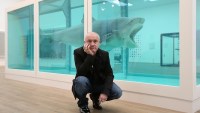
What was shocking about Damien Hirst’s appearance on Desert Island Discs on Sunday was not his admission on air that he lost his £20,000 Turner Prize cheque, and then discovered he had spent it all in the Groucho Club bar. Or his account of his early teens drinking cider beneath the pylons, shoplifting, burgling, always in trouble. A boy for whom ‘Crime is creative’. No, what was truly surprising was just how predictable are his thoughts about his art, his success, his place in the cultural life of GB. Hirst gave very little away, but not in an intriguing, there must be more going on underneath kind of way. The

The Fall, Culture Show Special — Not Like Any Other Love: The Smiths

The serial killer on The Fall (BBC1, Monday) is no ordinary serial killer. He has a unique and terrifying modus operandi — or ‘signature’, as we serial-killer experts call it. What this serial killer does is to predate ruthlessly and single-mindedly on those young, attractive women unfortunate enough to be in the precise target-audience demographic of glossy-grimy five-part, prime-time BBC thrillers about serial killers. His thoroughness is chilling. First he checks out what they do for a living: architects and lawyers are ideal because then people at opinion-forming, BBC executive-frequented Islington dinner parties will definitely be talking about it, whereas they might not if it were just smelly prostitutes. Then,

The Great Gatsby dazzles Deborah Ross

OK, old sports, Baz Luhrmann’s version of F. Scott Fitzgerald’s The Great Gatsby, as produced by Jay-Z, and with Kanye West on the soundtrack, has already riled the purists, who are grumbling and railing and basically queuing up to say it sucks, it’s a travesty, nothing like the book, doesn’t even come close, but you know what? You can tell them all to go hang. This is fantastically enjoyable, and a blast. It is wild and rampant and thrilling. It’s the best film I’ve seen since the last best film I saw, whatever and whenever that was. So tell them to go hang plus, if you are in the mood,