Arts Reviews

The good, bad and ugly in arts and exhbitions

Batman: from midnight monster to pop-tacular star. Kapow!

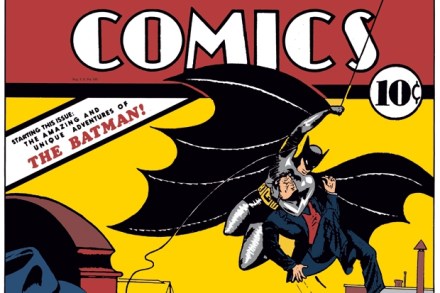
‘Well, Commissioner, anything exciting happening these days?’ Those were the first words — all seven of ’em — spoken by a new character introduced in the May 1939 issue of Detective Comics. That character was a chap called Bruce Wayne. You may know him better as the Batman. And, if you subtract May 1939 from now, you’ll realise that he is three quarters of a century old this year. So, yes, Bruce, there is something exciting happening these days. It’s your 75th birthday. Mr Wayne is sprightly for a septuagenarian — particularly given that he was hardly fresh-faced and spring-limbed at birth. When the writer Bill Finger and the artist
The German devotion to high culture is quite shaming

The 300th anniversary of George I coming to the British throne on 1 August 1714 is big news in his home town of Hanover in Lower Saxony. Five shows are being put on in Hanover and the Hanoverian country schloss in nearby Celle, an utterly charming town that largely escaped the attentions of Allied bombers in the war. The same can’t be said for Hanover, an important railway and manufacturing city flattened by our boys.  Still, enough has been restored to make it worth a visit, not least the Herrenhausen Palace, the Hanovers’ austerely classical summer residence, burnt to the ground in 1943 and rebuilt last year by Volkswagen at

The Matisse Cut-Outs is a show of true magnificence

Artists who live long enough to enjoy a late period of working will often produce art that is radically different from the achievements of the rest of their careers. Late Titian and late Rembrandt are two such remarkable final flowerings, but Henri Matisse (1869–1954) did something even more extraordinary: he not only changed direction, he also gave up painting entirely. In the last years of his life he concentrated exclusively on making pictures, some of them vast, from cut paper. If ill health prevented him from painting, it could not stop him creating, and he reached new heights of greatness in the breathtaking beauty and daringly simplified harmonies of his

Was I abused by Jimmy Savile?

‘Twenty-six million people in Europe are looking for work. And whose jobs are they after?’ asks the Ukip poster for the euro-elections, beside a Lord Kitchener-style pointing finger. Obviously, Ukip thinks the answer is ‘Ours’. But this isn’t true. Twenty-six million people are not looking for British jobs, but for jobs in general. And even those who do want jobs in Britain are not trying to take jobs from people who have them (though this might sometimes be the effect): they just want jobs. If Ukip is opposed to unrestricted EU immigration, it should direct its anger at the politicians who support this policy, not at the blameless people who,

Dolly Parton’s secret for surviving decades of celebrity

It’s a shame Dolly Parton has never gone into politics. She’s someone who’s lived her life very much in the public eye and yet has never lost sight of who she is, of her claim to fame as a country singer. You can tell by the way she sings, even now after more than 50 years in the business, that it’s straight from the heart, nothing synthesised, nothing stage-managed. Her voice just ripples out, tripping lightly through those lyrics of broken hearts, feckless men, without ever sounding bored, trite, as if she didn’t really care. When Paul Sexton went to Nashville to talk to her for Radio 2, she not

Estate agents: we were right about the bastards all along

Television executives must be longing to make a programme about estate agents that casts the agents in a good light. There would be a national outrage, and in these Twittering, Facebooking times nothing is more appealing to a producer than a bulging digital postbag. Under Offer: Estate Agents on the Job (BBC2, Wednesday) is, sad to say, not that series. The factual six-parter goes behind the scenes with agents around the country, only to show us that we were right about the bastards all along. Everyone we met was a pastiche of an archetype. There was Lewis Rossiter, in Exeter, a young man whose drinking banter and easy way with

If The Other Woman is a box-office hit, I’m going to have to top myself

The Other Woman is not just an extremely bad film but also a wholly reprehensible one (she says, with her most disapproving hat on). It’s a comedy, although if you find any of it funny, that’s all I will ever need to know about you, but its unfunniness isn’t what upsets me so much. It’s the dishonesty. It’s being sold as a film that ‘celebrates female friendships’ and ‘is absolutely a feminist movie’ (Cameron Diaz) even though it is an insult to all women everywhere from beginning to end. Who doesn’t realise this? Do they expect us not to realise this? I sincerely hope it flops and won’t attract an

The real original kitchen-sink drama

Rewrite the history books! Tradition tells us that kitchen-sink drama began in 1956 with Look Back in Anger. A season of lost classics at the White Bear Theatre has unearthed a gritty below-stairs play that predates John Osborne’s breakthrough by five years. Women of Twilight by Sylvia Rayman (which has transferred to the Pleasance) was a thumping West End hit in the early 1950s. It spawned several touring productions, one of which featured the young June Whitfield. When the script was filmed in 1952 it became the first British feature to attract the enticing ‘X’ certificate (over 18s only). The setting is a lodging house in Hampstead where unmarried mothers

Britten’s worldwide reputation is enhanced in Lyon

One of the proudest boasts to come from Britten HQ in Aldeburgh during the composer’s anniversary last year was that performances of his works were proliferating across the globe — and not just in the UK — as never before. If the Opéra de Lyon might be a little late to the anniversary party in featuring Britten in its annual Eastertime opera festival only this year, the fact that it’s doing so at all certainly provides evidence of the composer’s worldwide reputation, as well as of the artistic adventurousness of Serge Dorny, reinstalled for the time being as the opera house’s boss after a short-lived stint at Dresden’s Semperoper came

David Moyes’ failure – in his own words

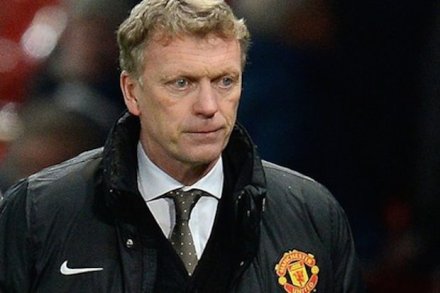
As children, we learn very quickly that a blame shared is a blame halved – but in the long-term, the ruse works only with the co-operation of the co-opted. This is a lesson that must have escaped David Moyes, whose public pronouncements regularly identified unwilling conspirators, illustrating precisely why he failed at Manchester United. Which is not to say that liability resides solely with him. Most obviously, Moyes was let down by his players; their performances were his ultimate responsibility – not excusing the indolence, indignation and entitlement that defined them. Also at fault is Alex Ferguson, who bequeathed Moyes a midfieldless squad – a partial consequence of a takeover

Don’t mock pro wrestling. Today’s TV is made in its image

Earlier this month, when a 54-year-old man with the birth name James Brian Hellwig died of a suspected heart attack outside a hotel in Arizona, a million boyhood fantasies also clutched their chests and fell to the ground. To fans – and former fans – of professional wrestling, Hellwig was The Ultimate Warrior, the man who defeated Hulk Hogan at Wrestlemania VI and taught a generation of scrawny kids to nurture their own inner Warrior. Some of us never forgot that poignant lesson, and there’s evidence Hellwig never forgot either. Despite his obvious lack of in-ring talent (enough time has passed since his death that we can admit he wasn’t

The National Gallery’s Veronese is the exhibition of a lifetime

Paolo Veronese (1528–1588) is one of the great painters of the Venetian School, often joined in an unholy trinity with Titian and Tintoretto. But he was not Venetian, and only arrived in the city when he was well into his twenties. His formative years were spent in Verona, hence his popular name (he was also known as Paolo Caliari, and before that as Paolo Spezapreda, in reference to his early training as a stonecutter, following his father and grandfather), which suggests a very different background from his two most famous confrères. He has also been categorised as a Mannerist, but this is more art-historical pigeonholing than useful elucidation. Veronese deserves

Our first kills of spring

The arrival of spring is not an unmitigated joy. The warmth is nice, of course, as are the fresh leaves on the trees and the general sense of rebirth and renewal after a dismal, soaking winter. And maybe, if you live in London, there is very little to complain about. There are delightful parks and squares, lovingly tended by others, in which to lie semi-naked in the sun or otherwise disport yourself. Nature in its wantonness is held at bay without any effort on your part. But here in the countryside of Northamptonshire, spring has its dark and menacing side. The daffodils have been splendid, as were the snowdrops before

Preset Image Valentine

Intimacy these days discomforts. More our style is the park or the pub, or three-minded chess with young Kasparov. A bracket-dash-colon smile implies we have no longings to confess. Always, though, I’ll text a bunch of preset flowers on the eve of her six-month scan. ‘Thank you, dear heart, for remembering.’ Then come the hours of worry (agony for her) before the all-clear. Valentine’s the patron saint of squirm for us both, love’s wafer on the tongue a poisoned biscuit. The troubadour-lover worth his sugar composes a romantic effusion of the kind she’d be loath to wipe her derrière with. Dare I risk it? I text her a preset pint

The Amazing Spider-Man 2: Too much bang-bang, not enough kiss-kiss

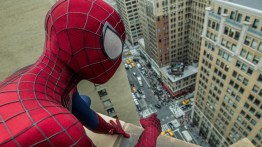
Have you seen that pizza with a cheeseburger crust? If not, just imagine a normal pizza, except where the pizza ought to end — and civilised society begin — there’s a ring of about ten miniature burgers, all encased in dough. On top of each of those burgers is a greasy discharge of cheese. There’s also an option to add bacon. I mention this because the opening of The Amazing Spider-Man 2 feels much the same. It serves up pizza: a pre-credits flashback in which the parents of Peter Parker, aka Spider-Man, struggle to upload data to YouTube, or wherever, while battling a gunman on board an exploding plane. But

Without a strong woman in charge, bees are doomed — just like us

God bless the BBC. And I’m not being entirely sarcastic here. There are some things the BBC does very well and one of them, sadly, was The Review Show, its monthly critical round-up of theatre, film, books and new art exhibitions, that it has now, in its wisdom, decided to scrap. Presumably, the decision was made because the ratings had plummeted — a fact perhaps not unconnected with the programme’s move from BBC2 to the ghetto of BBC4. Yes, being highbrow and involving critics who talked in long sentences, it definitely counted as minority viewing. But isn’t it — or oughtn’t it to be — one of the BBC’s raisons

Modern dance vs Shakespeare

In a dance world that has chosen to dispense with stylistic and semantic subtleties, ‘narrative ballet’ and ‘story ballet’ are often used as synonymous. Yet there are differences — and major ones at that. In a ‘narrative ballet’ it is the choreography that carries the story. Each movement idea is thus conceived in relation to the dramatic demands of the thread and charged with meaning. This is, at least, what the genre’s forefathers recommended back in the 18th century, and what most major dance-makers through history strive to do. A story ballet, on the other hand, mirrors and tackles the basic needs of an immediate, directly accessible and even naive

Brains on a lithographic slab

The Blyth Gallery is situated in the Sherfield Building, deep in the South Kensington campus of Imperial College London. The Sherfield Building is a labyrinth of concrete, linoleum and glass. Its atmosphere is oppressively institutional. You walk around to the percussion of slamming fire doors and the click-clock of unseen footsteps. The air carries the faint scent of yesterday’s boiled vegetables. It’s an unprepossessing place. The gallery is up on the fifth floor, in an anteroom between the lobby outside the central lifts and the Seminar and Learning Centre. There is no natural light. The floor is bare. The walls are white. A partition splits the room in half. The