Arts Reviews

The good, bad and ugly in arts and exhbitions

Fifties domestic harmony

Our love affair with the 1950s has been going on for years and shows no sign of abating. Pangolin London, the city arm of the Gloucestershire foundry, has cleverly used the visceral appeal of Fifties design — if ever a period merited the term gay in its original sense, this one does — to show how sculpture can be incorporated into a domestic setting (until 17 May). All too often works of sculpture, whatever their size, are put on pedestals or instinctively relegated outdoors or to public spaces. Sculpture in the Home, inspired by a series of promotional touring shows staged by the Arts Council between 1946 and 1958, closely
Let’s call the Turner Prize what it really is – an uninspiring ode to a multimedia world

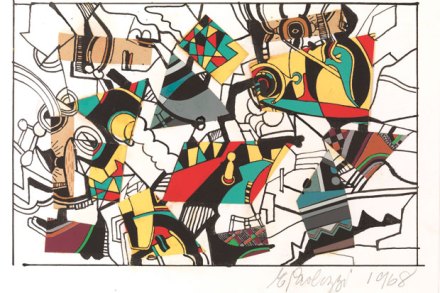
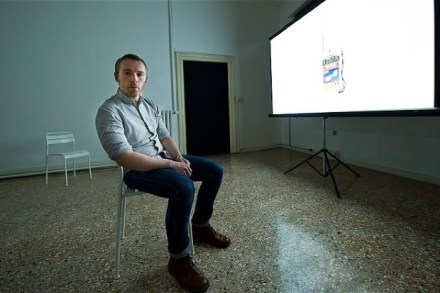
The Turner Prize shortlist has been announced, and includes a video artist who uses YouTube clips, an artist who pairs spoken word with slide shows and photography, and a historical documentary about African art. Among the four nominees for the most ‘prestigious and provocative’ contemporary art prize, not one of them is a traditional painter or sculptor. In short, the Turner Prize seems to have morphed into a film and photography prize. The Tate seem to be aware of this. The nomination announcement said the four artists’ methods ‘suggest the impact of the internet, cinema, TV and mobile technologies on a new generation of artists’. Of course, there’s no reason

‘When HBO want a gritty, hard-bitten, authentic American, they think: Old Etonian’

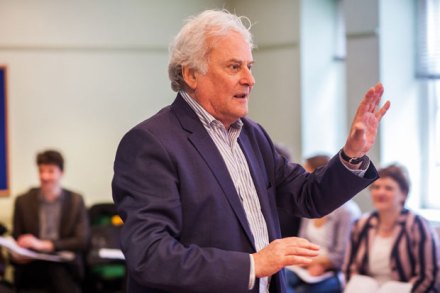
You don’t expect to find a slice of Eton College in deepest Dalston, but tonight a distinctly posh Waiting for Godot opens at the Arcola Theatre. The Beckett play is being directed by Eton’s former head of theatre, Simon Dormandy, and his Vladimir and Estragon are Tom Palmer and Tom Stourton, two of his past pupils. Together Palmer and Stourton (son of BBC’s Ed) are sketch comedy duo Totally Tom – perfect casting for Dormandy’s ‘reimagined’ production of the play, with its frequent references to music hall, the artform Beckett so loved. Dormandy, an actor as well as a director, has worked with Cheek by Jowl and the Royal Shakespeare

The problems at Tate Britain go beyond the director

Last week, Tate Britain was one of six museums across the UK to be nominated for the Art Fund’s Museum of the Year award, an annual prize in which the winner receives the not inconsiderable sum of £100,000. A couple of weeks earlier, Waldemar Januszczak, the Sunday Times’s ‘cor blimey’ art critic (don’t get me wrong, he has a winning shoot-from-the-hip style) was calling for the head of Penelope Curtis, Tate Britain’s director since 2010. Despite approving of the chronological rehang of the permanent collection which she oversaw last year – in fact, he proclaimed it a ‘miracle’ – Januszczak still insisted Curtis must go. He gave his reasons: she puts

The very best of Broadway – a director’s cut

‘America,’ said John Updike, ‘is a vast conspiracy for making you happy.’ If that’s true, there have been few more successful conspiracies than the Broadway musical — that is, the ‘book’ (meaning ‘play’) musical — a dramatic form that blends drama of character and narrative with song and dance. ‘Words make you think thoughts, music makes you feel a feeling, a song makes you feel a thought,’ said the songwriter Yip Harburg. The best musicals have a thrilling seamlessness and a cumulative emotional charge; the worst are chunks of dialogue interleaved with musical interludes. The first ‘book’ musical was John Gay’s The Beggar’s Opera, written in 1728. Lacking a genre

A fresh perspective on reassuringly familiar artists

This exhibition examines a loosely knit community of artists and their interaction over a decade at the beginning of the last century. It is centred around the marriage of Ben and Winifred Nicholson (which began to split up in 1931), involves their crucial joint-friendship with Christopher Wood and a fruitful exhibiting relationship with William Staite Murray, topped off by the all-pervading influence of a true original, Alfred Wallis, Cornish fisherman, marine-stores dealer and compulsive painter. The intellectual and artistic meeting of these individuals was a formative impulse in the development of Modernism in England; and it could be said — with some justification — that they brought out the best

Civilisation doesn’t need a woman presenter – and it doesn’t need to be remade!

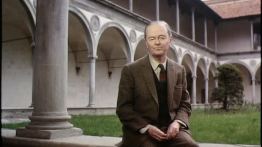
I was pleased to see that June Sarpong had added her weight to Kathy Lette’s petition to get a woman to present the BBC’s remake of Civilisation. I’ve often wondered what became of her after Five Go Dating, a show I used to watch religiously, and one which – if you’re listening, Channel 4 – equally deserves to be resurrected. Lette’s letter is in yesterday’s Times. She complains that Kenneth Clark’s original had little to say about women (true) and that because of this, a ‘female historian’ should take the reins this time. ‘A female presenter’, argues the Australian novelist, ‘would ensure that the series is not just about History but

John Deakin is no genius – and he has not been forgotten

Every so often, John Deakin, jug-eared chronicler of Soho and hanger-on at the Colony Rooms, is breathlessly rediscovered as the unknown giant behind Bacon and the forgotten man from Soho’s  generation of genius. All that is so much tosh: Deakin is no genius and he has not been forgotten. In fact, he can never be forgotten, most importantly because Bacon commissioned photographs from Deakin that he used to make his paintings but also because Deakin himself was the subject of one of Freud’s greatest portraits (above) and because Deakin’s photographs capture Bohemian Soho in aspic for the mental tourist of the future. In Under the Influence: John Deakin and the

Generation War does something very un-German – bottles it

I was so looking forward to Generation War (BBC2, Saturday) — a three-part drama series covering the second world war from the perspective of five young men and women on the German side. Any nation capable of producing the ME-109, the 88mm gun and the Tiger tank, not to mention Das Boot, really ought to have no problem making one of the most authentic, searingly honest war dramas ever to hit our screens… How wrong I was. Consider a scene from this week’s opening episode involving Friedhelm — bookish, bolshie, anti-war younger brother of the more pugnacious and efficient Leutnant Wilhelm Winter. There they are on the Eastern Front, in

Khovanskygate is about the dreadfulness and possible glory of being Russian

Within the space of a few weeks we have had the rare chance of seeing the two great torsos of Russian opera, Borodin’s Prince Igor, unfinished because the composer was often otherwise engaged, and Musorgsky’s Khovanshchina, unfinished because its composer died of drink. Prince Igor at the Coliseum was musically magnificent, and dramatically utterly absurd, ‘self-parody’ that did not do justice to its low-jinks. By contrast, Birmingham Opera Company’s Khovanskygate is musically at least as superb, and dramatically gripping though questionable. As is usual with BOC, the location is unorthodox, in this case an immense tent in the middle of Cannon Hill Park. No seats, except for the disabled, and

Blue Ruin is unwatchable, bloody – but, from what I saw, rather good

Blue Ruin is a low-budget yet highly accomplished revenge thriller although whether you have the stomach for it is another matter. I do not have a strong stomach, as we know, and as I braced myself for the next startlingly bloody burst of violence, having yet to recover from the last startlingly bloody burst of bloody violence, I was often just longing for it all to be over. I like excellent film-making as much as the next person but, ideally, I would also like to be able to watch it. Stuff you don’t need to know but might like to: this has been a huge festival hit, winning several prizes,

Thanks to Audio Description, the blind have the best seat in the house

I did not mean to snort so loudly. There I was watching the amazing Simon Russell Beale in King Lear at the National Theatre and things were all getting a bit nasty — what with daughters scheming and people having their eyes gouged out. And then, through a small earpiece, which no one else could hear, I heard the immortal words, said in a deep and quiet voice: ‘Lear enters to find Goneril clenched in tight embrace with Edgar. He clasps her tightly.’ At my snort, a very serious man behind me tapped me on the shoulder and ‘shushed’ me. He had no idea that I was tuned into the

The Guardian didn’t much like Noel Coward’s Relative Values – but you will

Cripes. How did I get that one wrong? A few issues back I blithely predicted that Harry Hill’s musical I Can’t Sing would run for three years. It closes this month, so I’m a little reluctant to praise another glittering comedy, Relative Values by Noël Coward, which, like Hill’s stricken satire, has received a few snubs from the critics. In his early dramas, Coward portrayed servants as amiable bunglers or bossy cynics and he rarely gave them more than one wisecrack per act. In Hay Fever, for example, the leading lady can’t even recall the housekeeper’s name, and her forgetfulness is supposed to be funny and attractive. Relative Values dates

For God, King and Country

Flags and flowers: three bloody years worked in silk. At the needle’s eye stand easy, ghost, slip through my fingers your blue, indelible, weightless kisses for the children. Tell Charlie, Min, time is short now. Up to the firing line for night operations — a ‘fabrication française’ where threads unravel, unvarnished truths must be embroidered by cheery cards. Not the only one not by a long way, your loving brother Albert.

Locke: a great excuse to gawp at Tom Hardy’s lovely neck

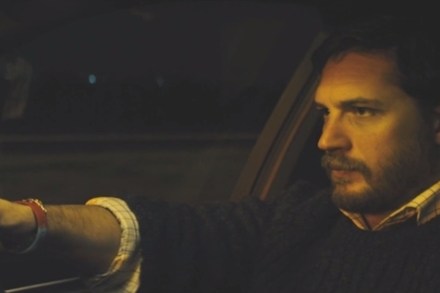
The ancients thought that the seat of female hysteria was the womb. My theory (just as credible) is that male charisma resides in the neck. The most magnetic films stars have always had impressive upper spines. Marlon Brando’s neck was so thick it was simply a continuation of his temples with only a jutting chin to betray the difference. While James Dean’s sudden bare nook between hair and leather collar is the definition of sexy vulnerability. Tom Hardy, one of the most exciting actors of the moment, is just as well endowed. His neck, playing the serial killer in Nicolas Winding Refn’s Bronson and a charming forger in Christopher Nolan’s

When Aachen was the centre of Europe – and Charlemagne ruled the known world

A UNESCO World Heritage Site since 1978, Aachen (Aix-la-Chapelle) will this summer become the focus of European attention. From June to September, the Aachen Palatinate, Europe’s best surviving Carolingian palace complex, plays host to three inter-related exhibitions commemorating the 1200th anniversary of the death of Charlemagne. The exhibition entitled Charlemagne. Power. Art. Treasures. occupies three separate parts of the former palace complex: the town hall, the Centre Charlemagne (a new visitor centre on the site of the original inner palace courtyard) and the Cathedral Treasury. Charlemagne, king of the Franks from 768-814, was crowned Holy Roman Emperor by the Pope in 800 and hailed the ‘father of Europe’ by a

Good Morning Britain: news, sport, showbiz and blithering nonsense

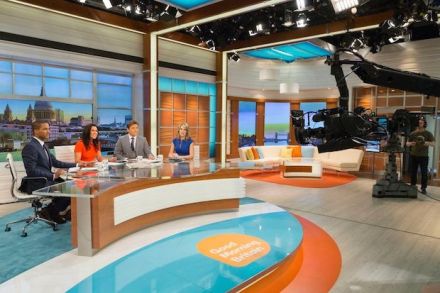
Some of the greatest minds of our generation have struggled to get to grips with the thorny conundrum of breakfast television. Should it be fluffy, should it be tough, should it do sofas or puppet rats or news? Back in the 1980s, many believed it shouldn’t do any of them, and shouldn’t exist at all. As Nick Ross, one of Frank Bough’s acolytes on the BBC’s pioneering Breakfast Time, put it, ‘television in the morning was outrageous – it was just decadence beyond belief.’ Judging by the opening salvo from Good Morning Britain, ITV’s latest revamp to the redeye slot kicking off this week, today’s state-of-the-art thinking is that it

Cutting all state funding to the arts would be monstrous

One of the best things about The Spectator is that it has no party line. As its dauntless refusal to compromise on Leveson Inquiry has shown, it is incomparably committed to the free speech of its writers. So only here could a humble arts blogger announce that this magazine’s editor, Fraser Nelson, was riproaringly, doltheatedly, cloven-foot-in-mouth wrong in his post on arts funding last week. On pretty much everything. Fraser’s right about one thing: Sajid Javid will make a great culture secretary, because unlike most culture bureaucrats, he gives a toss about staying solvent. Running culture by committee has always been a problem: the Department of Culture, Media and Sport

I Am Divine reminds me why I’ve always hated drag

It was early evening and I had not yet eaten, so I took a glass of wine and a packet of Haribos into the private screening of I Am Divine: the story of Divine. I touched neither, because early on in the film I felt a little sick. I’m unsure as to whether that queasiness was a result of the mention of dog excrement (more anon) or the scale of misogyny contained within its 90 minutes. Divine, aka Glenn Milstead, was an American actor, singer and drag queen who died in 1988 of a massive heart attack. Divine developed a name for himself as a female impersonator known for outrageous