Arts Reviews

The good, bad and ugly in arts and exhbitions

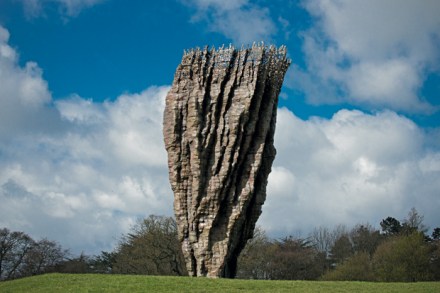
A wooden UFO lands in Yorkshire Sculpture Park

The New York-based sculptor Ursula von Rydingsvard comes from a long line of Polish and Ukrainian peasant farmers. She was born in Germany in 1942 on a forced labour farm to which her parents had been transported by the Nazis. Her early memories are of a wooden world — of huts, fences, domestic utensils and tools — on the farm and in postwar refugee camps. After von Rydingsvard’s family emigrated to America in 1950, wood was to become the primary material of her powerfully evocative sculptures, more than 50 of which are now on show at the Yorkshire Sculpture Park, both in the open and in the indoor Underground Gallery

BBC2’s Hotel India: slums? What slums?

Viewers who like their TV journalism hard-hitting should probably avoid Hotel India, a new BBC2 series about the Taj Mahal Palace in Mumbai. The tone of Wednesday’s episode was set immediately when the narrator introduced us to ‘one of the oldest and grandest hotels in the world’, where ‘no detail is too small or demand too great’, and there’s ‘an army of staff dedicated to flawless service’. To prove it, head of housekeeping Indrani then strode fearsomely down a corridor like a more elegant version of Hattie Jacques’s matron in the Carry On films. After using a torch (in daylight) to make sure the sheets just back from the laundry

Dolts, Doormats and FGM: theatre to make you physically sick

Wow. What an experience. A 1991 movie named Dogfight has spawned a romantic musical. We’re in San Francisco in 1963. Eddie is a swaggering, shaven-headed Marine and Rose is a shy, awkward waitress. Come to a party, he says. She refuses, prevaricates, reconsiders, accepts. They reach the venue; he ignores her. Furtive conversations in corners and a pervasive air of mystery suggest that something is up. The party, or ‘Dogfight’, turns out to be a secret Miss Piggy contest in which a bunch of insecure soldiers award a cash prize to the creep who invites the ugliest escort. When Rose learns she’s been tricked, she asks for an explanation. ‘You

Night Moves – the opposite of a Dan Brown film

Night Moves is a film by Kelly Reichardt, who also made the heart-wrenching Wendy and Lucy (2008), which may be one of my favourite films of all time. (If you don’t know it, go look it up; I’m old now, so no longer have the energy to educate you in these matters.) Her films, she has said, are ‘just glimpses of people passing through’ but whereas you or I would make a film about people just passing through which would be just that — everyday people would pass through, uninterestingly — her understanding of character and narrative and character as narrative is so profound, these ordinary people become wholly absorbing.

The small rewards of small-scale opera

Perhaps I should come clean straightaway and admit that, despite the fact that OperaUpClose is about to celebrate its fifth birthday, I’d never been to see one of its shows before last week. This has not been a conscious decision; maybe, though, I’d been unconsciously put off by the company’s early braggadocio — by the manner in which it gleefully trumpeted the Violetta-like decline of ‘traditional’ opera so that it could offer itself up as a timely cure. I can’t say that I’ve ever been attracted, either, by the prospect of a luscious Puccini score reduced for three instruments, or of singers, many only just out of music college, tackling

Like a Prayer

The heat in the day-room can put you to sleep there’s a man reciting the days of the week like a prayer he keeps his coat on, but he’s going nowhere the place is a circus of contradictions nurses anonymous as nuns push trays of benedictions in all colours and shapes; on the tongue they taste vaguely of a memory of Christ hung for our sins on a mates rates tree you count the minutes until the redemptive delivery kicks in; the bed’s unmade, it reeks of you the unrisen penis and the unrepentant view of a wall dulled in industrial blue paint you’d want the submissiveness of a consumptive

Citizen Brand

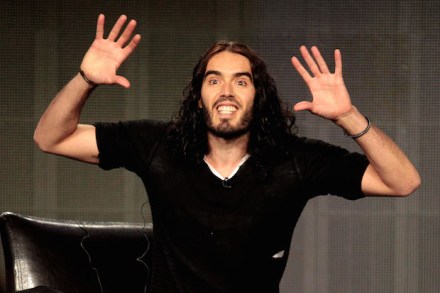
So it turns out the revolution will be televised after all. ‘Brand’, a full length documentary about the comedian turned political activist Russell Brand, is heading our way next year. The multi-millionaire comedian—who is dating a scion of the Goldsmith family—used a recent appearance on Newsnight to call for the overthrow of the state, claiming ‘profit is a filthy word’. It sounds like we are in for a treat: ‘This feature documentary film promises to follow his spiritual and biographical journey from comedian turned film star, and husband of pop star, to his present incarnation, following his realisation that he had, in Russell’s own words, “embraced the superficial and doped

Remember Richard Attenborough for his acting – not his directing

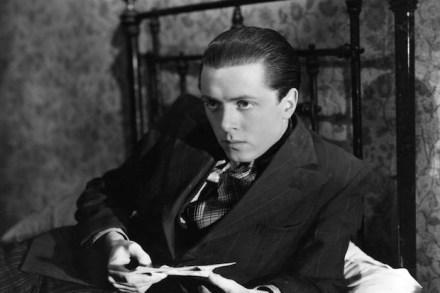
Jurassic Park has a lot to answer for. When I was growing up, I was convinced Richard Attenborough was a real dinosaur scientist. I was also convinced that Richard was David. When I became a bit older and wiser, and grew to realise there could be two Attenboroughs, I came to the conclusion that Richard might just be famous for being David’s brother. My problem with understanding how Richard fitted into the world was that, though he was ubiquitous, it wasn’t entirely clear to me (in the mid 90s) exactly why. Then I saw Brighton Rock… It’s a shame his later behind-the-scenes big-shot-ery so overshadowed his prolific earlier acting career. Between 1945 and 1971 he starred in

Cringe at the Fringe: are these really the ten funniest jokes from Edinburgh?

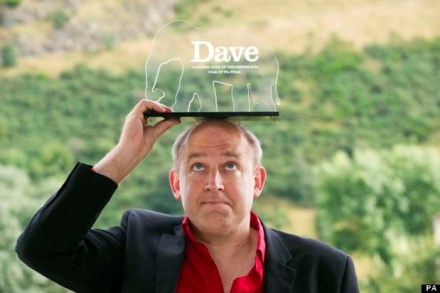
According to a poll, the funniest one-liner at this year’s Edinburgh Fringe was a joke about a vacuum cleaner: ‘I’ve decided to sell my hoover… well, it was just collecting dust’. Tim Vine, the man responsible for this curious bit of word play, said he was surprised to have won the coveted award. Presumably he hadn’t seen the rest of the top ten jokes, which ranged from cliché (‘I wanted to do a show about feminism. But my husband wouldn’t let me’) to stereotyping (‘Scotland had oil, but it’s running out thanks to all that deep frying’) and risky (‘Always leave them wanting more, my uncle used to say to

The dodgy world of posthumous art works

What does an artist do with work that isn’t quite up to his or her standards? Throw it out? Frank Stella and Robert Rauschenberg both tried that, putting artworks they didn’t like out with the trash, only to find them on sale in galleries a few years later. Some artists preemptively destroy works they don’t like. ‘There’s enough bad art in the world,’ Indiana painter Charles Mundy said. ‘I want to spare the public bad art, especially if it’s mine.’ The solution for most artists is just to keep their misfires in storage, which only postpones a decision. The question becomes trickier when the artists are dead, and a current exhibition at New York’s Metropolitan

Alex Salmond has already lost — if the Edinburgh Festival is anything to go by

Scotland’s on a knife-edge. Like all referendum-watchers at the Edinburgh Festival I grabbed a ticket for The Pitiless Storm, a drama about independence, which attracts big crowds every lunchtime at the Assembly Rooms. The play draws its inspiration from the passion and fury of Red Clydeside. David Hayman, an actor and lifelong leftie, plays a Glaswegian trade unionist who reflects on the troubles of Scottish socialism as the referendum approaches. Some of his rhetoric captures the best of the independence movement. ‘We’re not leaving the union, we’re joining the world.’ And he flavours his optimism with a dash of local irony. ‘We don’t know what the weather’s going to be

Futurism’s escape to the country

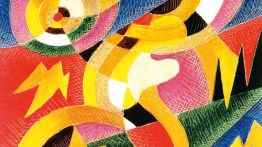
Futurism, with its populist mix of explosive rhetoric (burn all the museums!) and resolutely urban experience and emphasis on speed, was a force to be reckoned with (at least in Italy) for longer than one might imagine. It was launched in Paris in 1909 by Filippo Tommaso Marinetti, poet and performer, a superb propagandist for the movement he effectively founded, and it managed to survive the upheavals of the first world war, continuing into the 1920s. (Some say it lasted until Marinetti’s death in 1944.) Besides the core figures of Boccioni, Carrà, Balla and Severini, there were a number of other artists closely involved in Futurism, one of whom was

Anne Seymour Damer: the female Bernini?

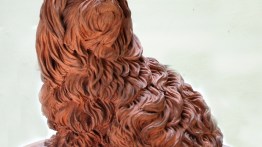
Anne Seymour Damer (1748–1828) was virtually the only female sculptor working in Britain during her lifetime. Contemporary artists may have dismissed her as a well-connected dilettante with curiosity value as a woman. But her most important connection was her uncle, Horace Walpole. He warmly praised his niece’s abilities: her terracotta ‘Shock Dog’ of 1780 (see above) he compared to a work by Bernini. On his death, he bequeathed her his country retreat, Strawberry Hill, Twickenham. This house is a fitting venue for Anne Seymour Damer – Sculpture and Society (until 9 November). The items are distributed round the house: her sculpted works are of high quality and range from animals

Ambridge recovers its sense of humour — finally

‘Isn’t that charming!’ Carol declares at the height of the great Home Farm cocktail party, after being subjected to Jennifer’s somewhat over-enthusiastic description of her wine storage unit. Just three words but such a lot of meaning. Carol Tregorran’s resurrection in Ambridge after decades of silence is a stroke of genius by The Archers team (led by Sean O’Connor), and almost, but not quite, makes up for the absurdity of the Elizabeth/Roy storyline, still not resolved and likely to linger on for weeks yet, Elizabeth struggling to put Roy back where he belongs, Roy transformed from a cheery family man into a lovelost shadow of his former self. Carol’s return,

The Origin of Poetry

Forgive the figure curled like a question mark in the corner no one speaks his language He tried to read a newspaper and failed, print swimming like tadpoles in a jar At night he speaks to Napoléon of empires and dying horses in the day-room he recalls his wife She comes as ghosted as a footballer’s memoir, her face a jigsaw puzzle he can’t resolve In Occupational Therapy he’s made a basket, a crazy weave to hold his ashes; he doodles poems On toilet paper when no one’s around, the paper splits words sliced and snowing on the pissy tiles.

An innocent graduate of Operation Yewtree, Jim Davidson, dazzles in Edinburgh

Let’s start with a nightmare. Wendy Wason, an Edinburgh comedienne, travelled to LA last year accompanied by her husband, who promptly succumbed to a fainting fit. Wason called an ambulance, unaware she was in a hospital car park, and was handed an £8,000 bill to cover the 15-yard trip. By the time her husband had been cured, the invoice had risen fivefold. As comedy Wason’s show (at the Gilded Balloon) is wry, downbeat and hilarious. It also has a Wider Purpose. She believes that US-style healthcare is about to engulf Britain and she wants us to help her save the NHS. Always a dilemma, I find, when stand-ups dabble in

In defence of Puccini

During my opera-going lifetime the most sensational change in the repertoire has, of course, been the immense expansion of the baroque repertoire, with Monteverdi, Rameau and above all Handel being not only revived but also seen now as mainstays in most opera houses. To think that only 50 years ago it was regarded as daring for Glyndebourne to mount L’incoronazione di Poppea, even in Raymond Leppard’s abbreviated and sumptuous version, which has been most unfairly denigrated in recent years. Yet just as remarkable, though hardly ever remarked on, has been the instatement of Puccini (who never needed reviving, since after initial scandals and flops he has always been more or

80 sq yds per gallon

Nothing brings him to the door quite as surely as Silexine Watertight, the complete waterproofer. One Imperial Quart. Opened this morning to seal a stump, it scents my hands beyond washing. No warning on the tin, no list of toxins, just a metal lid scummed with rust. Eleven and thruppence. My father walks into his garage and puts it away on the back of the bench, next to the spare.