Richard Bratby

Richard Bratby is the chief classical music critic of The Spectator

Recordings have stunted us

Bring me my bow of burning gold; or failing that, the opening notes of Elgar’s Second Symphony. That’s how I’ve always imagined them anyway, those three swelling B flats –  a mighty drawing back of the bow before Elgar propels his arrows of desire into the restless heart of this greatest of British symphonies. Thinking back, though, I’m not sure I’ve ever felt quite that tension in a live performance – not from Pesek in Liverpool or Barenboim at the Proms, and not from this most recent encounter, with Mark Wigglesworth and the Bournemouth Symphony Orchestra in Bristol. So where am I getting it from? Recordings, presumably, and the long-embedded imprint of two boyhood idols, John Barbirolli and Vernon ‘Tod’ Handley.

Bracingly inventive: Phantasy by the Piatti Quartet reviewed

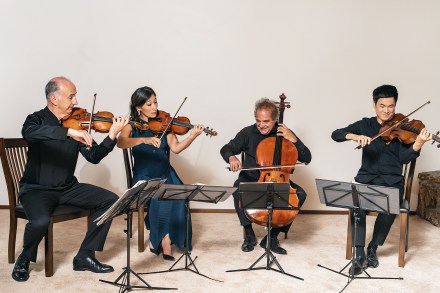
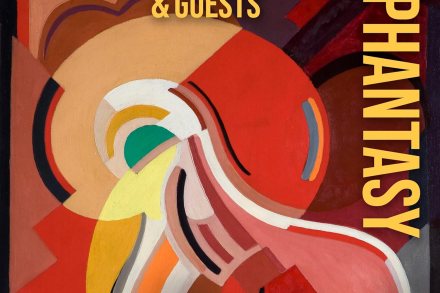
Grade: A You think you know a musical genre; then a new recording comes along and pulls something unexpected out of the bag. Walter Willson Cobbett (1847-1937) was an improbable culture-hero; a belt tycoon from Blackheath who devoted his spare time (and most of his profits) to domestic music-making, commissioning major British composers of his day and editing the single most readable reference book ever written about chamber music. Two ‘Phantasies’ from Cobbett’s competitions – reasonably familiar masterpieces of English pastoralism by Vaughan Williams and Herbert Howells – are the starting point for this imaginative disc from the Piatti Quartet.

‘I didn’t expect to love Wagner’

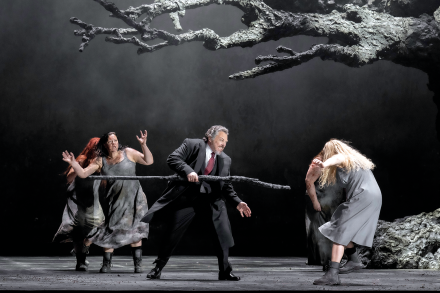
By the end of Siegfried, the third opera in Wagner’s Der Ring des Nibelungen, the king of the gods is in freefall. In the first opera, Das Rheingold, Wotan is a confident protagonist; a world-builder. In Die Walküre, we’ve seen him discover the limits of power, and felt his heart break. Now, in Siegfried, he’s a haunted figure; the solitary Wanderer, searching the world for answers that his all-powerful wisdom can no longer supply. He confronts the young hero Siegfried, and his law-giving spear shatters on the sword of a reckless, clueless boy. ‘All he can say is, “Go, then.

A playful, big-hearted, intelligent new opera

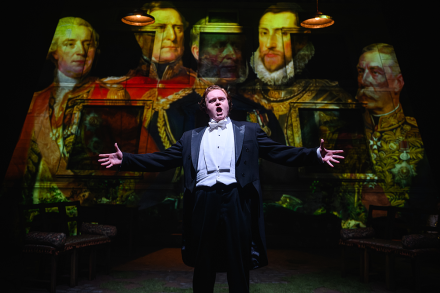
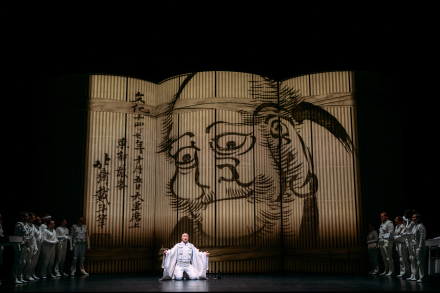
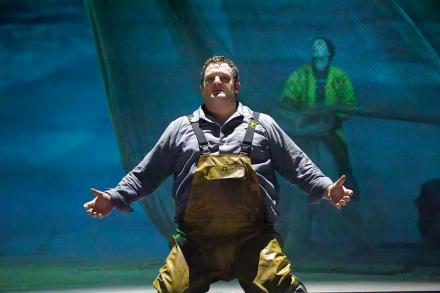
Some people like art to have a message. So here’s one, delivered by Katsushika Hokusai near the end of Dai Fujikura and Harry Ross’s new opera The Great Wave. ‘Remember art won’t change the world,’ sings the great painter (as incarnated by the baritone Daisuke Ohyama), and for that line alone I’d gladly have given the show five stars, if the Spectator did anything as barbaric as award stars. Words to live by, at least if you’re an artist; and the very private bliss of a life devoted to creativity is the heart, mind and dramatic engine of The Great Wave. Is that enough to sustain a full-length opera?

What a masterpiece. What a man: Borodin at the Barbican reviewed

Gianandrea Noseda conducted the London Symphony Orchestra last week in a programme of Stravinsky, Chopin and Borodin. The Stravinsky was a relative rarity – the divertimento from The Fairy’s Kiss – and Chopin’s F minor concerto was played by Seong-Jin Cho, a pianist with a large following and a soaring reputation. Full disclosure: I was there for the Borodin, his Second Symphony of 1877. What a masterpiece, and what a man! Alexander Borodin was a scientist of international standing and a campaigner for women’s rights. Deeply in love with his wife, and an inveterate rescuer of stray cats, he was, he confessed to Liszt, ‘only a Sunday composer’. ‘But after all,’ replied the wizard of Weimar, ‘Sunday is a special day.

The early-music movement is ageing well

The early music movement: it’s grown up so quickly, hasn’t it? The Orchestra of the Age of Enlightenment is 40 years old in 2026 and if you can remember its debut, back in the 1980s when Beethoven on period instruments was pretty much the wildest thing going, you’re going to feel terribly, terribly old. Right from the start, the OAE was in the vanguard of the second wave. As late as 1978, the gut-strings and Bach brigade had assumed that Mozart was beyond them. The newly founded OAE was straight out of the traps with Weber, Mendelssohn and Schubert – halfway down the 19th century without drawing a breath.

Richard Jones’s Boris Godunov feels like a parody

Mussorgsky’s Boris Godunov is back at Covent Garden, and there are ninjas. This isn’t a spoiler. There hasn’t been a note of music at this point, and it’s almost the first thing you see. A ginger child in a weird mask is playing with a spinning top when the black-clad assassins stalk on and slit his throat. Cue gasps. Well, the director is Richard Jones, after all; quirky, garish and occasionally macabre is what he does. And the (alleged) murder of a child pretender to the Russian throne is the horror that drives the entire plot, at least in the first (1869) version of the opera, which is what we’re given here.

Seductive Debussy and Ravel from the RLPO

Grade: A It’s a cliché that the best Spanish music was written by Frenchmen but it’s mostly true nonetheless, and here to prove the point is Domingo Hindoyan and the Royal Liverpool Philharmonic Orchestra. Debussy’s Iberia and Ravel’s Rapsodie Espagnole form the balmy, orange-scented heart of this Franco-Spanish album, featuring not a single note by an actual Spaniard. It’s a beaker full of the warm south; summer holiday music for these bleak, damp days. Four Spanish-themed French miniatures fill out the programme, including Ravel’s spicy orchestration of Alborada del gracioso. I’ll be honest, though, they had me at Chabrier’s Espana, that shameless little burst of sunshine from a composer who spent two decades as a pen-pusher in the Ministère de l’Intérieur.

Rattle’s glorious Janacek

The Czech author Karel Capek is probably best known for his plays: high-concept speculative dramas such as R.U.R. and The Insect Play, bristling with wit and ideas. But he paid his bills as a newspaper columnist, and he seems to have been pleasantly surprised when Janacek approached him about turning his ‘conversational, fairly unpoetical and over-garrulous play’ (Capek’s words) The Makropulos Affair into an opera. Capek licensed Janacek to adapt it as the composer saw fit, in words that have the authentic ring of the working journalist – ‘because I simply wouldn’t get round to revising it myself’. No fear on that count. The Makropulos Affair is a brisk, nervy play but Janacek, at 69 (there’s hope for us all), was an old theatrical hand.

This Royal Opera Traviata is no ordinary revival

First opera of the year, first night back in London, and the jolly old metrop was already springing surprises. A hulking pink Rolls-Royce was parked on Bow Street – a real oaf of a car, the lumpish nepo-baby of a Humvee and Lady Penelope’s Fab 1. And as we stood outside the Royal Opera House, cooling off from Act Two of La traviata, a large fox came jogging out of Broad Court and urinated against the front tyre before sauntering off in the direction of Aldwych. Pure magic. You should never take the capital for granted, just as you should never assume that a mid-season revival of a standard repertoire opera in a 32-year old staging will ever – necessarily – be routine.

The art of the transatlantic liner

Some time in the next few weeks, a great ocean liner will be lost at sea. One of the greatest, in fact. When the SS United States made its maiden voyage in July 1952, it was the last word in transatlantic liner design. In an age of ocean-going elegance, the ‘Big U’ was the newest, the sleekest and the swiftest. To this day, it holds the Blue Riband – the all-time record for the fastest transatlantic crossing by a passenger ship. Now, after five decades rusting in dock, and a series of unsuccessful preservation attempts, the United States is about to make its final voyage. Stripped of masts, fittings and its massive red, white and blue funnels, it will be towed out and sunk as a diving reef off the Florida coast. It’s heartbreaking to admit that this might be for the best.

The magnificence of Beare’s Chamber Music Festival

The quartet is the basic unit of string chamber music. Two violins, a viola and a cello: subtract any one of those, and you’re walking a tightrope. Add further players and the issue is redundancy: you’d better know precisely what you want to do with those additional voices, because otherwise they’ll congeal like cold gravy. When it comes to the string octet – two string quartets fused together – only the 16-year-old Mendelssohn really cracked it, going all out for transparency, daring and youthful verve. The Romanian George Enescu took the opposite approach. His Octet of 1900 is chamber music as epic construction project, wrought from steel, not spindrift.

Cosmo Landesman, Alex Diggins, Lucy Dunn & Richard Bratby

24 min listen

On this week’s Spectator Out Loud: Cosmo Landesman says life is too short to watch boring shows; Alex Diggins reports back from the Bukhara art biennial; Lucy Dunn provides her notes on BuzzBallz – which featured at the Spectator’s Christmas party; and, Richard Bratby reviews L’amour des trois oranges at the Royal Northern College of Music and Ariodante at the Royal Opera House.  Produced and presented by Patrick Gibbons.

An opera that will actually make you laugh

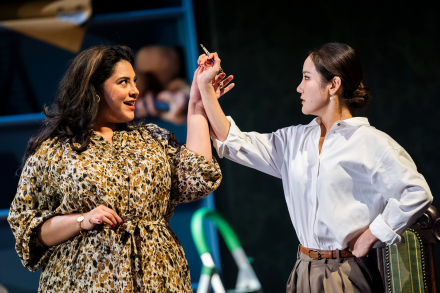
‘What we want is proper comedy!’ bellows the male chorus in the opening seconds of Prokofiev’s L’amour des trois oranges – in this case, a bevy of Monty Python bruisers in nylon frocks. The audience stirs. We’re being invaded by outsize schoolkids and what looks like a Scandinavian Eurovision entry, pushing through the stalls to the roars and whoops of a more-than-up-for-it student crowd. The previous night, I’d had four hours of manicured Handel and now a solo trombone was blowing raspberries in my face. ‘Stuff your tragedy! Take us out of ourselves!’ Yes, please! Do that. After prolonged exposure to da capo arias, a blast of raucous, multicoloured nonsense felt like shock therapy.

Christmas I: James Heale, Gyles Brandreth, Avi Loeb, Melanie McDonagh, Mary Wakefield, Richard Bratby & Rupert Hawksley

45 min listen

On this week’s special Christmas edition of Spectator Out Loud – part one: James Heale wonders if Keir Starmer will really have a happy new year; Gyles Brandreth discusses Her Majesty The Queen’s love of reading, and reveals which books Her Majesty has personally recommended to give this Christmas; Avi Loeb explains why a comet could be a spaceship; Melanie McDonagh compares Protestant and Catholic ghosts; Mary Wakefield explains what England’s old folk songs can teach us; Richard Bratby says there is joy to be found in composers’ graves; and, Rupert Hawksley provides his notes on washing up. Produced and presented by Patrick Gibbons.

The joy of composers’ graves

I called on Hugo Wolf the other week, and he didn’t look too great. He wouldn’t, of course; he died in a mental asylum in 1903 after suicide attempts, professional disappointment and the slow poison of tertiary syphilis. His face gazes glumly out from his monument in Vienna: above him, a single laurel branch, beneath him an eternal flame. But at least he’s not alone. A muscular youth, semi-ripped, looks away at one side. And on the other, a naked couple clinch in a passionate embrace. Talk about rubbing it in. It’s not that I make a habit of hanging around composers’ graves, you understand. But somewhere along the way I seem to have notched up an awful lot of these posthumous courtesy calls. With the big beasts – Beethoven, Mahler and co.

Intoxicating Elgar from the London Phil

By all accounts, the world première of Elgar’s Sea Pictures at the October 1899 Norwich Festival made quite a splash. Elgar conducted, and the soloist was the 27-year-old contralto Clara Butt – dressed in a silky, sinuous number which drew gasps in those corseted late-Victorian days. Elgar thought she looked ‘like a mermaid’; the critics, of course (of course!) confined themselves to the music. They reported that Elgar and Butt were called back four times, and the second of the five songs – the delicate ‘In Haven’, to words by Elgar’s wife Caroline Alice – was singled out for particular praise Interesting how tastes change.

Evgeny Kissin’s stand-in brings the house down

It was such an enticing programme, too. The Philharmonia had booked Evgeny Kissin, the last great piano prodigy of the Soviet era and one of the superstars of the late 1980s and early 1990s. And then there was the music: three Russian showpieces, including Rimsky-Korsakov’s enchanting and almost unplayed (in the UK, anyway) single-movement Piano Concerto. Better still, Kissin was down to perform Scriabin’s youthful Concerto in F sharp minor, a private passion that I’ve heard live only twice in four decades. Imagine a Russian Chopin, if Chopin knew how to orchestrate. Gilltburg has the agility and power of an old-school keyboard lion, though he uses it with Bach-like objectivity Too bad.

The orchestra that makes pros go weak at the knees

Stravinsky’s The Firebird begins in darkness, and it might be the softest, deepest darkness in all music. Basses and cellos rock slowly, pianissimo, in their lowest register; using mutes to give the sound that added touch of velvet. Far beneath them rumbles the bass drum: a halo of blackness, perceptible only at the very edge of the senses. In Liverpool Philharmonic Hall, with Sir Simon Rattle conducting the Bavarian Radio Symphony Orchestra, you felt your hairs tingle before you discerned a note. Seconds later, the very air within the hall seemed to be quivering with sensuous, engulfing bass warmth. You can be sure that Rattle anticipated that sensation; planned for it, in fact, from the moment that he confirmed this short British tour with his new orchestra.

Was Elgar really a snob?

There’s not much point pretending to be an expert on Elgar (or so The Bluffer’s Guide to Music assures us) because everyone already thinks they are. And there’s definitely no point getting hung up on the historical accuracy (or otherwise) of Alan Bennett and Nicholas Hytner’s new film The Choral. It’s set in a West Riding mill town during World War One and the plot pivots around the local choral society’s performance of The Dream of Gerontius. This being Bennett, of course, there’s rather more to it than that, but in any case – spoiler alert, and there’ll be more – Sir Edward himself makes a cameo appearance: Simon Russell Beale, looking oddly like the late Ken Russell in a white fright-wig. So here we go again: imaginative fiction collides with historical reality.