Richard Bratby

Richard Bratby is the chief classical music critic of The Spectator

The classical album everyone’s been talking about

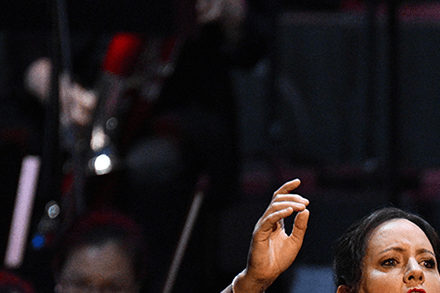
Grade: A Didn’t the Bluffer’s Guide to Music say that the highest achievement in British music was to become a well-loved mezzo? Beth Taylor seems to have managed it in little more than a year. True, she’s been on the scene for a while now (she made the finals of the 2023 Cardiff Singer of the World), but it feels like her career has gone nova in the past 12 months. Certainly, everyone seems to be talking about her debut recital disc, The Deeps Have Music. And with reason, as it turns out. It’s a splendid showcase for Taylor’s voice in all its aspects: whether lighting up the western horizon in fiery red-gold arcs, or surging along down low – dark and sculpted; passionate but thrillingly controlled.


This is what opera should be like

‘Popolo di Pekino!’ The xylophone clatters but the Mandarin whose proclamation opens David McVicar’s new production of Turandot doesn’t wear a silk robe. He’s a kind of ringmaster; a sinister maitre d’ in top hat and jodhpurs, and he’s speaking into one of those chunky 1920s microphones. Behind him is a sumptuous art-deco theatre in an advanced state of decay, its gilded chinoiserie as tattered and cobwebby as the crowds that fill it – the ghosts, perhaps, of flapper girls and playboys, trapped in a world somewhere between Mervyn Peake and Scott Fitzgerald. A sort of Gormen-Gatsby, if you like. So no, it’s not China. But when was it ever, really? In every important respect this tremendous new staging has got it all.

Yet another Tosca set in a militaristic dystopia?

Annilese Miskimmon, the artistic director of English National Opera, has asked critics not to reveal the ending of her new production of Tosca. Happy to oblige, though by the time Tosca makes her final exit, it’s been flagged so heavily that you’re not so much surprised as impatient to get it over with. Still, a spoiler’s a spoiler and opera, after all, is showbiz. The late Graham Vick, a genius at building new audiences, didn’t even provide a synopsis at his groundbreaking Birmingham Opera productions. Having read (and written) my share of opera synopses, there’s something to be said for that. But very few opera directors are as radical as Vick.

The finest Magic Flute I’ve ever heard

Opera directors: aren’t they the worst? All those gratuitous updatings and half-baked concepts, when they should really be following the composer’s intentions. Right? Ivan Fischer would presumably agree. In 2008 he launched an opera company, based around his Budapest Festival Orchestra, with Fischer acting as both conductor and stage director. The aim, he says, is to offer an ‘alternative to the usual trends of the international opera scene’, in a venue – the 16th-century Teatro Olimpico in Vicenza – that ‘reduces our temptation for regietheater’. (Note to non-opera nerds: ‘regietheater’ is what angry American record-collectors call any Wagner staging without horned helmets.) This being Fischer, he’s building from an incredibly high base.

What cinema gets wrong about conductors

André Previn began his career at MGM. And after he’d quit the studio to become conductor of the London Symphony Orchestra, he liked to share an anecdote. His old Hollywood pal Norman Jewison, the director of Rollerball, brought a film composer friend to hear Previn conduct the LSO. ‘It’s nice, isn’t it, to see André here at the Festival Hall, with his own orchestra, getting cheered because of his performance of Beethoven’s Ninth?’ ventured Jewison. His colleague nodded: ‘Sure, but you have to admit – it’s a shame how completely he screwed up his career.

Opera’s obsession with the Eastern bloc

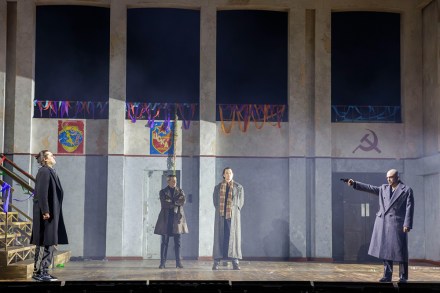
There was a fad a while back for photo books about Eastern bloc architecture. Derelict megastructures, brutalist monuments; you couldn’t move for them in the Barbican gift shop. Anyhow, Patrick Nolan and Leslie Travers – the director and designer respectively of Opera North’s new production of Eugene Onegin – were presumably big fans, because they’ve relocated the action to a provincial sports centre in the dying years of the USSR. It’s a fairly common gambit with Slavic operas. British opera companies are surely world leaders, by now, at rendering faded paintwork and water-stained concrete. But why?

The Hallé is on a roll

Say what you like about Manchester – and who doesn’t, right now? – but when it comes to imaginative programming, the Hallé is on a roll. It opened its new season with two substantial premières. First up was Sir James MacMillan’s Sixth Symphony, conducted by the orchestra’s principal conductor Kahchun Wong, and superficially a more abstract conception than MacMillan’s tremendous Fifth Symphony, which was premièred in Edinburgh in 2019. That work had a subtitle, Le grand Inconnu, and it dealt with the Holy Spirit. The Sixth has no name, though MacMillan has said that it incorporates musical portraits of family members, alluding to the ‘friends pictured within’ Elgar’s Enigma Variations. It’s an interesting model.

Royal Opera’s maddeningly erratic Parsifal

If the Royal Opera’s new Parsifal had ended after Act One, you’d be reading right now that it was one of the finest British Wagner productions of recent years. The prelude is played with the curtain down; a rare gesture of faith these days. When the curtain does rise, it’s on a dark vaulted space that might or might not be Wagner’s Grail temple: sublimity from the perspective of a broken and brutal age. Figures in overalls cluster at a bank of screens (Wagner specified no period for the mystery that’s about to unfold). Others tend, gently, to a man who lies bloodied and prone on the floor.

Do we really need a Dudamel Schumann cycle?

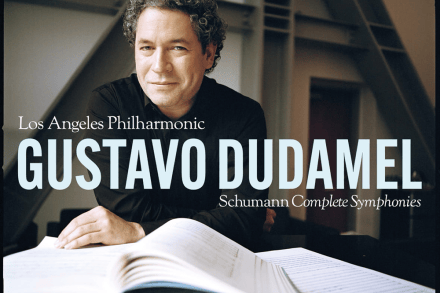
Grade: B These are strange days in the recording industry. Heaven alone knows why Platoon – an Apple sub-conglomerate with all the charm of the Borg – has decided that this is the moment to release a cycle of Schumann symphonies recorded live by Gustavo Dudamel and the Los Angeles Philharmonic in 2018. But I’m not complaining. No conductor records these four misunderstood masterpieces for the glory. No: it has to be love; and while you can draw any number of conclusions from Platoon’s decision to give the recordings away for free via streaming and download platforms, the real value is in the listening. If perceptions of Dudamel as a hyperactive ex-wunderkind were ever really justified, they aren’t now.

Meet the man behind Royal Opera’s new Parsifal

Evgeny Titov has landed at the Royal Opera, and he has good news for Britain’s beleaguered opera scene. ‘It’s the best place to work,’ he declares, leaning forward with enthusiasm; and already he’s thrown the interview off course. Usually with overseas artists there are courtesies, and then a tactful acknowledgment that British companies work under unavoidable pressures of time and money. But this actor-turned-opera director, whose career has taken him from St Petersburg to the Salzburg Festival, has seen a few things, and he means what he says. He likes it here. ‘Everybody told me before I came, “You will love it,”’ he says. ‘“Oh, is that so?

When will I see a Carmen set in 19th-century Seville?

No critic sets out to be a reactionary, even though it’s much easier that way. There’s no real satisfaction in rejecting novelty on sight; no joy in measuring a living performance against your record collection and coming down, every time, in favour of the dead Nazi. I get that. Still, it’s a plain fact that in three decades of regular opera-going, I have never – not once – seen a live production of Carmen that locates the action in 19th-century Seville. Or one that centres the visual elements – mantillas, sunshine, picture-postcard Spanishness – that directors tell us (and how they tell us!) have become such clichés.

Rattle makes Schumann shine and sing

Phrenology, eh? It’s cobblers, plainly, but Robert Schumann didn’t know that and his biographer Martin Geck tells how in 1846, near Dresden, he submitted to a full once-over from Europe’s leading cranium-fondler Robert Noel. Noel clearly knew his patient, because his analysis echoes what anyone who knows Schumann’s music might say about the personality of this supreme romantic. Noel detected ‘sense of form – modesty – strength of purpose’. Touchingly, he also detected ‘anxiety that stands in the way of happiness’. Then the clincher, the observation that grabs straight at the heart of any Schumann fan: ‘emotional through and through’. Well, we Schumann-lovers will take all the back-up we can get.

Words are the most important part of any opera

The long days wane, summer fades and sure enough, the big international guest orchestras begin to land at the BBC Proms. A rare catch this year was the Proms debut of the orchestra of the New York Metropolitan Opera, under its music director Yannick Nézét-Séguin. Debut? No, I couldn’t quite believe it either. What with the regular Radio 3 broadcasts from the Met, and all those live cinema relays, the Met Orchestra almost feels like part of the family. Certainly, there must be few overseas orchestras whose live performances are more familiar to British audiences. No question, though, there’s always something rather festive about hearing a great opera orchestra in concert.

Finally: a museum that refrains from moralising

Hull is a city of many quirks, but I didn’t expect a mermaid. Seriously: an actual mermaid, mounted in a case on the top floor of the Maritime Museum. From head to fishtail she’s about a foot and a half tall, and look away now if you treasure your illusions, because even allowing for the taxidermy process it’s clear that Disney has not been entirely frank with us. Her skin is leathery and the colour of tar. Her glass eyes stare beadily, and she bares tiny teeth in a silent, eldritch shriek. ‘Probably a monkey stitched to a fish,’ the curator told me. The Spectator always gets the inside track. Two old favourites – the stuffed polar bear known to locals as Erik and a 40ft right whale skeleton – are back Still, there are no spoilers on the signage.

The violinist who told the Vienna Phil where to stick it

Grade: A The Viennese violinist Arnold Rosé (1863-1946) held a musical civilisation together. Brother-in-law of Mahler, friend to Brahms and a legendary chamber musician, in 1884 he became leader of the Vienna Philharmonic – a post he held under Mahler and Richard Strauss until the Nazis drove him into exile in London in 1938. His daughter Alma conducted the women’s orchestra in Auschwitz; she didn’t survive. After the war, the Philharmonic apologised to Arnold for any misunderstanding, and offered him his old job back. He told them where to stick it. Aren’t you curious to hear such a musician?

A true visual spectacle: Edinburgh’s The Galloping Cure reviewed

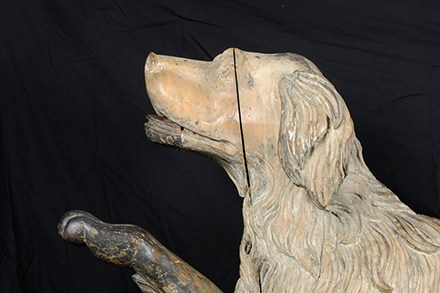
Those lights! Thinking back on The Galloping Cure, Missy Mazzoli’s new opera for the Edinburgh International Festival, that’s what lingers: cascades of lights, shimmering and flickering in every hue that modern LED technology can supply. At first the effect is almost Zen – soothing washes of pinks and blues and ochres, with carousel horses rising and weaving among them. Then, as the action intensifies and the characters succumb to collective mania, they’re brighter, faster, more aggressive: a frantic sensory overload, flashing to the rave-derived backbeat of Mazzoli’s score. Lucy Carter’s lighting designs are meant to transfix you, and they really do. Hardly the point of an opera, you might say.

This giant of romanticism deserves so much more

Pity Carl Maria von Weber. On the morning of 5 June 1826 a servant knocked on the door of his bedroom in Great Portland Street, and heard no response. Stricken by tuberculosis, and tortured by the ‘thick, dank, yellow’ London smog, Weber had died in his sleep, aged 39. He knew that he was dying, and he’d travelled to London to try and make as much money as possible for his wife and children. He spent his last strength on Oberon; a sprawling half-opera, half-pantomime that he had been assured would drive British audiences wild. So it was fitting that the Proms should commemorate the 200th anniversary of Weber’s death with a concert staging of his only English opera, warts and all.

A much-deserved revival of a formidable British composer

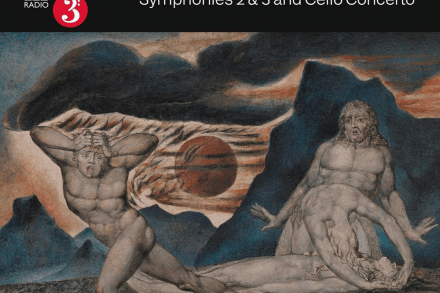
Grade: B+ ‘Cheltenham Symphonies’, they used to call them – a catch-all term for the kind of large-scale, traditionally inclined postwar works that found a natural home at the Cheltenham Music Festival. But it was also a sneer: a dig at the supposedly parochial nature of British music in the 1960s and 1970s. Over in Europe, the avant-garde was doing whizzy things with Marxism and electronics. British music, went the narrative, was suburban, outdated and drab. Now listen to John McCabe’s Third Symphony of 1978. McCabe’s orchestration is as gorgeous as a bird of paradise; it shimmers like the colours on the surface of a bubble. Not that there’s anything fragile about McCabe’s musical engineering.

A triumphant adaptation of Game of Thrones

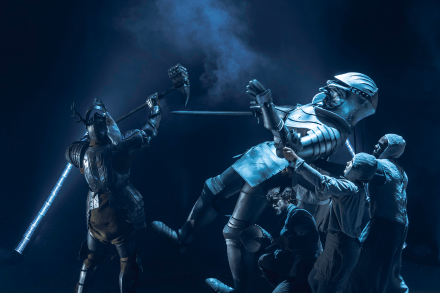
Wasn’t it Philomena Cunk who first observed that Shakespeare’s greatest work is Game of Thrones? She had a point. When I told friends that the Royal Shakespeare Company was adapting George R.R. Martin’s saga for the stage, the GoT fans lit up. The non-fans were incredulous, and not in a good way. Now Game of Thrones: The Mad King has landed, nearly four hours of it, and it represents a gamble for the RSC. Nearly a decade after peak Thrones, a vast inbuilt audience can no longer be assumed. This new stage version needs to please both camps if it’s to become the money-spinner that the company clearly (and justifiably) intends it to be. I’d like to imagine that I’m the target audience.

Don’t miss this dark Hansel and Gretel

The Three Choirs Festival always feels so nourishing, so eternally English, that you sometimes forget how much history has been made there. It was in Gloucester in 1910 that the young Herbert Howells and Ivor Gurney heard the world première of Vaughan Williams’s Tallis Fantasia while Elgar, in rented digs, tried out his Violin Concerto with Fritz Kreisler. Three years later you’ve got Sibelius despatching Aino Ackte to première Luonnotar, and Saint-Saëns, at 77, playing Mozart by day, then cracking out his celebrated musical impersonations at the post-show party. Apparently his Cosima Wagner was quite the knockout. The point is that there have been moments when the musical universe pivoted around this quiet cathedral close.