Grange Park Opera has acquired a new chandelier for its theatre at West Horsley; a jumble of foliage and fairy lights that ascends into the roof pre-curtain, like in The Phantom of the Opera. It’s a fun addition, and very on-brand. This stockbroker-belt festival knows its audience. It raises and splashes cash with equal gusto, and it doesn’t overthink things. A Ring cycle – opera’s ultimate status symbol – has been on the cards at GPO for a few years. Now it’s arrived and the opening gambit, Das Rheingold, looks and sounds impeccably high-spec.
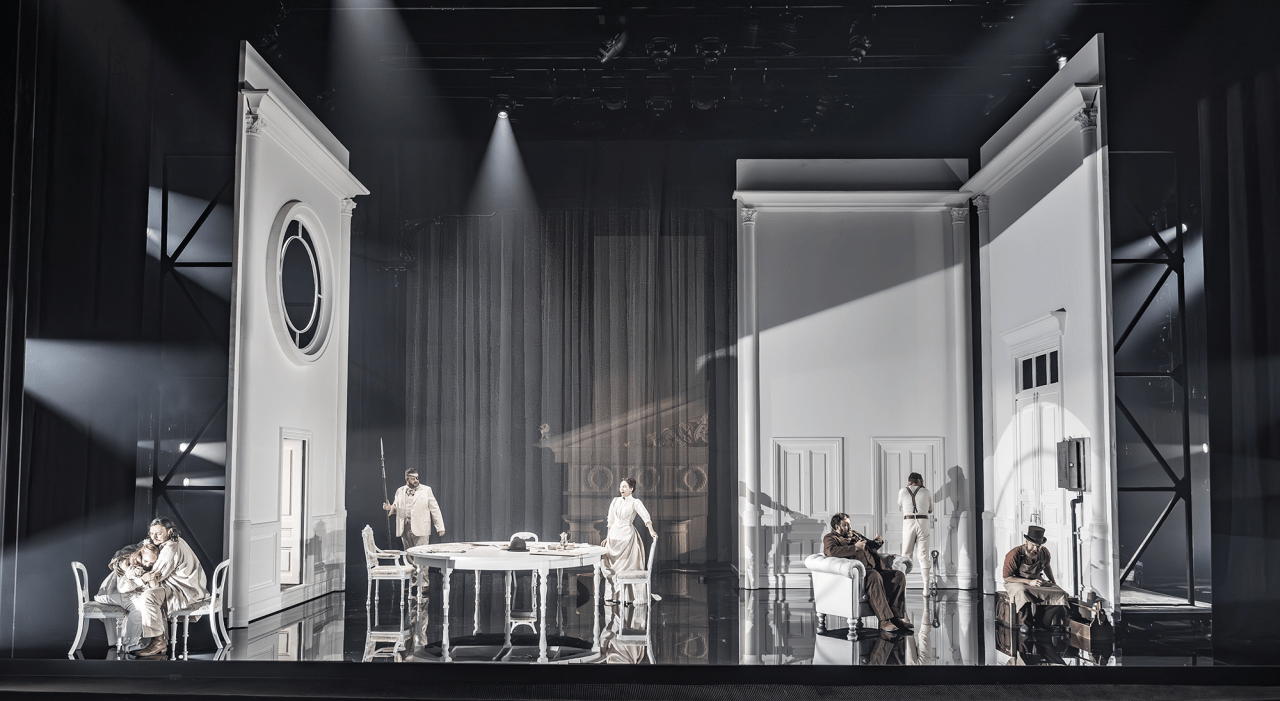
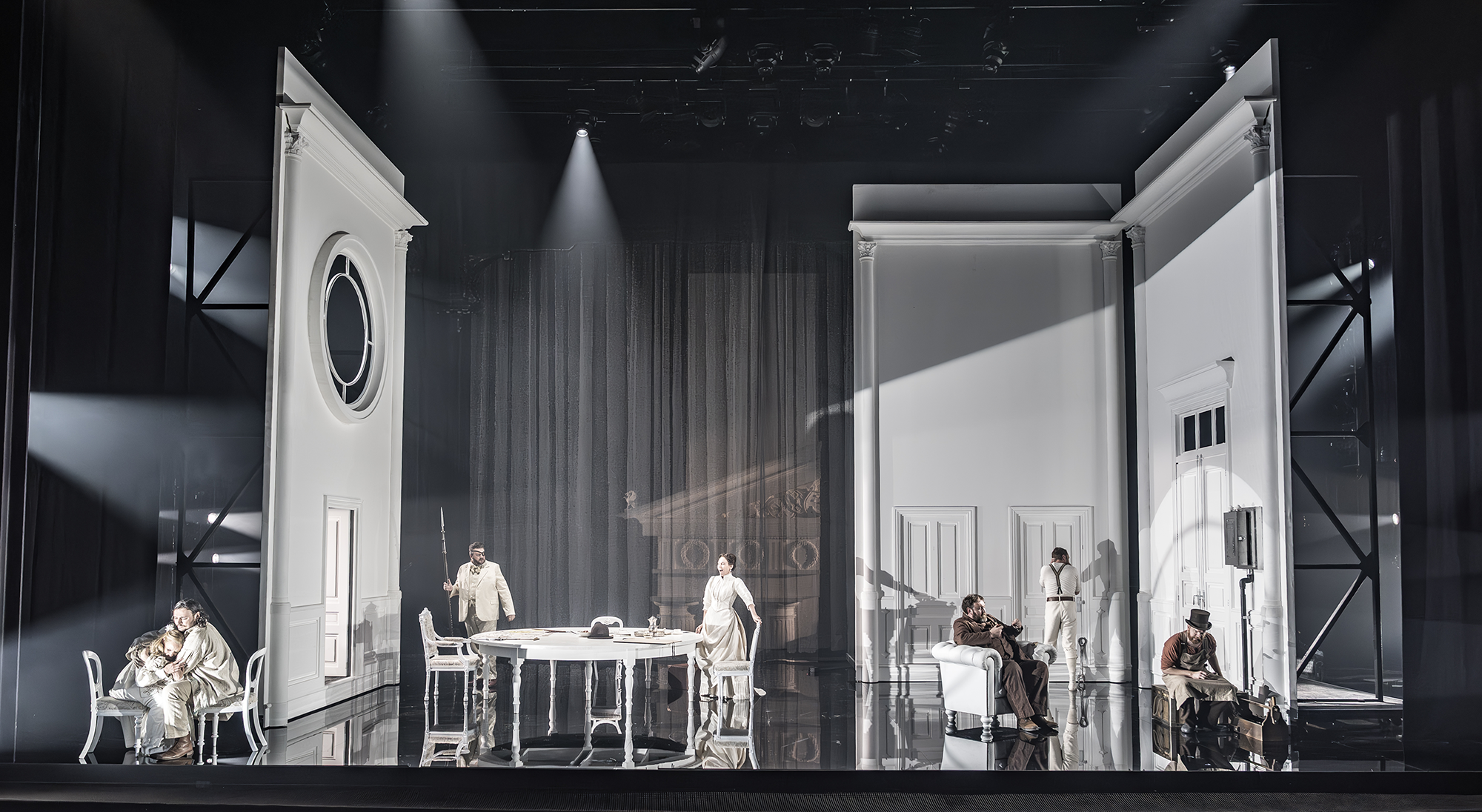
It’s designed and directed by Charlie Edwards, and the visuals are familiar but effective. Wotan (James Rutherford) and the gods are Victorian aristocrats dressed in tasteful monochromes, and their Valhalla is a realm of gleaming black floors and spotless white classicism. Between its stiff inhabitants and the droogish, top hat-wearing Fafner (David Shipley) poor Fasolt (Matthew Rose) in his plain brown suit stands no chance. The notion that Freia (Rachel Nicholls) actually prefers him to her own family is not a new or particularly subtle one but Nicholls, fearless as ever, plays it to the hilt.
Meanwhile the Rhinemaidens cavort in blue dresses behind a gauze curtain, one of several allusions to Wagner’s original design concepts. When Alberich (David Stout) transforms into a dragon and a toad, they’re represented as shadow puppets in a magic lantern show – within touching distance of the fairytale romanticism from which Wagner forged his world. Electricity, as a source of magic and menace, is another theme. Edwards is not the first director to represent Nibelheim as a power station, but he might be the first to portray Donner (Thomas Isherwood) as an amateur sparky who spends much of his time poking around inside Valhalla’s central fuse box.
By and large, Edwards’s staging is most effective when reframing old ideas, and least convincing when it attempts to shock. A blast of white light and electric bells when the Ring is revealed is meant, presumably, to jolt us from our seats with world-disrupting force. It sort of works, once you clock that it isn’t an actual fire alarm (a few seasons ago, a GPO production simulated a terrorist attack on its own audience: they’re subtle like that). But having Erda (Sarah Fulgoni) enter through the stalls to deliver her prophecy from the audience is just naff – a school play gimmick, though Fulgoni sounded magnificently ominous and oaky.
In truth, this Rheingold is nobly sung throughout, with Rutherford’s subdued Wotan making a compelling shadow for Stout’s forceful, obsidian-voiced Alberich (who seems, so far, to be the real protagonist of Edwards’s Ring). In the absence of other Nibelungs, Adrian Thompson plays Mime for laughs, but the most original characterisation is Mark Le Brocq’s long-haired Loge, heroically resisting all temptation to run away with the show. None of the usual camping it up, or caricatured singing – just droll, articulate scepticism, sung with slippery elegance.
Harry Sever conducted the orchestra of English National Opera in a reading that was less about cumulative force than the beauties of the moment – handling phrases tenderly, and letting woodwinds and horns linger over their shifting colours. The greatest opera Schubert never wrote? Well, why not? Severs cut his Wagnerian teeth at Longborough and some of the cast appeared in ENO’s abortive half-Ring, so GPO is standing on the shoulders of giants. At Longborough, of course, a team of fanatical Wagnerites transcended fearsome limitations to achieve something that was (then) supposed to be impossible. At West Horsley, you suspect that Edwards’s brief is primarily to avoid frightening the horses. But this is an entertaining Rheingold, classily cast; the incest and ultraviolence starts next year.
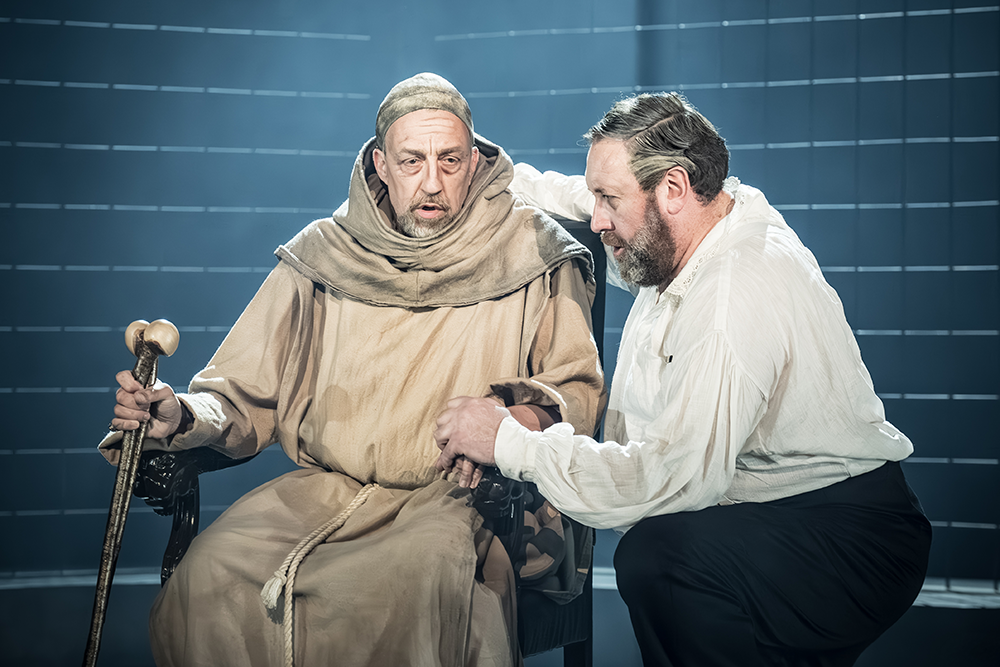
Still, it’s brave of GPO to stage Verdi’s Don Carlo in the same season. Let’s hope that the empty seats (the Wagner was packed) didn’t cost them too dearly, because it sounds magnificent and looks imposing, with only the crowd scenes in Jo Davies’s generically updated staging (Edwardian-ish costumes; brutalist sets) feeling a little under-directed. As Philip II, Matthew Rose occasionally sounded strained – unsurprising, perhaps, given that he’s singing the role on his nights off from Rheingold – but his confrontation with Julian Close’s reptilian Grand Inquisitor was properly chilling.
Michel de Souza is a swashbuckling Rodrigo. Otar Jorjikia’s restless ADHD Carlo is a study in emotional disintegration, and by singing Eboli essentially straight, Ruxandra Donose makes it clear that the real struggle is playing out in the soul of Elisabeth (Elin Pritchard). Pritchard just gets better and better, layering determination, steel and agonising sweetness over a base-note of tearstained vulnerability. It’s all so gloriously songful, too. With George Jackson conducting, the ENO orchestra brooded and blazed, and you emerge – as you should from Don Carlo – feeling like you’ve lived a lifetime, and wondering where the hours went.



Comments