Grade: A–
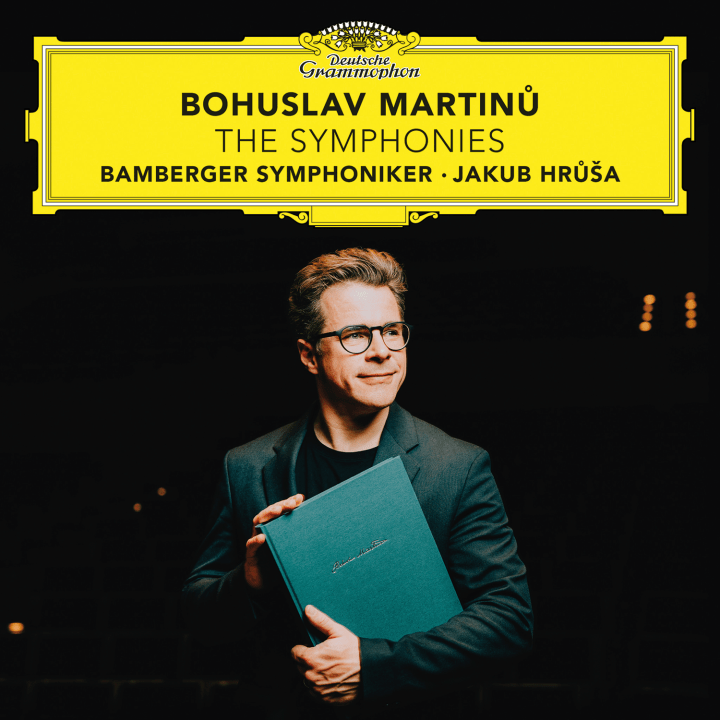
What, more Martinu? It feels like no time since the Pavel Haas Quartet was persuading us that there might, after all, be more than we’d suspected in the chamber music of this patchy but fascinating Czech composer. Now here’s the chief of the Royal Opera, Jakub Hrusa, with a symphony cycle, and it’s starting to look as if Martinu is having a moment. To older record collectors, there’s still something oddly authoritative about seeing the yellow Deutsche Grammophon cartouche above an earnest conductor photo. Stand up straight: it’s on DG. This is serious.
Hrusa is certainly serious; very much the thinking man’s maestro, he’s even published a collection of essays on Martinu. None of that impedes the vitality and colour of these performances with Hrusa’s own orchestra, the famously adventurous Bamberg Symphony. This music demands vivid characterisation as well as a firm grip on Martinu’s lush (sometimes over-lush) textures, and it gets it here, with Hrusa making the most of the composer’s rhythmic verve. Feel the bite of those chunky, piano-tipped motor rhythms: was Martinu the first minimalist?
Anyway, if you’re tempted to explore Martinu the symphonist, this is now the place to start. A word of advice: don’t listen straight through. Martinu wrote all six symphonies in exile in the space of just 11 years, and their family resemblance is striking – not quite self-contained worlds; more like different twists of the same (admittedly gorgeous) kaleidoscope. A little goes a long way. I’d begin with the Fourth Symphony of 1945, which opens with wave upon wave of shimmering sunlight, and ends in a whooping, syncopated victory parade.






Comments