
English National Opera’s first production created in Manchester is Angel’s Bone, a one-act opera by Du Yun and the librettist Royce Vavrek. It was premiered in 2016 in New York and subsequently won the Pulitzer Prize, but we shouldn’t hold that against it. Musically, at least, it’s certainly more interesting than recent US imports like Jeanine Tesori’s Blue – worthy, subminimalist Yankslop addressing the fashionable issues of the day. (It’s funny how the classical music world imagines that the way to reach British audiences in 2026 is to program stuff that was relevant to Americans in 2016.)
It was a pretty horrible experience nonetheless. Daytime TV-fixated suburbanites Mr. and Mrs. X.E. (Rodney Earl Clarke and Allison Cook) discover a pair of grounded angels (Matthew McKinney and Mariam Wallentin) in their backyard and must decide what to do with them. The couple are stressed and on their uppers; perhaps the heavenly visitors are a sign of hope? So they rip off the angels’ wings, imprison them in their pink-tiled bathroom and invite their friends to a celebratory party, at which the angels are raped. Because? Because humans (especially suburban, middle-class humans) are hateful and the world is vile. Enjoy the show!
Angel’s Bone felt sterile, as if the digital end-product mattered more than the living performance
It’d take Alban Berg to make worthwhile music-theater out of that little lot. The story is a dead end, the characters are stereotypes, and while Yun’s score is inventive, 85 minutes is far too long for such limited dramatic material. The music does at least hold the attention for some of the time – restless, wired and crammed with arresting sonorities and stylistic backflips. A largely passive angel chorus chants in eerie microtonal polyphony, like Gesualdo melted with a lens (it was sung by the Manchester-based Kantos Chamber Choir).
The inner world of the couple, meanwhile, is rendered in hyperactive Euro-modern complexity, occasionally tipping over into pop-culture pastiche. Fair play: it takes a certain artistic courage to make Mr. X.E. parody Louis Armstrong, while writing the angels’ music in basically classical idioms (that choral chanting, or the pale echoes of romanticism in the angels’ broken moments of song). Cook and Clarke effectively carried the show, dealing heroically with Yun’s fearsome vocal demands while Cook, in particular, found glimmers of humanity in her shoulder-padded soap-bitch of a character. Baldur Brönnimann conducted a ten-piece ensemble from the BBC Philharmonic. They played with steely finesse.
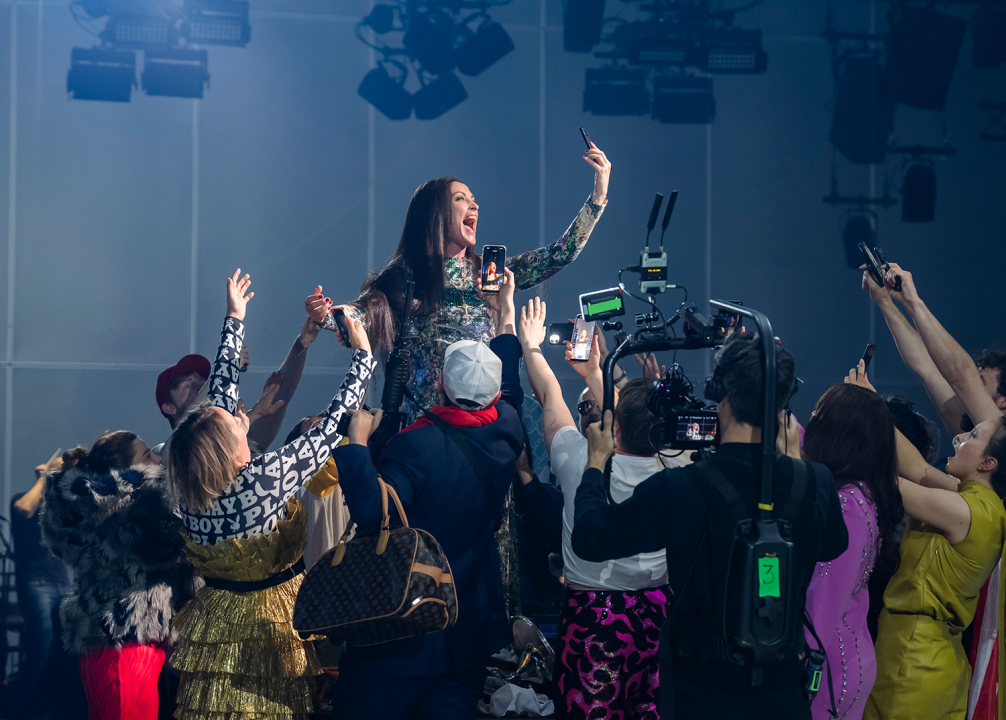
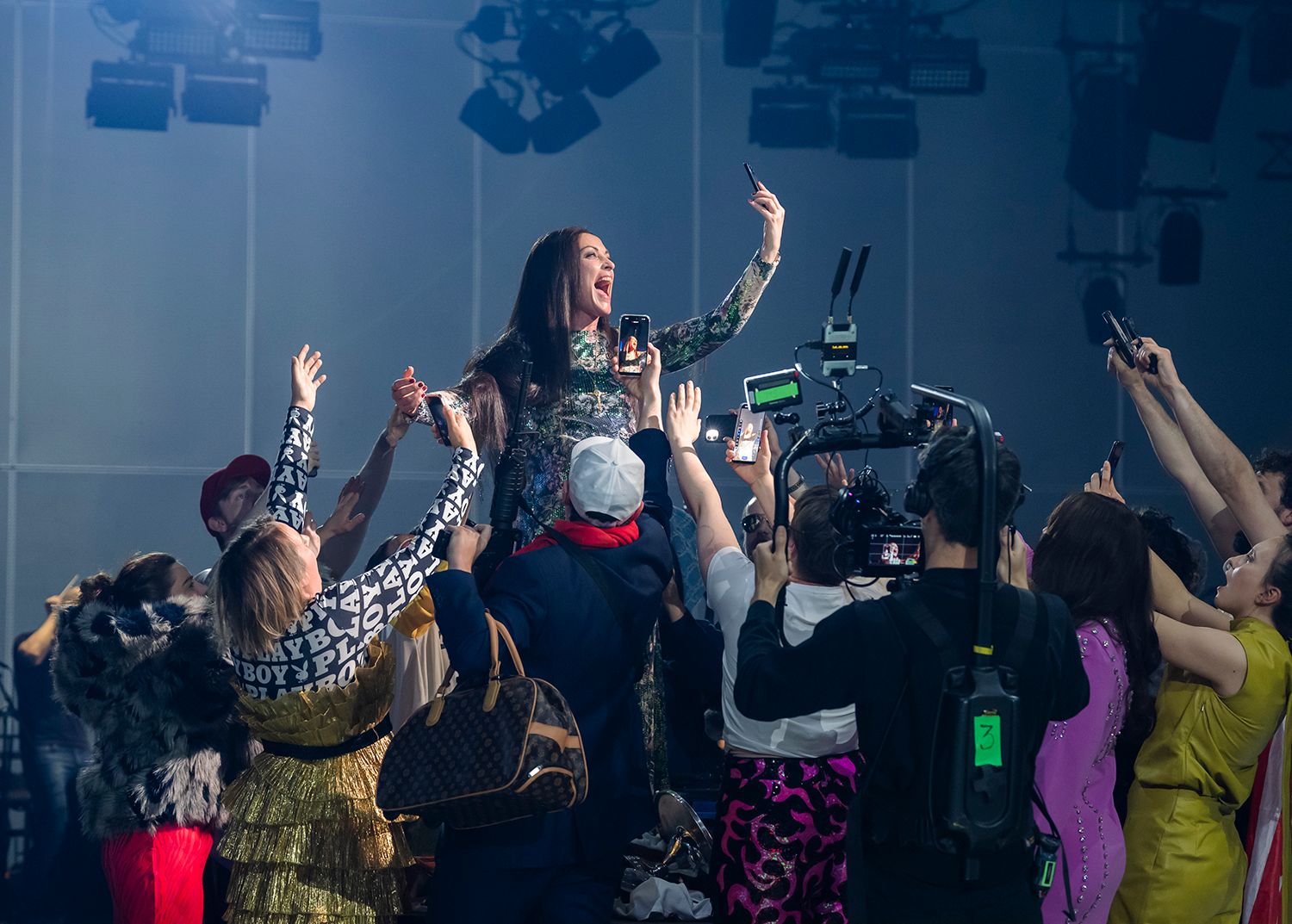
All of this was staged in the round, in the cavernous industrial void of Aviva Studios in Castlefield. As a venue, it’s completely unsuited to conventional opera, which was presumably the whole point of this Arts Council-enforced wedding between ENO and co-producers Factory International. In any case, the director Kip Williams couldn’t do much about it. Forget about human connection, or the immediacy of live theater. The performers were amplified, but unless you were in the front row of the standing audience (or bagged one of the few raised seats) sightlines were nonexistent. Even there, the set designs obscured the singers for long stretches. You were forced to watch most of the show through a video feed, filmed by obtrusive cameramen and projected onto six big screens high above the stage.

Arts Council England mandated this whole exercise, so it’s worth taking a moment to consider the implications. To be clear: none of the innovations here – video and amplification, performing in alternative spaces, exploring new work, integrating nonclassical performers – is, in itself, inimical to opera. Think of Welsh National Opera’s multimedia experiments, Birmingham Opera Company’s demolition-site Tippett, or ENO’s own drive-in Puccini – vital creative experiences, opening new possibilities for the art.
Angel’s Bone, by contrast, felt sterile, as if the digital end-product mattered more than the living performance. Is this the aspiration now: opera as TikTok? Listening through loudspeakers, eyes glued to screens, soaking up the message that life is shit? If you want to picture ACE’s vision for the future of opera, imagine state-funded doomscrolling, in your face, for ever.
Twenty-four hours later, the overture to The Marriage of Figaro – Scottish Opera’s latest touring revival – had never felt more welcome. Thomas Allen’s staging (yes, that Thomas Allen) dates from 2010 and it’s determinedly traditional, with shabby-chic sets and 18th-century costumes under an orange Spanish sun. The cast is wholly engaging. Ian Rucker is an elegant, menacing Count; Simone McIntosh makes a particularly mischievous Cherubino and Ava Dodd, as Susanna, hides a deep tenderness beneath the classic soubrette sparkle. She’s enchanting.
Down in the pit the orchestra danced along under Dane Lam (valveless brass added a nice earthy touch) and if Amanda Holden’s English translation is starting to wilt a little, the continuo player Toby Hession was a riot – witty, subversive, crafting sonic zingers out of the briefest of recitatives. Opera reinvented, right before your ears, and all it takes is an inspired performer and four bars of Mozart.





Comments