Culture

Culture

The good, the bad and the ugly in books, exhibitions, cinema, TV, dance, music, podcasts and theatre.

The lady vanquishes

Opera

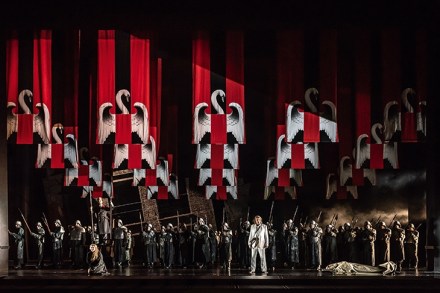
At last, a great time at the Royal Opera: a magnificent performance, in every way, of Verdi’s Macbeth, curiously but pleasantly beginning at 3 p.m. This is the fourth outing of Phyllida Lloyd’s 2002 production, and the finest by a long way, though each of the previous series had its merits. If my memory serves me rightly, and it very likely doesn’t, Daniel Dooner, the revival director, has made significant changes to the production. What previously struck me as tolerable seemed, in this revival, thoughtful, imaginative and genuinely helpful to the drama, qualities that I had given up hope of experiencing in a major opera house. Oddly, that meant that the striking unevenness of this opera became more evident, with the blame to be laid firmly at the composer’s door.

Love Handel

Opera

Handel’s Rinaldo has not been highly regarded even by his most ardent admirers. I have never understood why — even less so after the recent performance at the Barbican, with stunning forces, including the English Concert, under the inspiring direction of Harry Bicket. Certainly the plot is absurd, with a last-minute mass conversion of Muslims to Christianity in order to bring things to a happy conclusion. But there are only six main characters in complicated relationships with one another, turning on their love and hatred like a switch, and going through the usual hoops; that is what Handel operas are. The penny has dropped with me, almost too late, that it is a complete mistake to look for characterisation in Handel.

What’s in a name

Opera

Janacek is the master of the operatic title. Think of the slippery, sleight-of-hand emphasis of Jenufa in its original Czech —Her Stepdaughter — or the elegant misdirection of The Beginning of a Romance. It encourages the suspicion that when Janacek christened his final opera, deliberately truncating the title of Dostoyevsky’s Siberian prison camp-inspired novel Notes From the House of the Dead, there was good reason. It’s a title that opens out a description into an implied question: From the House of the Dead to, where or what exactly? Where can you go, who can you cry out to, once you have crossed over into the underworld and witnessed its horrors? Where indeed.

It’s the music, stupid

Opera

‘Welcome to our hearts again, Iolanthe!’ sings the fairy chorus in Gilbert and Sullivan’s fantasy-satire, and during this exuberant new production by Cal McCrystal you could almost hear the assembled G&S fans sighing in agreement. Iolanthe is our trump card against the sceptics, and not merely because Gilbert’s digs at parliamentary politics are still so startlingly acute. No, we insist, it’s the music, stupid: just listen to it! Sullivan’s score gleefully assimilates Handel, Mendelssohn and Wagner (Tannhäuser, Rheingold; even Tristan und Isolde), and to fly that close to the magic flame of Bayreuth without getting frazzled is something that very few composers have achieved with such freshness and melodic grace.

Accentuate the negative

Opera

A chaste act of adultery and a silent conversation: these are the encounters at the heart of Un ballo in maschera. On paper Verdi’s opera is a hot-blooded political thriller climaxing in a regicide, but in the watching it’s something entirely other. Just like the buoyant score, whose ‘aura of gaiety’ seems so at odds with the dark subject matter, the drama of Ballo is a sustained act of misdirection. The focus in this unusual piece is not on action and event but on absences, unspokens — the negative and not the photograph is what absorbs Verdi so compellingly here.

Body language | 25 January 2018

Opera

One of the Royal Opera’s greatest virtues is the care it takes with its revivals, even those that are virtually annuals, such as Jonathan Kent’s Tosca, the unnecessary replacement for Zeffirelli’s classic production. Kent’s version, with elaborate sets by the much-missed Paul Brown, was unveiled in 2006 and now has its ninth revival. It is a sloppy affair — three stars thrown together on the stage and told to get on with it. Since there is plenty of furniture around, and two precipitous flights of stairs, that isn’t as easy as it would be in any other UK production.

Up the revolution

Opera

Spoiler alert: the final image of John Fulljames’s production of Monteverdi’s The Return of Ulysses at the Roundhouse is haunting. Ulysses (Roderick Williams) and Penelope (Christine Rice) stand facing each other at last, arms outstretched. But Penelope is on terra firma. Ulysses stands on the revolving walkway that has served as the stage throughout most of the evening. And though Monteverdi’s music has found stillness, the stage continues to revolve, carrying him away from his beloved — boats against the current, borne back ceaselessly into the past. Or something. Like many of this production’s most striking ideas, it’s poetic in the moment, but doesn’t really work once you step back. A metaphor for the alienating effect of war and exile?

Sonic youth

Opera

Everyone knows — don’t they? — that the National Youth Orchestra of Great Britain is the UK’s youngest world-class symphony orchestra — an ensemble of musicians aged 18 and under that’s the equal of any professional band (and better than some). But it’s also the largest, and we don’t hear enough about the sheer sonic impact of hearing 157 musicians moving with absolute precision. Even the smallest gesture by an 87-player string section has a sort of heft, a physical weight and depth that you can sense in the air around you. Overwhelming when the whole orchestra is playing at full power, it’s even more tangible in quiet passages, as if you’re in the vicinity of some vast, invisible living creature.

Passion killer

Opera

The late arch-Rossinian Philip Gossett regarded Semiramide as a neoclassical work, vaguely and alarmingly suggesting to me a musical equivalent of Canova, a sculptor I detest. Actually, I don’t think the terminology is helpful. Nor is Semiramide monumental in the way that the programme book suggests. There is a notable lack of ensembles and of anything except accompanied recitative and arias. The duets are as rare as in Handel, and come as just as great a relief. The culminating duets in Act Two are as balm to the soul. They even remind one that there is such a thing.

Unclear Handeling

Opera

ENO has revived Richard Jones’s production of Handel’s Rodelinda. It was warmly greeted on its first outing in 2014, though Jones was, as he remains, inveterately controversial. The opera itself seems to command universal admiration among Handelians, and widespread approval among those of us who have never quite managed to call ourselves that. The most unequivocally positive response I’ve had to it was at Glyndebourne in 1998, where it was produced as if it were an early black-and-white film, and superbly conducted by William Christie. Viewing the DVD has confirmed my warm feelings about it.

Irish ayes | 26 October 2017

Opera

Luigi Cherubini is the pantomime villain of French romantic music. As head of the Paris Conservatoire in the 1820s he was the embodiment of obsolescence: Berlioz’s Memoirs recount an occasion when some state functionary told the ageing master that he should really write an opera. ‘One can dimly imagine the indignant consternation of the author of Medea, Les deux journées, Lodoïska, Mont Saint-Bernard…’ writes Berlioz with twinkling malice, though most modern operagoers, if they’re honest, won’t be any wiser. The one exception is Medea, which has never quite dropped into obscurity. Fiona Shaw’s new production at the Wexford Festival shakes it brusquely back to life. We’re at a hen party at a day spa.

Mad Men – The Opera

Opera

Leonard Bernstein’s Trouble in Tahiti begins not with a prelude, but a jingle. In Matthew Eberhardt’s production a trio of session singers clusters around a studio microphone. A clarinet throws out a slinky riff, the ‘On Air’ light blinks on, and they’re off: a swinging hymn to postwar suburbia, in Andrews Sisters close-harmony. Then we see a scene familiar from a hundred sitcoms and movies: all-American domesticity, 1950s-style. Clean-cut Sam is in his business suit, his prettily dressed wife Dinah fixes breakfast, and Junior scampers about in a cowboy costume. Bernstein establishes his world instantly, and Eberhardt sets it up with a deft touch. This is basically Mad Men — The Opera. So you know the deal.

Soap opera

Opera

Previously on Giulio Cesare… English Touring Opera’s new season caters cannily to the box-set generation by chopping Handel’s Egyptian power-and-politics opera in two, playing each half on consecutive evenings as edge-of-your-seat instalments in a sort of baroque House of Cards. Will Cleopatra outwit her wicked brother? Will she and Cesare ever get together? Will Sesto ever stop dithering and do the deed? Tune in tomorrow night to find out. If that sounds like the kind of pacy, racy entertainment you’ve always longed for in the opera house, be warned; this is Giulio Cesare: the Director’s Cut, doggedly and absolutely complete, down to every last recitative, aria and interlude.

Pole position | 5 October 2017

Opera

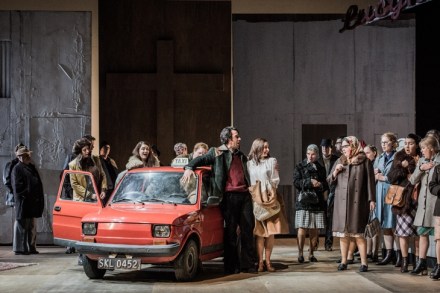
Did you know that they used to make the Fiat 126 in the Eastern bloc? They did, apparently. There was a plant at Bielsko-Biala, and the car was widely driven throughout Poland in the 1970s, when you only had to wait a couple of years to buy one. It became an emblem of personal freedom, and Poles even gave it a nickname: Maluch, or ‘little one’. That’s the principal insight that I gleaned from director Karolina Sofulak’s decision to set Cavalleria rusticana in communist Poland. She explains her thinking in the programme book: essentially, 19th-century Sicily was Catholic and repressive, and 1970s Poland was Catholic and repressive, so why not? Cue the latest one-size-fits-all operatic design cliché — fastidiously rendered depictions of 1970s squalor.

Small wonders

Opera

It has been a reasonably good week for peripatetic opera-loving female-underwear fetishists. In La bohème at Covent Garden Musetta slipped out of her knickers and swung them round, as everyone, except me, mentioned in their reviews; and now, in Leeds, in the first of Opera North’s ‘Little Greats’, what laughter the actors in the drama got was from Tonio and others trying on Nedda’s bra. This new production of Pagliacci by Charles Edwards, sadly under-attended, was possibly too ingenious. It is set in a rehearsal room, and we see the first day of rehearsals and then the final run-through. It kind of works, but anyone unfamiliar with the opera would have found it mysterious, and some of the time I felt I was on shifting sands.

DIY Bohème

Opera

The Royal Opera’s one production that, it has always confidently been claimed, need never be replaced has been replaced. John Copley, vintage 1974, has given way to Richard Jones, in a production full of his trademark quirkinesses and mischief, though he is respectful enough of Bohème to keep his irony out of sight for the last two acts. Stewart Laing is the designer, with a separate movement director (I thought that’s what directors did) in Sarah Fahie. Snow falls continuously before the curtain rises, but the set of Act One inevitably strikes you as a gauntlet thrown down to Copley. Flat 7b, which is the abode of the bohemians, is nothing more than roof beams, with a single chair, no bed, a tiny stove that produces plumes of smoke emitted from a tall chimney.

Ave, Maria

Opera

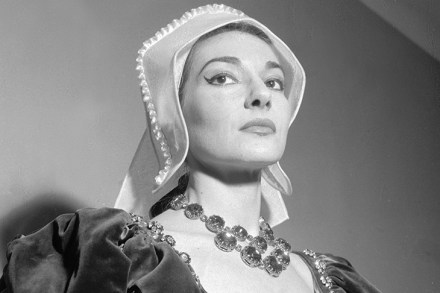
Anyone who thinks that an artist’s life is irrelevant to their artistic achievement, and for that matter anyone who thinks that it isn’t, must be given pause by Maria Callas. It is now exactly 40 years since her death and everything she recorded is available on multiple pressings. But of the huge body of material that has appeared about her, only a small percentage concerns itself with the recordings. There are innumerable biographies, memoirs, refutations of memoirs, studies of the influence of her fluctuating erotic life on her singing, her meteoric rise, the Great Decade, the tragic decline, and so on. All of these might be fascinating, but they draw attention away from the only thing that mattered about her: her art.

Viennese whirl

Opera

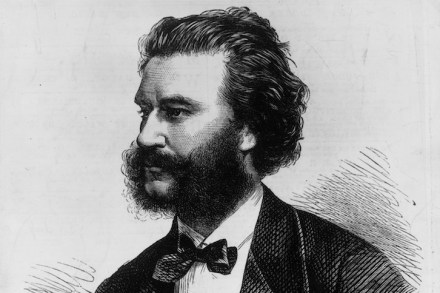
‘First performance: Vienna, October 3, 1880’ declares the programme for Opera della Luna’s new production of Johann Strauss’s The Queen’s Lace Handkerchief. ‘First British Performance: Wilton’s Music Hall, London, August 29, 2017’. They’re not joking: this really is the first full UK staging of the Waltz King’s single most successful (in his lifetime, anyway) operetta. It’s a major event, and the director Jeff Clarke duly follows up with one of those quasi-academic articles that you get in programme books at big opera houses explaining how La bohème predicted Mussolini, or whatever. Still kept awake at night by the liberal reform agenda of Crown Prince Rudolf of Austria-Hungary?

Grimes triumphant

Opera

‘Peter Grimes!’ Ranked high above us in the Usher Hall — a mob smelling blood, hot for the kill — the chorus let forth those three primal cries, and we were all lost. The modesty-curtain of civilisation was torn away, and our basest human urges — hate, revenge, suspicion of difference, delight at weakness — were exposed. Looking up at those faces, shielded by no proscenium, separated by no stage lighting, I don’t know when I have ever felt more horrified, more shaken by a performance. ‘A staged concert,’ writes conductor Ivan Fischer, ‘looks for complete harmony and coordination between music and theatre... for organic unity in which vocal and acting skills merge completely.’ He’s not wrong.

Classy and classic

Opera

The Edinburgh International Festival began with a double helping of incest. Curiously, Greek — Mark-Anthony Turnage’s East End retelling of the Oedipus myth, which was greeted with universal acclaim at its premiere in 1988, and which has gone on to be one of British opera’s biggest export success stories — was tagged on the Festival website as being suitable for ‘risk takers’. Whereas Wagner’s Die Walküre — which ends its first act in ecstatic celebration of a sex act so transgressive that even in 2017 it can draw appalled gasps from an audience — was described as being ideal for ‘traditionalists’. Bizarre. Perhaps brothers and sisters sleep together all the time in Morningside; I couldn’t say.

Strong stuff

Opera

The strings sweep upwards, the horns surge, and Leoncavallo’s Zaza throws itself into your arms. We don’t know it yet, but we’ve just heard the drama’s focal point: what David Lynch would call its ‘eye of the duck moment’. The same music recurs near the end of Act One, as the fumbling attempts at seduction of the small-time showgirl Zaza finally come good, and she locks lips with Milio Dufresne, the Parisian dandy who she imagines will take her away from the seedy, bustling demi-monde that we see laid out around her.

New kid on the block

Opera

The new Grange Park Opera at Horsley is amazing, as everyone who visits it must agree. In less than a year a pretty large, comfortable theatre, with excellent acoustics and a large stage, has been erected from nothing, and among the first productions is one of Die Walküre, a demanding work in all respects, and one which, when it is largely successful, as the performance I went to was, provides an exalting and moving experience such as few works can. You probably need to be as difficult and abrasive a personality as Wasfi Kani to bring it off, but there is no doubting that she has. The ‘creative team’ has as its most important members Stephen Barlow conducting, despite his concurrent work at Buxton; Stephen Medcalf directing, and Jamie Vartan designing the sets.

Risk assessment

Opera

Someone at the Buxton International Festival had a wry smile on their face when programming this year’s trio of operas. To sandwich together Verdi’s Macbeth and Mozart’s Lucio Silla — charged tales of political tyranny, both — with Benjamin Britten’s Albert Herring is a juxtaposition as canny as it is risky. Dictatorship takes many forms, it says, and whether your choices are prescribed, your desires proscribed, by a Roman dictator or by the tweed-bosomed ‘self-appointed chief constable’ of a small Suffolk village makes little difference.

Dressed to thrill

Opera

Mitridate, re di Ponto was Mozart’s fifth opera, written and first produced when he was 14 years old. Absolutely amazing. Now we’ve got that out of the way, what about the work? Is it worth reviving, and if so how? The Royal Opera evidently thinks so, since it is reviving for the second time Graham Vick’s production from 1991.

Roll over Beethoven

Opera

If you want to see an opera director kicking a genius when they’re down — and I mean really sticking the knife in and giving it a good old twist around — Fidelio is usually a safe bet. It’s one of Beethoven’s few undisputed masterpieces in which he’s not in absolute command of his medium; instead, the sheer moral and emotional conviction of the music carries it through. Confronted with such blazing sincerity, the instinct (possibly defensive) of many modern directors seems to be to subvert, to undercut, to belittle. I haven’t seen a production of Fidelio this century that’s been content simply to help the work speak (and Fidelio does need some discreet help).

Twin peaks | 22 June 2017

Opera

In an essay called ‘Wagner’s fluids’, Susan Sontag concludes, ‘The depth and grandeur of feeling of which Wagner is capable is combined in his greatest work with an extraordinary delicacy in the depiction of emotion. It is this delicacy that may finally convince us that we are indeed in the presence of that rarest of achievements in art, the reinvention of sublimity.’ For a performance of any of Wagner’s mature works, either we feel we are in the presence of sublimity or the whole thing is a frustrating waste of time, as almost all performances are.

Art of darkness | 15 June 2017

Opera

Brett Dean’s new opera for Glyndebourne is a big-hearted romantic comedy, sunny and life-affirming. Only joking — this is contemporary opera, after all. It’s about the usual stuff: neurosis, violence and toxic sexuality. Those seem to be the emotions most naturally suited to the language of mainstream contemporary classical music, and Dean speaks that language as brilliantly as Richard Strauss handled the idiom of an earlier generation. Whatever else this operatic adaptation of Hamlet might be, it’s a polished piece of work. That takes some doing: Shakespeare isn’t naturally suited to the opera house.

Myths and morals

Opera

Handel’s Semele, one of the most enjoyable operas (or opera-oratorio, if you insist) in the repertoire, is, in its upshot, an enchanting display of thoughtless hedonism and a warning about what may happen, or even what is bound to happen, if you take hedonism too far. Wormsley, to which Garsington Opera moved several years ago — this was my first visit — seems the ideal place to stage it. The opening of the season was a perfect early-summer evening, the countryside looking gorgeous, refreshments and supper delicious and prompt, the atmosphere friendly, and the performance in many ways excellent.

Music matters | 1 June 2017

Opera

The ancient Greeks had a word for it —katabasis, descending into the depths, to the underworld itself, in search of answers. To cross the threshold between life and death, innocence and knowledge, the everyday and what lies beyond, is an act woven through art, resurfacing in each generation. For Orpheus, and for Monteverdi, the journey may be a literal one, but for Bartok’s Bluebeard, imagined in the age of Freud and Jung, hell is not found outside, or even in other people, but within the darkest recesses of our own selves. When we speak of Orpheus it is of music, of birds and beasts beguiled, and men and women drawn into dance.