Culture

Culture

The good, the bad and the ugly in books, exhibitions, cinema, TV, dance, music, podcasts and theatre.

Intoxicating Elgar from the London Phil

Classical

By all accounts, the world première of Elgar’s Sea Pictures at the October 1899 Norwich Festival made quite a splash. Elgar conducted, and the soloist was the 27-year-old contralto Clara Butt – dressed in a silky, sinuous number which drew gasps in those corseted late-Victorian days. Elgar thought she looked ‘like a mermaid’; the critics, of course (of course!) confined themselves to the music. They reported that Elgar and Butt were called back four times, and the second of the five songs – the delicate ‘In Haven’, to words by Elgar’s wife Caroline Alice – was singled out for particular praise Interesting how tastes change.

The Beast in Me is surprisingly addictive

Television

The Beast in Me is one of those ‘taut psychological thrillers’ that everyone talks about in the office. This might sound disparaging – as it is, obviously – but I have to admit that, having succumbed in desperation (because, as usual, there is so little else on), I did find the show pretty addictive and unusually satisfying. What makes it stand out is that it doesn’t go for the obvious. Yes, its heroine – played by Claire Danes – is feisty, talented and capable. But she’s also whiny, uptight and really quite unsympathetic, as perhaps screenwriter Gabe Rotter intended when he gave her the weirdly repellant name Aggie Wiggs.

Bruckner on Ozempic – and the première of the year

Classical

Bruckner at the Wigmore Hall. Yes, you heard right: a Bruckner symphony – his second: usually performed by 80-odd musicians – on a stage scarcely larger than my bedroom. How? Welcome to Anthony Payne’s very smart 2013 chamber arrangement. Bruckner on Ozempic. Composition is an Alice in Wonderland activity. A key duty is mastering how to make things bigger and smaller, how to stretch and compress and bend – time and space and sound. Bruckner understood this well. If you know anything about his symphonies, it’s that they’re vast – and that critics are mandated to compare them to cathedrals or mountain ranges. What survives after such an extreme trim? More than you expect. The long sightlines remain; paradoxically, the reduced forces sharpen the sense of depth.

Noah Baumbach needs to try harder: Jay Kelly reviewed

Cinema

Noah Baumbach’s Jay Kelly stars George Clooney as a handsome movie star playing a handsome movie star who has an identity crisis and is forced to reflect on his life. It’s being sold as a Hollywood satire, but it’s far too affectionate to be biting, and contains moments where it drowns in schmaltz. For a director of Baumbach’s calibre (Marriage Story, The Squid and the Whale, Frances Ha), it all feels like very low-hanging fruit. That said, it’s not such an ordeal to spend a couple of hours in the company of Clooney as the golden Tuscan sunshine beats down (it’s mostly filmed in Italy). I found I could cope.

Evgeny Kissin’s stand-in brings the house down

Classical

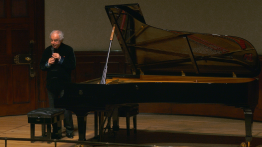
It was such an enticing programme, too. The Philharmonia had booked Evgeny Kissin, the last great piano prodigy of the Soviet era and one of the superstars of the late 1980s and early 1990s. And then there was the music: three Russian showpieces, including Rimsky-Korsakov’s enchanting and almost unplayed (in the UK, anyway) single-movement Piano Concerto. Better still, Kissin was down to perform Scriabin’s youthful Concerto in F sharp minor, a private passion that I’ve heard live only twice in four decades. Imagine a Russian Chopin, if Chopin knew how to orchestrate. Gilltburg has the agility and power of an old-school keyboard lion, though he uses it with Bach-like objectivity Too bad.

Why are today’s choreographers so musically illiterate?

Dance

Most choreographers today have lost interest in using music as anything more than a background wash of colour and mood. More’s the pity. For an earlier generation the idea that the dance grew through the music – into and out of it – was of the essence: or, as Balanchine famously said: ‘See the music, hear the dance.’ In a fascinating piece for the Guardian recently, the composer Nico Muhly explains how rich the interaction between a choreographer’s phrasing of movement and the bar lines or metrical structures specified in the score can be: ‘If the music feels as if it’s in comfortable cycles of four bars, is the dance reinforcing that, resisting it, or complicating it?’ he writes.

A sack of bilge: End, at the Dorfman Theatre, reviewed

Theatre

End is the title chosen by David Eldridge for his new relationship drama. Clive Owen and Saskia Reeves star as Alfie and Julie, a pair of wildly successful creative types who live in a mansion near Highgate. Both are 59. Alfie is a retired DJ who made a fortune touring the world at the height of the ecstasy craze and Julie earns a living from crime fiction. But she’s bored with detective stories and wants to publish her memoirs and to write a state-of-the-nation novel set during the 2012 Olympics. Despite their amazing careers, both characters are moaning dimwits who swear constantly and have nothing of value to say about their lives, their professions, or anything else. Listen to them discussing an unseen character named Boring Tone.

Gothic lives matter: BBC2’s Civilisations reviewed

Television

Anybody growing weary of the debate surrounding the BBC’s unexamined assumptions and biases about modern politics might have expected to find some relief in a scholarly documentary about the sack of Rome in AD 410. Sad to say, though, the first episode of Civilisations: Rise and Fall offered very little of it. Of course, it’s not unusual for history programmes to want to prove that the people in the past were Just Like Us. But in this case the parallels drawn/rather desperately imposed were a particularly uncanny fit with those same pesky assumptions and biases.

An adorable Taiwanese debut: Left-Handed Girl reviewed

Film

Left-Handed Girl is a Taiwanese drama about a single mother who moves back to Taipei with her two daughters to run a noodle stand in the night market. It’s one of those films where the stakes don’t appear that high – will the mother make the rent this month?; will the littlest daughter settle at her new school?; what’s grandma’s game? – yet we become so attached to this family and their survival it will all matter a great deal. It also features an adorable pet meerkat, GooGoo, and I doubt you’ll see a better film starring an adorable pet meerkat called GooGoo this year. I’d bet my life on it.

Indian classical music’s rebellion against modernity

Arts feature

When Gurdain Ryatt, Ojas Adhiya, Milind Kulkarni and Murad Ali Khan take to the stage at Milton Court this Sunday they will be united by a common language: the tradition of Hindustani Indian classical music, rooted in the north of India. Ryatt and Adhiya’s job will be to keep beats circulating on their pitched, drum-like tablas, while Kulkarni’s harmonium will sustain drones, apparently towards infinity. Khan plays the sarangi, a string instrument famed for its uncanny invocation of the wavering of the human voice. Shankar’s tireless advocacy spawned a crossover culture that he felt too often sullied the very music he loved British audiences have a head start when it comes to appreciating this tradition.

The orchestra that makes pros go weak at the knees

Classical

Stravinsky’s The Firebird begins in darkness, and it might be the softest, deepest darkness in all music. Basses and cellos rock slowly, pianissimo, in their lowest register; using mutes to give the sound that added touch of velvet. Far beneath them rumbles the bass drum: a halo of blackness, perceptible only at the very edge of the senses. In Liverpool Philharmonic Hall, with Sir Simon Rattle conducting the Bavarian Radio Symphony Orchestra, you felt your hairs tingle before you discerned a note. Seconds later, the very air within the hall seemed to be quivering with sensuous, engulfing bass warmth. You can be sure that Rattle anticipated that sensation; planned for it, in fact, from the moment that he confirmed this short British tour with his new orchestra.

The tedium of softboi rap

Pop

A male British rapper who is unafraid to show tenderness and vulnerability is not a particularly new phenomenon: Dave, Stormzy, Headie One and Kano have all walked this path in recent times. None, however, has made emotional fragility his USP to quite the same extent as Loyle Carner, who writes about his children, his masculine role models, mental health, race and inherited trauma in an unthreatening sing-song style which has made him both a pop star and a bit of a poster boy for Feeling Things. His tour is named after his fourth and most recent album, hopefully!. To his credit, he has put his money where his rhymes are. Carner has preached about knife crime from the stage at Glastonbury. He was talking about his ADHD before it became the topic du jour for celebrity over-sharers.

Pluribus is a mess

Television

Pluribus is another drama set in the dystopian future. But on this occasion the integrity of the entire human race depends not on someone ordinary and likeable who could almost be you, but on a bolshie, misanthropic middle-aged lesbian called Carol. Carol (Rhea Seehorn from Better Call Saul) is so grumpy that when in flashback we see her wife Helen treating her to an expensive jaunt to a romantic ice hotel in Scandinavia, she refuses to snuggle beneath the fur bedspread, sip designer vodka and gaze at the Northern Lights above. Instead, all she wants to notice is that sitting on a bed made of blocks of ice makes her want to pee. But now Helen is gone and Carol is one of only 12 people in the entire world who remain normal.

The best thing Cathy Marston has ever done

Dance

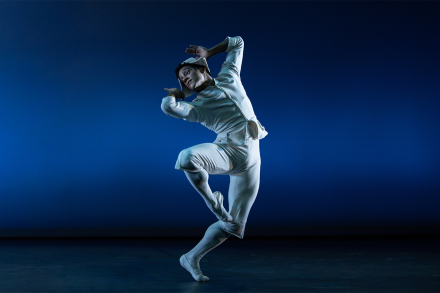
The Royal Ballet has scheduled what – on paper at least – looks like one of the most dismally dull and cautious seasons I can recall. The company is hobbled by a £21.7 million government loan (that had tided the place over during Covid), which the Royal Opera House is being forced to ‘service’. One bright spot of interest comes with the commissioning of a new work from Cathy Marston and an import from New York City Ballet’s Justin Peck, slotted into a triple bill alongside Balanchine’s nocturne, Serenade. There’s not much to say about Peck’s Everywhere We Go. Big, bold, bright and much too long, it is devoid of shape or implication but bursting with jazzy Broadway energy, pumped up by a crude score by Sufjan Stevens.

‘Ballet is antiquated, and it works’: Royal Ballet principal Matthew Ball interviewed

Arts feature

The history of the male ballet dancer is a chequered one. In the early 19th century, he was the star of the show, albeit more as an acrobat and tumbler than fairy-tale prince. The vogue for sylph-like damsels floating in white tulle put paid to that, reducing him to the auxiliary role of porter and attendant. Then came the comet of Nijinsky, introducing a note of mysterious Slavic androgyny that left the male dancer suspiciously homosexual and prone to the ‘pink tights’ cliché. Nureyev and Baryshnikov cemented the exotic Russian connection, until the late 1990s when the allure of the musical Billy Elliot and Matthew Bourne’s version of Swan Lake opened ballet up to a generation of British boys who would otherwise have preferred kicking a football around.

Was Elgar really a snob?

There’s not much point pretending to be an expert on Elgar (or so The Bluffer’s Guide to Music assures us) because everyone already thinks they are. And there’s definitely no point getting hung up on the historical accuracy (or otherwise) of Alan Bennett and Nicholas Hytner’s new film The Choral. It’s set in a West Riding mill town during World War One and the plot pivots around the local choral society’s performance of The Dream of Gerontius. This being Bennett, of course, there’s rather more to it than that, but in any case – spoiler alert, and there’ll be more – Sir Edward himself makes a cameo appearance: Simon Russell Beale, looking oddly like the late Ken Russell in a white fright-wig. So here we go again: imaginative fiction collides with historical reality.

In defence of Katie Mitchell

Opera

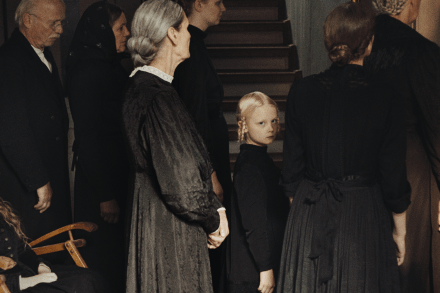
Janacek’s The Makropulos Case is a weird and very wonderful opera, but its basic plot isn’t hard to follow. Still, it seems to send directors into a tailspin. One recent production (since revised) had a cast member break character and pull out a flipchart to recap the story so far. Katie Mitchell’s new staging for the Royal Opera takes the more familiar route of updating the action to the present, and it’s always fascinating to see what opera directors think we’ll find relatable. Luxury hotels, recreational heroin use, Tinder hookups with locally sourced hotties: no, me neither. How the other half live, eh? In short, it’s a bit like Mitchell’s 2022 re-imagining of Handel’s Theodora.

Mrs Göring is far too sympathetic: Nuremberg reviewed

Cinema

Nuremberg is one of those films that falls short on everything it wants to be and everything it could be. It’s a historical drama, set just before the trials, where an American psychiatrist (Rami Malek) is charged with assessing whether Hermann Göring (Russell Crowe), Hitler’s second in command, is fit to stand trial and to ascertain what his defence might be. This should be electric and terrifying and take us inside the Nazi mind. In other words, I had expected a tense two-hander. But it’s serviceable rather than inspired, plodding rather than tense, its running time (two and a half hours) trying. (Keep a Red Bull to hand.) It also takes some horrible missteps. Mrs Göring, sympathetic? Please.

The rise of psychedelia

Pop

On YouTube – and I urge you to look it up – there is a magnificent piece of footage from German TV, in which big band leader James Last leads his orchestra into a medley of hard rock hits, opening with Hawkwind’s deathless space-rock drone ‘Silver Machine’. And damn it if they don’t nail it. The members of the band with electric instruments play it just as Hawkwind did: the whooshing synth, the thudding bass, the fuzzing guitar. But instead of Lemmy growling out the topline melody, there is a huge rush of brass from the band, the brightness cutting unexpectedly through the murk. It is, unironically, brilliant. I have no desire to investigate much else of Last’s colossal oeuvre, but I can watch those few minutes over and over again.

This Othello is almost flawless

Theatre

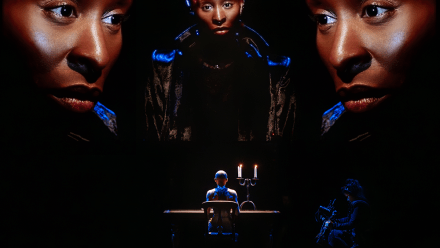
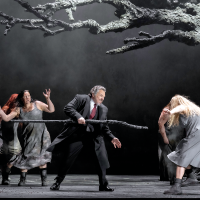
Othello directed by Tom Morris opens with a stately display of scarlet costumes and gilded doorways arranged against a backdrop of black nothingness. This is Venice at night with no hint of sea or sunshine. Crimson-robed senators gather to discuss Othello’s alleged abduction of Brabantio’s daughter. And here he comes, David Harewood as the Moor, wearing a gauche two-tone suit like a tasteless guest at a wedding. The scene is stiff, arid and over-ornate but the show opens up when the location shifts to Cyprus. Warmth and light fill the stage and the costumes improve. Othello and his men wear creamy white battle fatigues that look stylishly and subtly masculine.

Del Toro’s Frankenstein offers nothing new

Film

Guillermo del Toro’s Frankenstein stars Oscar Isaac (Baron Victor Frankenstein) and Jacob Elordi (‘the creature’) and retells the basics of Mary Shelley’s story – man creates monster, man rejects monster, monster goes off on one – with high-camp sumptuousness. Del Toro’s spin is to include a redemptive arc, plus he throws in some invented characters. ‘The creature’, meanwhile, is portrayed with great sympathy, as a soulful, mistreated innocent. In other words, there’s no Boris Karloff lumbering around in that blazer a size too small with a bolt through the neck. It opens with a Danish expedition-ship stuck in the Arctic ice and the crew rescuing an injured Victor.

Violin concertos from two Broadway legends

The Listener

Grade: B+ The 20th century, eh? What a lark that was. Vladimir Dukelsky studied in Kiev under Glière and looked set to be one of the smarter Russian composers of his generation. He even wrote a ballet for Diaghilev. Then communism happened and Dukelsky ended up in the USA where to the bemusement of his friend Prokofiev he reinvented himself as Vernon Duke, Broadway songsmith. ‘Autumn in New York’ and ‘Taking a Chance on Love’ are both by Duke; classic Americana by way of Tsarist Ukraine.  Duke’s Violin Concerto (1943) is recorded here alongside the 1941 concerto by Robert Russell Bennett – better known as the king of Broadway orchestrators; the man who clothed Oklahoma! and My Fair Lady in silken strings.

What a joy La Fille mal gardée is

Dance

The winter nights may be drawing in and everyone is down with stinking colds as the civilised world inexorably disintegrates, but in La Fille mal gardée, it’s sunlit springtime and young love is busting out all over. Frederick Ashton’s bucolic masterpiece, revived by the Royal Ballet, manages to be both child-like in its innocence and wickedly sophisticated in what it demands of the dancers – it looks so artless, so easy, and it just isn’t. Of Ashton’s supreme genius in the devising of it all there can be no doubt, but John Lanchbery and Osbert Lancaster deserve credit too – Lanchbery’s pasticcio score is a chocolate box filled with toe-tapping tunes, and Lancaster’s affectionately witty designs have a perfectly judged lightness of touch.

Film and TV are run by satanists

Television

I once came up with a brilliant idea for a children’s Sunday-evening TV series. It would follow the adventures of young Jesus in Britain, circa AD 16, and his rich, tin-trading great uncle Joseph of Arimathea. There’d be dragons and giants and lots demonic figures, all trying to kill the boy Messiah before He achieved his true purpose. And young Jesus would continually be constrained from using any of His real powers because it was all a secret and His time had not yet come. If you’re clever, you can probably guess the title. But it’s never going to get made because a) I haven’t written it and b) the film and TV worlds are run by satanists. Not literal satanists, perhaps. Well, not all of them.

A cracking little 1967 opera that we ought to see more often

Opera

Ravel’s L’heure espagnole is set in a clockmaker’s shop and the first thing you hear is ticking and chiming. It’s not just a sound effect; with Ravel, it never is. He was an inventor’s son, half-Swiss, half-Basque, and timepieces, toys and Dresden figurines were in his soul. For Ravel, they seem to have possessed souls in their own right. ‘Does it not occur to people that one may be artificial by nature?’ he remarked, and few artists have shown such tenderness towards these small, lovingly made things that strive so tirelessly, and so hopelessly, to be alive. So that was something to think about, as Alexandra Cravero conducted the opening bars of this new production from Scottish Opera.