Culture

Culture

The good, the bad and the ugly in books, exhibitions, cinema, TV, dance, music, podcasts and theatre.

Claude Vivier ought to be a modern classic. Why isn’t he?

Classical

April is the cruellest month, but May is shaping up quite pleasantly and the daylight streamed in through the east window of St Martin-in-the-Fields at the start of I Fagiolini’s latest concept-concert, Re-Wilding The Waste Land. The centenary of Eliot’s poem is the obvious hook. But whether you’re counting from the Rite of Spring riot in 1913, Schoenberg’s Skandalkonzert the same year, or further back to Strauss’s Salome or Debussy’s Faune, music’s modernist moment occurred some time earlier. Which is helpful, in a way, because it freed the group’s director Robert Hollingworth from the limitations of chronological programming and gave him scope to do something a bit more interesting, and possibly a bit more Eliot-esque.

Touching, eclectic and exhilarating: Rambert Dance is in great shape

Dance

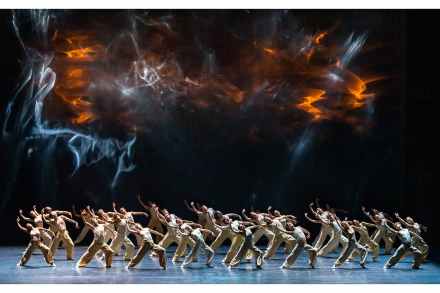
Rambert ages elegantly: it might just rank as the world’s oldest company devoted to modern dance (whatever that term might mean nowadays), but as it approaches its centenary, it’s still in great shape. Lean and hungry, open-minded and light-footed, it’s been lucky over the past 40 years to have enjoyed a stable succession of excellent artistic directors – Richard Alston, Christopher Bruce, Mark Baldwin and now the French-American Benoit Swan Pouffer – as well as policies that have healthily prevented it from becoming fixated on one choreographer or aesthetic. It keeps moving. The current ensemble of 17 dancers makes a crack team, offering a broad range of body types and plenty of strong, fearless personalities.

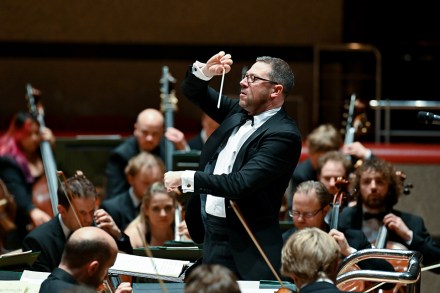
Even Nelsons’s miscalculations are fascinating: Leipzig Gewandhaus/Andris Nelsons, at the Barbican, reviewed

Classical

Imagine growing up with a whole orchestra as your plaything. Richard Strauss’s father was the principal horn of the Munich Opera, and doting relatives funded publication of the teenage Richard’s earliest compositions. At the age of 19 he was assistant conductor of the Court Orchestra in Meiningen, and had rather got used to having world-class musicians at his command.

What we learnt from Eurovision

Columns

Twice during the Eurovision Song Contest our television lost the signal and the set went blank – once, mercifully, during the performance of a hirsute, gurning, cod-operatic bellend from that patently European country Azerbaijan. ‘Putin’, my wife and I both reckoned, seeing as Russian hacker groups favourably disposed towards their country’s leader had promised that they would do what they could to disrupt the broadcast and indeed the voting. If this really is the third world war, then I suppose it is a suitably banal and modernist take on universal annihilation – this yearly celebration of joyous gayness and very bad music suddenly part of the same war as the bloodshed, carnage and misery of Mariupol.

I’m not sure they ever reached a fourth chord: Spiritualized, at the Roundhouse, reviewed

Pop

Every so often, Jason Pierce drifts into focus. It happened at the end of the 1980s, when his then group Spacemen 3 (motto: ‘Taking drugs to make music to take drugs to’) suddenly and briefly went from being those weirdos from Rugby to one of the defining groups of English alternative rock thanks to their album Sound of Confusion (there’s a whole strain of American psychedelia that is explicitly indebted to their two-chord drone). It happened again a decade or so later, when Spiritualized’s album Ladies and Gentlemen We Are Floating in Space became a big hit, and a staple of Greatest Albums lists. He’s in one of his partial-focus phases at the moment: he’s not going to be popping up on The One Show, but people are taking notice.

Too affectionate, not enough cruelty: Don Pasquale, at the Royal Opera House, reviewed

Classical

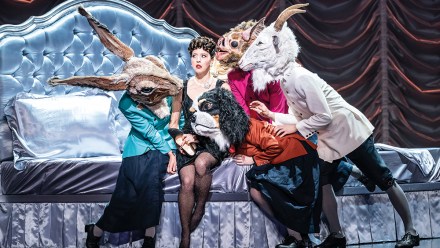
There are many things to enjoy in the Royal Opera’s revival of Donizetti’s Don Pasquale, but perhaps the most surprising is that the director plays it straight. This was my first encounter with Damiano Michieletto’s newish (2019) staging, and the plan was to approach it without preconceptions. (If we’re about to experience, say, a Bold Feminist Re-Imagining, I’d prefer to deduce it from the evidence on stage.) But for an opera premièred in 1843, Don Pasquale is distinctly old-school, with all its commedia dell’arte assumptions intact and whirring away like clockwork. The elderly miser Don Pasquale disinherits his lovelorn nephew and marries a compliant young bride who instantly becomes an abusive shopaholic scold.

Two hours of bickering from a couple of doughnut-shaped crybabies: Middle, at the Dorfman Theatre, reviewed

Theatre

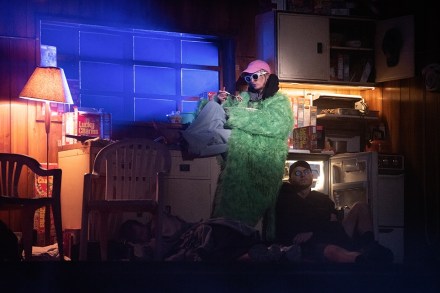
‘I fink I doan luv yew any maw.’ A marital bust-up drama at the National Theatre opens with a whining Cockney, Maggie, telling her City whizzkid husband Gary that their relationship is over. Gary and Maggie are aspriring underclass types who’ve achieved bourgeois prosperity: John Lewis kitchen, vintage wine rack and a ceramics collection. They have an eight-year-old daughter at a private school where she learns ballet steps and the piano instead of watching road-rage videos on YouTube like a council-house kid. She’s called Annabelle, by the way, and one wonders if Gary and Maggie style themselves ‘Garfield and Margaret’ at the school gate.

A joy – mostly: Nick Mason’s Saucerful of Secrets, at Usher Hall, reviewed

Pop

Drummers are patient chaps, in the main. Think of Ringo in Peter Jackson’s recent Beatles docuseries, Get Back. Lolling around peaceably for days on end as Lennon and McCartney bash about, looking for clues. Drummers twiddle their thumbs behind their kit while the musos fret over chords and key changes, waiting for the moment when they will be called upon to hit skins with sticks and make a song worth hearing. In 2018, admirably urbane Pink Floyd drummer Nick Mason finally lost patience. The band has effectively been finished since 1994, and following the death of keyboardist Rick Wright in 2008, Mason was caught between Roger Waters and David Gilmour, the two rutting stags of the group’s legacy.

The perfect pop star: Dua Lipa at the O2 Arena reviewed

Pop

Dua Lipa’s second album, Future Nostalgia, was released at the least promising moment possible: 27 March 2020, the day after the first lockdown came into force in the UK. Just as a pandemic swept the world, she was releasing a maximalist pop album that, surely, was designed for the communal experiences no one was having. But something about it connected: Future Nostalgia was a worldwide hit, the first British album released in 2020 to go platinum, the tenth bestselling record in the world that year. It turned out to be the right album for a wretched year. No wonder her show at the O2 was centred on it – every track was heard, which would normally be overegging the promotional pudding, but, given its consistent excellence, was entirely justifiable.

Angry diatribes and amusing pranks: Donmar Warehouse’s Marys Seacole reviewed

Theatre

The title of the Donmar’s new effort, Marys Seacole, appears to be a misprint and that makes the reader look twice. Good marketing. The show is a blend of Spike Milligan-esque sketches and indignant speeches about race but it starts as a straightforward historical narrative. Mary Seacole enters in Victorian garb and introduces herself as a woman of half-Scots and half-Caribbean heritage who believes that ethnic differences create hierarchies of competence. Her veins, she says, flow with ‘Scotch blood’ and this gives her an entrepreneurial advantage over her ‘indolent’ Caribbean neighbours. Inflammatory stuff. If a white author embraced that supremacist creed, there’d be outrage.

Why I booed Birtwistle

Arts feature

With the passing of Sir Harrison Birtwistle last month we are witness to a changing of the guard in new classical music. For 70-odd years contemporary music in the West was dominated by a highly exclusive atonal mode of thought that produced works that were hostile to the wider music-loving public and written for a small but highly subsidised cultural circle. If it was spontaneous when it began, the atonal idiom – meaning a highly dissonant style – quickly ossified into a kind of luxury backwater of music, so obscure it couldn’t even be questioned, yet endlessly backed by public subsidy which the public could nevertheless never challenge.

I would be surprised if his next tour included arenas: Louis Tomlinson at Wembley reviewed

Pop

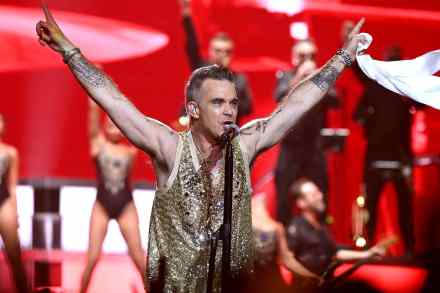
You don’t need to be a historian of pop to realise that having been part of a huge manufactured group is no guarantee of subsequent success. Most boy and girl band stars, after a brief flurry of passion, are forced to descend into the netherworld of panto, reality TV, and ever-diminishing returns from the actual music. The problem seems to be that the wider world doesn’t have the mental space to accept three, four or five people competing for attention. In almost every case, the wider world can only be bothered to embrace one person after the split, and it’s not always the one you expect. Gary Barlow – the talent! – was meant to be the solo star from Take That; it turned out to be Robbie Williams.

‘I came, I saw, I scribbled’: Shane MacGowan on Bob Dylan, angels and his lifelong love of art

Arts feature

We join Shane MacGowan, much like a character from one of his songs, in a world where prosaic, often harsh realities vie with feverish flights of fancy. The former Pogue conducts this interview remotely, ‘sitting on a vastly uncomfortable lime green leather chair, within reach of a grey bucket, in a small but surprisingly unspeakable room. In a corner, Jimi Hendrix is repairing some broken guitar strings, while in the kitchen behind me, Bono is loading the dishwasher and a leprechaun with a gold earring is rolling what he says is a cigarette. On the walls are a selection of my wife’s multidimensional angel paintings and one or two of my drawings. Clint Eastwood is on the telly and Maggie Barry is on the record player.

Impressive interpretations marred by cuts: Scottish Ballet’s The Scandal at Mayerling reviewed

Dance

Sneer all you like at its prolixities and vulgarities but Kenneth MacMillan’s Mayerling remains a ballet that packs an exceptionally powerful emotional punch. Weathering a grapeshot of adverse criticism at its Covent Garden première in 1978, it has comfortably stood the test of time and entered the international pantheon. With a plushly throbbing score culled from Liszt’s oeuvre and an intriguing historical setting (the gratin of Habsbsurg Vienna in the 1880s), it’s a gift to large companies in search of full-length romantic drama beyond the rut of Swan Lake and Giselle. Because a production requires resources beyond the reach of medium-scale troupes, MacMillan’s widow Deborah has now sanctioned Scottish Ballet to prepare a slim-line version.

A fine cast, superbly conducted – just don’t overthink the production: Royal Opera’s Lohengrin reviewed

Opera

To be a Wagnerite is to enter the theatre in a state of paranoia. Mainstream culture has decided that Wagner was uniquely wicked; that’s just how it is, and it’s futile to retort that we seem comparatively relaxed about, say, Richard Strauss’s membership of the Reichsmusikkammer, or Stravinsky’s post-1945 anti-Semitism. Or that within recent memory Prokofiev’s October Cantata was presented in the UK as a bit of kitschy fun. (Never mind the dead kulaks: enjoy those accordions!) True, Wagner was an immeasurably greater artist, so he should be held to higher standards. No quarrel with that, at least not here and not now.

A wonderfully unguarded podcast about the last bohemians

Radio

Ordinarily, if a podcast purports to be revelatory, you can assume it is anything but. There’s a glut of programmes at the moment featuring interviewer and interviewee locked in passionate heart-to-hearts in which a few, carefully selected beans are spilled to no real consequence or effect. The Last Bohemians makes no claim to shatter the earth with secrets, but the guests are so unguarded that the episodes possess that longed-for bite. Maggi Hambling reels off a to-do list she made at art school while she was seeking to lose her virginity: ‘Older man, younger man, black man, woman’. Dana Gillespie, singer and former flame of David Bowie, describes undoing her top button to be photographed in the cleavage-obsessed press of her youth.

Humour, sweetness and sincerity: Father John Misty’s Chloë and the Next Twentieth Century reviewed

The Listener

 Grade: A– In which Josh Tillman reimagines the whole back catalogue of 20th-century American pop music (except for rock), tilting heavily in favour of the 1930s-1950s. Lush strings, polite jazz and sometimes cocktail piano, big band stuff etc., plus the expected Tillman mordant humour and some unexpected sweetness and sincerity. There’s the country torch of Patsy Cline on ‘Kiss Me (I Loved You)’, the cabaret samba of ‘Olvidado (Otro Momento)’, Rodgers’ and Hart’s ‘My Funny Valentine’ homage on ‘Funny Girl’, and what we’re told is an attempt to kind of rewrite Fred Neil’s ‘Everybody’s Talkin’’ on ‘Goodbye Mr Blue’. The problem?

The awfulness of the Red Hot Chili Peppers has always felt weirdly personal

Pop

Squaring up to the prospect of a new Red Hot Chili Peppers album, I’m reminded of a vintage quote by Nick Cave: ‘I’m forever near a stereo saying, “What… is this garbage?” And the answer is always the Red Hot Chili Peppers.’ I can empathise. I don’t habitually harbour animus against artists I dislike, but something about the sheer scale of the Red Hot Chili Peppers’ awfulness has always felt weirdly personal. Despite the kind of success that looks mightily impressive in a Wikipedia stat dump – 100 million record sales, multiple Grammy wins, numerous number ones – the Californian rock band have always been tricky to tolerate, let alone love. The reasons for this are manifold.

Igor Levit deserved his standing ovation; Shostakovich, even more so

Classical

Music and politics don’t mix, runs the platitude. Looks a bit tattered now, doesn’t it? For Soviet musicians, of course, it wasn’t a question of whether you were interested in politics. Politics was unambiguously interested in you. Shostakovich wrote his 24 Preludes and Fugues for piano between 1950 and 1951, in the teeth of Stalin’s postwar crackdown, and in adopting the model of Bach, he seems to have been looking for a safe path forward: music that was politically neutral. He dedicated the Preludes and Fugues to the pianist Tatyana Nikolayeva, whose surprise victory at the 1950 Bach competition in Leipzig had been exploited by state propagandists. Bach himself was a permanent conundrum to the Soviets – that inconvenient fixation with God!

He is now a family entertainer: Stormzy at the O2 Arena reviewed

Pop

Stormzy occupies a curious place in British pop culture right now. He’s the darling of liberals for all his good deeds – setting up an imprint for black writers within Penguin, and a charity to put black kids through Cambridge. He’s also the figurehead of UK hip hop, which at times has made him a lightning rod for the particular worldview of certain people. ‘Is it asking too much that he show a scintilla of gratitude to the country that offered his mother and him so much? Instead of trashing it,’ wrote, inevitably, Amanda Platell in, inevitably, the Daily Mail, after Stormzy had attacked Theresa May’s government over the Grenfell fire. You don’t see so much of that sort of coverage these days, and a glance around the O2 showed why.

A fitting swansong from Tamara Rojo: The Forsythe Evening reviewed

Dance

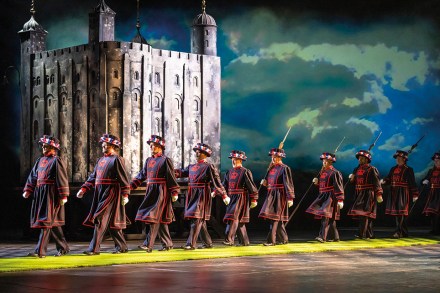
One wouldn’t want to be on the wrong side of Tamara Rojo. The most fearsome figure on the British dance scene since the authoritarian reign of Ninette ‘Madam’ de Valois, she has capped a brilliant international career as a prima ballerina with a formidable decade as artistic director of English National Ballet (as well as the award of a PhD, the patented invention of an anti-bunion device and the birth of her first child at the age of 46). She is now about to move on with her dancer husband Isaac Hernandez, 16 years her junior, to a similar position in San Francisco. The Bay Area doesn’t know what a tornado is on its way. How does her achievement at ENB stack up? Her managerial style has been, er, forceful, and it has yielded results.

A spirited attempt to fix a show that’s never really flown: Utopia, Limited reviewed

Classical

Utopia, Limited (1893) is a rare bird, and one that every Gilbert and Sullivan completist simply has to bag. The point of completism, of course, is to acquire an overview: if artists are truly original, everything they created should illuminate the whole. But what if a career tailed off, or ran to seed? It’s just going to be depressing, isn’t it? By the time they began their penultimate opera, Gilbert and Sullivan hadn’t collaborated for three years. In fact, they’d barely spoken. Goaded back into harness, they produced a comedy that really ought to have sparkled and yet somehow… well, put it this way: even the late D’Oyly Carte company waited until 1975 before attempting a revival.

Why is dance so butch these days?

Dance

For an art form that once boldly set out to question conventional divisions of gender, ballet now seems to be retreating towards the butch – ironically, just as the rest of the world is moving obsessively to the femme. Scroll back a century or so and Nijinsky cross-dressed at masked balls, danced on pointe and covered himself in petals as le spectre de la rose; in Les Biches, his sister Nijinska shamelessly choreographed all manner of sexual indeterminacy and suggested that girls could also be boys. Then came the Carry On stereotype of limp-wristed ephebes in pink tights with an ominous bulge – every mother’s nightmare in the homophobic post-war era, and perhaps still a source of psychotic contempt among certain sections of society.

No one should be doing indie rock at 43: Band of Horses’s Things Are Great reviewed

The Listener

Grade: B That thing, ‘indie rock’, is so well played and produced these days, so pristine and flawless, that it has become almost the antithesis of what it was back at the end of the 1970s, when the term was invented. Then it referred to bands who released stuff on small independent labels because the big labels wouldn’t take them on. Shouty, angsty and angular, or just weird and beloved by the befringed dolorous yoof, in their anoraks or donkey jackets, the whole thing had a pleasing DIY feel to it, even if it sometimes grated. These days ‘indie’ just tends to mean anodyne power pop played by whining blokes who haven’t had a shag for ages. So it is, I think, for Seattle’s Band of Horses.

Pitch-black satire drenched in an atmosphere of compelling unease: ETO’s Golden Cockerel reviewed

Classical

Blame it on Serge Diaghilev. Rimsky-Korsakov died in 1908 and never saw the première of his last opera, The Golden Cockerel. When the great showman finally presented it in Paris in 1914, it was as Le Coq d’Or: a spectacular opera-ballet hybrid, with colourful, folk-inspired designs by Natalia Goncharova that came to define the Ballets Russes in its imperial phase. That was the form in which it came to Britain, where the Evening Standard described it as a ‘farrago of love-making, black magic and ingenuous inconsequence’ before turning to the real news – the costumes.

See this Russian hip hop star before they arrest him: Oxxxymiron’s Beauty & Ugliness reviewed

The Listener

Grade: A+ I was going to review hyperpop chanteuse Charli XCX’s album this week, but it was such boring, meretricious, grandstanding 1980s retread electropop vacuity that I thought, nah, even if it is headed to the top of our ravaged charts. So have this instead. Oxxxymiron is Russia’s No. 1 hip-hop artist. Yes, Russian hip hop is indeed an oxxxymiron, much as would be Serbian reggae or Iranian gospel, but never mind. He’s a youngish Jewish bloke born in Leningrad, with a degree in Middle English from Oxford University, and is hugely popular in his home country. Is it any good, this album released late last year? It’s darker and nastier than US hip hop, full of menace and those icy synths the Russians seem to adore even more than their Iskander missiles.

Comes so close to greatness but succumbs to prejudice: Royal Opera’s Peter Grimes reviewed

Opera

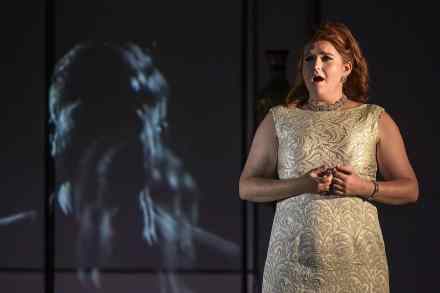
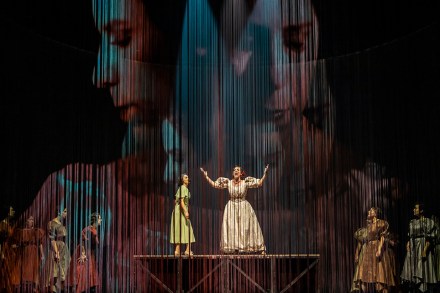
No question, the Royal Opera is on a roll. Just look at the cast list alone for Deborah Warner’s new production of Britten’s Peter Grimes. Allan Clayton sings Grimes, Bryn Terfel is Captain Balstrode, and John Tomlinson is Swallow, with Mark Elder conducting. Even before you get to a supporting cast that includes premium names such as James Gilchrist, Jennifer France and Catherine Wyn-Rogers, you’ve basically got the three pre-eminent British male singers of their respective generations, singing their boots off in the greatest of all British operas under the baton of the conductor who (it’s naive, but let’s dream) really ought to succeed Antonio Pappano when he leaves the Royal Opera in 2024.

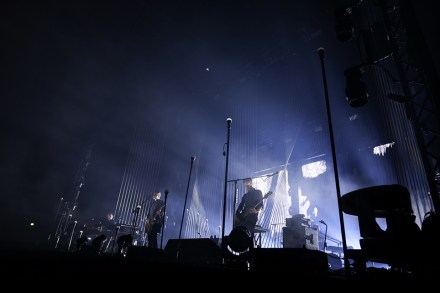
Felt like being caught on the moors in a storm: Keeley Forsyth, at the Barbican, reviewed

Pop

It took a moment to realise Keeley Forsyth was there. There were already three musicians, faint figures on a dark stage, wreathed in dry ice. And then, to their side, one became aware of a patch of darkness that was a little darker than the rest, and which seemed to be moving. Even when she moved into the slightly less gloomy part of the stage, Forsyth remained hidden: this was a show of startling unease and intensity. ‘Well, she’s spectacular,’ one chap ahead of me said to his friend as they filed down the stairs at the end. ‘Not sure I could manage more than an hour of it, though.

Spot-on in almost every way: Scottish Opera’s A Midsummer Night’s Dream reviewed

Classical

Scottish Opera’s new production of Britten’s A Midsummer Night’s Dream seems to open in midwinter. Snow falls, fairies hurl snowballs and the aurora borealis flickers and arcs across the darkened sky. Meanwhile Britten’s score swoons and sighs, its drowsy clouds of string tone wafting above gently snoring basses to create an atmosphere whose every glimmer evokes perfumed warmth. It should be a contradiction, but it doesn’t feel that way at all.