Culture

Culture

The good, the bad and the ugly in books, exhibitions, cinema, TV, dance, music, podcasts and theatre.

A generational pop talent: Rina Sawayama, at the O2 Academy Brixton, reviewed

Pop

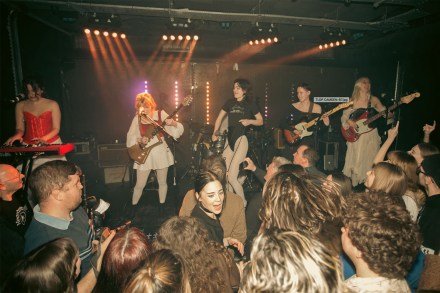
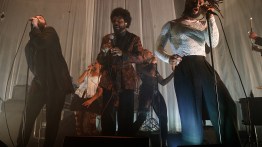
The first time I saw Franz Ferdinand was at the sadly lost Astoria, just after the release of their first album. I’d liked but not loved the record, but that night I experienced the single most exciting thing in live music: artist and audience absolutely united in the conviction that this – the biggest gig of their career so far and by far – was the last time this band would be playing a place this small. Both band and audience – and even the VIP enclosure of the balcony, in front of where I stood – radiated excitement about all of us being in this together: prepare for lift-off, next stop the stars! Rina Sawayama’s Brixton show was the same febrile, euphoric, shared experience.

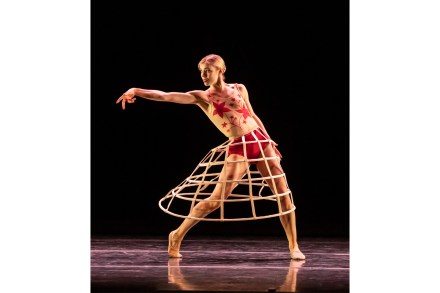
One long moan of woe: Crystal Pite’s Light of Passage, at the Royal Opera, reviewed

Dance

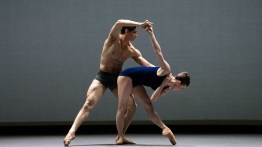
I was moved and shaken by Crystal Pite’s Flight Pattern when I first saw it in 2017. In richly visualised imagery, it proposed two ways of interpreting the horrific footage of the refugee crisis of 2016: either as a matter of anonymous, voiceless masses, portrayed as a body of dancers moving across the stage like a skein of migrating swallows beyond reason or control; or as a ragtag of desperate, furious individuals with every dignity and possession taken from them – somebody’s husband or wife, somebody’s daughter or son, fighting for survival – a plight conveyed in the impassioned dancing of Marcelino Sambé and Kristen McNally.

Tenderness and menace: Bob Dylan, at the London Palladium, reviewed

Pop

Bob Dylan has always toyed with audiences. He plays what he wants, how he wants, letting his mood dictate tempo and often key (sometimes switching songs to the minor). On Dylan’s return to London for the first time in five years, he summed it up early. ‘I ain’t no false prophet/ I just know what I know,’ he gruffly sang. Dylan spent the night at the Palladium doing what he knows best, singing songs of love, loss and immortality. Covid temporarily ended his ‘Never-Ending Tour’, which had seen Dylan play more than 3,000 shows since 1988. Now it’s billed as ‘The Rough and Rowdy Ways Tour’, with the strapline: ‘Things aren’t what they were’.

Compellingly personal arena experience: Bon Iver, at Ovo Hydro, reviewed

Pop

A reliable metric for measuring pop success is hard to find these days, as Michael Hann noted in these pages recently. Massaged figures for sales and streams are so opaque as to be almost meaningless. The charts are old news; social media reach wildly distorting. Bon Iver have won Grammys and released platinum-selling albums, but that was a decade ago. Such accolades feel oddly old--fashioned now. Perhaps the most assured barometer is the traditional one of bums on seats – by which gauge Bon Iver appear to be doing just fine. Yes, they are a band lacking any semblance of a song your postman could whistle. And yes, they are fronted by Justin Vernon, a doggedly unstarry fortysomething in a rumpled T-shirt and headband.

Bold, self-assured reimagining of Monteverdi: Opera North’s Orpheus reviewed

Opera

You wouldn’t like Tamerlano when he’s angry. ‘My heart seethes with rage,’ he sings, in Act III of Handel’s opera – spraying coloratura about the stage like Silly String on a 1980s kids’ TV show. That’s the deal with baroque opera: the emotional register is extreme and you’re either in the moment or you might as well leave the theatre. Literal realism, clearly, is not the point – making it even more necessary for a modern director to sketch in some hint of a social or cultural framework in which we can locate and comprehend these hyper-real characters. The music is too hot and too strong to work as drama in a purely abstract setting. Pare it back too far and you’re left with five maniacs screaming at each other in a black box.

We should take Robbie Williams more seriously

Pop

Oh, nostalgia – so much better than it used to be! You’d never have guessed pop music was once the preserve of teenagers had you been visiting the Greenwich peninsula last week – not from the crowds, or from the artists. Here were Roxy Music, whose four core members boast a combined age of 295, playing what might be their last ever show. Here were the Tops and the Temps, bands each with just one original member left – 86-year-old Duke Fakir of the Tops, 80-year-old Otis Williams of the Temps. And here was the absolute youngster of the lot, Robbie Williams, a stripling of 48, but 32 years into his pop career. Blimey, I know we keep being told retirement at 65 is a thing of the past, but this was ridiculous.

A miniature rite of a very English spring: a Vaughan Williams rediscovery in Liverpool

Classical

Imagine a folk dance without music. Actually, you don’t have to: poke about on YouTube and you’ll find footage from 1912 (there’s music dubbed on, but it’s a silent film) of Vaughan Williams’s friend George Butterworth in full Morris fig, going through the moves with Cecil Sharp and a pair of pinafore-wearing gals. Note the precision of his movements, that big Kitchener moustache: how seriously Butterworth is taking it, four years before he stopped a bullet on the Somme. And they really were sincere, those folk song pioneers.

A solid evening’s entertainment: Rambert’s Peaky Blinders ballet reviewed

Dance

Being of a squeamish sensibility and prejudiced by a low opinion of recent BBC drama, I can claim only a superficial acquaintance with Peaky Blinders. So my response to The Redemption of Thomas Shelby, a new ballet drawing on the popular television series about gangland Birmingham during the 1920s, is that of a rank outsider. Produced by Rambert (in association with Birmingham Hippodrome), it represents the company’s admirable attempt to find a broader audience and move out of the modern dance ghetto – hence presenting the show at the new Troubadour Theatre in Wembley Park rather than Sadler’s Wells. A spot check on the demographic suggests that it succeeded: but will this crowd come back when the programme is more demanding?

Apocalypse chic: Autechre, Last Days and Southbank’s Xenakis day reviewed

Music

It was so dark, my friend noted, you could have had sex or done a Hitler salute. No stage lights, no stair lights, no desk lights, no door lights, no usher lights, no exit signs. The few wisps of illumination that did steal in created colossal shadows, giants freeze-framed on the walls. In these snatches the wooden ribcage interior of the Barbican Hall looked demonic. A few photons lit up the Autechre boys, Rob Brown and Sean Booth, who flickered like blue flames rising from a hob. A few more nudged into view the ceiling that had become a vast charcoal grisaille. When, occasionally, someone left, the tiny glowing portal that appeared made it feel as though we were at the bottom of a cavernous well.

The death of the pop star

Pop

The definition of ‘pop star’ in the Collins English Dictionary is unambiguous: ‘A famous singer or musician who performs pop music.’ Well, that seems fairly self-explanatory, doesn’t it? It also seems way wide of the mark, because being a pop star (or a rock star, its longer-haired cousin) encompasses a great deal more than being famous for singing pop songs. As Nik Cohn wrote, describing the first flush of idols of the rock’n’roll age, they were ‘maniacs, wild men with pianos and guitars who would have been laughing stocks in any earlier generation… They were energetic, basic, outrageous. They were huge personalities and they used music like a battering ram.

Incredibly his new songs were the best songs: Lindsey Buckingham, at the London Palladium, reviewed

Pop

Lindsey Buckingham, at 72, still has cheekbones that cast shadows. He has the upright shock of hair, too, though now it makes him look less like the kohl-eyed pop god of 1980 and more like Malcolm Gladwell’s cooler, angrier brother. He still has fire, too. A couple of solo renditions of Fleetwood Mac songs won the crowd over, but it was the following run of three numbers from his newest album, played with his three-piece band, that put the spark to the show. It proved he’s not yet a heritage act. He had no choice, really, but to forge ahead. In 2018, he was booted out of Fleetwood Mac, for various reasons, chief among them appearing to be that Stevie Nicks couldn’t stand the sight of him any longer, and it was her or him.

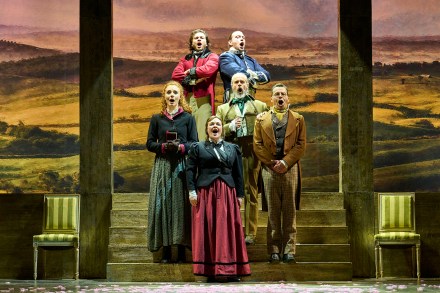
Grey, grey and more grey: Aida, at the Royal Opera House, reviewed

Classical

Grey. More grey. So very, very grey. That’s the main visual impression left by Robert Carsen’s new production of Verdi’s Aida. Possibly a few older operagoers still think of Aida as a fabulous spectacle: horses, temples, caparisoned elephants and all the gilded splendour of the Pharaohs. But if you cut your opera-going teeth more recently than 1990 – and unless you’re going to one of the more lavish Ellen Kent efforts – you’ll know by now to expect nothing of the sort. Carsen places the drama within the towering walls of a government bunker in some unspecified modern military dictatorship, with the cast (even Aida and Amneris) dressed almost entirely in shades of khaki.

Why does opera always feel the need to apologise for its plots?

Classical

Leos Janacek disliked long operas, and the first act of The Makropulos Affair is a masterclass in how to set up a drama without an ounce of fat. There’s a prelude: driving motor-rhythms, surges of emotion, and somewhere in the distance – far away (or long ago) – the sound of trumpets. The curtain rises and we’re tipped brusquely into a lawyers’ office in the early 20th century. The lawsuit they’re discussing is long-winded and complex: aren’t they always? No matter. By the end of the act, these blustering professional men have been interrupted by the magnetic and imperious diva Emilia Marty, who knows things about the century-old case of Gregor vs Prus that no living person could possibly know. We’re intrigued. End of Act One.

Simple songs; voice like the grand canyon: George Ezra, at OVO Hydra, reviewed

Pop

It would be easy to be a little dismissive of George Ezra. A wholesome late twentysomething hailing from the rock and roll badlands of Hertfordshire, Ezra is the kind of pop star you could happily take home to meet your grandparents. A graduate of the British and Irish Modern Music Institute, good-looking in that long, toothy Prince William way, he seems to be laboratory designed not to offend or challenge even the most prickly sensibilities. His music is harder to pin down. With its repeated calls and refrains, it blends folk, pop, soul, blues and calypso styles into an uncomplicated feelgood mix that is both old-fashioned and summer-fresh. The melodies are bright crayon drawings; immediate and insistent.

Why the Arts Council should kill off ENO and ENB

Arts feature

Pity Arts Council England, least loved of our NGOs, understaffed and under-resourced, its arm’s-length status gnawed to the shoulder by DCMS ukases, the stinginess of the Treasury and the government’s (in some respects, welcome) indifference to our higher culture. In return for its annual grant-in-aid (currently £336 million), it is obliged to cheer-lead policies of inclusivity and diversity and step gingerly over the eggshells of elitism, racism, gender politics and decolonisation. Its hands are further tied by the requirement to operate as extensions of the social services. The diktats of Levelling Up have to be honoured. The disabled and the disadvantaged, the young and the old are all crying out to be championed.

Joyous and sexy: Nathy Peluso, at O2 Shepherd’s Bush Empire, reviewed

Pop

Few forms of music have colonised the world like metal and hip-hop. Wherever you go you will find these two alchemising with local genres. A few years back, I took a trip to Kathmandu to visit a Nepali festival, where I saw bands from all over south Asia blasting through the beats, and in the streets outside the cabs threaded past with hip-hop blaring out of open windows. Both still represent youth in a way that lots of pop and rock no longer does. Hip-hop is simply the lingua franca of popular culture for anyone under 40; metal is still the most potent symbol of rebellion music has to offer – no matter that the rebellion is usually carefully packaged into a set of signifiers designed to tick adolescent boxes. But they are also omnipresent because both are malleable.

More depravity, please: Salome, at the Royal Opera House, reviewed

Opera

The first night of the new season at Covent Garden was cancelled when the solemn news came through. The second opened with a short, respectful speech from Oliver Mears, the director of opera, and a minute’s silence in which the houselights were lowered and we could gaze at the curtains, from which the huge gold-embroidered EIIR cypher had already been removed. For the first time in King Charles’s reign, we sang the national anthem to unfamiliar new words. There were shouts of ‘God Save the King!’And then the lights dimmed once more and we proceeded with the business of the evening, and the life of the Royal Opera.

Exhilarating, frightening and hilarious: Made in Leeds – Three Short Ballets reviewed

Dance

Good, better, best was the satisfying trajectory of Northern Ballet’s terrific programme of three original short works, which moves south to the Linbury Studio at the Royal Opera House at the beginning of November. The company has a new director in the amiable Federico Bonelli, formerly a principal with the Royal Ballet, and he has several problems to address, not least the shortage of richly characterful dancers among the senior ranks. But this triple bill should boost everyone’s morale, and the audience at the Leeds Playhouse was enthralled. First up was Wailers, Mthuthuzeli November’s elegiac return to the world of his childhood in a parched South African township.

A David Bowie doc like no other: Moonage Daydream reviewed

Cinema

Moonage Daydream is a music documentary like no other, which is fitting as the subject is David Bowie. If it’s David Bowie, make it special or just don’t bother. And this is special. It’s an immersive, trippy, hurtling, throbbing two hours and 15 minutes. If Disneyland did a Bowie ride, this would be it. Yet it isn’t shallow. There are some real insights. Bowie was cool and sexy and beautiful, but also somehow aloof and otherworldly, an enigma, never everyday. I can imagine Paul McCartney at home and I can imagine Mick Jagger at home. But I have never been able to imagine David Bowie at home, turning to Iman and saying: ‘What shall we do for dinner? Fish again?

BBC radio has excelled itself over the past week

Radio

Listening to BBC Radios 3 and 4 over the past week has been like meeting an old friend who, after decades of squeezing into age-inappropriate designer clothes, has suddenly reverted to a sensible wardrobe. It’s a pity that it took the death of our beloved Queen for this to happen, but I’ve been enjoying it while it lasts – because, like the miracle drug that Robin Williams gives his dementia patients in the film Awakenings, this dose of sanity will quickly wear off. Radio 4’s long-prepared tributes to Elizabeth II were, by the BBC’s standards, remarkably impartial. Even Saturday’s Today programme rose to the occasion.

Holds out huge promise for future seasons: If Opera’s La Rondine reviewed

Classical

One swallow might not make a summer, but it certainly helps rounds the season off. ‘Perhaps, like the swallow, you will migrate towards a bright land, towards love,’ sings the poet Prunier to Magda, the heroine of La Rondine, but love itself is the real bird of passage in Puccini’s gorgeous Viennese operetta-manqué. Magda trades in her old lover for a younger, cuter model and after a summer of happiness leaves him too, without undue regret. That’s basically it. No death leaps from battlements, no ritual disembowelling; none of that stuff that we’re meant to find so regressive and problematic in an opera house, and so visceral and cool in an HBO drama. Just a simple, plausible romance, played out to glowing waltz melodies.

Confounding and fantastic: 100 Gecs, at O2 Forum Kentish Town, reviewed

Pop

Let me introduce you to the two poles in pop and rock. One is marked by authenticity, musicianship, a certain traditionalism. This is the pole that in critics’ discourse is called ‘rockism’ – the assumption that rock (or, at least, real people playing real instruments) is the normative state of music. The other is artificiality, brashness, a disdain for heritage – a celebration of everything that is inauthentic, where a good idea is worth 100 guitar lessons. And that pole is known as ‘poptimism’. Poptimism is why you end up with learned essays in the New Yorker analysing the singer Ariana Grande nicking a doughnut from a shop with reference to the work of John Ruskin. (Yes, that really happened.

Nureyev deserves better: Nureyev – Legend and Legacy, at Theatre Royal Drury Lane, reviewed

Dance

I was never Rudolf Nureyev’s greatest fan. I must have seen him dance 30 or 40 times, starting with a Bayadère in the mid-1960s, and while his sheer presence remained so potent that he was always exciting to witness, I became increasingly aware of how fiercely willed his dancing was – a struggle with or against his own body, almost self-punishing (he believed that he performed at his best when he was totally exhausted). His final appearances, when he was showing symptoms of the Aids that killed him in 1993, were truly painful to watch on that score. He really had nothing left to give, but the compulsion remained.

Apocalyptic minimalism: Carl Orff’s final opera, at Salzburg Festival, reviewed

Music

‘Germany’s greatest artistic asset, its music, is in danger,’ warned The Spectator in June 1937. Reporting from the leading new-music festival in Darmstadt, the correspondent mentioned only one première of the two dozen on offer: ‘The most important achievement was the scenic cantata Carmina Burana by Carl Orff, a piece that would have been impossible without the influence of the “cultural Bolshevik” Stravinsky.’ He’s not wrong: give Stravinsky’s Les Noces some nail clippers and a face scrub and you get Orff. Carmina Burana can today seem irredeemably boorish and kitsch. But you can see how the piece’s hiccupy primitivism might have once startled.

The new master of the American Whine: Ezra Furman, at Edinburgh Festival, reviewed

Pop

The American Whine is one of the key vocal registers in rock and roll. You can trace that thin disaffected quaver through the decades from the Shangri-Las to Lou Reed, from Jonathan Richman to Neil Young. Inveigling, needy, smart-assed, it’s as vital a part of the DNA of the medium as a black leather jacket and a souped-up Chevrolet. Ezra Furman, I’m pleased to report, is in possession of a vintage whine. Furman is a Jewish transgender woman who composes with compassion, wit, empathy and anger from those particular personal viewpoints. She wrote the soundtrack to Netflix blockbuster Sex Education and has just released an eloquent sixth solo album, All Of Us Flames.

The joy of Franck’s Symphony in D Minor: BBCSO/Gabel, at the Proms, reviewed

Classical

In the Rodgers and Hart musical On Your Toes, a Broadway hoofer is forced to work at a community college, teaching classical music like some kind of square. He picks out a melody on the piano: ‘Whom was this written by?’ ‘By Caesar Frank!’ chorus the students. ‘Pronounce it Fronk,’ he corrects them; and the audience, presumably, laughed in recognition. This was 1936, and César Franck’s Symphony in D minor was a hugely popular concert hall warhorse. Now: not so much. According to the stats in the programme book for this BBC Prom, it was performed 36 times in 50 years at the Proms, before falling off a cliff in 1959. This performance by the BBC Symphony Orchestra under Fabien Gabel was only its seventh Proms outing in as many decades.

‘Ray of Light made me, and I didn’t know what I was doing’: William Orbit on Madonna, being sectioned and resurrection

William Orbit is an electronic musician living a jazz life. ‘I like to make it up as I go along,’ he says. ‘It’s one long improv session.’ For most of his 65 years, the music skipped along well enough. In the late Nineties, Orbit was the man with lightning at his fingertips. He co-produced (and co-wrote) Madonna’s best album, Ray of Light, followed in 1999 by Blur’s best album, 13. He created big hits for big movies, including The Beach, which featured his song ‘Pure Shores’. Recorded by All Saints, it became the second most successful British single of 2000.

Full of unexpected delights: Green Man Festival reviewed

Pop

One learns the strangest things at festivals. That, for instance, this summer has been a bit of a blackcurrant disaster in the UK because the extreme heat caused all the different varieties to ripen at the same time and fall from the bushes before they could be properly harvested. That fact came from a retired Kentish farmer called Ian, next to whom we were sitting at a £65-a-head dinner at this year’s Green Man, just outside Crickhowell in Wales. That alone should spell the difference between Green Man and the scene depicted in the Netflix series Trainwreck: Woodstock ’99. No one here was getting mouth ulcers because the drinking water was running with sewage, or rioting, or burning the catering tents down (what a waste of slow-cooked Welsh lamb that would have been).

Sensational: Herbie Hancock, at the Edinburgh Festival, reviewed

Festivals

‘Human beings are in trouble these days,’ says Herbie Hancock, chatting to us between songs. ‘And do you know who can fix it?’ ‘Herbie!’ comes the instant reply, shouted from somewhere in the stalls. Hancock might be a jazz legend, but he’s not quite the Saviour. Kicking off this year’s excellent contemporary music programme at the Edinburgh International Festival, he’s a hit from the moment he strolls into view. In his long black frockcoat, Hancock has come tonight as the High Priest of Cool. When he straps on a keytar, he’s a funky gunslinger. When one of his outstanding trio takes a particularly inventive solo, he cracks up with undisguised glee at the sheer showdown-slaying audacity of their playing.