Culture

Culture

The good, the bad and the ugly in books, exhibitions, cinema, TV, dance, music, podcasts and theatre.

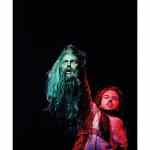
A fine cast, superbly conducted – just don’t overthink the production: Royal Opera’s Lohengrin reviewed

Opera

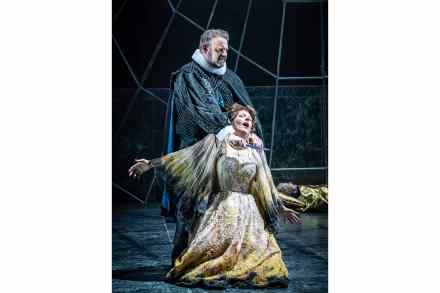
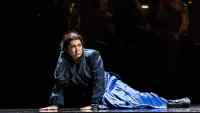
To be a Wagnerite is to enter the theatre in a state of paranoia. Mainstream culture has decided that Wagner was uniquely wicked; that’s just how it is, and it’s futile to retort that we seem comparatively relaxed about, say, Richard Strauss’s membership of the Reichsmusikkammer, or Stravinsky’s post-1945 anti-Semitism. Or that within recent memory Prokofiev’s October Cantata was presented in the UK as a bit of kitschy fun. (Never mind the dead kulaks: enjoy those accordions!) True, Wagner was an immeasurably greater artist, so he should be held to higher standards. No quarrel with that, at least not here and not now.

A wonderfully unguarded podcast about the last bohemians

Radio and podcasts

Ordinarily, if a podcast purports to be revelatory, you can assume it is anything but. There’s a glut of programmes at the moment featuring interviewer and interviewee locked in passionate heart-to-hearts in which a few, carefully selected beans are spilled to no real consequence or effect. The Last Bohemians makes no claim to shatter the earth with secrets, but the guests are so unguarded that the episodes possess that longed-for bite. Maggi Hambling reels off a to-do list she made at art school while she was seeking to lose her virginity: ‘Older man, younger man, black man, woman’. Dana Gillespie, singer and former flame of David Bowie, describes undoing her top button to be photographed in the cleavage-obsessed press of her youth.

Humour, sweetness and sincerity: Father John Misty’s Chloë and the Next Twentieth Century reviewed

The Listener

 Grade: A– In which Josh Tillman reimagines the whole back catalogue of 20th-century American pop music (except for rock), tilting heavily in favour of the 1930s-1950s. Lush strings, polite jazz and sometimes cocktail piano, big band stuff etc., plus the expected Tillman mordant humour and some unexpected sweetness and sincerity. There’s the country torch of Patsy Cline on ‘Kiss Me (I Loved You)’, the cabaret samba of ‘Olvidado (Otro Momento)’, Rodgers’ and Hart’s ‘My Funny Valentine’ homage on ‘Funny Girl’, and what we’re told is an attempt to kind of rewrite Fred Neil’s ‘Everybody’s Talkin’’ on ‘Goodbye Mr Blue’. The problem?

The awfulness of the Red Hot Chili Peppers has always felt weirdly personal

Pop

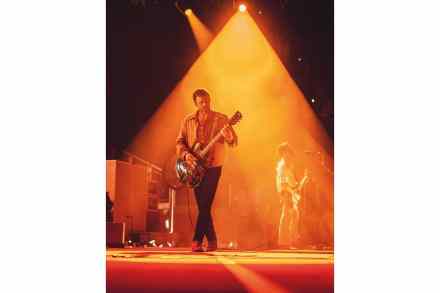
Squaring up to the prospect of a new Red Hot Chili Peppers album, I’m reminded of a vintage quote by Nick Cave: ‘I’m forever near a stereo saying, “What… is this garbage?” And the answer is always the Red Hot Chili Peppers.’ I can empathise. I don’t habitually harbour animus against artists I dislike, but something about the sheer scale of the Red Hot Chili Peppers’ awfulness has always felt weirdly personal. Despite the kind of success that looks mightily impressive in a Wikipedia stat dump – 100 million record sales, multiple Grammy wins, numerous number ones – the Californian rock band have always been tricky to tolerate, let alone love. The reasons for this are manifold.

Igor Levit deserved his standing ovation; Shostakovich, even more so

Classical

Music and politics don’t mix, runs the platitude. Looks a bit tattered now, doesn’t it? For Soviet musicians, of course, it wasn’t a question of whether you were interested in politics. Politics was unambiguously interested in you. Shostakovich wrote his 24 Preludes and Fugues for piano between 1950 and 1951, in the teeth of Stalin’s postwar crackdown, and in adopting the model of Bach, he seems to have been looking for a safe path forward: music that was politically neutral. He dedicated the Preludes and Fugues to the pianist Tatyana Nikolayeva, whose surprise victory at the 1950 Bach competition in Leipzig had been exploited by state propagandists. Bach himself was a permanent conundrum to the Soviets – that inconvenient fixation with God!

He is now a family entertainer: Stormzy at the O2 Arena reviewed

Pop

Stormzy occupies a curious place in British pop culture right now. He’s the darling of liberals for all his good deeds – setting up an imprint for black writers within Penguin, and a charity to put black kids through Cambridge. He’s also the figurehead of UK hip hop, which at times has made him a lightning rod for the particular worldview of certain people. ‘Is it asking too much that he show a scintilla of gratitude to the country that offered his mother and him so much? Instead of trashing it,’ wrote, inevitably, Amanda Platell in, inevitably, the Daily Mail, after Stormzy had attacked Theresa May’s government over the Grenfell fire. You don’t see so much of that sort of coverage these days, and a glance around the O2 showed why.

A fitting swansong from Tamara Rojo: The Forsythe Evening reviewed

Dance

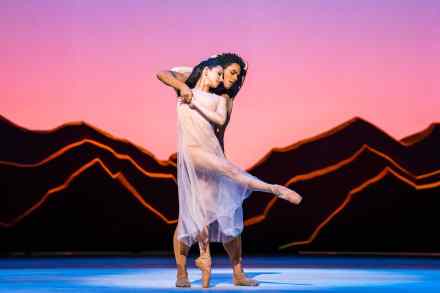
One wouldn’t want to be on the wrong side of Tamara Rojo. The most fearsome figure on the British dance scene since the authoritarian reign of Ninette ‘Madam’ de Valois, she has capped a brilliant international career as a prima ballerina with a formidable decade as artistic director of English National Ballet (as well as the award of a PhD, the patented invention of an anti-bunion device and the birth of her first child at the age of 46). She is now about to move on with her dancer husband Isaac Hernandez, 16 years her junior, to a similar position in San Francisco. The Bay Area doesn’t know what a tornado is on its way. How does her achievement at ENB stack up? Her managerial style has been, er, forceful, and it has yielded results.

A spirited attempt to fix a show that’s never really flown: Utopia, Limited reviewed

Classical

Utopia, Limited (1893) is a rare bird, and one that every Gilbert and Sullivan completist simply has to bag. The point of completism, of course, is to acquire an overview: if artists are truly original, everything they created should illuminate the whole. But what if a career tailed off, or ran to seed? It’s just going to be depressing, isn’t it? By the time they began their penultimate opera, Gilbert and Sullivan hadn’t collaborated for three years. In fact, they’d barely spoken. Goaded back into harness, they produced a comedy that really ought to have sparkled and yet somehow… well, put it this way: even the late D’Oyly Carte company waited until 1975 before attempting a revival.

Why is dance so butch these days?

Dance

For an art form that once boldly set out to question conventional divisions of gender, ballet now seems to be retreating towards the butch – ironically, just as the rest of the world is moving obsessively to the femme. Scroll back a century or so and Nijinsky cross-dressed at masked balls, danced on pointe and covered himself in petals as le spectre de la rose; in Les Biches, his sister Nijinska shamelessly choreographed all manner of sexual indeterminacy and suggested that girls could also be boys. Then came the Carry On stereotype of limp-wristed ephebes in pink tights with an ominous bulge – every mother’s nightmare in the homophobic post-war era, and perhaps still a source of psychotic contempt among certain sections of society.

No one should be doing indie rock at 43: Band of Horses’s Things Are Great reviewed

The Listener

Grade: B That thing, ‘indie rock’, is so well played and produced these days, so pristine and flawless, that it has become almost the antithesis of what it was back at the end of the 1970s, when the term was invented. Then it referred to bands who released stuff on small independent labels because the big labels wouldn’t take them on. Shouty, angsty and angular, or just weird and beloved by the befringed dolorous yoof, in their anoraks or donkey jackets, the whole thing had a pleasing DIY feel to it, even if it sometimes grated. These days ‘indie’ just tends to mean anodyne power pop played by whining blokes who haven’t had a shag for ages. So it is, I think, for Seattle’s Band of Horses.

Pitch-black satire drenched in an atmosphere of compelling unease: ETO’s Golden Cockerel reviewed

Classical

Blame it on Serge Diaghilev. Rimsky-Korsakov died in 1908 and never saw the première of his last opera, The Golden Cockerel. When the great showman finally presented it in Paris in 1914, it was as Le Coq d’Or: a spectacular opera-ballet hybrid, with colourful, folk-inspired designs by Natalia Goncharova that came to define the Ballets Russes in its imperial phase. That was the form in which it came to Britain, where the Evening Standard described it as a ‘farrago of love-making, black magic and ingenuous inconsequence’ before turning to the real news – the costumes.

See this Russian hip hop star before they arrest him: Oxxxymiron’s Beauty & Ugliness reviewed

The Listener

Grade: A+ I was going to review hyperpop chanteuse Charli XCX’s album this week, but it was such boring, meretricious, grandstanding 1980s retread electropop vacuity that I thought, nah, even if it is headed to the top of our ravaged charts. So have this instead. Oxxxymiron is Russia’s No. 1 hip-hop artist. Yes, Russian hip hop is indeed an oxxxymiron, much as would be Serbian reggae or Iranian gospel, but never mind. He’s a youngish Jewish bloke born in Leningrad, with a degree in Middle English from Oxford University, and is hugely popular in his home country. Is it any good, this album released late last year? It’s darker and nastier than US hip hop, full of menace and those icy synths the Russians seem to adore even more than their Iskander missiles.

Comes so close to greatness but succumbs to prejudice: Royal Opera’s Peter Grimes reviewed

Opera

No question, the Royal Opera is on a roll. Just look at the cast list alone for Deborah Warner’s new production of Britten’s Peter Grimes. Allan Clayton sings Grimes, Bryn Terfel is Captain Balstrode, and John Tomlinson is Swallow, with Mark Elder conducting. Even before you get to a supporting cast that includes premium names such as James Gilchrist, Jennifer France and Catherine Wyn-Rogers, you’ve basically got the three pre-eminent British male singers of their respective generations, singing their boots off in the greatest of all British operas under the baton of the conductor who (it’s naive, but let’s dream) really ought to succeed Antonio Pappano when he leaves the Royal Opera in 2024.

Felt like being caught on the moors in a storm: Keeley Forsyth, at the Barbican, reviewed

Pop

It took a moment to realise Keeley Forsyth was there. There were already three musicians, faint figures on a dark stage, wreathed in dry ice. And then, to their side, one became aware of a patch of darkness that was a little darker than the rest, and which seemed to be moving. Even when she moved into the slightly less gloomy part of the stage, Forsyth remained hidden: this was a show of startling unease and intensity. ‘Well, she’s spectacular,’ one chap ahead of me said to his friend as they filed down the stairs at the end. ‘Not sure I could manage more than an hour of it, though.

Spot-on in almost every way: Scottish Opera’s A Midsummer Night’s Dream reviewed

Classical

Scottish Opera’s new production of Britten’s A Midsummer Night’s Dream seems to open in midwinter. Snow falls, fairies hurl snowballs and the aurora borealis flickers and arcs across the darkened sky. Meanwhile Britten’s score swoons and sighs, its drowsy clouds of string tone wafting above gently snoring basses to create an atmosphere whose every glimmer evokes perfumed warmth. It should be a contradiction, but it doesn’t feel that way at all.

Liam Scarlett’s enduring legacy: Royal Ballet’s Swan Lake reviewed

Dance

Without fanfare or apology, the Royal Ballet appears to have rehabilitated Liam Scarlett, but what a tragic balls-up it has been. In 2019, having been accused of unspecified sexual misconduct, the choreographer and his work were cancelled both at Covent Garden and abroad. An internal report into his activities has never been published, so rumours and allegations persist, but the official line exonerated him without explanation. Shockingly, Scarlett killed himself last April. Now he has been restored, smilingly pictured without mention of any unpleasantness in the programme book for the Royal Ballet’s current revival of his production of Swan Lake. There’s been a chaotic cover-up, and it’s just not good enough. How much talent did he have?

Fabulously boring: Weather Station’s How Is It That I Should Look at the Stars reviewed

The Listener

Grade: C– Anyone remember that TV advert for Canada from the 1980s – a succession of colourful images, including a delicious pink donut, downtown T.O. and soaring mountain peaks, displaying the beauty, vitality and vibrancy of the country? It made me want to visit. Wild horses wouldn’t drag me there now – that glorious, vast expanse now the sine qua non of smugness and condescension. It has become a terminally precious country and we should withdraw our ambassador, or invade (that being the fashion). Weather Station, led by the fabulously irritating Tamara Lindeman, were once okayish indie folkies who have now become pretentious, half-assed purveyors of somnambulant fake jazz, like the very worst of Joni Mitchell without the melodies or ability.

Astonishing, if unnecessary, grandstanding: Barbara Hannigan’s La voix humaine reviewed

Classical

I think it was when she leaned forward and balanced on one leg that Barbara Hannigan jumped the shark. It wasn’t just a question of physical agility, although that was impressive enough. Hannigan performed her on-the-spot acrobatics while singing; the results were projected on to a big screen by three remote-controlled cameras, which zoomed in on her eyes, merged blurry images of her face and occasionally froze, meaningfully, on a particularly arresting posture. She did all this at the same time as conducting the London Symphony Orchestra in Poulenc’s one-woman opera La voix humaine, though that wasn’t really what this was about; at least, not by the time she was on one leg.

The genius of Iannis Xenakis

Classical

This year is the centenary of the birth of Iannis Xenakis, the Greek composer-architect who called himself an ancient Greek stuck in the contemporary world. His instrumental music at times suggests an alien species trying to communicate with us through our musical instruments, his electronic music a distressed animal on the receiving end of amateur dentistry. For his part, Xenakis said that music ‘must aim… towards a total exaltation in which the individual mingles, losing his consciousness in a truth immediate, rare, enormous and perfect’. Of all the post-war European firebrands, Xenakis remains the most influential today.

Too neat but it has hooks aplenty: Avril Lavigne’s Love Sux reviewed

The Listener

Grade: B Yay, life just gets better and better. World War Three and now this. More petulant popcorn pre-school punk in which Avril spells words stupidly and tells ‘bois’ how much she weally, weally hates them but acksherly weally loves them. This was momentarily captivating on the magnificently catty glam-rock thrash of ‘Girlfriend’ 15 years ago. Trouble is, Avril is now 37, older than the Prime Minister of Finland – and there’s something a little unbecoming in a mature woman still hanging around the school bike sheds and shrieking at those bois: ‘When I think of you I wanna throw up!’ Shouldn’t she be writing about pre-nups, the onset of the menopause and the spiralling cost of divorce lawyers?

The buzz band of 2022 sound like they’re from 1982: Yard Act, at Village Underground reviewed

Pop

One of the curiosities of modern pop’s landscape is that no one knows any longer how to measure success. An artist can be a huge live draw, but make no impact on the charts; they can be consistent chart-toppers but minnows among the streamers; they can stream by the bazillion, but have no live following to speak of. The metrics of success are so unrelated to each other that anyone can prove anything these days: any band can be the biggest young band in Britain right now. Yard Act are one of those biggest young bands in Britain. Their debut album was a No. 2 hit at the start of this month. Properly big, right? Well, no, perhaps not. For one, it stayed in the chart for only two weeks.

Deserves to become an ENO staple: The Cunning Little Vixen reviewed

Classical

Spoiler alert. The last words in Janacek’s The Cunning Little Vixen come from a child playing a frog. The story has come full circle — there was a frog near the start of Act One, and naturally you assume it’s the same one. But no: ‘That wasn’t me. That was my grandaddy. He used to tell me about you.’ It’s the final sad-sweet sting; the orchestra swells and the curtain falls. Perfection. Or so Janacek thought, anyway: ‘To end with the frog is impossible,’ insisted his German translator Max Brod — the same well-meaning meddler who either rescued or (according to taste) wrecked Kafka. Brod wanted a final hymn to nature from the central human character, the Forester. You know, a proper peroration.

Expectations were met and then exceeded: Arooj Aftab, at Celtic Connections, reviewed

Pop

We gathered on a freezing Sunday night, inside a barrel-vaulted church designed in the 1890s by Charles Rennie Mackintosh, to witness a cresting wave. Vulture Prince, the third album by the Brooklyn-based Pakistani singer, composer and producer Arooj Aftab, was one of the most accomplished and interesting records of last year. A keening song of loss, dedicated to her late brother, Vulture Prince is almost impossible to pin down. It’s a flood plain of merging musical streams, a genre-phobic blend of jazz, minimalism, Sufi devotional music, acoustic textures and torch song. Sung almost entirely in Urdu, its beauty and import are immediate, its emotional pull universal. Following two Grammy nominations and a fat wodge of critical acclaim, Aftab’s stock is in the ascendant.

Handel as Netflix thriller: Royal Opera’s Theodora reviewed

Opera

The Royal Opera has come over all baroque. In the Linbury Theatre, they’re hosting Irish National Opera’s production of Vivaldi’s 1735 carnival opera Bajazet; unsurprisingly, its first appearance at Covent Garden. Upstairs in the big room, they’re doing Handel’s Theodora: premièred at Covent Garden in March 1750 and then ignored by the Royal Opera and its forebears for the next 272 years. In fairness, it isn’t actually an opera. It’s an oratorio, and it was a flop. Handel attributed its neglect to the fact that the story ‘is a virtuous one’, though the music’s emotional appeal is uncompromising, and the basic morality — Christians and virtuous pagans vs a tyrannical Roman governor — is clear-cut.

One of the most exciting hours I’ve spent in ages: Turnstile at O2 Forum Kentish Town

Pop

Even leaving aside its origins as prison slang, punk has always meant different things on either side of the Atlantic. Forty-five years ago, in New York, no punk band sounded like the next one: the only thing that linked Ramones, Talking Heads, Patti Smith, Suicide, Blondie and Television was that they played the same club, CBGB. Over here, by contrast, punk was rapidly codified into people shouting angrily over buzzsaw guitars. These days, it can seem as though the opposite applies. It’s the American punks who stick to a formula, while in the British Isles, the punk label seems to apply to any band with a guitar and a modicum of attitude. Both Turnstile (from Baltimore) and Fontaines D.C. (Dublin) have been called punk.

Ralph Vaughan Williams: modernist master

Arts feature

To look at a picture of Ralph Vaughan Williams is like contemplating an image of a mountain. Not the elegant, keen-eyed Edwardian intellectual whom we sometimes glimpse on CD sleeves or in concert programmes; I’m thinking of the portraits from the last decade of his long life. By the 1950s ‘RVW’ had been the father of British music for so long that he already seemed like part of the landscape, and he looked it too. The craggy jowls, the weathered thatch of grey hair; that questioning gaze — and beneath it all, those great, tumbling scree slopes of rumpled tweed. In his 150th anniversary year he’s still there, towering in the middle distance of national memory.

Has the whiff of Spinal Tap: Jethro Tull’s The Zealot Gene reviewed

The Listener

Grade: C+   I bought the ‘seminal’ Jethro Tull double album Thick as a Brick from a secondhand shop when I was nearing my 13th birthday. I played it once and then wrote off the £1.85 of my pocket money with buyer’s grave remorse. Sometimes, when the yearning for that much better decade, the 1970s, overwhelms me I take it out of my vinyl collection as a salutary corrective: remember those ten years also gave us Baader-Meinhof, Idi Amin, the IRA and Jethro Tull. If folkish prog is on offer, I prefer the Strawbs, even if Dave Cousins is clearly a lot dimmer than Jethro’s idiosyncratic and likeable Ian Anderson. The Strawbs had one or two songs, though. Jethro had just one: ‘Life is a Long Song’, with its affected vocals. And its bloody flute.

Triumphant: Idles at the O2 Academy Brixton reviewed

Pop

The single thing you don’t want when you are beginning a run of four shows in a prestige venue, with reviewers out in force, is for it all to go tits up at the start. Which is precisely what happened to Idles as they opened their Brixton run. On came the band, up started the throb of the opening song, ‘MTT 420 RR’, and off stalked singer Joe Talbot. Back he came. Off he went. Back he came. Off he went, clearly dealing with some technical issue. The rest of the band carried on, but given that until Talbot starts singing, ‘MTT 420 RR’ is nothing but a monotone drone, this was not the dramatic start one might have hoped for. Next to me, Idles’ booking agent started laughing, a little despairingly.

Clear, complex and gripping: Opera North’s Rigoletto reviewed

Classical

Say what you like about that Duke of Mantua, but he’s basically an OK sort of bloke. A bit of an arse, sure; the kind of TOWIE-adjacent, skinny jean-wearing reality star who’d commission photographic portraits of himself and recruit an entourage of hipsters and B-boy wannabes. But really, his worst crimes are against taste. His neon-lit crib might be hung with hideous religious art, but his parties are relatively free of the nudity, quaffing and non-consensual dry-humping that tends to characterise Act One of Verdi’s Rigoletto. In Femi Elufowoju Jr’s new staging for Opera North, the Duke lays on a hog roast for his posse but doesn’t forget to order pizza for his security staff. The Deliveroo courier got a big laugh as they pedalled in across the stage.