Culture

Culture

The good, the bad and the ugly in books, exhibitions, cinema, TV, dance, music, podcasts and theatre.

Liam Scarlett’s enduring legacy: Royal Ballet’s Swan Lake reviewed

Dance

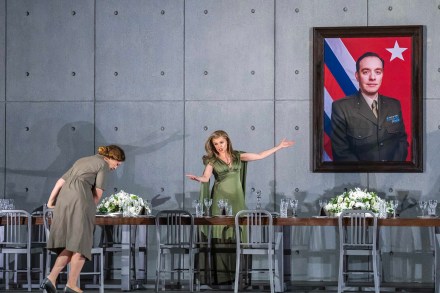
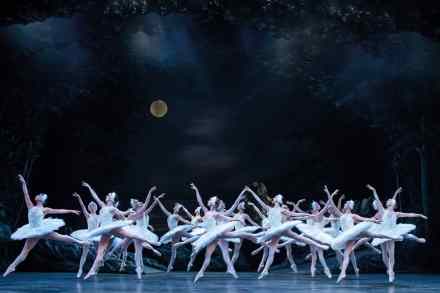
Without fanfare or apology, the Royal Ballet appears to have rehabilitated Liam Scarlett, but what a tragic balls-up it has been. In 2019, having been accused of unspecified sexual misconduct, the choreographer and his work were cancelled both at Covent Garden and abroad. An internal report into his activities has never been published, so rumours and allegations persist, but the official line exonerated him without explanation. Shockingly, Scarlett killed himself last April. Now he has been restored, smilingly pictured without mention of any unpleasantness in the programme book for the Royal Ballet’s current revival of his production of Swan Lake. There’s been a chaotic cover-up, and it’s just not good enough. How much talent did he have?

Fabulously boring: Weather Station’s How Is It That I Should Look at the Stars reviewed

The Listener

Grade: C– Anyone remember that TV advert for Canada from the 1980s – a succession of colourful images, including a delicious pink donut, downtown T.O. and soaring mountain peaks, displaying the beauty, vitality and vibrancy of the country? It made me want to visit. Wild horses wouldn’t drag me there now – that glorious, vast expanse now the sine qua non of smugness and condescension. It has become a terminally precious country and we should withdraw our ambassador, or invade (that being the fashion). Weather Station, led by the fabulously irritating Tamara Lindeman, were once okayish indie folkies who have now become pretentious, half-assed purveyors of somnambulant fake jazz, like the very worst of Joni Mitchell without the melodies or ability.

Astonishing, if unnecessary, grandstanding: Barbara Hannigan’s La voix humaine reviewed

Classical

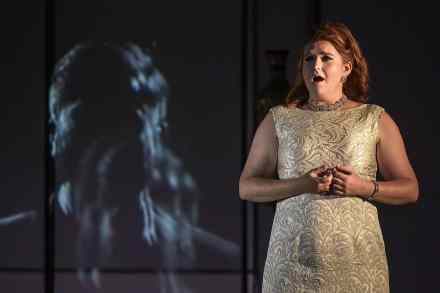
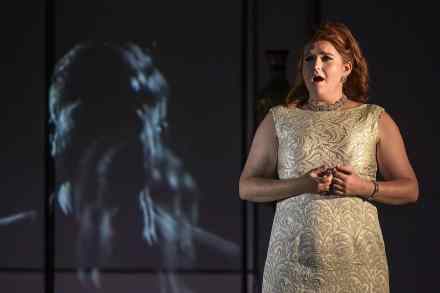
I think it was when she leaned forward and balanced on one leg that Barbara Hannigan jumped the shark. It wasn’t just a question of physical agility, although that was impressive enough. Hannigan performed her on-the-spot acrobatics while singing; the results were projected on to a big screen by three remote-controlled cameras, which zoomed in on her eyes, merged blurry images of her face and occasionally froze, meaningfully, on a particularly arresting posture. She did all this at the same time as conducting the London Symphony Orchestra in Poulenc’s one-woman opera La voix humaine, though that wasn’t really what this was about; at least, not by the time she was on one leg.

The genius of Iannis Xenakis

Classical

This year is the centenary of the birth of Iannis Xenakis, the Greek composer-architect who called himself an ancient Greek stuck in the contemporary world. His instrumental music at times suggests an alien species trying to communicate with us through our musical instruments, his electronic music a distressed animal on the receiving end of amateur dentistry. For his part, Xenakis said that music ‘must aim… towards a total exaltation in which the individual mingles, losing his consciousness in a truth immediate, rare, enormous and perfect’. Of all the post-war European firebrands, Xenakis remains the most influential today.

Too neat but it has hooks aplenty: Avril Lavigne’s Love Sux reviewed

The Listener

Grade: B Yay, life just gets better and better. World War Three and now this. More petulant popcorn pre-school punk in which Avril spells words stupidly and tells ‘bois’ how much she weally, weally hates them but acksherly weally loves them. This was momentarily captivating on the magnificently catty glam-rock thrash of ‘Girlfriend’ 15 years ago. Trouble is, Avril is now 37, older than the Prime Minister of Finland – and there’s something a little unbecoming in a mature woman still hanging around the school bike sheds and shrieking at those bois: ‘When I think of you I wanna throw up!’ Shouldn’t she be writing about pre-nups, the onset of the menopause and the spiralling cost of divorce lawyers?

The buzz band of 2022 sound like they’re from 1982: Yard Act, at Village Underground reviewed

Pop

One of the curiosities of modern pop’s landscape is that no one knows any longer how to measure success. An artist can be a huge live draw, but make no impact on the charts; they can be consistent chart-toppers but minnows among the streamers; they can stream by the bazillion, but have no live following to speak of. The metrics of success are so unrelated to each other that anyone can prove anything these days: any band can be the biggest young band in Britain right now. Yard Act are one of those biggest young bands in Britain. Their debut album was a No. 2 hit at the start of this month. Properly big, right? Well, no, perhaps not. For one, it stayed in the chart for only two weeks.

Deserves to become an ENO staple: The Cunning Little Vixen reviewed

Classical

Spoiler alert. The last words in Janacek’s The Cunning Little Vixen come from a child playing a frog. The story has come full circle — there was a frog near the start of Act One, and naturally you assume it’s the same one. But no: ‘That wasn’t me. That was my grandaddy. He used to tell me about you.’ It’s the final sad-sweet sting; the orchestra swells and the curtain falls. Perfection. Or so Janacek thought, anyway: ‘To end with the frog is impossible,’ insisted his German translator Max Brod — the same well-meaning meddler who either rescued or (according to taste) wrecked Kafka. Brod wanted a final hymn to nature from the central human character, the Forester. You know, a proper peroration.

Expectations were met and then exceeded: Arooj Aftab, at Celtic Connections, reviewed

Pop

We gathered on a freezing Sunday night, inside a barrel-vaulted church designed in the 1890s by Charles Rennie Mackintosh, to witness a cresting wave. Vulture Prince, the third album by the Brooklyn-based Pakistani singer, composer and producer Arooj Aftab, was one of the most accomplished and interesting records of last year. A keening song of loss, dedicated to her late brother, Vulture Prince is almost impossible to pin down. It’s a flood plain of merging musical streams, a genre-phobic blend of jazz, minimalism, Sufi devotional music, acoustic textures and torch song. Sung almost entirely in Urdu, its beauty and import are immediate, its emotional pull universal. Following two Grammy nominations and a fat wodge of critical acclaim, Aftab’s stock is in the ascendant.

Handel as Netflix thriller: Royal Opera’s Theodora reviewed

Opera

The Royal Opera has come over all baroque. In the Linbury Theatre, they’re hosting Irish National Opera’s production of Vivaldi’s 1735 carnival opera Bajazet; unsurprisingly, its first appearance at Covent Garden. Upstairs in the big room, they’re doing Handel’s Theodora: premièred at Covent Garden in March 1750 and then ignored by the Royal Opera and its forebears for the next 272 years. In fairness, it isn’t actually an opera. It’s an oratorio, and it was a flop. Handel attributed its neglect to the fact that the story ‘is a virtuous one’, though the music’s emotional appeal is uncompromising, and the basic morality — Christians and virtuous pagans vs a tyrannical Roman governor — is clear-cut.

One of the most exciting hours I’ve spent in ages: Turnstile at O2 Forum Kentish Town

Pop

Even leaving aside its origins as prison slang, punk has always meant different things on either side of the Atlantic. Forty-five years ago, in New York, no punk band sounded like the next one: the only thing that linked Ramones, Talking Heads, Patti Smith, Suicide, Blondie and Television was that they played the same club, CBGB. Over here, by contrast, punk was rapidly codified into people shouting angrily over buzzsaw guitars. These days, it can seem as though the opposite applies. It’s the American punks who stick to a formula, while in the British Isles, the punk label seems to apply to any band with a guitar and a modicum of attitude. Both Turnstile (from Baltimore) and Fontaines D.C. (Dublin) have been called punk.

Ralph Vaughan Williams: modernist master

Arts feature

To look at a picture of Ralph Vaughan Williams is like contemplating an image of a mountain. Not the elegant, keen-eyed Edwardian intellectual whom we sometimes glimpse on CD sleeves or in concert programmes; I’m thinking of the portraits from the last decade of his long life. By the 1950s ‘RVW’ had been the father of British music for so long that he already seemed like part of the landscape, and he looked it too. The craggy jowls, the weathered thatch of grey hair; that questioning gaze — and beneath it all, those great, tumbling scree slopes of rumpled tweed. In his 150th anniversary year he’s still there, towering in the middle distance of national memory.

Has the whiff of Spinal Tap: Jethro Tull’s The Zealot Gene reviewed

The Listener

Grade: C+   I bought the ‘seminal’ Jethro Tull double album Thick as a Brick from a secondhand shop when I was nearing my 13th birthday. I played it once and then wrote off the £1.85 of my pocket money with buyer’s grave remorse. Sometimes, when the yearning for that much better decade, the 1970s, overwhelms me I take it out of my vinyl collection as a salutary corrective: remember those ten years also gave us Baader-Meinhof, Idi Amin, the IRA and Jethro Tull. If folkish prog is on offer, I prefer the Strawbs, even if Dave Cousins is clearly a lot dimmer than Jethro’s idiosyncratic and likeable Ian Anderson. The Strawbs had one or two songs, though. Jethro had just one: ‘Life is a Long Song’, with its affected vocals. And its bloody flute.

Triumphant: Idles at the O2 Academy Brixton reviewed

Pop

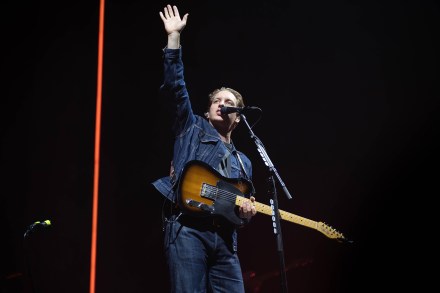
The single thing you don’t want when you are beginning a run of four shows in a prestige venue, with reviewers out in force, is for it all to go tits up at the start. Which is precisely what happened to Idles as they opened their Brixton run. On came the band, up started the throb of the opening song, ‘MTT 420 RR’, and off stalked singer Joe Talbot. Back he came. Off he went. Back he came. Off he went, clearly dealing with some technical issue. The rest of the band carried on, but given that until Talbot starts singing, ‘MTT 420 RR’ is nothing but a monotone drone, this was not the dramatic start one might have hoped for. Next to me, Idles’ booking agent started laughing, a little despairingly.

Clear, complex and gripping: Opera North’s Rigoletto reviewed

Classical

Say what you like about that Duke of Mantua, but he’s basically an OK sort of bloke. A bit of an arse, sure; the kind of TOWIE-adjacent, skinny jean-wearing reality star who’d commission photographic portraits of himself and recruit an entourage of hipsters and B-boy wannabes. But really, his worst crimes are against taste. His neon-lit crib might be hung with hideous religious art, but his parties are relatively free of the nudity, quaffing and non-consensual dry-humping that tends to characterise Act One of Verdi’s Rigoletto. In Femi Elufowoju Jr’s new staging for Opera North, the Duke lays on a hog roast for his posse but doesn’t forget to order pizza for his security staff. The Deliveroo courier got a big laugh as they pedalled in across the stage.

Not pleasant, and not in tune, but unarguably compelling: Royal Opera’s Nabucco reviewed

Classical

Nabucco, said Giuseppe Verdi, ‘was born under a lucky star’. It was both his last throw of the dice and his first undisputed hit, composed after the failure of Un giorno di regno and the death of his young wife and two children had driven him to abandon music outright. The story (at least, as Verdi told it) was that the director of La Scala had forced him to accept a libretto on the Biblical story of Nebuchadnezzar, and that when a page fell open on the chorus ‘Va, pensiero’ the muse returned. Citation needed, possibly, but there’s no question that the ‘Chorus of the Hebrew Slaves’ is one of those once-in-a-lifetime melodies; a tune (as Elgar might have put it) to ‘knock ’em flat’.

A story of reflection and self-discovery: Anaïs Mitchell’s new album reviewed

Pop

Any artist who has habitually written or performed in character — from David Bowie to Lady Gaga — eventually arrives at their Mike Yarwood moment: ‘And this is me!’ With the release of her sixth solo record, Anaïs Mitchell has reached the point of personal revelation. ‘I’ve spent a lot of time trying to write in the voice of other characters,’ she says. ‘It felt like after so many years of working on telling other stories — now here are some of mine.’ In 2020 Mitchell was named one of Time magazine’s 100 most influential people. Nevertheless, she requires an introduction.

A booster shot of sunlight: Unsuk Chin’s new violin concerto reviewed

Classical

Sir Simon Rattle and the London Symphony Orchestra began the year with a world première. Unsuk Chin’s Second Violin Concerto opened with the soloist, Leonidas Kavakos, completely alone in front of a silent orchestra, playing phrases that rocked back and forth until, suddenly, they were striking sparks. As well they might; Kavakos, after all, is the reason that the concerto exists — the violinist whose ‘burningly intense’ (the composer’s words) artistry has prompted Chin to break her self-imposed rule of writing only one concerto for any given instrument. She explained in the programme notes that ‘the solo violin part forms the foundation of the whole score, the soloist triggering all of the orchestra’s actions and impulses.

Lovely and wistful: Neil Young and Crazy Horse’s Barn reviewed

The Listener

 Grade: A I have persisted in buying everything Neil Young releases since I first heard On the Beach as a callow but pretentious 13-year-old. To tell you the truth, the past 27 years have somewhat tested this commitment. There has been a fatal laziness in the songwriting, lyrically and melodically, since 1994’s Sleeps with Angels and the preaching has become ever more tiresome. But I continued forking out in the increasingly forlorn hope that he’d turn out something if not wonderful, then at least reminiscent of wonderful things past. And for lo, the grizzled old troubadour has done exactly that. This is a subtler incarnation of Crazy Horse, helped incalculably by the presence of Nils Lofgren on flowery bar-room piano and sweet guitar.

Musical conservatives ought to love identity politics

Classical

It’s 2022 and classical music is, again, dead. It’d be surprising if it wasn’t. In 2014 the New Yorker published a timeline by the industry analyst Andy Doe showing the precise chronology of the decline and fall. Ageing audiences in the 21st century, the gramophone in the 20th, the dangerous new technology of the pianoforte in the 1840s: all, in their time, were considered proof that the rot was terminal. Doe traced the root of the problem back to a papal bull in 1324, giving new potency to Charles Rosen’s remark that ‘the death of classical music is perhaps its oldest continuing tradition’. Anyway, the fatal blow this time is the Great Awokening.

The Nutcracker wasn’t always considered quite such a box of delights

Dance

E.T.A. Hoffmann’s tale of a young man turned into a novelty kitchen gadget by an evil rodent isn’t obvious dance material, and yet here we are, up to our plastic tiaras in sugar plums. Four Nutcrackers in London alone and an average of 200 productions, amateur and professional, across the Atlantic. How? Why? Sharp pens greeted the 1892 St Petersburg première — ‘it’s a pity that so much fine music is expended on nonsense’ — and within two decades it was little more than a box of delights to be raided by directors and choreographers, blithely borrowing anything they fancied from Lev Ivanov’s choreography or Tchaikovsky’s ravishing, bittersweet score, regardless of context or key signatures.

The genius of Tchaikovsky’s Nutcracker score

Classical

By all accounts, Tchaikovsky struggled to compose The Nutcracker. It wasn’t his idea of an effective ballet scenario, and he was unimpressed with the choreographer Marius Petipa’s prettified storyline. Mid-composition, he learned of the death of his younger sister Alexandra. ‘Even more than yesterday, I feel absolutely incapable of depicting the Kingdom of Sweets in music,’ he wrote. But inspiration can be counterintuitive. On a good day, Tchaikovsky could write as fluently as any Victorian serial novelist, churning out forgettable piano pieces (as he put it) ‘like batches of pancakes’. Projects like The Nutcracker put him through purgatory but the result, with hindsight, was nothing less than the sound of Christmas.

Truly godawful: Ed Sheeran’s =

The Listener

 Grade: C= My wife’s ill with Covid and demanding inexhaustible libations and difficult meals, which she will leave uneaten. The dog thinks it deserves a walk in the filthy sleet. The kitchen is a tip and the bins need emptying. I have a headache, a runny nose and the ghost of a ticklish cough. Can things get worse? Yes, yes they can. It’s The Spectator on the phone. Can you please review Ed Sheeran’s new album? As in: look, you’re feeling rough and put upon at the moment. So can we come round and smash your spectacles and rub human excrement in your hair? And all this a few weeks after they foisted on me the woke caterwauling exoskeleton that is Adele. Oh, he seems a nice enough bloke, Ed.

In praise of seasonal chart fodder

Pop

Christmas: the most vulnerable time of the year. I heard ‘A Winter’s Tale’ by David Essex on the radio the other day and, oh boy. It was Noël Coward who wrote, in Private Lives, that smart little line about the strange potency of cheap music. It is a truism never more apparent than at Christmas, when we allow the gaudy and sentimental access to our hearts with only the most cursory of security checks. Songs that would never make it past the bouncers in May are whisked directly into the VIP area come December. A quick google confirms that ‘A Winter’s Tale’ was released in the run-up to Christmas 1982, which means I was nine years old when it was first released.

Modernism’s back, baby: Huddersfield Contemporary Music Festival reviewed

Classical

It’s not everyone’s idea of fun, a trip to Huddersfield in the depths of November. But as any veteran of Huddersfield Contemporary Music Festival knows, it usually pays off. Sure, none of the venues has a bar; the programming is as carefully curated as a b2b trade show, the main hall about as cosy as a care home. And true, calling all this a ‘festival’ sometimes feels like wishful thinking. And yes, you are in Huddersfield. (In November.) But HCMF remains one of the few places in this country where you can get a high-quality hit of musical modernism — and always freshly served piping hot straight from the continent’s finest compositional kitchens.

Reprehensible – but fun: Orpheus Chamber Orchestra’s Complete DG Recordings reviewed

The Listener

 Grade: B It must have been an interesting day in the Orpheus Chamber Orchestra’s press office when Blair Tindall’s memoir Mozart in the Jungle hit the bookshops in 2005. ‘He sat in the desk chair, pushed aside the first oboe part of Rossini’s Italian Girl in Algiers and tapped a pile of cocaine on the glass’ runs a typical anecdote. Even in 2005, it wasn’t really what anyone expected to hear from a former member of Orpheus — a youthful, conductor-less New York outfit who used to pose for album covers dressed in spotless white.

More mesmerising than it should be – Disney+’s The Beatles: Get Back reviewed

Television

My late friend Alexander Nekrassov loathed the Beatles, which I used to think was a wantonly contrary position akin to hating kittens or blue skies or Christmas carols. What could there possibly be not to like, love and admire about the band that gave us ‘Eleanor Rigby’, ‘A Day In the Life’ and ‘Strawberry Fields Forever’? Since then I’ve encountered so many Beatles sceptics that it has given me pause for thought.

In defence of the earworm

Classical

That strain again… it’s the morning after the concert and one tune is still there, playing in the head upon waking, running around and around on an unbreakable loop over breakfast. I’ve never liked the term ‘earworm’. It suggests an alien parasite, an aural violation, when in fact some part of the musical brain is clearly in love with this scrap of melody, and getting a microgram of a dopamine hit every time it presses ‘repeat’. It’s consensual, even pleasurable. Why fight it? There’s an Arthur C. Clarke story about a scientist obsessed by the finale of Sibelius’s Second Symphony.

A soulful man with a blistering voice: Sipho, at Studio 9294, reviewed

Pop

When I were a lad — back when you could buy the entire back catalogue of the Fall for thruppence and still have change to get into a New Order show on the way home — record labels mattered. Well, a cohort of independent labels mattered, because their imprints stood for something. There was Creation, with its dedication to a twin axis of 1977 and 1967 as the only years that counted; 4AD, with its arty sleeves and its wafty, diaphanous music; there was Factory, somewhere between an elaborate practical joke and home to the most forward-thinking musicians in the country. You don’t get many labels like that any longer. The new economics of the music industry militate against the model of the record label as an aesthetic statement, rather than purveyor of vulgar commerce.

Cheap schlock has now become expensive schlock: Adele’s 30 reviewed

The Listener

Grade: C The problem I have is that I thought she was pretty awful before — when she was just fat and from Tottenham. Now that she has been marinated in SoCal for six years, she seems to have become even worse: a kind of Meghan Markle with a larynx. It was cheap schlock all the way back then; it’s expensive schlock now — that’s the only difference. This is her divorce album, her ‘Hollywood’ album, her mature album, her BRAVE album according to her adoring… critics is obviously the wrong word. OK, it starts off with words — ‘I’ll be taking flowers to the cemetery of my heart’ — on the song ‘Strangers By Nature’. If that doesn’t make you blush embarrassedly for her, then what will?