Culture

Culture

The good, the bad and the ugly in books, exhibitions, cinema, TV, dance, music, podcasts and theatre.

Why I love Rod Stewart

Pop

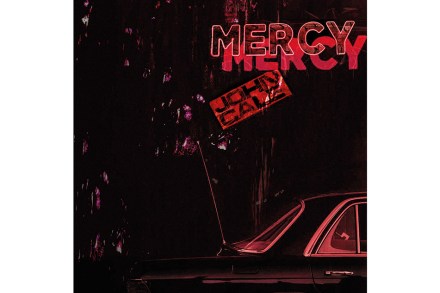
Reader, I let you down. But I did so for the right reason: for love. On a night when all of London’s music critics were at the Royal Festival Hall for Christine and the Queens, I deserted my duty. But, honestly, I don’t regret it. The reports back from the RFH suggested some baffling melange of performance art, am dram, experimental pop and gender identity, wrapped up in a concept piece about red cars. Not me. I’ll stick with Rod, a man so comfortable with his gender identity that he’s a byword for male libido. Rod is a man so comfortable with his gender identity that he’s a byword for male libido My love for Rod Stewart is pure and noble.

The sonic equivalent of a Starbucks Eggnog Latte: ENO’s It’s a Wonderful Life reviewed

Opera

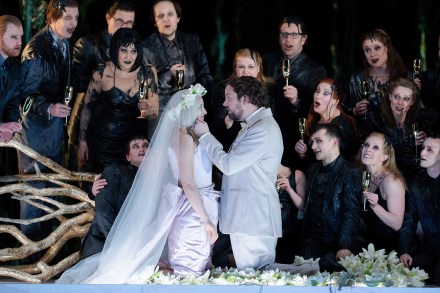
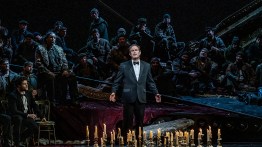
Whoosh! A digital starburst, a sweep of orchestral sound and the stage of the Coliseum is alive with dancing, whirling snowflakes. Floating in the heavens is the soprano Danielle de Niese; below her in the darkness, the truss bridge that we all know – because we’ve all seen It’s a Wonderful Life – is where the turning point of the story will occur, a couple of hours from now. That being the case, the only question is how composer Jake Heggie, librettist Gene Scheer and director Aletta Collins are going to close the circle and get us there. It’s evident from the off that they’re not going to stint either on spectacle or on sentiment. And quite right too: this is a Christmas opera, and there aren’t too many of those about.

Carries the whiff of a hotel-lounge pianist: Vikingur Olafsson’s From Afar reviewed

The Listener

Grade: B+ The 38-year-old Icelandic pianist Vikingur Olafsson has an almost unique ability to make counterpoint sing, as his astonishing 2018 Bach recital for DG revealed. But his Proms debut last year in Mozart’s Piano Concerto K491 seemed over-thought, verging on the fussy. Now he’s been allowed the luxury of a concept double album, From Afar, in which he plays an eccentrically curated mixture of small pieces twice, once on a Steinway grand and once on an upright. It’s a revelation, though not perhaps the one Olafsson intended. He says the two instruments call for different approaches to his menu of Bach transcriptions, Schumann, Brahms and snippets of Bartok, Kurtag and Adès.

Like A-ha after an extensive rewilding process: Sigur Ros, at Usher Hall, reviewed

Pop

Plus: it's quite clear that MUNA are going to be huge What is it with Icelanders and mushrooms? Just weeks after Bjork releases a fungal-themed album, Fossora, Sigur Ros appear on stage with dozens of sporey lights illuminating the gloom. It’s boom time for mycophiles, but with Sigur Ros the link makes a certain kind of sense. Their aesthetic is not so much post-rock as glacial. For almost three decades the Icelandic quartet have been making large-screen, epically elemental music: celestial choral pieces, art-house concert films, ambient soundscapes and the occasional relatively conventional rock and pop song. Whether aware of it or not, you will have heard ‘Hoppipolla’ on numerous BBC nature documentaries. We won’t hear it tonight, though.

Rebecca Humphries is dynamite – pity about the play: Blackout Songs, at Hampstead Theatre, reviewed

Theatre

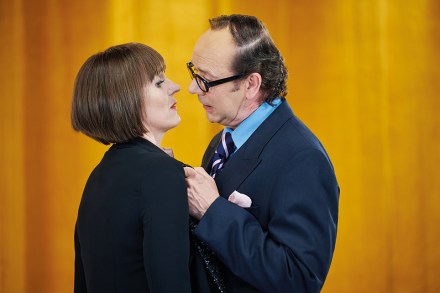
Viewers watching a good romcom need to fall in love with three things. The boy, the girl and the affair itself. The new Hampstead melodrama, Blackout Songs, scores just one out of three. Rebecca Humphries is adorably chic and sexy as the Soho seductress who drifts from bar to bar, picking up men. Her toyboy is a disappointment, a teenage deadbeat who has none of her louche gusto. And his character is a puzzle when it ought to be crystal clear. At the start of the action he wears a neck-brace and speaks with a stammer. In the next scene, his neck has healed and his stammer has vanished as well. Is he two characters? Or is he a con man who assumes different personalities, and if so why? He dresses in a paint-spattered tracksuit but he claims to be a welder, a rock star and a fine artist.

Exhilarating: English National Ballet triple bill, at Sadler’s Wells, reviewed

Dance

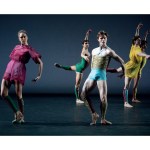
Headed for San Francisco, Tamara Rojo bows out of her directorship of English National Ballet with an exhilarating triple bill demonstrating her success in expanding the repertory and raising technical standards. If only the company could tour this class of work outside London.  The climax of the evening was a new version of The Rite of Spring by Mats Ek – his second stab at dramatising music so graphically vivid and violently aggressive that choreographers since Nijinsky have struggled to find imagery and movement to match its primal energy. Even Kenneth MacMillan and Pina Bausch didn’t quite hack it for me. Ek has avoided the clichés: nobody stomps about plastered in scary face paint. I wonder if his scenario was inspired by Ari Aster’s elegant horror film Midsommar?

What’s the point of these soul covers? Bruce Springsteen’s Only the Strong Survive reviewed

The Listener

Grade: B What’s the worst-ever cover version (after Madonna’s hilarious stab at ‘American Pie’)? I reckon Creedence Clearwater Revival’s interminable mangling of ‘I Heard It Through The Grapevine’, or maybe the J. Geils Band stamping over ‘Where Did Our Love Go’ in hobnail boots – two bands I otherwise adore. Jeff Beck boring his way through ‘Superstition’? The Stranglers wrecking ‘Walk on By’? All Saints ripping the guts out of ‘Lady Marmalade’? I think you catch my drift, because the lesson is pretty clear: no, really, do not play that funky music, white boy.

Odd, rich and adventurous: Erykah Badu, at the Royal Festival Hall, reviewed

Pop

You couldn’t call Erykah Badu one of the world’s most productive artists: it’s 12 years since her last album, and she’s released just five of them in 25 years, plus a couple of mixtapes. You’re more likely to see her name in the papers for something stupid she’s said – that she can see the good in everybody, even Hitler, because he was ‘a wonderful painter’, for example – than because she’s done something musical. Which is a shame because like her equally unproductive neo-soul contemporaries (Maxwell – five albums in 26 years; D’Angelo – three in 27 years), the music still sounds extraordinary.

The joy of B-sides

Pop

Paul Weller releasing a collection of solo B-sides is cause for mild celebration. After all, the Jam were one of the great B-side bands. ‘Tales From The Riverbank’, ‘The Butterfly Collector’, ‘Liza Radley’ – all A-list songs, relegated to the subs’ bench. Remember the B-side? That bijou, creative safe space which didn’t merely permit but positively encouraged artists to write parallel narratives of exploration, experimentation and extemporisation. I still remember the first B-side I fell in fascination with. It was called ‘Christ Versus Warhol’, a queasily psychedelic, wilfully odd indulgence on the wrong side of the Teardrop Explodes’ determinedly poppy ‘Passionate Friend’. I felt like the protagonist in Gregory’s Girl.

A towering achievement: ENO’s The Yeomen of the Guard reviewed

Opera

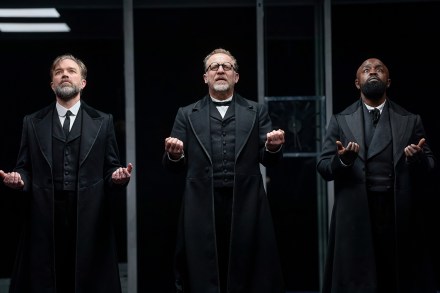
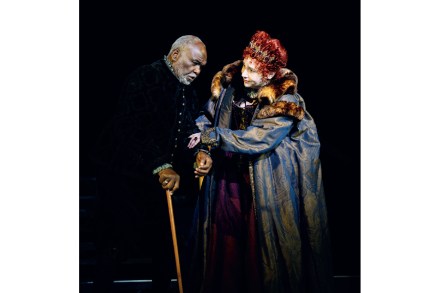
The screw may twist and the rack may turn: the Tower of London, in Jo Davies’s new production of The Yeomen of the Guard, is a dark place indeed, and that’s as it should be. ‘Men may bleed and men may burn,’ intones Dame Carruthers, as she delivers a magic lantern show about the history of the Tower, complete with colour slides of famous beheadings. In The Mikado Gilbert uses capital punishment as a particularly spiky punchline, but in The Yeomen of the Guard, sentence of death has been passed before the curtain has even risen. The shadows are lengthening from the off, and even Sullivan’s cheeriest melodies have a dying fall.

King Charles III’s love of classical music

Arts feature

The musical tastes of King Charles III are more sophisticated than those of our late Queen. That’s not being rude: it’s just a fact. Her favourite musician appears to have been George Formby, whose chirpy songs she knew by heart. No doubt she relished their double entendres – but the hint of smut meant that, to her regret, she had to decline the presidency of the George Formby Society. Our new monarch, by contrast, adores the Piano Concerto in E flat major by Julius Benedict (1804-85). He recommended it in an interview a couple of years ago. I’d never heard of the piece, which existed only in manuscript until Howard Shelley and the Tasmanian Symphony Orchestra recorded it for Hyperion in 2008.

The UK Drill Project, at The Pit, reviewed

Theatre

The UK Drill Project is a cabaret show that celebrates greed, criminality and drug-taking among black males in London. It opens with a septet of masked performers, sheathed in dark Lycra, singing a rhythmic poem while pretending to fire guns and stab people with knives. These sad young rappers are desperate to look scary because they’re scared themselves. And though they claim to be artists, their purpose in writing ‘drill’ songs and posting videos online is to protect their drug profits and to intimidate rival gangs. Musically, they lack accomplishment. They can’t play instruments and appear to own none. Harmony and melody are alien to them.

Arts Council England and the war on opera

Instructed by the Department for Digital, Culture, Media and Sport to move money away from London and reassign it to the regions as part of the Levelling Up strategy, Arts Council England has ended up making some very risky decisions. It has thrown funds at small untested groupuscules without a firm audience base and penalising major reputable institutions such as the Royal Opera House for their success and expertise. Given that the sector is struggling from the effects of the pandemic and the energy crisis – not to mention historic under-funding – the result could well be a catastrophic reduction in the quality and quantity of our cultural life, and a further blow to our international prestige. Opera is being particularly hard hit.

A total (and often gripping) theatrical experience: Scottish Opera’s Ainadamar reviewed

Classical

Do you remember Osvaldo Golijov? Two decades ago he was classical music’s Next Big Thing: a credible postmodernist with a lush and listenable tonal flair, and an Argentinian with an interestingly complex European heritage in a millennium where everyone agreed – for a while, anyway – that the future was Latin American. Major labels recorded his music as soon as it was premièred; he was popular. Too popular for some – I remember a contemporary music promoter lamenting, with the demeanour of a housemaster who’s just found the head boy smoking behind the bins, that Golijov ‘hadn’t developed as we’d hoped’. Anyhow, Golijov was big, and then something stalled. Commissions failed to materialise, there were rumours of creative block, and the parade moved on.

A generational pop talent: Rina Sawayama, at the O2 Academy Brixton, reviewed

Pop

The first time I saw Franz Ferdinand was at the sadly lost Astoria, just after the release of their first album. I’d liked but not loved the record, but that night I experienced the single most exciting thing in live music: artist and audience absolutely united in the conviction that this – the biggest gig of their career so far and by far – was the last time this band would be playing a place this small. Both band and audience – and even the VIP enclosure of the balcony, in front of where I stood – radiated excitement about all of us being in this together: prepare for lift-off, next stop the stars! Rina Sawayama’s Brixton show was the same febrile, euphoric, shared experience.

One long moan of woe: Crystal Pite’s Light of Passage, at the Royal Opera, reviewed

Dance

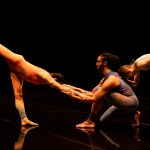
I was moved and shaken by Crystal Pite’s Flight Pattern when I first saw it in 2017. In richly visualised imagery, it proposed two ways of interpreting the horrific footage of the refugee crisis of 2016: either as a matter of anonymous, voiceless masses, portrayed as a body of dancers moving across the stage like a skein of migrating swallows beyond reason or control; or as a ragtag of desperate, furious individuals with every dignity and possession taken from them – somebody’s husband or wife, somebody’s daughter or son, fighting for survival – a plight conveyed in the impassioned dancing of Marcelino Sambé and Kristen McNally.

Tenderness and menace: Bob Dylan, at the London Palladium, reviewed

Pop

Bob Dylan has always toyed with audiences. He plays what he wants, how he wants, letting his mood dictate tempo and often key (sometimes switching songs to the minor). On Dylan’s return to London for the first time in five years, he summed it up early. ‘I ain’t no false prophet/ I just know what I know,’ he gruffly sang. Dylan spent the night at the Palladium doing what he knows best, singing songs of love, loss and immortality. Covid temporarily ended his ‘Never-Ending Tour’, which had seen Dylan play more than 3,000 shows since 1988. Now it’s billed as ‘The Rough and Rowdy Ways Tour’, with the strapline: ‘Things aren’t what they were’.

Compellingly personal arena experience: Bon Iver, at Ovo Hydro, reviewed

Pop

A reliable metric for measuring pop success is hard to find these days, as Michael Hann noted in these pages recently. Massaged figures for sales and streams are so opaque as to be almost meaningless. The charts are old news; social media reach wildly distorting. Bon Iver have won Grammys and released platinum-selling albums, but that was a decade ago. Such accolades feel oddly old--fashioned now. Perhaps the most assured barometer is the traditional one of bums on seats – by which gauge Bon Iver appear to be doing just fine. Yes, they are a band lacking any semblance of a song your postman could whistle. And yes, they are fronted by Justin Vernon, a doggedly unstarry fortysomething in a rumpled T-shirt and headband.

Bold, self-assured reimagining of Monteverdi: Opera North’s Orpheus reviewed

Opera

You wouldn’t like Tamerlano when he’s angry. ‘My heart seethes with rage,’ he sings, in Act III of Handel’s opera – spraying coloratura about the stage like Silly String on a 1980s kids’ TV show. That’s the deal with baroque opera: the emotional register is extreme and you’re either in the moment or you might as well leave the theatre. Literal realism, clearly, is not the point – making it even more necessary for a modern director to sketch in some hint of a social or cultural framework in which we can locate and comprehend these hyper-real characters. The music is too hot and too strong to work as drama in a purely abstract setting. Pare it back too far and you’re left with five maniacs screaming at each other in a black box.

We should take Robbie Williams more seriously

Pop

Oh, nostalgia – so much better than it used to be! You’d never have guessed pop music was once the preserve of teenagers had you been visiting the Greenwich peninsula last week – not from the crowds, or from the artists. Here were Roxy Music, whose four core members boast a combined age of 295, playing what might be their last ever show. Here were the Tops and the Temps, bands each with just one original member left – 86-year-old Duke Fakir of the Tops, 80-year-old Otis Williams of the Temps. And here was the absolute youngster of the lot, Robbie Williams, a stripling of 48, but 32 years into his pop career. Blimey, I know we keep being told retirement at 65 is a thing of the past, but this was ridiculous.

A miniature rite of a very English spring: a Vaughan Williams rediscovery in Liverpool

Classical

Imagine a folk dance without music. Actually, you don’t have to: poke about on YouTube and you’ll find footage from 1912 (there’s music dubbed on, but it’s a silent film) of Vaughan Williams’s friend George Butterworth in full Morris fig, going through the moves with Cecil Sharp and a pair of pinafore-wearing gals. Note the precision of his movements, that big Kitchener moustache: how seriously Butterworth is taking it, four years before he stopped a bullet on the Somme. And they really were sincere, those folk song pioneers.

A solid evening’s entertainment: Rambert’s Peaky Blinders ballet reviewed

Dance

Being of a squeamish sensibility and prejudiced by a low opinion of recent BBC drama, I can claim only a superficial acquaintance with Peaky Blinders. So my response to The Redemption of Thomas Shelby, a new ballet drawing on the popular television series about gangland Birmingham during the 1920s, is that of a rank outsider. Produced by Rambert (in association with Birmingham Hippodrome), it represents the company’s admirable attempt to find a broader audience and move out of the modern dance ghetto – hence presenting the show at the new Troubadour Theatre in Wembley Park rather than Sadler’s Wells. A spot check on the demographic suggests that it succeeded: but will this crowd come back when the programme is more demanding?

Apocalypse chic: Autechre, Last Days and Southbank’s Xenakis day reviewed

Music

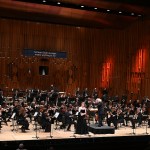
It was so dark, my friend noted, you could have had sex or done a Hitler salute. No stage lights, no stair lights, no desk lights, no door lights, no usher lights, no exit signs. The few wisps of illumination that did steal in created colossal shadows, giants freeze-framed on the walls. In these snatches the wooden ribcage interior of the Barbican Hall looked demonic. A few photons lit up the Autechre boys, Rob Brown and Sean Booth, who flickered like blue flames rising from a hob. A few more nudged into view the ceiling that had become a vast charcoal grisaille. When, occasionally, someone left, the tiny glowing portal that appeared made it feel as though we were at the bottom of a cavernous well.

The death of the pop star

Pop

The definition of ‘pop star’ in the Collins English Dictionary is unambiguous: ‘A famous singer or musician who performs pop music.’ Well, that seems fairly self-explanatory, doesn’t it? It also seems way wide of the mark, because being a pop star (or a rock star, its longer-haired cousin) encompasses a great deal more than being famous for singing pop songs. As Nik Cohn wrote, describing the first flush of idols of the rock’n’roll age, they were ‘maniacs, wild men with pianos and guitars who would have been laughing stocks in any earlier generation… They were energetic, basic, outrageous. They were huge personalities and they used music like a battering ram.

Incredibly his new songs were the best songs: Lindsey Buckingham, at the London Palladium, reviewed

Pop

Lindsey Buckingham, at 72, still has cheekbones that cast shadows. He has the upright shock of hair, too, though now it makes him look less like the kohl-eyed pop god of 1980 and more like Malcolm Gladwell’s cooler, angrier brother. He still has fire, too. A couple of solo renditions of Fleetwood Mac songs won the crowd over, but it was the following run of three numbers from his newest album, played with his three-piece band, that put the spark to the show. It proved he’s not yet a heritage act. He had no choice, really, but to forge ahead. In 2018, he was booted out of Fleetwood Mac, for various reasons, chief among them appearing to be that Stevie Nicks couldn’t stand the sight of him any longer, and it was her or him.

Grey, grey and more grey: Aida, at the Royal Opera House, reviewed

Classical

Grey. More grey. So very, very grey. That’s the main visual impression left by Robert Carsen’s new production of Verdi’s Aida. Possibly a few older operagoers still think of Aida as a fabulous spectacle: horses, temples, caparisoned elephants and all the gilded splendour of the Pharaohs. But if you cut your opera-going teeth more recently than 1990 – and unless you’re going to one of the more lavish Ellen Kent efforts – you’ll know by now to expect nothing of the sort. Carsen places the drama within the towering walls of a government bunker in some unspecified modern military dictatorship, with the cast (even Aida and Amneris) dressed almost entirely in shades of khaki.

Why does opera always feel the need to apologise for its plots?

Classical

Leos Janacek disliked long operas, and the first act of The Makropulos Affair is a masterclass in how to set up a drama without an ounce of fat. There’s a prelude: driving motor-rhythms, surges of emotion, and somewhere in the distance – far away (or long ago) – the sound of trumpets. The curtain rises and we’re tipped brusquely into a lawyers’ office in the early 20th century. The lawsuit they’re discussing is long-winded and complex: aren’t they always? No matter. By the end of the act, these blustering professional men have been interrupted by the magnetic and imperious diva Emilia Marty, who knows things about the century-old case of Gregor vs Prus that no living person could possibly know. We’re intrigued. End of Act One.

Simple songs; voice like the grand canyon: George Ezra, at OVO Hydra, reviewed

Pop

It would be easy to be a little dismissive of George Ezra. A wholesome late twentysomething hailing from the rock and roll badlands of Hertfordshire, Ezra is the kind of pop star you could happily take home to meet your grandparents. A graduate of the British and Irish Modern Music Institute, good-looking in that long, toothy Prince William way, he seems to be laboratory designed not to offend or challenge even the most prickly sensibilities. His music is harder to pin down. With its repeated calls and refrains, it blends folk, pop, soul, blues and calypso styles into an uncomplicated feelgood mix that is both old-fashioned and summer-fresh. The melodies are bright crayon drawings; immediate and insistent.