Culture

Culture

The good, the bad and the ugly in books, exhibitions, cinema, TV, dance, music, podcasts and theatre.

Is Coogan’s Dr Strangelove as good as Sellers’s? Of course not

Theatre

Stanley Kubrick’s surreal movie Dr Strangelove is a response to the fear of nuclear annihilation which obsessed every citizen in the western world from the end of the Cuban missile crisis in 1962 until the fall of the Berlin Wall in 1989. The play’s co-adaptors, Sean Foley and Armando Iannucci, are old enough to recall that fear – but they’ve omitted any sense of collective anxiety from their adaptation. It’s a just a larky tribute to the movie, like a sketch show. Daft not disturbing. It turns out Dr Strangelove is like Father Christmas – more potent as a mythical abstraction than as a reality The story starts with an insane American, General Ripper, ordering a squadron of B-52s to nuke Russia before the communists can overwhelm the United States.

A lively and imaginative interpretation of an indestructible Britten opera

Classical

Scottish Opera’s new production of Albert Herring updates the action to 1990, and hey – remember 1990? No, not particularly, and I suspect that’ll be a common reaction if you were actually around back then. The director Daisy Evans was a toddler at the time and she imagines a gaudy, tawdry small-town world of bum-bags, WeightWatchers and decrepit gas heaters. Loxford Village Hall looks like it hasn’t been redecorated since the year the opera was composed, 1947, and that certainly rings true. Blancmange for the May Day feast, though? I’m pretty sure that even under John Major, blancmange was a throwback. But Evans has a show to put on after all, and a pink wobbling gelatine-based dessert is more theatrical than a bowl of Monster Munch.

Demanding but exhilarating: Royal Ballet’s Encounters reviewed

Dance

After opening its 2024/5 season with a run of Christopher Wheeldon’s candy-coloured, kiddie-friendly Alice’s Adventures in Wonderland, the Royal Ballet gets down to business with a demanding but exhilarating programme of new work. Newish, to be accurate; the evening’s only previously unseen piece is Joseph Toonga’s Dusk. Crystal Pite’s The Statement is eight years old and was previously seen at Covent Garden in 2021; Kyle Abraham’s The Weathering followed a year later; and Pam Tanowitz’s Or Forevermore has developed out of a duet that originated during the pandemic. Dusk and The Weathering call for little comment. Both are well-crafted and safely generic, elegiac in mood and unassertive in theme.

Chrissie Hynde remains outstanding: the Pretenders, at Usher Hall, reviewed

Pop

A few hours before the doors opened for the Pretenders’ Edinburgh concert, Chrissie Hynde posted a message on her social media channels. The gist being that, while she appreciated the support of the band’s most devoted fans – the ones who travel from city to city and country to country to attend multiple concerts – she was, to be frank, getting sick of seeing the usual suspects plonked six feet in front of her at every damn gig. She was therefore formally asking her hardy but apparently increasingly tiresome acolytes to cede the front row to ‘local faces’. This would, she said, help keep ‘it new’ for the band each night. Hynde has always been pretty punchy, but this seemed a bit much, even by her standards; not so much biting the hand that feeds as gnawing it clean off.

Schoenberg owes his survival to crime drama

Classical

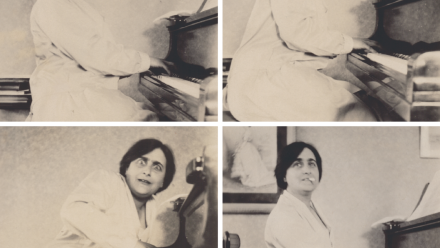
George Gershwin once made a home movie of Arnold Schoenberg grinning in a suit on his tennis court in Beverly Hills but, sadly, never filmed one of their weekly matches. According to one observer, the composer of ‘I Got Rhythm’ played with languid strokes in a ‘nonchalant and chivalrous’ manner against the ‘choppy, over eager’ strokes of the creator of Erwartung. That figures. But how odd that the two men should be friends and passionate admirers of each other’s work. Gershwin paid for the first recording of Schoenberg’s gnarliest string quartet, the Fourth; when the younger man died, Schoenberg described him as ‘a great composer’ and expressed ‘the deepest grief for the deplorable loss to music’.

Less Riot Grrl than Riot Lladies Who Lunch: Sleater-Kinney’s Little Rope reviewed

The Listener

Grade: B- Given that Carrie and Corin are now in their fifties and one of them has settled down with a nice man, this is perhaps less Riot Grrl than Riot Lladies Who Lunch. You cannot expect fury to sustain itself for 30 years, not least when your band has long since ceased being an upstart revolution to the patriarchal rock order and has become instead a kind of indie heartland rock institution. This is Sleater-Kinney’s 11th take on that curiously bloodless American version of punk, a genre which is now comfortably mainstream. They never had quite the cuteness or pop sensibilities of, say, Veruca Salt: what marked them out originally was a disinclination to compromise.

You’re unlikely to see a better case made for this Bernstein double bill 

Opera

It’s rare nowadays to see a new opera production that’s set in the period that the composer and librettist intended, but they do occasionally come along. In the case of Leonard Bernstein’s operas Trouble in Tahiti and A Quiet Place, the time and place are basically the whole plot. Trouble in Tahiti dates from 1951; a sassy little one-act satire on America’s postwar consumer idyll. It’s practically perfect. A Quiet Place is from 1983 and it’s a sequel, set 40 years later – post-Vietnam and post-Woodstock, with the nuclear family in full meltdown. These performances, and this production, provoke thoughts that might rob you of sleep It’s a bit of a mess, in other words, and Bernstein never really made the pairing work.

An uncompromising master: David Gilmour, at the Royal Albert Hall, reviewed

Pop

It doesn’t matter which dictionary you consult, they all agree on what a song is: words, set to music, that are sung. Yet it’s also an entirely inadequate description, since there are so many types of song. Take David Gilmour and Neil Finn, both men of passing years who like to switch between electric and acoustic guitars, both backed by plenty of singers and kindred instrumentation (though Finn didn’t have a pair of harps on stage with Crowded House), both playing music largely rooted in the late 1960s, both offering lightly mind-bending songs. Yet this misses something crucial.

I’m done with Hofesh Shechter

Dance

I think I’m through with Hofesh Shechter, and that’s a pity, because earlier work of his such as Political Mother thrilled me with its unedited passion and energy. But after several duds and misfires, I feel that with Theatre of Dreams he’s run out of ideas and hit a dead end. The title suggests what’s gone wrong: labelling something Theatre of Dreams gives you licence to go crazy and do what the hell you like, without any purpose or structure, rhyme or reason. And that’s what has happened here. Over 90 uninterrupted minutes, curtains close and open to reveal a hundred or so snapshot tableaux of 13 dancers doing nothing of any discernible significance in a void. It’s all great if you suffer from attention deficit disorder.

The BBC Singers Centenary Concert was toe-curling

Classical

When does a new opera enter the repertoire? Judith Weir’s Blond Eckbert has only had a couple of UK productions since its première at English National Opera in 1994, but it’s been doing reasonably good business on the continent, where its source material – a story by German writer Ludwig Tieck – presumably has more cultural currency. In any case, it’s back now, as part of English Touring Opera’s autumn roster, and both the staging (by ETO’s general director Robin Norton-Hale) and the performances deserve to make Weir’s haunted, oddly unsettling opera a lot better known. If my toes had curled any harder I think I’d have dropped a shoe size As it should be: this is a small opera that makes a bigger and darker impression each time you see it.

I agree with pop’s war on iPhones – but King Canute might want a word

Pop

Before each show on the recent The The tour – reviewed in these pages last week – the pre-recorded voice of singer Matt Johnson politely asked the audience to refrain from using mobile phones when the band was performing. In Edinburgh, while Johnson was speaking, the chap next to me was preoccupied filming an empty stage. A sea of screens can be priceless in a genuine emergency but that’s about it As it happens, most of the crowd complied most of the time, but proscribing phone use at concerts is increasingly challenging. A few artists are up for the fight.

Heartfelt and thought-provoking: Eugene Onegin, at the Royal Opera, reviewed

Classical

The curtain is already up at the start of Ted Huffman’s new production of Eugene Onegin. The auditorium is lit but the stage is in darkness and almost bare. Gradually, as Tchaikovsky’s prelude sighs and unfurls, the stage brightens and the theatre grows dim. But not before Onegin (Gordon Bintner) – tousle-headed and in a designer suit – has walked out, bowed to the house and retired to a chair at the back of the stage, to wait for the story to call him to life. Any competent maestro can whip up a big noise, but it’s a lot harder to make meaning out of silence Russophiles have grumbled for years about the way Tchaikovsky trimmed and tidied Pushkin’s raffish first-person narrative into seven self-contained ‘lyrical scenes’.

Have today’s TV dramatists completely given up on plausibility?

Television

In advance, Ludwig sounded as if it was aimed squarely at the Inspector Morse market. Set among spires of impeccable dreaminess (in a cunning twist, those of Cambridge), it has a main character who solves crimes and cryptic crosswords with equal efficiency. Once the series began, though, it was clear that its sights were set a little lower than that. Instead, the show seems content to take its place as the latest proof that plausibility is out of fashion in TV drama these days. (In my last column I reviewed Nightsleeper, which had no time for it at all.) One reason this detective feels like the traditional fish out of water, for example, is that he’s not a police detective.

The world is on fire – yet navel-gazing still reigns in pop

Pop

There is no better cultural weather vane than pop. It’s not that pop singers possess incredible analytical skills – they don’t. It’s more that it’s in their interests to reflect some prevailing mood. And what people call a vibe shift can often be gleaned by comparing two artists. Take those featured this week: one very much au courant, the other regarded as a searing commentator on 1980s Britain. It’s a very good album, one for sitting down and listening to rather than standing in a vast shed to hear Over the past couple of years, Raye – a 26-year-old Londoner – has become rather a star. You may remember that she had a bunch of hit singles early on, but her label showed no interest in releasing an album.

‘Some pianists make me shake with anger’: Vikingur Olafsson interviewed

Arts feature

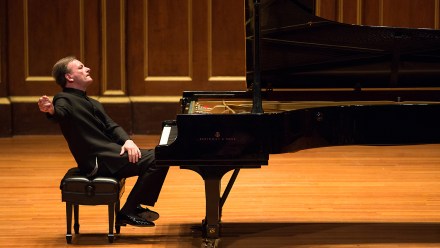
At the BBC Proms this year, an Icelandic pianist dressed like a Wall Street broker played a slow movement from a Bach organ sonata that had the audience first gasping and then stamping their feet. This was an encore to a performance of the Schumann Piano Concerto that neither milked the poetry nor romped thrillingly through the finale – and that, too, nearly had the Prommers throwing their underwear at the shy soloist. How do you explain the phenomenon of Vikingur Olafsson? At first glance, he fits the mould of the bespectacled scholar-pianist who recoils from vulgarity – a young Alfred Brendel or Richard Goode, say, whose Beethoven or Schubert cycles have the cognoscenti underlining felicities in the score. ‘The Goldbergs are the hardest piece.

How some of the most derided bands of all time are making a comeback

Arts feature

The fate of the pop musician – at least the pop musician below the top tier of stardom – has historically been to fall from fashion. At some point in their rise they will be of the moment, the spirit of the age, and then they won’t be. At best, they’ll have a slow but perfectly lucrative fade, as their fanbase dwindles to the zealots. At worst they’ll become a punch line, a raised eyebrow: ‘What were we thinking?’ Every hit, every sold-out show, is just another step closer to irrelevance. ‘There’d be 800 teenagers in a club in Minneapolis, which felt absurd: we’re old enough to be their parents’ It may be that the single greatest artistic effect of the Covid pandemic has been to change that.

A box set for those on the spectrum: Markus Poschner’s Bruckner Symphonies reviewed

The Listener

Grade: B+ Anton Bruckner wrote 11 symphonies – Numbers One to Nine plus a student exercise and the formidable rejected symphony endearingly known as ‘Number 0’, actually finished between the First and Second. So why does this 200th anniversary cycle conducted by Markus Poschner, divided between the Bruckner Orchester Linz and the Vienna Radio Symphony Orchestra, run to 18 CDs? The answer is that it gives us two versions of Numbers One, Two and Eight, and three of Numbers Three and Four. The composer, generally agreed to have been ‘on the spectrum’, was hypersensitive to criticism and compulsively rewrote his symphonies in an attempt to tighten them up and silence his mean critics.

Committed performances – but who was the granny? Northern Ireland Opera’s Eugene Onegin reviewed

Opera

It’s a critic’s job to pick holes in the dafter aspects of opera productions, but in truth audiences are usually capable of detecting nonsense when they see it. ‘She must be at least 150,’ commented the gentleman sitting behind me, referring to the wheelchair-bound old lady who was trundled on stage at the start of Northern Ireland Opera’s new production of Eugene Onegin, and then parked there, pretty much for the duration. It really buzzed along, even if the set resembled a public lavatory (urinal chic seems to be an emerging trend) He had a point. Was she meant to be an elderly Tatyana? Then why was she dressed in modern clothes when the rest of the action played out in the era of Pushkin?

Expressive and eloquent: Northern Ballet’s Three Short Ballets reviewed

Dance

Ballet companies have become dismally timid about exploring their 20th-century heritage: everything nowadays must be either box-fresh new or a fairy-tale classic, which seems to me a recipe for an unbalanced diet. So I’m pleased that under the directorship of Federico Bonelli, Northern Ballet is pluckily dusting off neglected treasures of the recent past. Last year brought Hans van Manen’s exquisite Adagio Hammerklavier (1973) back to life; this year, it’s the turn of Rudi van Dantzig’s setting of Strauss’s Four Last Songs (1977), danced to the recording made by Gundula Janowitz and Herbert von Karajan.

My night with the worst kind of nostalgia 

Pop

American Football are a band whose legend was formed by the internet: some Illinois college kids who made an album for a little label in 1999, went their separate ways, and in their absence found that a huge number of people had responded to their music. They duly reunited in 2014. They are often identified as emo, the most confounding of all genre names, given it means everything and nothing, but American Football are not of the eyeliner and dyed-hair variety exemplified by My Chemical Romance, nor the angsty pop-punk variant of Weezer or Jimmy Eat World, nor the shouty hardcore punk evolution of the genre’s founders in the 1980s.

Manacorda’s thrills and spills at Prom 72

Classical

At a Hollywood party in the 1940s, the garrulous socialite Elsa Maxwell spotted Arnold Schoenberg, then teaching music at UCLA, looking miserable. So she pushed him towards the piano with the words: ‘Come on, Professor, give us a tune!’ I couldn’t help thinking of those words on Friday night, when we heard the first Proms performance of a symphony written in 1847 by a professor at the Paris Conservatoire. The Third Symphony of Louise Farrenc is full of well-crafted melodic lines, neatly configured to fit maddeningly predictable textbook chord progressions. It’s delicately orchestrated, but even the feathery flutes of the Orchestra of the Age of Enlightenment couldn’t disguise the professor’s failure to give us a single memorable tune. This is not a popular opinion.

A massive, joyous, sensational hit: Why Am I So Single? reviewed

Theatre

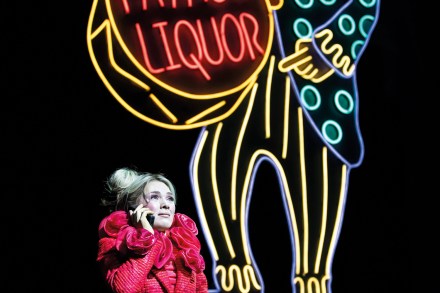
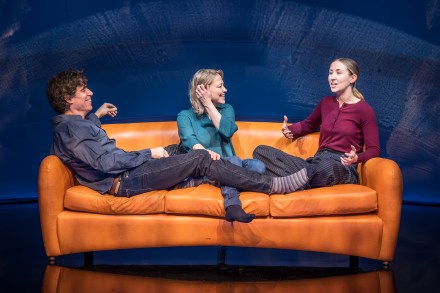
Why Am I So Single? opens with two actors on stage impersonating the play’s writers Toby Marlow and Lucy Moss. You may not recognise the names but you’ve probably heard of their smash-hit, Six, which re-imagined the tragic wives of Henry VIII as glamorous pop divas. This follow-up show is a spoof of vintage musicals and it’s deliberately knowing and self-referential. That’s why the authors are played by members of the cast, and they start with a few disparaging quips about Mamma Mia! and other West End fare. They even call the audience at the Garrick ‘riff-raff’, which seems a little charmless.

Ten times better than Taylor Swift: Romance, by Fontaines D.C., reviewed

The Listener

Grade: B+ Almost all modern popular music is afflicted by a desperate yearning for importance, and thus – as it translates these days – electronic bombast, which is of course available now at the flick of a switch in the studio. The song is not enough, nowhere near enough. What you need, to elevate your infantile and asinine observations of the world and your sad lack of a good choon, is confected importance. This has been increasingly true since about 1965, but never more so than now. The song is not enough? That’s because it’s not a very good song, kiddo. Write a good song and, you’ll find, marvellously, it really is enough. Dublin’s Fontaines D.C. are a good case in point.

How Berlin nearly broke Bowie

Radio

This week’s Archive on 4 is a treat for David Bowie fans. Francis Whately, the producer behind several of the BBC’s Bowie films, including The Last Five Years, has patched together old recordings and new interviews with Bowie’s lovers and friends to examine his life in West Berlin between 1976 and 1978. It was a fraught, make-or-break time. Out of pocket, addicted and depressed, Bowie had grown ‘very, very worried’ for his life. It isn’t entirely clear why he chose Berlin as a place for recovery, other than that it was unstarry, cheap and a good distance from LA, where his troubles had spiralled. Unfortunately, it was also ‘the smack capital of Europe’, and Bowie was about to move in with Iggy Pop.

The problem with Klaus Makela

Classical

Klaus Makela is kind of a big deal. He’s a pupil of the Finnish conducting guru Jorma Panula – the so-called ‘Yoda of conducting’ – and he’s chief conductor of the Oslo Philharmonic as well as the Orchestre de Paris. Within the next three years he’s scheduled to take the baton at both the Chicago Symphony and the Royal Concertgebouw Orchestra in Amsterdam: blue-chip international positions, with fees to match. So we’re going to be hearing a lot more from maestro Makela, though possibly not in the UK where he has almost certainly (barring the LSO and Covent Garden) been priced out of the market. He is only 28, though apparently his agents would prefer it if you didn’t talk about that.

Elvis Costello remains the most fascinating songwriter Britain has produced in the past 50 years

Pop

Song for song, line by line, blow for blow, Elvis Costello remains the most consistently fascinating songwriter Britain has produced in the past 50 years – an opinion which seems these days to be mostly confined to a smallish section of an ageing demographic. Certainly, Costello’s music has, as far as I can tell, proved largely resistant to TikTokification, even if Olivia Rodrigo did ‘pay homage’ (nicked, with the author’s approval) to the riff to ‘Pump It Up’ for her song ‘Brutal’.

A lively showcase for a great central European orchestra at the Proms

Classical

As the Proms season enters the home straight, it’s moved up a gear, with a string of high profile European guest orchestras. First up was the Czech Philharmonic playing Suk’s Asrael Symphony under Jakub Hrusa before moving on to Janacek’s Glagolitic Mass the following night. These grand, glittering monuments of Czech music were garnished with a couple of relative rarities – Dvorak’s Piano Concerto, played by Mao Fujita, and the Military Sinfonietta, composed in 1937 by (the then 22-year-old) Vitezslava Kapralova, who died at the age of 25. It’s unmistakably the work of a young composer. Xylophone?