Culture

Culture

The good, the bad and the ugly in books, exhibitions, cinema, TV, dance, music, podcasts and theatre.

Charles Hadcock – taking on the age of speculation with sculpture in the City

Exhibitions

As the boundary between auction house and art dealer blurs yet further, with auctioneers acting increasingly by private treaty as well as taking over commercial galleries, and as West End gallery space becomes ever more expensive, alternative exhibiting venues are being sought with growing urgency. One solution is to move further into corporate territory, and Charles Hadcock (born 1965) is currently doing just that with an exhibition of his latest sculptures in the foyer of 60 Threadneedle Street in the City.

Oceans and forests in kaleidoscopic flow – discovering Keith Grant

Exhibitions

For decades I’ve been aware of the work of Keith Grant (born 1930), but it is only in recent years that I have come to know it at all well. During that time both the style and the subject of his paintings have undergone a series of remarkable revolutions, as he determined not to rest on his laurels, but to explore the fundamentals of his approach and interests. You don’t often see an artist doing this, particularly one over the age of 80, when an ‘everything goes’ Old Age Style is a more common development.

A comic drawn by Bob Monkhouse in which a superhero battles giant penises? Yes, it’s all here

Exhibitions

Fwoooosh! That, were someone to write a strip about it, would be the sound of a thousand comic books going up in flames. They used to do that, you know; burn comics. It was mostly in America, in the late 1940s, after these DayGlo fictions, with their monsters and superheroes and suggestive curves, were declared bad for children’s health. But it spread to Britain too. Parents and teachers would search drawers and desks. Any comics they found would be gathered in small piles outside. A responsible adult would pull out some matches. And then, like I said: fwoooosh! Of course, comics are now treated with greater respect.

The painter who channelled the forces of gravity

Exhibitions

Tragically, Ian Welsh (1944–2014) did not live to see this exhibition of his latest work. Diagnosed with terminal cancer on the eve of his 70th birthday, he struggled to finish the two large paintings in his last series of works, entitled ‘Gravity’s Rainbow’. He found it increasingly difficult to stand to paint, but he worked, sitting down instead, on a group of six small canvases that have a mysterious linear assurance worthy of the best of late de Kooning. Welsh desperately wanted to see his new work up on the refurbished walls of his local gallery, Hasting Arts Forum, of which he was a passionate supporter, acting as chairman until very recently. But despite his fortitude and remarkable good spirits, he died just three weeks before the exhibition opened.

The Royal Academy Summer Exhibition offers up the good, the bad and the ugly – and a sore neck

Exhibitions

One of the great traditions of the RA’s Summer Exhibition has always been that each work submitted was seen in person by the Hanging Committee, passed in front of their keen or bemused gaze by a succession of porters. Of course this method had its drawbacks: judges could miss something in a state of postprandial somnolence induced by the consumption of too much (heavily fortified) beef tea, but at least the paintings, drawings and prints had a chance of being chosen through that all-important direct communication of eye and art. (Sculpture, because of its scale and mass, has always presented its own logistical problems.) This year, for the first time, artists submitted their works digitally for the initial round of judging. Has this made any appreciable difference? Not really.

When Mondrian was off the grid

Exhibitions

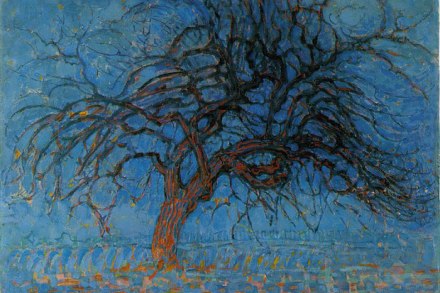
I find it easy to forget that Piet Mondrian is a Dutch artist. The linear, gridlocked works he is famed for seem to beat with the energy of the New York metropolis. But it was not always so. His path to abstraction was a precarious one that bumped into a number of styles drifting round during the early 20th century. And, in the beginning, his work was Dutch — pastoral, domestic, earthy. To see this progression, head to Margate (Margate!) where you will find an exhibition of Mondrian’s work at Turner Contemporary, which commemorates the 70th anniversary of his death. The title sounds generic — Mondrian and Colour (artist — tick! Artistic property — tick!) — but in many ways, it’s confusing.

It took 11 years to bring Bill Viola to St Paul’s Cathedral – but it was worth it

Exhibitions

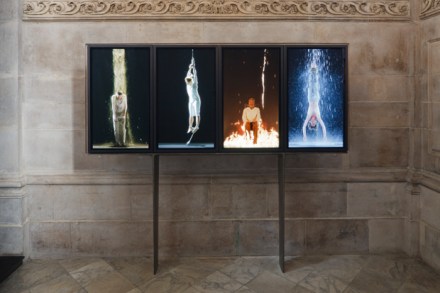
Deans are a strange breed. Growing up in the Church of England, I met a wide range, their cultural tastes embracing everything from Chagall to In Bed with Madonna. In 2003, I didn’t know what appealed to the then Dean of St Paul’s Cathedral, John Moses, but in April of that year it suddenly became crucial. I was proposing that St Paul’s commission the artist Bill Viola — dubbed by some the Rembrandt of the video age — to create a work for the cathedral. Since Moses had never heard of Viola and I didn’t work in the visual-arts world, it seemed a far-fetched proposition. Yet I was in no doubt that it should happen.

Kenneth Clark wasn’t happy simply popularising art, he liked to collect it and shape it too

Exhibitions

Earlier this year, I sat down and watched Kenneth Clark’s groundbreaking TV series Civilisation. I vaguely remember when it was first screened in 1969, but was too young to appreciate it properly. This time around it made splendid Sunday afternoon viewing: Clark’s distinctive blend of authority and humour, his ability to convey information and enthusiasm without the slightest trace of condescension, coupled with effective camerawork and good editing, make a rich and stimulating brew of word, image and music. The series, which was commissioned by David Attenborough and brilliantly directed by Michael Gill, established a model for all subsequent arts documentaries. Not only did I learn a lot from its 13 episodes, I also enjoyed it enormously as entertainment.

Can Lynn Chadwick finally escape the 1950?

Exhibitions

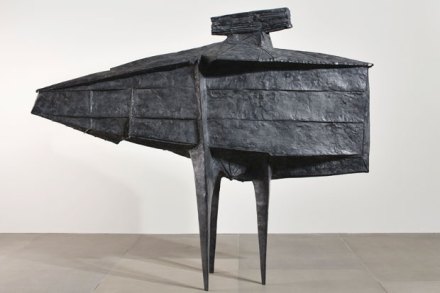
Lynn Chadwick was born 100 years ago in London, and died in 2003 at his Gloucestershire home, Lypiatt Park, where he is buried in the Pinetum. He was one of the great names of 20th-century sculpture, not just in England but recognised and celebrated internationally, too. He first came to prominence in the 1950s, and the aura of that decade clung to him for the remainder of his career. He was included in the 1952 Venice Biennale with seven other sculptors (including Kenneth Armitage, Reg Butler and Eduardo Paolozzi), when Herbert Read coined the phrase ‘geometry of fear’ to describe their work. In conjuring up this postwar angst, Read spoke of an ‘iconography of despair’ and ‘collective guilt’.

Josef Albers: roaring diagonals and paradisiacal squares

Exhibitions

Josef Albers (1888–1976) is best known for his long engagement with the square, which he painted in exquisite variation more than a thousand times. A German–American painter, he trained in Berlin and Munich before enrolling at the Bauhaus (the leading modernist art and design school) in 1920. He was a student there for three years and a teacher for ten (longer than anyone else), his chosen craft was stained glass, and his teaching ranged from typography to furniture. In 1933 he moved to America and began to teach at Black Mountain College in North Carolina. Among his students was Robert Rauschenberg, who acknowledged Albers as ‘the most important teacher I’ve ever had’.

We’re very lucky Philip II was so indulgent with Titian

Exhibitions

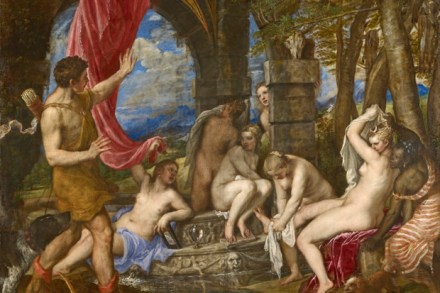
In Venice, around 1552, Titian began work on a series of six paintings for King Philip II of Spain, each of which reinterpreted a scene from Ovid’s Metamorphoses. The resulting work proved to be the apogee of his career and became what may be the most influential group of paintings in post-Renaissance European art. Studied, absorbed and channelled by successive generations of artists, from Velázquez and Rubens through to Gainsborough and latterly Freud, the impact of these works and their stylistic legacy was profound.

The brilliant neurotics of the late Renaissance

Exhibitions

In many respects the average art-lover remains a Victorian, and the Florentine Renaissance is one area in which that is decidedly so. Most of us, like Ruskin, love the works of 15th-century artists of that city — Botticelli, Fra Angelico, Ghiberti — and are much less enthusiastic about those of the 16th. But a superb exhibition at the Palazzo Strozzi, Florence, Pontormo and Rosso Fiorentino: Diverging Paths of Mannerism, might change some minds. It contains pictures that are intense in emotion, eccentric, mysterious, sometimes bizarre and — to a 21st-century eye — appealingly neurotic. Rosso Fiorentino and Pontormo were almost exact contemporaries, born within a few months of each other in 1494.

What was Allen Ginsberg doing in Wales? LSD

Exhibitions

‘Valleys breathe, heaven and earth move together,/ daisies push inches of yellow air, vegetables tremble,/ grass shimmers green...’ The characteristic undulations of the voice of the Beat poet Allen Ginsberg greet the visitor on entering Wales Visitation: Poetry, Romanticism and Myth in Art at the National Museum Cardiff. Bearded and mellifluous, projected to mythic proportions across a vast expanse of wall, Ginsberg is seen reading his poem ‘Wales Visitation’ on American television in 1968, telling less of visits than of visions. What was the Blakeian, Buddhist, drug-sampling poet doing in Wales? LSD.

When Raquel Welch danced on a table at Cinecittà

Exhibitions

Before there was Hello!, OK! and Closer, there was Oggi. Oggi was the magazine my Italian mother used to flick through on the long dark English winter evenings. Its celebrity photo spreads were for her the armchair equivalent of the Italian national pastime, the ‘passeggiata’. The Years of La Dolce Vita, revisited in a new exhibition at the Estorick Collection, were the glory years of Oggi. The show draws on an archive of more than a million images taken by Marcello Geppetti (1933–1998), the street photojournalist ranked by American Photo ‘the most undervalued photographer in history’.

The hidden, overlooked and undervalued: Andrew Lambirth’s spring roundup

Exhibitions

Jankel Adler (1895–1949), a Polish Jew who arrived in Glasgow in 1941, was invalided out of the Polish army, and moved to London two years later. A distinguished artist in his own right, he turns out to have been a hidden presence on the English art scene, a secret influence on indigenous artists. He is usually cited as a crucial inspiration for Robert Colquhoun, but as his work grows more familiar, it becomes clear that a whole host of other artists must have been aware of him, from S.W. Hayter to Cecil Collins.

Henri Le Sidaner: the artist who fell between two schools

Exhibitions

Like other species, artists club together in movements not just for purposes of identification but for longevity. Individuals who don’t belong to schools take longer establishing reputations during their lifetimes, and tend to lose them sooner after their deaths. Henri Le Sidaner (1862–1939) was one such individual: a contemporary of the Post-Impressionists who painted in dots but was not a Pointillist; revelled in complementary colours but was not a Fauve; and drew a veil of dreams over reality but was not a Symbolist, or only briefly. He was, as his friend the critic Gabriel Mourey described him, ‘a sort of mystic who has no faith’. When asked what school he belonged to, his own reply was: ‘None.

A fresh perspective on reassuringly familiar artists

Exhibitions

This exhibition examines a loosely knit community of artists and their interaction over a decade at the beginning of the last century. It is centred around the marriage of Ben and Winifred Nicholson (which began to split up in 1931), involves their crucial joint-friendship with Christopher Wood and a fruitful exhibiting relationship with William Staite Murray, topped off by the all-pervading influence of a true original, Alfred Wallis, Cornish fisherman, marine-stores dealer and compulsive painter. The intellectual and artistic meeting of these individuals was a formative impulse in the development of Modernism in England; and it could be said — with some justification — that they brought out the best in each other.

The German devotion to high culture is quite shaming

Exhibitions

The 300th anniversary of George I coming to the British throne on 1 August 1714 is big news in his home town of Hanover in Lower Saxony. Five shows are being put on in Hanover and the Hanoverian country schloss in nearby Celle, an utterly charming town that largely escaped the attentions of Allied bombers in the war. The same can’t be said for Hanover, an important railway and manufacturing city flattened by our boys.  Still, enough has been restored to make it worth a visit, not least the Herrenhausen Palace, the Hanovers’ austerely classical summer residence, burnt to the ground in 1943 and rebuilt last year by Volkswagen at vast expense.

The Matisse Cut-Outs is a show of true magnificence

Exhibitions

Artists who live long enough to enjoy a late period of working will often produce art that is radically different from the achievements of the rest of their careers. Late Titian and late Rembrandt are two such remarkable final flowerings, but Henri Matisse (1869–1954) did something even more extraordinary: he not only changed direction, he also gave up painting entirely. In the last years of his life he concentrated exclusively on making pictures, some of them vast, from cut paper. If ill health prevented him from painting, it could not stop him creating, and he reached new heights of greatness in the breathtaking beauty and daringly simplified harmonies of his cut-outs. ‘I have attained a form filtered to the essentials,’ he said.

William Kent was an ideas man – the Damien Hirst of the 18th century

Exhibitions

How important is William Kent (1685–1748)? He’s not exactly a household name and yet this English painter and architect, apprenticed to a Hull coach-painter before he was sent to Italy (as a kind of cultural finishing school) by a group of patrons who recognised his abilities, became the chief architectural impresario and interior decorator to the early Georgian nobility. His Italian studies made him a devoted Palladian, and in partnership with his principal collaborator Lord Burlington he set about transplanting the architectural principles and beliefs of Andrea Palladio to the English countryside. He was probably a better ideas man than artist (the Damien Hirst of his day, perhaps?), but he had access to the finest craftsmen, who could execute his plans to great effect.

It’s the whisper you’ve got to listen for in Arturo Di Stefano’s paintings

Exhibitions

One of the paintings in Arturo Di Stefano’s impressive new show at Purdy Hicks Gallery is called ‘Santa Croce’ and it depicts the arcaded cloister of the church in Florence where Giotto painted a series of frescoes. Di Stefano has not chosen to paint the obvious view — its famous black-and-white façade — but focuses instead on the cloister, where he imagines Giotto walking during the making of his frescoes. The painting is thus charged with the human presence of an artist Di Stefano much admires, a hidden presence, though real enough in the frescoed chapels behind the façade of the basilica.

Francisco de Zurbarán had a Hollywood sense of drama

Exhibitions

It seems suitable that just round the corner from the Zurbarán exhibition at the Palais des Beaux Arts is the Musée Magritte. Surrealism was in the air of 20th-century Belgium, just as much as it was in the atmosphere of Spain. And of course in many cases its leading figures — Buñuel, Dalí, René Magritte — were lapsed Catholics. Francisco de Zurbarán (1598–1664), in contrast, was one of the most striking examples in art history of the unlapsed Catholic. His paintings express the faith of the Spanish counter-reformation at full strength, but the results are often as disconcerting in their way as a painting of baguettes raining down from the sky.

The great and the good and the gassed and the dead

Exhibitions

Last week, three exhibitions celebrating the art of Germany; this week, a show commemorating the first world war fought against that great nation. In this centenary year of the beginning of WW1, there will be numerous events marking the start of hostilities. (Will there be as many celebrating the anniversary of their cessation, I wonder?) Although there is some film footage of the war, and detailed photographic documentation of its horrors, the best record we have of the human reality of those five years of conflict resides in the art made about it. When the contagion of battle has passed from the blood, the conscious mind may turn to better things, and culture reassert its high priority.

Julian Cooper’s rock profiles

Exhibitions

Like most ambitious artists, Julian Cooper has been pulled this way and that by seemingly conflicting influences. The son and grandson of Lake District landscape painters — his mother was a sculptor — he fell among abstractionists at his London art college, Goldsmith’s, in the late 1960s. But when I first saw his work in the early 1980s, he had emerged as a flagrant figurative painter, with a series of large canvases depicting scenes from Malcolm Lowry’s novel Under the Volcano. There was no subterfuge about these works; they went straight back to Manet and Degas, not as imitations but developments.

Upside down and right on top: the power of George Baselitz

Exhibitions

It’s German Season in London, and revealingly the best of three new shows is the one dealing with the most modern period: the post-second world war era of East and West Germany and the potent art that came out of that split nation. In Room 90 is another immaculately presented British Museum show of prints and drawings, focused this time around Georg Baselitz (born 1938). Of the 90 works on display, more than a third has been donated to the BM by Count Christian Duerckheim, the remainder lent by this assiduous collector. The show begins with Baselitz’s contemporaries and I was surprised to find myself quite liking some things by Gerhard Richter, currently the most overrated artist in the world.

The tubular joys of Fernand Léger

Exhibitions

In 1914 Fernand Léger gave a lecture about modern art. By then recognised as a leading Cubist artist, he had the year before signed up with the dealer Daniel-Henry Kahnweiler, who already represented Picasso and Braque. ‘If pictorial expression has changed, it is because modern life has necessitated it,’ Léger argued. ‘The existence of modern creative people is much more intense and more complex than that of people in earlier centuries...The view through the window of the railway carriage or the motorcar windshield, combined with the speed, has altered the customary look of things. A modern man registers a hundred times more sensory impressions than an 18th-century artist.

Richard Deacon – from Meccano into art

Exhibitions

When I visited the Richard Deacon exhibition at Tate Millbank, there were quite a lot of single men of a certain age studying the exhibits with rapt attention — some even making notes. (I realise I’ve just described myself...) This is perhaps because the show is all about the glories of construction, and reminiscent of hobbies on an industrial scale. The exhibits are made of bent wood, looping metal, other materials cut or sewn or carved, exoskeletons of imaginary, or rather invented, things. Much of the early work in this fascinating survey is linear, the structures resolutely open, but the emphasis gradually becomes more volumetric and involved with three-dimensional plasticity. Richard Deacon (born 1949) is an object-maker of intriguing presence and diversity.

The British Museum’s Vikings: part provincial exhibit, part gripping drama

Exhibitions

Exhibitions are made for two main reasons: education and entertainment. Although I recognise the importance of education I am, by nature, a devotee of pleasure and want people to enjoy what they see in museums — not just feel that they must learn from it. Great exhibitions marry the two impulses effortlessly, and on balance the Vikings show, supported by BP, in the marvellous new Sainsbury Exhibition Gallery at the BM, is a great exhibition, though it does rather fall into two sections, the first somewhat more earnest than the last. But this also has the effect of significant build-up: the first half is like Sir Les Patterson and Sandy Stone warming the audience before Dame Edna appears after the interval.

The Ikon Gallery’s greatest hits

Exhibitions

In a crowded storeroom at Ikon, Birmingham’s contemporary art gallery, its director Jonathan Watkins is unwrapping the pictures for his latest show. His excitement is infectious. He’s like a big kid on Christmas day. This exhibition marks the start of Ikon’s 50th season, for which he’s devised a special programme — a history of Ikon, which doubles as a compact history of contemporary art. To celebrate Ikon’s half-century, Watkins is mounting shows by five artists, one from each decade, who’ve exhibited here during the past 50 years. First up is the photorealist John Salt — the first artist ever shown at Ikon.