Culture

Culture

The good, the bad and the ugly in books, exhibitions, cinema, TV, dance, music, podcasts and theatre.

For richer, for richer

More from Books

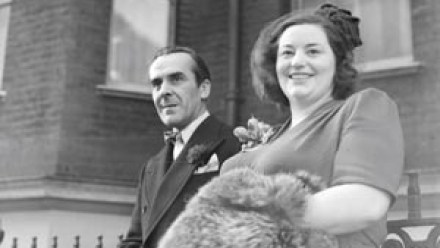
In her introduction to this extraordinary memoir, Etti Plesch warns the reader that the life she is about to describe will seem unfashionable as it contains no ‘stories of great suffering’. True enough. As recounted in Horses & Husbands, Etti’s 99 years seemed to have been passed at a level of luxury and self-indulgence almost impossible now to imagine. Knowledgeably edited by Hugo Vickers, this is the story of a woman who, uniquely, was the owner of not one, but two Derby winners, and who married wealthily six times. Born to aristocratic parents in Vienna in 1903, Etti was brought up in a romantic castle in Czechoslovakia belonging to her grandmother, her parents having divorced when she was four.

A ghastly crew | 6 October 2007

More from Books

Jennifer Johnston is adept at economy. Here is a short novel in which the eight characters are introduced one by one, with minimum fuss — some dialogue, a brief reference by someone else — and their complex relationships obliquely revealed. Complex indeed are these connections. ‘I am gay, bent, queer, homosexual, call it what you will,' says Donough, coming out to his mother Stephanie. Sexual identity lies at the heart of the narrative — who is inclined to what, and with whom. By the end, four of the eight are defined as gay, bent, call it what you will, and the past is floodlit, with all its confusions and deceptions. Stephanie’s ex-husband Henry is in hospital, recovering from a car accident in which the driver, his wife, was killed.

Relishing the death throes

More from Books

Piers Brendon does not much like the British empire. In over 650 pages of closely researched, patronising disdain he uses his Stakhanovite labour to perform a smug hatchet job on empire- builders, administrators and the British military. He warns us in his introduction what to expect: ‘Less emphasis is placed here on triumphs than on the disasters that undermined the future of the empire.’ As a result, he accumulates the impression of an empire consisting entirely of unimaginative, hypocritical despots embattled by racial attitudes, snobbery and smug military incompetence. You have to ask yourself how such a useless people as the British managed to acquire a quarter of the earth’s surface and hang onto it until the middle of the 20th century.

A case of missing identity

More from Books

This could have been a wonderful book. Take a scene from it which could so easily have been the start of a film. It is the 1920s, and in the garage of a large stockbroker’s mansion in the Home Counties two youths, the spoilt and jobless sons of a rich man, are noisily tuning a hell bat ( actually a modified Model T-Ford ), a car already capable of 100 m.p.h. Dissolve to the woods above them, to silence broken by tinkling notes. Among the trees their elderly father is playing a musical box. A huge and powerful individual, with the sort of moustache then popular among army officers of field rank, he has, according to his earlier biographer Hesketh Pearson, ‘no more mystery about him than a pumpkin’.

The worst of friends

More from Books

In this his latest book Max Hastings aims not so much to write another history of the war in the Pacific but to describe ‘a massive and terrible experience, set in a chronological framework’. It is a companion volume to his Armageddon which did much the same for the last phase of the war in Europe; but the experiences he describes are yet more terrible, and the framework will be even less familiar to British readers.

Riding out the storm

More from Books

I share with Richard Mabey a love of trees. Beechcombings begins with the great storm of 1987, although Mabey’s love of trees has its origins in his childhood in the Chilterns. The childhood romance shines through. Trees were family. When I had the privilege of being Member of Parliament for Henley, and so the Stonor Valley, the great beech woods of the Chilterns were in my constituency. Mabey’s particular affection for the beech — fagus sylvatica — is touching, human and altogether understandable. I took a rather more positive view of the consequences of the 1987 storm than Mabey does. Of course there were some sad losses. Mabey refers to the beeches of Chartwell which Churchill so admired. If you looked at the carnage on the ground it was devastating.

The pleasure of his company

More from Books

Some writers have the ability to poison one’s daily existence. James Salter, I have discovered, is one of them. To read him is to be painfully reminded of how mundane, how blurry, how fatally lacking in glamour one’s own life is. Still, if you can hold such feelings at bay, reading him is also an intense pleasure. Salter has written no great novel. But he has written a couple of very good ones, some superb short stories, and an amazing memoir, Burning the Days. His writing is lyrical, dashing, succinct — modelled on Hemingway, but with strains of Fitzgerald, Colette and Cheever. Rich in the kinds of experience most writers lack, Salter’s life feeds into the writing at every point. It makes it incandescent, and gives it credibility, too.

Examine my thoughts

More from Books

The following extracts are from The Blind Eye: A Book of Late Advice: Please don’t be misled by the apparent self-certainty of these utterances; be assured that after each one I nervously delete the words but that’s probably just me, right . . . I can see exactly what not to do at the moment. No doubt through the usual process of elimination I’ll arrive at my favourite strategy of total paralysis. With your back to the wall, always pay a compliment. Even your mugger or torturer is not immune to flattery, and still capable of being a little disarmed by a word of congratulation on their choice of footwear or superior technique.

Alternative reading | 6 October 2007

More from Books

A Journey into God is one of four books by Delia Smith on the subject of Christian spirituality, the others being A Journey into Prayer, A Feast for Lent and A Feast for Advent. Delia journeys into God painfully aware of her own lack of recipes. She takes the apophatic approach, describing God as what he is not: he is not ‘the Life-Stifler God’, nor ‘the God of Fear and Anxiety’ nor ‘the Cuddly-Bear God’ nor ‘the God of the Well-Informed'. He lies outside human rationality, including human theological enquiry (which is useful, since it means you don’t have to read Barth, Bultmann or Strauss). Delia, while a patient student of the Bible, is seduced, ultimately, by mysticism of no particular denomination.

The Undersea World of Jacques Cousteau

More from Books

The Undersea World of Jacques Cousteau While my mother chokes on a fishbone, I am shuffled into another room to watch The Undersea World of Jacques Cousteau. Bubbles rush upwards from a diver’s mouthpiece as my mother coughs up blood. Beyond the window, snowflakes rim the leafless trees. The deep teems with presences. My mother’s face takes on a distressing error in form. The ocean generates a sad music all of its own. Ambulance lights dye the snow blue. A siren bends the air to zero.

He does not know how much he does not know

More from Books

There’s a wonderful story in this book, told by the biologist Lewis Wolpert, about a vistor to the office of the physicist Niels Bohr. The visitor, a fellow scientist, was astonished to see a horseshoe nailed above the Nobel laureate’s desk. ‘Surely you don’t believe that horseshoe will bring you luck?’ he said. ‘I believe no such thing, my good friend,’ replied Bohr. ‘Not at all. I am scarcely likely to believe in such foolish nonsense. However, I am told that a horseshoe will bring you good luck whether you believe in it or not.’ As John Humphrys says, that’s ‘funny and profound in the same breath’.

Papering over the cracks

More from Books

The first thing to be said about this combination of history, autobiography and polemic is how heavy it is — not in the literary sense, though it is by no means light reading, but in the literal sense that it is a surprising weight in the hand. Befitting its title, it is printed on unusually thick, glossy paper, the better to carry a set of beautiful illustrations relating to the development of paper money and the follies and manias connected with it. Befitting its multimillionaire publisher-financier-connoisseur author, the book is an idiosyncratic artefact, a craftsman-made container for the distillate of a lifetime’s observation of the interaction of paper and wealth. In short, it’s a rich man’s book, but none the worse for that.

The very special relationship

More from Books

‘Here is a hot potato,’ The Spectator’s book review editor wrote in a note accompanying this book. Radioactive, actually. In 2006 Chicago professor John Mearsheimer and Harvard’s Stephen Walt posted a version of an article they had written on the Israel lobby for the London Review of Books on a Harvard faculty website. It was downloaded more than 275,000 times, and provoked what the authors call a firestorm of abuse.

The undiscovered county

More from Books

Worcestershire is England’s most undervalued county. Sauce, Elgar and cricket, not necessarily in that order, are what most people associate with the name. Otherwise it is that place we cross on our way to Herefordshire, its far smarter western neighbour, or the territory glimpsed on either side of the M5 as we whiz northwards to Birmingham, whose sprawl has chewed up a sizeable part of the ancient shire. Among those small towns which ‘heritage’ enthusiasts like to claim as a distinctive English speciality, Pershore, Upton and Bewdley must be among the most spectacularly unvisited.

No end to hostilities

More from Books

The war in Iraq cast a long shadow over Minette Walters’ previous novel, The Devil’s Feather, and it also plays a part in her new one. Lieutenant Charles Acland suffers horrific head injuries, including the loss of an eye, when he runs into an ambush while leading a convoy on the Basra-Baghdad highway. The two troopers with him in his Scimitar reconnaissance vehicle are killed. Invalided to the UK, Charles makes a remarkable physical recovery from his injuries in a Birmingham hospital. But he refuses the cosmetic surgery which could have reduced the visible damage on his shattered face, and his emotional state worries his doctors. Churlish and withdrawn, he is reluctant to see his parents and refuses to see his friends. He is increasingly violent too, especially to women.

Nanny comes to the rescue

More from Books

Footballers’ wives and girlfriends, pop stars’ and politicians’ sons and daughters, are gilded by proximity to the golden ones, often regardless of their own intrinsic talent (or lack of it). It is unusual to find this phenomenon operating upwards through the generations, however. Jennie Churchill, despite her great beauty, charisma, notorious marriages, and reputed 200 lovers, would not merit a page in the history books were it not for the place deservedly reserved there for her son. Anne Sebba dutifully makes a case for Lady Randolph Churchill’s achievements in her own right, but they do not exceed those of a legion of other contemporary politicians’ wives or society hostesses.

A diffident pioneer

More from Books

Now Saga’s agony aunt, Katharine Whitehorn, has for more than 50 years been a trail-blazer in British journalism. Starting out as a member of the talented writing team on Picture Post, she went on (stopping off only briefly at Woman’s Own) to found the celebrated ‘Roundabout’ column in The Spectator before being scooped up by David Astor’s Observer. There, under one guise or another, she spent a remarkable 36 years until falling foul of some trendy young fly-by-night installed by the Guardian in 1996. If never perhaps the most renowned female journalist of her day, she was arguably the most distinguished — the pioneer who pushed the frontiers of women’s pages forward and turned newspapers into a unisex trade.

The teddy bares his teeth

More from Books

Ever since he could read and write John Betjeman felt himself destined to become a poet. Later he wrote, ‘I have always preferred it [poetry], knowing that its composition was my vocation and that anything else I wrote has been primarily a means of earning money in order to write poetry.’ In so doing he wrote a great deal of prose. Stephen Games gives a superb selection of his journalism, his correspondence, the texts of his broadcast talks and the scripts of his television appearances. By the1960s his radio talks and TV appearances had made him a familiar figure. To his fans he was a national treasure rightly created Poet Laureate in 1976. Games writes that Betjeman was ‘far from immune to the lure of the popular press’.

The magnum opus of Compton Mackenzie

More from Books

On Capri in 1925 Scott Fitzgerald met his ‘old idol’ Compton Mackenzie and found him ‘cordial, attractive and pleasantly mundane. You get no sense from him that he feels his work has gone to pieces. He’s not pompous about his present output. I think he’s just tired. The war wrecked him as it did Wells and many of that generation.’ Fitzgerald himself survives, on the strength of two and a half novels and perhaps a dozen short stories, but, except in Scotland, Mackenzie is, I surmise, more or less forgotten, and even in Scotland it’s only Whisky Galore and perhaps his Highland farces which keep his name alive.

Isn’t saying The Brothers Karamazov rather idiotic?

On holiday I read (not reread I am afraid in my case, as people tend to claim about great classics) The Karamazov Brothers, in a new translation from Penguin. The moment I saw the title I wondered how we had all been persuaded to call it The Brothers Karamazov all these years. Talking about the Brothers Smith sounds very affected. Though the Arts Editor here now informs me that it is acceptable to say The Brothers Grimm.

A life in pictures

More from Books

Jonathan Coe’s gloomy new novel will surprise fans of The Rotters’ Club and What a Carve-Up!, but it need not disappoint them. In taking on the voice of Rosamond, an elderly, suicidal lesbian, Coe shows an admirable refusal to be pigeonholed. Like many contemporary novelists (Penelope Lively, Thomas Keneally, Alan Judd), Coe is concerned with the emotional dislocation caused by the second world war and its impact on succeeding generations. In common with these novelists, he chiefly concerns himself with the lives of women, with the domestic aftermath of the experience of upheaval and loss.

The enemy within

More from Books

On the 9 August 378 AD near Adrianople in Thrace the Roman army of the East was massacred and the Emperor Valens left dead on the battlefield by an army of barbarian Goths. It was, as Alessandro Barbero’s title claims, ‘The Day of the Barbarians’. He gives a highly readable account of the campaign and its consequences for an empire that stretched from Hadrian’s Wall to the fortresses on the Rhine, the Danube and the Tigris. It included what is now Turkey and the Middle East, Egypt and a strip of territory along the southern shore of the Mediterranean. Beyond the frontier lay the restive German barbarian tribes and the armies of Rome’s great rival, the Persian empire.

How did the Colosseum?

More from Books

Quid have we here? Nihil less than a smart parody of all the usual travel guides and one that manages to sustain its originality by delivering genuine, if often larky or unashamedly salacious, information about ancient Rome in a handy modern format. Provincial visitors, lugging their impedimenta up the Appian Way might have found it a useful vademecum while the Caesars were on the throne. Today’s 50-euro-a-day tourist will find it hardly less enlightening. Philip Matyszak both knows his stuff and manages to serve it in deliciae-sized portions. His guide honours all the usual categories of sights and pleasures and alerts travellers to the perennial dangers, not forgetting mislaid or misappropriated luggage on the way in (how much more reliable is Rome airport today?).

Small Room in a Hotel

More from Books

Small Room in a Hotel In this cool cube of marble I am valid but invisible As an image caught in a camera But not yet reproduced. My reappearance from confinement Is that of a lavatory Houdini Except that no one notices And the wonder is reduced to a trickle. How many men have died at stool, Bent in that vain rictus of hope That gives to their flushed features The terrifying squint of a Samurai? Between philosophical reflections And the final rebellion of blood Is the same fine line as between shadows And the ignorant earth which casts them. Why are we so eager for shadows? Is reality so hard to bear? That our root is in earth which Returns to earth, and is our sleep?

Patterns from the past

More from Books

Michael Ondaatje’s legion of admirers will not expect a novel constructed around a linear narrative, or even cohering in the developing consciousness of a central character. ‘Everything is collage,’ he tells us in Divisadero, a novel which is perhaps over-full of self-referential pointers. The work, we are led to infer, is like a ‘helicoidal’ spiralling belfry, or ‘like a villanelle … the way the villanelle’s form refuses to move forward in linear development’. It is like a ‘triptych’, offering parallel panels. ‘We live permanently in the recurrence of our own stories, whatever story we tell,’ says one character (it hardly matters which).

Return to form

More from Books

Richard Russo is one of those writers, and they are many — indeed, they are most — whose work you may have read and enjoyed and yet whose name you may not instantly recognise. These are the stalwarts, the broad-shouldered, able-bodied men and women of literature, the workers, who for some reason lack that instant brand recognition that means the next time you’re in a bookshop or a library you’re going to head for their spot on the shelf to see what they’ve been up to lately. With his novel Empire Falls (2001) it looked as though Russo was about to emerge from obscurity into the sunny uplands of bookshop 3 for 2dom.