Culture

Culture

The good, the bad and the ugly in books, exhibitions, cinema, TV, dance, music, podcasts and theatre.

A false dawn

More from Books

Gordon Brown has a number of key political challenges to satisfy simultaneously if he is to lead his party to a fourth consecutive election victory. As Lee’s outstanding book makes plain, the Prime Minister’s immediate political task is to distance himself from the unpopular aspects of the Blair legacy without falling into the hole Al Gore dug for himself. Brown’s task is much more difficult, however. No one thought Gore had much influence on US politics. No one could believe the same here, with Brown’s unparalleled imperial power over home policy. The Prime Minister has also to deal with the Kirkcaldy and Cowdenbeath Question. This strategy coalesces around attempts to develop a new sense of Britishness.

The parent trap

More from Books

Nick Hornby has often written perceptively about male adolescence, but Slam is the first of his books to be aimed at an adolescent male readership. Teenage boys will read music magazines, sports reports, pornography and cereal packets, but they are notoriously averse to reading — or rather, finishing — books. Can Hornby break the habit, or lack of habit? Slam’s main subjects are sex and skateboarding, both calculated to have instant appeal for the target audience, but Hornby’s treatment of them is thoughtful, careful and wholly untitillating. Instead of pandering to youthful fantasies of conquest and glory, he sets out, in the nicest possible way, to expose the gap between fantasy and reality.

The call of the wild

More from Books

Jean Sibelius was an epic figure: an orignal who never strove for originality. Not for him the frippery of a Stravinsky (‘with his stillborn affectations’) or the artificial contrivances of Arnold Schönberg. Sibelius was his own man, and a deeply human one, moved and moulded by the harsh Finnish landscape. This gave his music a rugged and austere quality, prompting the composer to reflect, ‘My orchestration is better than Beethoven’s and I have better themes than his. But he was born in a wine country — I in a land where surmjölk [curdled milk] is in charge.’ Sibelius was not an arrogant man. As Andrew Barnett reveals in this fine biography, he was full of contradictions and self-doubt.

Sinister levity of an all-seeing spider

More from Books

As an an outstanding English painter and a delectable personality, Edward Burra deserves this entertaining biography. It should be admitted, however, that because Burra was a letter writer of great verve and individuality, half Jane Stevenson’s battle is won: the quotations flare up from the page. Luckily, they do not destroy the surrounding narrative, for Stevenson too can be stylish and sharp. Anyone who knows the engrossing volume of Burra’s letters Well, Dearie!, edited by his lifelong friend William Chappell, will surely pounce on this new book to reacquaint themselves with those letters already published and laugh aloud at extracts that will be new to them. A Burra letter is a joy forever: droll, delicately malicious, irrepressibly camp, full of forensic observations.

The loss of enchantment

More from Books

Children who have seen an electronic dinosaur wheel across the sky are not much amazed when a man with his sleeves rolled up takes the rabbit out of the hat. Manual illusions have been overtaken by the digital kind, and traditional conjuring is mostly for the nostalgia market. But it finds its niches; Michael Bailey, a former chairman of the Magic Circle (the illusionists’ upmarket trade union) who has written its centennial history, modestly describes himself as ‘the leading British corporate magician’. Far from restoring the fortunes of companies that someone has sawn in half, he helps senior managers with the arcane business of bonding. Conjuring has gone respectable. For much of its long history it was anything but that.

A very English domesticity

More from Books

Anthony Thwaite is among the last surviving links to the Movement of the mid-1950s. That group (which was named by J. D. Scott, a former literary editor of this magazine) was ideologically diffuse — largely because it wasn’t a movement in the formal sense — and short-lived, but its members’ early work marked the transitional stage in literature between patrician romanticism and demotic, illusion-free modernism.

Surprising literary ventures | 1 December 2007

More from Books

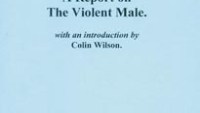
A. E. van Vogt was a doyen of the Astounding generation of mid-20th-century science-fiction writers, a group whose senior members included Asimov, Clarke and Heinlein. Among van Vogt’s novels are The Voyage of the Space Beagle, Slan and The World of Null-A. He also produced this little book, published in 1992 but conceived much earlier, a pre-feminist and pre-pop-biology attempt to pin down the problem of the violent male, or as he also termed it, the ‘right man’ — ‘right’ in the sense of wishing always to be right. The ‘right man’ is abusive towards women, is prone to outbursts of jealous rage, has a secret death-wish, and can be found at the helm of ‘all Communist countries’.

Romney’s Plan for Washington

Andy Ferguson's article on the ghastliness of presidential campaign books isn't quite vintage Ferguson. for one thing he ignores the awkward fact that by all accounts Barack Obama did actually write his own book, something which is far from the worst reason for supporting him. Still, Ferguson's account of Mitt Romney's Turnaround: Crisis, Leadership, and the Olympic Games is another welcome reminder of Mitt's Gruesomeness: Turnaround looks like a business book, reads like a business book, and is as boring as a business book, stomped flat by excruciating accounts of sales pitches, budget meetings, brainstorming sessions, PowerPoint presentations, and marketing strategies.

A guide to ‘gaffes’, and why, in truth, they are always to be found in the eye of the beholder

Columns

Among the silly expressions that may one day be associated with our era — and I hope buried with it — is the little word ‘gaffe’. I ought to know, having been indicted often enough myself for the crime, and having just co-edited and published a whole book, Mission Accomplished, of so-called gaffes committed by politicians and world leaders. Yet the moment you start to examine in a thoughtful way the things we call gaffes, the concept disintegrates into a clutch of very different types of utterances, some of which are wholly commendable. All that such utterances have in common is that they are regretted. I do not even say ‘regrettable’ because in politics honesty, though often regretted, cannot be regrettable.

In salons for writers, beware giving a black eye to literature

Any other business

Students of words enjoy the way in which adjectives normally used to describe reprehensible actions are whitewashed to become terms of praise. One instance, which has caught my eye recently, is ‘aggressive’. In the past few days I have seen a firm’s brochure praising its ‘aggressive approach to the worldwide sale of megayachts’, a reference to a writer of semi-pornographic novels as ‘skilfully and slyly aggressive’ and a rising politician as ‘charming Congress with his verbal aggression’. Such usage is not all that new. ‘Aggressive’ can be defined (OED meaning 2c) as self-assertive, pushful, energetic and enterprising.

The volcano’s resonant rumble

More from Books

In the cartoonist Martin Rowson’s comic strip critique-cum-spoof of The Waste Land, Ezra Pound appeared in cameo as ‘Idaho Ez’ — a sort of demented janitor shuffling through the middle of the action, muttering to himself and pushing a broom. This captures, albeit cruelly, a version of the way his reputation survives: opaque, marginal, bonkers — his primary importance in 20th-century poetry if not actually janitorial then that of a curator. The other side of his image, of course, is as a comic turn in the lives of his contemporaries, whether as the loony old anti-Semite in St Elizabeth’s or as the attention-seeking young flâneur described fancifully by Ford Madox Ford: Ezra . . .

Lives less ordinary

More from Books

Peter Gay opens his survey of the culture of Modernism with a discussion of Baudelaire’s call to artists to draw their inspiration from contemporary urban realities, and closes it with some sort of ironic ne plus ultra, as Damien Hirst roars with laughter after a ‘pile of organised chaos representing the detritus of a painter’s studio’ that he presented as an installation is mistakenly swept into a bin bag by an innocent cleaner assuming it to be bona fide rubbish. In between, Professor Gay travels through 150 years of the history of the visual arts, literature and music. It must have been an exhausting journey for this distinguished Yale-based chronicler of the Enlightenment and German intellectualism, now in his mid-eighties.

Inscrutable lords of the deep

More from Books

The sperm whale, more than any other whale, has captured the public’s imagination, to the point that when the average person envisions a whale, it is the sperm whale that they most often see. As a child I definitely saw, in my mind’s eye, the whale that swallowed Jonah as a sperm whale (although I may have conflated this monster with the beast that swallowed Disney’s Pinocchio). Moby Dick was a sperm whale. The huge head, the low, long, tooth-studded jaw, the oddly placed eye, the fountainous blowhole, the massive flukes, and the legendary power of the sperm whale (the only whale known to have deliberately sunk ships) all combine to make it, as Dolin puts it, ‘the whale’s whale’.

No simple solutions

More from Books

The epidemic of Aids among heterosexuals of which we were once warned by public health officials is now almost as forgotten as the global freezing of which the environmentalists in the 1970s also warned us. Only in Africa has Aids spread through the general population, reducing the already low life expectancies of several countries still further. The African exception has long puzzled doctors. Why should Africa be the exception? Various theories have been put forward, from general malnutrition to the prevalence of other sexually transmitted diseases that facilitate the entry of the virus into the body and the polio immunisation experiments conducted in the 1950s in the Congo.

Borders of the possible

More from Books

The original title for this novel was Jews with Swords, which perfectly captures its spirit as well as its subject. It also, incidentally, suggests a good literary parlour game, in which classic works are simplistically renamed to reflect their content: Day Out in Dublin, for Ulysses, or Beautiful Child Abuse, for Lolita, perhaps. In any case, the original title for Gentlemen of the Road is apposite, because it at once points to a historical period of weapon-wielding (10th-century Khazaria, as it happens) and offers a clue to the exuberant manner in which the tale is told. Michael Chabon is a literary novelist, but has here ‘gone off in search of a little adventure’ with a pleasurable crack at swashbuckling genre fiction.

A one off

More from Books

Late in My Tango with Barbara Strozzi, Phil Ockerman, the main narrator, goes to Diamond Heart in Scotland, ‘a centre of dynamic calm in which mind and spirit gather energy for the next forward move’. He is the stand-in writer to teach a course on ‘The Search For Page One’. If Russell Hoban finds it difficult to get started on a novel then I suspect he refers back to something like this: Girl meets Boy; people may be drawn in more than one direction at once; they often have their own agendas: love is not simple. Will he/she, won’t he/she? Characters from other books wander in to say hello; images recur. Phil reminds us that we were introduced to Diamond Heart in Her Name Was Lola — ‘Bloomsbury, 2003’.

Adjustment

More from Books

Adjustment So much for the ineffectual sandbags: we were put in touch with the loss adjuster, who came when the ‘black water’ had retired. They would indeed replace the white goods (for which we’d better find the lost receipts) but, with a droll glance at the furniture, he let us know that didn’t mean what was wrecked already might be redeemed nor that the house would be caulked and fitted out with gopher wood against a future flood. He must have seen a rainbow smudge of expectation in our eyes. His soles scuffed the buckled floor boards — the alluvia of silvered dust, clay, gravel, seeds and spores still promising the new, the better life.

His own man

More from Books

What little most of us know about Omar Khayyam can be summarised in two words: the Rubaiyat, a collection of his free-spirited quatrains made famous around the world by the translations of the 19th-century poet Edward Fitzgerald. It has been said that these immensely popular books, first published in 1859 and running into numerous editions, contributed more phrases to the English language than the Bible and Shakespeare combined. Hazhir Teimourian, a respected commentator on Middle Eastern affairs, has offered readers a much broader study of this 11th-century polymath in a work of considered scholarship and tremendous imaginative sympathy.

Recent gardening books | 24 November 2007

More from Books

Celebrity gardeners are what publishers are banking on this year. The Dowager Marchioness of Salisbury, known in New York as ‘the high priestess of historic garden design’, has given us her gardening autobiography. A Gardener’s Life (Frances Lincoln, £35) is illustrated by another aristocrat, Derry Moore — in private life Lord Drogheda. The book looks as beautiful as the gardens that the Marchioness makes. Her famous style of scholarly nostalgia can be seen in Ireland, France, Italy and America, as well as at Highgrove and in many English gardens, including her own newest venture, on a Chelsea roof. Cranborne remains for me the dream garden and Hatfield, perhaps her greatest achievement, appears all ‘luxe, calme et volupté’.

Norman at the Ritz

More from Books

Andrew O’Hagan wrote a very nice piece about Norman Mailer in the Daily Telegraph last week. Affectionate and admiring, it was just the sort of tribute a young writer should pay to a senior one, and it was pleasant to learn how encouraging Mailer had been to O’Hagan and indeed to other young writers. This is as it should be — a handing on of the torch. No doubt this was easier for Mailer than for less successful elderly writers who find themselves elbowed out of the way by younger generations, and quite possibly dropped by their publishers. Nevertheless it’s commendable, jealousy or envy being sins to which writers are prone. I only once saw Mailer.

Books of the Year | 17 November 2007

More from Books

Deborah Devonshire The Uncommon Reader by Alan Bennett (Profile Books, £9.99) is small, short, cheap and perfect. It is a gem among the dross, without a wasted word. It conjures a picture so skilfully that whenever I see the Derbyshire County Library van in the village I see Norman and his employer inside discussing their lists of books to borrow. Several bedside copies have already been taken away by my guests. I don’t blame them. Black Diamonds by Catherine Bailey (Penguin Viking, £20) proves truth to be stranger than fiction. It tells the history of the Fitzwilliam family, with its convoluted relationships, living in royal style at Wentworth House, the biggest-by-far private house in England.

The conquering hero as show-off

More from Books

How should ancient Roman history be written? Gibbon larded his account with ironic elegance. Echoing Tacitus’ epigrammatic sarcasm, he made ponderously light of the vanities and savagery of imperial rule. Yet the Latinate charm of his prose implied wry nostalgia, not only for the age of the Antonines, but also for the whole myth of Roman grandeur. In my undergraduate day, Professor F. E. Adcock continued to lisp in Tacitean epigrams, but the great modern iconoclast was Ronald Syme. A New Zealander whose The Roman Revolution cut the classy crap, Syme denounced Augustus and his family as proto-mafiosi who had taken over Rome in what François Mitterrand later called (when speaking of de Gaulle’s Fifth Republic) ‘le coup d’état permanent’.

Balance and counterbalance

More from Books

Until the 1760s British statesmen had two empires to manage. One exercised the public imagination and awoke patriotic dreams: the colonies in America and the West Indies. The public frequently wished the other away — the Holy Roman Empire. Britain had been dragged into the morass of European politics from 1714 with the accession of George I, who was ruler of Hanover and one of the Electors of the Empire. Britannia ruled the waves, the people were told; surely it was better to leave the Continent to its own concerns, follow a ‘blue water policy’ and build up a maritime empire. In this bold and convincing account Brendan Simms shows that Britain reached the height of her glory when she was actively engaged as a European player.

A choice of quirky books

More from Books

The humorist Paul Jennings wrote for Punch when it was still funny — that is, up to and including the editorship of the late Alan Coren. The humorist Paul Jennings wrote for Punch when it was still funny — that is, up to and including the editorship of the late Alan Coren. Jennings also wrote such books as Oddly Bodlikins (1953) and I Said Oddly, Diddle I? (1961). It was he who classified book reviewers as batchers, betchers (‘Betcher I could write it better than you’), bitchers, botchers and butchers. In this and my next review, I am cast as a promiscuous batcher. This first batch is of ‘quirky’ books; the next will be of ‘funny’ books. I reserve the right to be a betcher, a bitcher and a butcher too — I hope not a botcher.

Settling old scores

More from Books

English cricket was in a desperate state seven years ago. The players had just been booed off the field after defeat at home by New Zealand. Team morale was poor, while there was little organisation and no vision. To the rescue came Duncan Fletcher, a little-known coach from Zimbabwe. He had few connections at the top of the England game, and employed his own methods. Fletcher turned out to have a remarkable knack for spotting the international potential of apparently middling players in the county game: Marcus Trescothik, Andrew Strauss, Michael Vaughan and Simon Jones are some of his personal picks. He had a quiet and inscrutable manner, preferring to guide his players rather than instruct.

The mad emperor and his cannon

More from Books

I approached this book with some trepidation, fearing it would be a load of old bollocks. For my one previous experience of Ethiopian history had been the following sentence in my daughter’s GCSE textbook, when, describing their defeat of a modern Italian army in 1896, the author, Tony McAleavy, wrote, ‘The Ethiopians castrated the Italian prisoners of war taken at Adowa.’ Not a history book you will note, but a textbook, so a whole generation of schoolchildren would read something that could affect forever their attitudes to Ethiopia and Africa. So why had I not heard of this atrocity? There were over 1,000 Italian POWs after Adowa — can you imagine what the effect on European public opinion would have been had 1,000 repatriated eunuchs turned up in Italy ?