Culture

Culture

The good, the bad and the ugly in books, exhibitions, cinema, TV, dance, music, podcasts and theatre.

The problems of PR

More from Books

Two centuries ago, Edmund Burke famously mocked the intellectuals of revolutionary France for trying to devise a perfectly rational constitution for their country. The Abbé Sieyès, he wrote, had whole nests of pigeon-holes full of constitutions, ready made, ticketed, sorted and numbered, suited to every season and every fancy . . . so that no constitution-fancier may go unsuited from his shop. The Abbé Sieyès has had his imitators in England lately. The last government devoted much intellectual energy and parliamentary time to producing a theoretical separation of the judiciary from the legislature and the executive, when a practical separation had existed for years.

The great game

More from Books

Some of the best writing about sport in recent years has been done by journalists who tend their soil, so to speak, in another parish. Peter Oborne’s biography of the Cape Town-born England cricketer Basil D’Oliveira was a deserved prize-winner, and another political scribe, Leo McKinstry, has done justice to Geoffrey Boycott, the Charlton brothers and Sir Alf Ramsey. Now he has turned his attention to a batsman whose career, measured in statistics, goes a long way to justifying the subtitle of this latest book, ‘England’s Greatest Cricketer’. Born in a modest Cambridge home, admired by all who played with him for his decency as well as his skill at the crease, Hobbs was the first professional cricketer to be knighted.

Relics of old Castile

More from Books

Christopher Howse describes Spain as ‘the strangest place with which Westerners can easily identify’. Christopher Howse describes Spain as ‘the strangest place with which Westerners can easily identify’. He has certainly written one of the strangest books on the country in recent years. His approach is gloriously and provocatively unfashionable. Whereas other authors on Spain today might dwell on its innovative new chefs, the modernity of Barcelona and Bilbao, the tawdry Costa del Sol, and such persistent Andalucían-based stereotypes as duende, bullfighting and Moorish sensuality, Howse has concentrated on an aspect of the country that was once no less integral to its image — its austere and spiritual side.

The price of victory

More from Books

In the patriotic mythology of British arms 1759 may be the one true annus mirabilis, the ‘year of victories’, the year of Minden, Quebec and Quiberon Bay, but has there ever been a year comparable to 1918? In that year 20,000 British soldiers surrendered on a single day, 31 March, and yet within six months Britain and her allies had recaptured all the territory lost since 1914, destroyed Austrian and Bulgarian resistance in Italy and Macedonia, encircled a Turkish army in Palestine, mastered the submarine menace at sea, and fought the German army to the brink of disintegration and the German empire to the point of revolt.

Bookends: Lowe and behold | 10 June 2011

Mark Mason has written the Bookend column in the latest issue of The Spectator. Here it is for readers of this blog. It is 1979. You are a 15-year-old boy starring in a hit US television show. You’ve seen the crowds of screaming girls outside the gates as you arrive for work, and are therefore very excited to have received your first fan letter. You open it eagerly and begin to read: ‘Dear Mr Rob Lowe, You are a great actor. Can you please send me an autographed photo of yourself? If possible in a bathing suit or in your underwear. Sincerely, Michael LeBron. #4142214 Pelican Bay Prison.’ Anyone who thinks of Lowe as Action Man made flesh (blandly handsome, zero personality) will be pleasantly surprised by his autobiography, Stories I Only Tell My Friends.

Link-blog: Remixing Jane

An exciting new bookshop that shut down after three weeks (on purpose). A young man who helped a branch of the previous bookshop go out of business. The logical (but not necessarily pleasant) conclusion of the "Jane Austen remix" trend. A short history of the heavy-metal umlaut. Imaginary movie posters for David Foster Wallace fans. The continuing battle over the moral effect of young-adult fiction. The new editor of the world's most important newspaper, and her book about puppies. Some polite corrections to the New Yorker swearing piece I linked last week. Libraries dying that a golf course may live.

Supermac in eight anecdotes

The hardback edition of D.R. Thorpe's Supermac is 626 pages in length (not including endnotes and index), 24cm x 16cm x 6cm in girth, and weighs in at more than one kilogram – on first appearances, not a book for a beach holiday. Or so I thought, because despite the corporeal hardships of reading this on a sunbed in mercury-popping heat, I was transfixed. And now I have the forearms to prove it. Thorpe gravitates between dextrous prose and a judicial exposition of evidence, such as when taking the reader through the controversial Cossacks repatriation episode, or the quandary of royal prerogative during the handover to Lord Home.

Téa Obreht wins the Orange Prize

Congratulations to Téa Obreht, whose novel The Tiger’s Wife won the Orange Prize for Fiction last night. At 25, she is the youngest ever winner. Chairman of the judges Bettany Hughes said: "The Tiger's Wife is an exceptional book and Téa Obreht is a truly exciting new talent. Obreht's powers of observation and her understanding of the world are remarkable. By skilfully spinning a series of magical tales she has managed to bring the tragedy of chronic Balkan conflict thumping into our front rooms with a bittersweet vivacity." Obreht is Serbian-American and her award winning novel is a delicate attempt to mythologize the Yugoslavian wars of the 1990s.

Final Hay dispatch: Out of Africa

The Hay Festival has ended, but so much of this enormous festival went largely unreported. Here’s the final dispatch from George Binning: Richard E Grant’s conversation with Peter Godwin about Mugabe’s regime and Godwin’s latest book, The Fear, gave us a nuanced insight into African politics that could not have been written by the Western press. Godwin, who fought against Mugabe in the civil war, started by describing the dichotomy of being a white African, especially when lecturing to audiences of predominantly black American students who had never been to Africa themselves, but still identified with the continent.

Making sense of nonsense

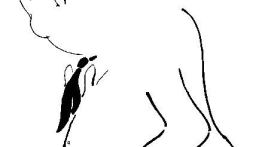
'They dined on mince and slices of quince,     which they ate with a runcible spoon' The Owl and the Pussycat, Edward Lear, 1871 To hazard a guess at the exact nature of a runcible spoon, you’d have to consult Edward Lear's 1849 illustration of the Dolomphious duck (pictured) on the point of devouring its dinner. A ladle. Or a spork? Named after a Runcie or a Runcy? Robert Runcie polished silverware as butler for Lear’s patron the Earl of Derby, while Lear's friend, George Runcy, polished up children's manners by concocting up cutlery designs. But what about a runcible cat? Or Lear's description of himself as a spherical form topped by a runcible hat? The inverted logic of nonsense verse abandons words to mere sounds and inky squiggles.

Hay Dispatch: Long live the king…

The Hay Festival has ended, but reports from this enormous festival do not. Here’s another dispatch from George Binning: In 1977, having started a craze for second hand book shops and festivals in Hay on Wye, Richard Booth crowned himself King of Hay. He also appointed a chamber of hereditary peers in 2000 (a nice little earner), but in spite of his lifelong contribution to Hay's cultural landscape, a large number of the locals think he is a wally. In fact one man tells me that there was a sort of revolution a few years ago where an angry mob ritually beheaded an effigy of Booth. He recently sold Hay Castle for around the two million mark and there are fears that the castle will be closed off and redecorated.

Hay Dispatch: more meanings for life

The Hay Festival has ended, but reports from this enormous festival do not. Here’s another dispatch from George Binning: If you ever have the opportunity to see Rolf Heuer, the director general of CERN, talk, I strongly believe it is your duty as a member of the human race to go and see him. I cannot begin to describe how phenomenally important the work of the Large Hadron Collider will be, suffice to say it is the oracle of modern times, which will hopefully allow us to identify the Higgs Boson Particle, the particle which will account for the existence of mass within the standard model of particle physics.

Across the literary pages | 6 June 2011

Michael Cunningham, author of The Hours, disabuses readers of the Guardian of their misconceptions about Virginia Woolf. ‘Virginia Woolf was great fun at parties. I want to tell you that up front, because Woolf, who died 70 years ago this year, is so often portrayed as the Dark Lady of English letters, all glowery and sad, looking balefully on from a crepuscular corner of literary history with a stone lodged in her pocket. She did, of course, have her darker interludes. More on that in a moment.

Hay dispatch: The dark side

As night fell I was joined by my friend Sarah, a researcher for documentary maker Nick Broomfield. We attended a talk by William Cohen, an investigative journalist who told us that Goldman Sachs really is the evil corporation that everyone says it is, but before long we succumbed to the dark side. That is to say, we venture into How The Light Gets In, a rival festival organised by the Independent. The musical entertainment was Disraeli and the Small Gods, a very competent Ska outfit headed by an intensely annoying Bristolian wide boy, who I suspect may be posher than he would like to let on, followed by a cheesy DJ.

Hay dispatch: Turning on Thomas

Hugh Thomas gave an update on his progress through his three volume history of the Spanish Empire. He has recently published volume two: the Golden Age, in which he examines the reign of Charles V and the conquest of South America. Aptly named the Golden Age because he refers to an age of amazing discovery during which the Spanish were afflicted with an insatiable hunger for gold and two thirds of Spain's income was mined from South America. Thomas had chosen to focus mostly on what the Spanish brought to South America, namely writing, domestic animals, the wheel and Christianity. He asserted that Christianity had been gladly welcomed by the natives, who had until then put up with a religion of human sacrifice.

Honour the most exalted poet

More from Books

What’s your punishment going to be, when you get to Hell? At least as envisaged by Dante, you might be somewhat surprised. Hitler (mass murderer) is in the outer ring of the seventh circle, up to his eyebrows in a river of blood and fire. Still, that’s a little better than the innocent manager of your local HSBC (banker), who is in the inner ring, running perpetually on burning sand. Both get off much lighter than the poor lady who, the other day, told me how much she’d enjoyed something or other I’d written (flatterer). She’s a whole circle lower down in the second bolgia, or pit, sitting in excrement forever, which seems rather harsh. Corrupt politicians are immersed in boiling pitch, but they are nowhere near as far down as the impersonators.

Hall of mirrors

More from Books

After the Nazi occupation of Paris was over, Sartre famously said — somewhat hypocritically, given his own slippery behaviour — that the only possibilities had been collaboration or resistance. After the Nazi occupation of Paris was over, Sartre famously said — somewhat hypocritically, given his own slippery behaviour — that the only possibilities had been collaboration or resistance. Alan Riding’s new study of the episode forcefully reminds one that it was never that simple: objectively researched and soberly balanced though the book is, navigating its moral maze leaves one queasy with mixed feelings.

Recent crime fiction | 4 June 2011

More from Books

Mo Hayder has a considerable and well-deserved reputation as a writer of horrific crime novels that often revolve around the physical violence men do to women. Her latest, Hanging Hill (Bantam, £18.99), is no exception. Set in Bath, it’s the story of two estranged sisters — Zoe, a detective inspector equipped with a motorbike and a welter of scars, both physical and emotional; and Sally, the divorced mother of a teenage girl, who is struggling to cope with her vertiginous plunge from the agreeable plateau inhabited by Bath’s affluent middle classes. The narrative moves alternately between the sisters’ lives and the impact that the murder of a beautiful teenage girl has upon them.

Deep, dark mysteries

More from Books

For Peter Ackroyd, the subterranean world holds a potent allure. London Under, his brief account of the capital’s catacombs and other murky zones, manages to radiate a dark mystery and sulphur reek. ‘There is no darkness like the darkness under the ground’, Ackroyd announces, like a Victorian raree-show merchant. This is an entertaining if slightly daft book, that reveals what a weird world lies beneath our feet. Whether Ackroyd has actually been to all the places he describes is uncertain. Journalists have contorted themselves through narrow, stinking cave-galleries and risked leptospirosis from rat urine in their quest for London subterranea. But the stately Ackroyd? The London sewers are vividly described here.

‘I told them’

More from Books

No messenger bearing bad news can expect to be popular. But to be dis- believed as well adds a particularly bitter twist, since the messenger’s character can only be vindicated by proving the truth of his horrific message. That was Jan Karski’s fate. He was the Polish resistance fighter sent to London in 1942 to tell the world that the Jews in Poland were being exterminated. Not in their hundreds, not in their thousands, but in their millions.There would be none left, Karski reported, unless the Allies publicly promised a retaliation sufficiently terrible to halt the Nazis in their tracks.

A catastrophe waiting to happen

More from Books

Gillian Darley’s book has the pace, colour and deliberation of a Vesuvian eruption, which is fitting; for we must get used to the fact that sooner or later the volcano will erupt again with a devastating power. Gillian Darley’s book has the pace, colour and deliberation of a Vesuvian eruption, which is fitting; for we must get used to the fact that sooner or later the volcano will erupt again with a devastating power. The subtitle of the book is quite accurate. Vesuvius probably is the most famous volcano in the world, because unlike all others it has attracted for some 2,000 years multifarious extraordinary people to study it. Darley enumerates these in their legions, showing that Pliny the Younger, writing after the 79 AD eruption, was not the first.

We are the past

More from Books

Julie Myerson’s eighth novel is told by a woman who roams the City of London after an unspecified apocalypse (no power, bad weather). Julie Myerson’s eighth novel is told by a woman who roams the City of London after an unspecified apocalypse (no power, bad weather). The Monument is rubble, Tower Bridge has ‘long gone’ and scavengers are chopping fingers off frozen bodies to snatch rings. Our narrator can’t remember much — two thirds of the book pass before we find out her name is Izzy — but a couple of randy fellow vagrants claim to know her, and some children say she’s their mum. By the time one of them ‘lifts off the ground and comes flying through the air’ — and vanishes — we’re not sure what to believe.

Speak, Memory

More from Books

One day, the American journalist Joshua Foer is surfing the net, trying to find the answer to a specific question: who is the most intelligent person in the world? He can’t find a definitive answer. One day, the American journalist Joshua Foer is surfing the net, trying to find the answer to a specific question: who is the most intelligent person in the world? He can’t find a definitive answer. But he sees that a man called Ben Pridmore is the world’s ‘memory champion’. Foer is instantly intrigued. He himself has, he says, an average memory. He forgets lots of things — where he put his keys, for instance. And his girlfriend’s birthday. And Valentine’s day. Foer wonders what it would be like to be a memory champion.

Elegy for wild Wales

More from Books

If you drive West out of Carmarthen on the A40, you pass through a landscape of dimpled hills and lonely chapels and little rivers full of salmon trout. This is Byron’s Country, the place where Byron Rogers was brought up in the late Forties, not knowing a word of English, until at the age of five he made the momentous journey a few miles east into Carmarthen town. It is a very odd place. In the graveyard at Cana, just beside the road, you will find the grave of Group Captain Ira Jones DSO, MC, DFC and bar, MM, one of Wales’s greatest war heroes. He was famous for killing Germans who had baled out and were dangling from their parachutes.

Bookend: Bloodbath

Colin Amery has written the Bookend column in this week's issue of the Spectator. Here it is for readers of this blog: It may have been first published in 1973, but reading it again in Persephone Books’ elegant re-print, Adam Fergusson’s The Sack of Bath remains a real shocker. The fury of his polemic against the powers in Bath that seemed hell-bent on destroying everything except a few grand Georgian set- pieces in that beautiful city still has a terrible relevance today. Looking at the photographs of acres of modest stone houses being reduced to rubble to be replaced by unbelievably low grade ‘comprehensive redevelopment’ is utterly depressing.

Hay dispatch: The meaning of life

If one scientist were to sit at a table full of philosophers it might seem at first that the scientist had the upper hand purely by virtue of their self confidence. The philosophers' humility might be no match for the all encompassing certainty of science. Peter Atkins, Professor of Chemistry and author of A Scientist's Exploration of the Great Questions of Existence, stood up before an audience of several hundred and proudly declared that science would eventually answer every question relating to the physical world, even perhaps, to morality. Science is the only way to answer a question, he said, as all science is based upon evidence and observation. He then gayly dismissed the existence of anything for which there was no empirical evidence.

Link blog: Of drunks, criminals and profanity

A way of becoming very drunk while stocktaking your bookshop's science-fiction section (via). A collector's guide to true crime, including an unexpected connection between Dennis Nilsen and Virginia Woolf. A celebration of the typographic specimen book that is rather lovely to look at. An easy way into Jean Rhys - at least, easy if you know sufficient French. A vintage television interview with Joan Didion, elegantly glossed. A book-promotion technique based on photographs of cute dogs reading. An erudite discussion on the right Nordic crime to choose if you really, really didn't like Stieg Larsson.