Dylan Neri

How mastering friction transformed humanity

From our UK edition

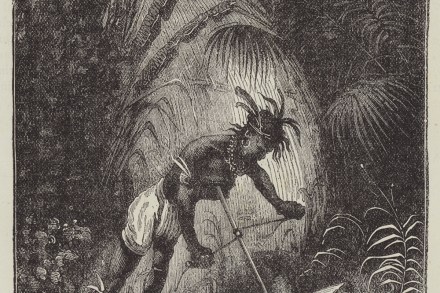
The fundamental purpose of science is to view the world from a different perspective. In the age of modern science, however, in which each academic discipline represents a world in itself, this is hard to remember. The field of ‘tribology’ would appear to be a perfect example. But such opacity is merely a front for the study of friction. And, according to Jennifer R. Vail, friction is ‘the unsung hero of the material world’. Why? Because ‘the way we experience the world, whether through greater efficiency, flight or space exploration, has been shaped by our understanding of friction’. Indeed, ‘our relationship with friction dates back to one of humanity’s greatest discoveries: fire’. How’s that?
A meditation on the beauty of carbon

From our UK edition

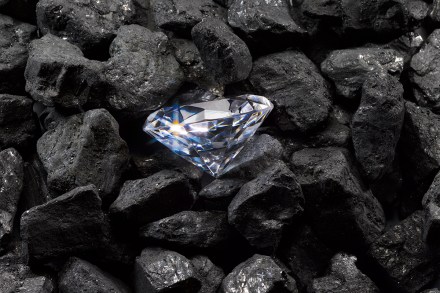
There’s a scene in Evelyn Waugh’s The Loved One in which a magazine’s advice columnist ‘the Guru Brahmin’ (in fact ‘two gloomy men and a bright young secretary’) receives yet another letter from a compulsive nail-biter: ‘What did we advise her last time?’ Mr Slump, the chain-smoking drunk, asks. ‘Meditation on the Beautiful.’ ‘Well, tell her to go on meditating.’ The opening of Paul Hawken’s Carbon gives the impression that it was dictated by the gloomy Mr Slump in response to a climate activist asking what he should think about the destruction of the planet. Tell him that ‘to better understand the riddles and luminosity of life’ he must ‘go far upstream, and look at the flow of life through the lens of carbon’.

Are we finally beginning to understand gravity?

From our UK edition

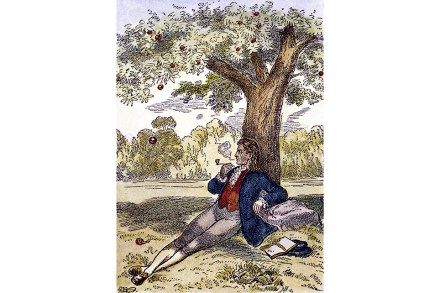
The question of why things fall has puzzled our species since we crawled out from the darkness of our primitive ignorance. Aristotle was the first to offer a serious theory. He proposed that each of the four elements (earth, air, fire, water) had a natural place to which it innately wanted to return. Fire and air rise because their place is in the heavens, whereas earth and water return to the Earth. Aristotelian philosophy had such a profound impact on human thought that this view prevailed for nearly 2,000 years. Only with the Renaissance and the ideas of Kepler and Galileo was it finally challenged; and only by standing on the shoulders of these giants was Isaac Newton able to make probably the greatest intellectual leap ever.

Now imagine a white hole – a black hole’s time-reversed twin…

From our UK edition

There are many ways to measure the course of human history and each will give an insight into one or more of the various qualities that have made us the most successful great ape. Every major advance, whether in war or art or literature, requires imagination, that most amazing of human capacities, and the ability to ask ‘What if?’ – to take the world from a different perspective. Nowhere is this more apparent than in the history of science. While there is an inherent provincialism in revolutions in art and literature, progress in science is universal, and moves, like Dante’s Hell, in concentric circles of ever deeper understanding.