Culture

Culture

The good, the bad and the ugly in books, exhibitions, cinema, TV, dance, music, podcasts and theatre.

Inspired programming and a proper celebration: Barbican’s Beethoven Weekender reviewed

Classical

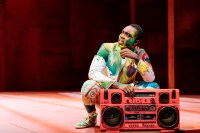
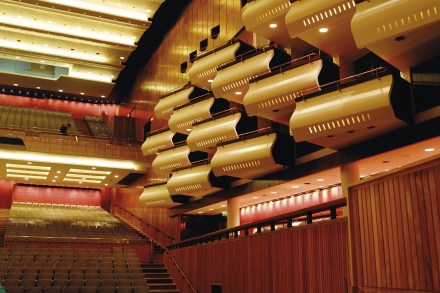
Beethoven wears a feather boa and pink shades. He wrangles an electric guitar. A red lightning flash streaks across that familiar, scowling face. ‘Genius before Elton. Radical before Prince. Iconic before Bowie’ proclaimed the posters for the Barbican’s Beethoven Weekender, and apparently there’ve been complaints about them, which probably means that they’ve got the tone about right. Two hundred and fifty years after his birth, Beethoven still has a way of driving all the right people round the bend. US campus musicologists have called for his music to be suppressed (you’d think that champions of inclusion would support a year-long celebration of a disabled composer, but it seems not. Wrong chromosomes).

Rambert’s latest uses the migrant crisis for superficial intrigue: Aisha and Abhaya reviewed

Dance

The January dance stage can be a site of naked contrition. Like a tippler grasping at green juice after a December of prosecco pukes (#NewYearNewMe), companies slap Swan Lakes and Giselles on the roster, eager to atone for the indulgences of Nutcracker season. It’s back to business at your opera houses and concert halls. Button up and batten down. Enter Sadler’s Wells Sampled, a hair-down do in a sea of chignons. The show is a taster of the assorted fare that passes through the London venue, from ballroom to breakdance. Tickets are cheap, there’s Proms-style standing, and no one will shoot you STFU daggers if you whoop too loud. It’s all very relaxed. Possibly too relaxed this year, at least in terms of programming.

Dazzling and nonsensical in equal measure: Madonna at the London Palladium reviewed

Pop

You might have thought Madonna was not a singer but a professional footballer judging by the talk before she took to the stage at the Palladium last Wednesday night. She’d missed ten out of 93 appearances, and she’d been picking up the kind of niggling injuries — would her knees stand up to the strains of a long, hard season? How’s her hip? — associated with hard-running midfielders. Just as in the Premier League, there were gripes about ticket prices — go on Ticketmaster and they range from £69 to £511.50 (yes, there are tickets available throughout the run; you’ve got until 16 February to see her).

SAS: Who Dares Wins is harsh, gruelling and transgressively countercultural

Television

SAS: Who Dares Wins (Channel 4, Sundays) is literally the only programme left on terrestrial TV that I can bear to watch any more. And I’m only slightly exaggerating. Where else, anywhere from the BBC to Channel 4, would you see a woman being punched in the face and made to cry by an ex-SAS soldier for your amusement and delectation? Where else would the competition not be rigged in one way or another so as to ensure that the appropriate race and gender mix made it through to the end? Yes, of course it was shocking a few weeks back watching midwife Louise Gabbitas, 29, get thumped several times in the head by a bloke. Especially when we viewers knew that he was in fact undercover ex-special forces and had been sent to spy on her.

Why do writers enjoy walking so much?

Radio

Writers like walking. When people ask us why, we say it’s what writers do. ‘Just popping out to buy a pencil,’ we cry, before tootling along the tarmac à la Virginia Woolf, Walter Benjamin or George Sand. BBC Radio likes walking, too, to judge by the number of programmes dedicated to the pursuit this fortnight. Some revolve around mental health and the environment; Clare Balding saunters over Berkshire’s Winter Hill in Ramblings with Steve Backshall and Helen Glover discussing wellbeing, parenthood and sewage. More involve the walking writer, with five authors retracing memorable ambulations on Radio 3, and Professor Jonathan Bate taking us on an altogether more dreamlike journey for In Wordsworth’s Footsteps on Radio 4.

A terrific two-hander that belongs at the National: RSC’s Kunene and the King reviewed

Theatre

The Gift is three plays in one. It opens in a blindingly white Victorian parlour where a posh lady, Sarah, is teaching her clumsy maid to serve tea correctly. Both characters are black. Sarah’s prosperous husband, also black, arrives home and the scene continues as the gauche skivvy (Donna Berlin, brilliant) makes more and more hilarious blunders. What is this play? Perhaps a neglected Victorian comedy revived with colour-blind casting. In fact, the script is inspired by a historical character, Sarah Forbes Bonetta, a Yoruba princess born in Nigeria in the 19th century, who was adopted by Queen Victoria and raised as an English gentlewoman.

Spiralling tributes to air, flight and lift-off: Naum Gabo at Tate St Ives reviewed

Exhibitions

‘Plunderers of the air’, Naum Gabo called the Luftwaffe planes. In Cornwall, during the second world war, Gabo kept cuttings of the attacks over London. One newspaper photo, pasted in his diary, was taken from the Golden Gallery of St Paul’s after a night of incendiary bombs. London looks like Pompeii. Enemy planes were a betrayal. Gabo was entranced by flight. His sculptures are spiralling tributes to air, light and lift-off. After an hour in the Naum Gabo retrospective at Tate St Ives, the first major show of the artist’s work for more than 30 years, you feel a certain springiness about the knees as if you could push off Porthmeor Beach and fly. The Icarus effect. Gabo was entranced by flight.

You have to be a terrific snob not to see the appeal of Slipknot

Pop

Every development in heavy music is derided by mainstream critics. When Black Sabbath and Led Zeppelin emerged in the late 1960s, they were sneered at for their lumpen, troglodyte stupidity. A decade on, AC/DC were reviled for precisely the same reasons. When Metallica and Slayer helped lead the thrash metal movement in the mid-1980s, it was at first only enthusiasts for extreme noise who cheered them on. The disdain never lasts. People who grew up listening to those bands became critics or editors or broadcasters or musicians, and each of them was absorbed seamlessly into the rock canon. That’s precisely what’s happened to the Iowa band Slipknot, too.

Strong performances in a slightly wonky production: Uncle Vanya reviewed

Theatre

Uncle Vanya opens with a puzzle. Is the action set in the early 20th century or right now? The furnishings might be modern purchases or inherited antiques, and the costumes are also styled ambiguously. It soon becomes clear from Conor McPherson’s script, which uses colloquialisms like ‘wanging on’, that this is a contemporary version. It’s always a risk to update Chekhov and the director Ian Rickson pulls it off. Never once did I wonder why these chattering idlers didn’t have broadband or mobile phones. But the casting is awry. Vanya is a middle-aged Hamlet, a thinker, an observer, whose dreams are smashed to pieces in the course of the action.

Understated, unashamedly patriotic and heartbreaking: The Windermere Children reviewed

Television

One of the many astonishing things about the BBC2 drama The Windermere Children (Monday) was that the real-life story it told isn’t better known already. In August 1945, 300 Jewish children, who just a short time before had been starving in Nazi concentration camps, arrived at a converted seaplane factory in the Lake District. None, as far as they knew, had any family left, and none could speak any English. Waiting to welcome them was Leonard Montefiore of the Central British Fund for Jewish Relief who’d raised the money to turn the factory into a carefully thought-out rehabilitation centre — and amid the wreckage of Eastern Europe had liaised with the Red Cross, the RAF, the Czech authorities and the British Home Office to fly them in.

Mad but terrific: The Lighthouse reviewed

Cinema

The Lighthouse stars Willem Dafoe and Robert Pattinson (and a very nasty seagull) in a gothic thriller set off the coast of Maine in 1890, and it’s terrific. Mad, but terrific. It is gripping, intense, extraordinarily written — someone is accused of smelling like ‘curdled foreskin’ at one point — and is about two fellas thrown together. But unlike most odd-couple scenarios there is no bonding. So get bonding right out of your mind. Instead, they drive each other full-on (and marvellously) insane. It’s a mad film about madness, in short.

The art of pregnancy

Arts feature

In 1622, Elizabeth Joscelin wrote a letter to her unborn child. This was fairly common practice in Elizabethan England; pregnant women were encouraged to write ‘mother’s legacy’ texts in case they did not survive the birth. ‘It may… appear strange to thee to receyue theas lines from a mother that dyed when thou weart born,’ she wrote. Her daughter Theodora was born on 12 October 1622, and following a violent fever Elizabeth died nine days later. Her letter — which urged her child to pray, avoid temptation and be charitable — was discovered posthumously in her writing desk and published in 1624 by an Anglican clergyman called Thomas Goad. The Mothers Legacie, To her Vnborne Childe became a hugely popular book.

Dazzling and sex-fuelled: Picasso and Paper at the Royal Academy reviewed

Exhibitions

Picasso collected papers. Not just sheets of the exotic handmade stuff — though he admitted being seduced by them — but any scrap that could inspire, support or become part of an image. He jettisoned muses like there were endless tomorrows but clung on to Métro tickets, postcards, restaurant bills, bottle labels. When the thrill of a muse was gone her creative possibilities were exhausted, but you never knew, with synthetic cubism, when that old Métro ticket might come in handy. In a garret he would have had a hoarding problem. ‘Picasso throws nothing away,’ reported one lover. There was no filing system: a photograph in the exhibition shows a bulldog-clipped bunch of correspondence hanging from the ceiling at rue des Grands-Augustins.

The audience were in tears: Christian Gerhaher/Gerold Huber at the Wigmore Hall reviewed

Classical

‘Popular’ classical music is a relative term. Show me someone who thinks Beethoven is surefire box office, and I’ll show you someone who’s never tried to sell tickets for the Op. 9 string trios. Even Mahler, the blockbuster concert phenomenon of the past four decades, has his limits. Audiences love him, sure. But in 2011, when several orchestras performed complete Mahler cycles, the limits of that love became embarrassingly clear. The Second and Eighth symphonies — roof-raising choral spectaculars — promptly sold out. The gentle Fourth and the knotty, reconstructed Tenth: not so much. As for his songs, forget it. Well, that’s lieder for you.

Best gig of the week: the fuzzy, slacker melodies of teenage quintet Disq

Music

Come January, when the proper pop stars are all in the gym working off the pounds before they emerge, blinking and svelte, into the watery winter sun, the small venues of London attempt to pack in the curious by filling their schedules with seasons of up-and-coming artists. In east London this past week, the excellent promoter Eat Your Own Ears ran three free nights of new acts. In Islington, the Lexington offered first the Winter Sprinter — five nights of sweet-toothed indie pop, where you might have caught the Portland Brothers, the occasional duo featuring Steven Adams, once of the Broken Family Band, and the best songwriter almost no one in the country has heard of — and then the Five Day Forecast, in conjunction with the new music website the Line of Best Fit.

Radio 4’s new H.P. Lovecraft adaptation will give you the chills

Radio

Of all the many things I’ve learned from the radio so far this decade, the most deranging is that the universe is the dream of the god Azathoth. Not unreasonably, Azathoth yearns to wake up and visit his creation. In The Whisperer in Darkness (Radio 4), a crusty coven of drug-addled neopagans seek to realise this wish by summoning Azathoth through a mystic portal they’ve opened — just off the B1084 in Suffolk. Fools! Don’t they realise that they risk unleashing forces they don’t understand? Waking Azathoth would mean there will be no dreamer to dream the dream and so not just Suffolk but all reality would be obliterated as a result.

Netflix’s Messiah is a great concept undermined by implausible politics

Television

Sky’s latest bingewatch potboiler Cobra can’t quite make up its mind whether it wants to be an arch, knowing House of Cards-meets-The Thick Of It satire about parliamentary intrigue. Or a full-on post-apocalyptic thriller in the manner of Survivors or The Walking Dead. It ends up succeeding in neither. The premise is that a powerful solar flare is heading towards Britain, leaving the government little time to prepare, and subsequently causing all manner of chaos: plane crashes, hotel fires, escaped prisoners, mass blackouts. Will mild, likeable Conservative prime minister Robert Sutherland (a miscast Robert Carlyle), his fractious cabinet and his civil service prove up to the job of extricating Britain from a new Dark Age?

Sweeping, sod-you comedy – irresistible: Billionaire Boy reviewed

Theatre

Falling In Love Again features two of the 20th century’s best-known sex athletes. Ron Elisha’s drama covers a long drunken night spent by Marlene Dietrich and Edward VIII at Fort Belvedere, near Windsor, on the eve of Edward’s abdication in December 1936. It sounds like a contrived premise for a play but Elisha, who researches his material thoroughly, says this encounter actually took place. Marlene (played by Ramona von Pusch as an enigmatic adventuress in green lipstick) claims to have fled the Savoy where Rudolf Hess is bombarding her with flowers in the hope of luring her home to make films for the Third Reich. Marlene refuses because she can’t stand Hitler.

One of those films that never seems to end: A Hidden Life reviewed

Cinema

Terrence Malick’s A Hidden Life is a historical drama based on the true story of Franz Jäggerstätter, an Austrian who refused to fight for the Nazis in the second world war and was later beatified by the Catholic church. It isn’t peak Malick as it’s linear rather than associative — let’s not pretend we aren’t mightily relieved — but otherwise it’s business as usual in the sense that it’s visually beautiful, poetic, philosophical, theological and slowly, slowly, slowly meditative. In fact, it’s so slowly, slowly, slowly meditative it’s one of those films that feels as if it’s been playing for ever when there is still an hour to go.

Enchanting but outrageously expensive: Tutankhamun reviewed

Exhibitions

Like Elton John, though less ravaged, Tutankhamun’s treasures are on their final world tour. Soon these 150 artefacts will return permanently to Egypt. Nearly a century after Howard Carter disrupted their 3,000-year rest in the Valley of the Kings, they are to be retombed in the new Grand Egyptian Museum in Giza. But first they undergo their final ordeal, an outing in London. The genius of the Saatchi show, curated by Tarek El Awady, is to simulate the trials the pharaoh’s mummified corpse endured in the netherworld. After having his brain pulled out through his nose, Tutankhamun had to pass through 12 gates guarded by snakes, crocodiles, vultures and supernatural beasts.

Undeniably eye-popping: BBC2’s Louis Theroux – Selling Sex reviewed

Television

Victoria, a single mother in her early thirties, is getting her children ready for school — ensuring an equitable distribution of toast and issuing a series of determinedly patient instructions. (‘Listen to Mummy, you need to put your socks on.’) Once they’re gone, she then heads to a hotel to meet the first man that day who’ll be paying her £250 for sex. ‘It’s the perfect job for me,’ she explains cheerfully. ‘Very flexible.’ Victoria was one of three women featured in Louis Theroux: Selling Sex (BBC2, Sunday) for which Louis furrowed his familiar brow, adopted his finely honed bemused expression and set off to investigate transactional sex in digital-age Britain.

Warmth, energy and gripping momentum: Stephen Hough’s Wigmore Hall residency reviewed

Classical

In the summer of 1878 Johannes Brahms finally succeeded in growing a beard. It was his third attempt. ‘Prepare your wife for the grisly spectacle, for something so long suppressed cannot be beautiful,’ he wrote to a friend, and by all accounts he wasn’t wrong. Clara Schumann pleaded with him to shave it off. She’d have remembered Brahms as the golden-haired 20-year-old who had arrived on her doorstep in September 1853, glowing with genius; in the words of her husband Robert, ‘a young blood at whose cradle graces and heroes stood guard’. For modern listeners, though, the beard has long since conquered — as if, like one of Philip Pullman’s daemons, it somehow embodies Brahms in his gruff and hairy definitive form.

TikTok is the world’s fastest-growing – and goofiest – digital platform, but should we fear it?

Arts feature

In November last year, an internet video made by a 17-year-old American went viral. The video was less than a minute long and began with its creator, Feroza Aziz, looking directly into the camera and talking viewers through a makeup tutorial. ‘The first thing you need to do is grab your lash curler. Curl your lashes, obviously. Then you’re going to put them down and use your phone… to search up what’s happening in China, how they’re getting concentration camps, throwing innocent Muslims in there, separating families from each other, kidnapping them, murdering them, raping them, forcing them to eat pork, forcing them to drink, forcing them to convert.

Beer, sweat and jockstraps: the real history of the CBSO

Music

In childhood, the theme tune to The Box of Delights was the sound of Christmas. The melody was ‘The First Nowell’ but that wasn’t what cast the spell. It was the way the harp glinted and pealed, and the eerie wisp of the ‘Coventry Carol’ that drifted through on muted violins: a masterclass in orchestration for a BBC teatime audience. After inquiries at Circle Records in Liverpool (this was pre-Amazon), my father established its identity: the Carol Symphony, by a composer with the pleasingly Edwardian name of Victor Hely-Hutchinson. And that was that, for me anyway, until three decades later, rifling through the archive of the City of Birmingham Symphony Orchestra, I noticed the initials ‘VHH’ on files from the 1940s.

The latest Turner Prize stunt is a step too far

This year’s Turner Prize has four winners rather than one. In a letter to the jury, the artists claimed that it would be wrong to adjudicate between the social causes championed in their art. So in the end, they split the spoils between them. The judges had one job: to judge. Instead, they acquiesced to the candidates they were meant to be assessing. Instead of one name, poor Edward Enninful, the editor of Vogue, charged with opening the envelope at the ceremony in Margate, saw four: Oscar Murillo, Tai Shani, Helen Cammock and Lawrence Abu Hamdan. 'Here’s something quite extraordinary,' Enninful said, presumably off the cuff.